Alaska LNG Tax Bill Walks Tightrope Between Project Viability and Local Needs
The House Resources Committee's latest approach to taxing the Alaska LNG project places the state at a crossroads familiar to jurisdictions worldwide: how to structure levies that attract investment in capital-intensive energy infrastructure while ensuring communities bear neither the costs nor the risks of development.
The committee substitute adopted Monday creates a three-part volumetric tax system. It sets 5 cents per thousand cubic feet on pipeline throughput, 5 cents on the gas treatment plant, and 10 cents on the LNG facility, with a six-year abatement period. The structure diverges sharply from Governor Dunleavy's January proposal, which offered a uniform 6-cent rate across all components with a ten-year ramp-up, estimated to generate $26 billion over three decades.
The Senate Resources Committee has moved in the opposite direction. It released a revised bill with volumetric taxes up to 55 cents per thousand cubic feet plus one-time construction fees, approved preliminarily on a 5-2 vote last week. The competing approaches reflect divergent visions of Alaska's gas line future. Dunleavy's framework prioritizes low taxes to enable construction. The Senate version seeks to maximize revenue regardless of project viability.
Globally, LNG export facilities operate under widely varying fiscal regimes. Australia's North West Shelf project pays state royalties plus corporate income tax but received substantial infrastructure subsidies. Qatar's massive LNG operations function under production-sharing agreements that defer significant taxation until cost recovery. Canada's LNG Canada project in British Columbia benefits from a provincial sales tax exemption on construction materials and machinery, a provision Alaska's committee explicitly removed from earlier drafts.
"Any increased taxation, any further taxation stresses this project," Matt Kissinger, AGDC's commercial director, said during the hearing. "We are trying to find the exact right balance between the project moving forward and those needs of the community."
The committee's framework attempts that balance through conditional requirements. The project developer must commit to community benefit agreements with municipalities within 50 miles of the pipeline corridor, establish an impact fund for direct costs, negotiate a project labor agreement, and begin construction on a Fairbanks spur line within two years of completing the first 750 miles of pipeline. The Commissioner of Revenue determines whether commitments are sufficient before the alternative tax structure takes effect.
That approach mirrors strategies in other jurisdictions where large-scale resource projects face community opposition. Norway's petroleum sector operates under a framework requiring companies to submit impact assessments and mitigation plans before development approval, though the government, not individual municipalities, negotiates terms. In British Columbia, the province's Environmental Assessment Office coordinates with First Nations and local governments on benefit agreements, but provincial statute sets the fiscal framework.
Alaska's structure pushes negotiation authority to individual boroughs while maintaining legislative control over appropriations. The bill directs 50 percent of pipeline volumetric tax revenue to municipalities based on pipeline mileage within their boundaries, and 50 percent distributed by population, subject to annual legislative appropriation.
That per-capita split drew criticism from Representative Zack Fields, co-chair of the House Labor and Commerce Committee, who said the formula shortchanges urban centers. "If you have a higher AVT share, you can just do it on the pipeline if you have 15, 20 cents," Fields said. "If it goes down to 5 and then 50 percent of that is distributed per capita, that's, I would say, a grossly insufficient share for impacted communities: Fairbanks, Anchorage."
North Slope Borough and Kenai Peninsula Borough may elect to take equity stakes in project components rather than volumetric payments, trading foregone property tax revenue for ownership shares.
"If you're an investor coming into the project, it is more complicated to come in when you know that you can be preempted on 25 percent of it," Kissinger said, describing how municipal equity options would function within AGDC's existing preemptive rights with developer Glenfarn.
The equity option represents a significant departure from standard practice. Most jurisdictions separate taxation from ownership to avoid conflicts of interest and maintain regulatory independence. Alaska's structure would allow boroughs to simultaneously regulate project components through local permitting authority while holding financial stakes in those same facilities, an arrangement that could complicate both project financing and local decision-making.
Representative Dan Saddler raised concerns about enforcement mechanisms for the conditional requirements. "People are going to want hard edges as to what the conditions are and are not," Saddler said. The bill provides no appeal process if stakeholders dispute the Commissioner of Revenue's determination that commitments have been met, and Saddler questioned whether community benefit agreements would constitute binding contracts or merely gentleman's agreements.
The committee extended its amendment deadline to May 1, acknowledging that several provisions require refinement. Questions remain about how per-capita revenue distribution would count temporary workers in communities like Prudhoe Bay, whether the Regulatory Commission of Alaska has authority to certify that project design maximizes in-state gas use, and how volumetric taxes would apply to a smaller Phase 1 gas treatment facility if the project proceeds without Great Bear Pantheon gas supplies.
Frank Richards, AGDC president, emphasized the urgency. "We are facing an energy crisis," Richards said. "One of the best ways to achieve a reasonable source is to have a tax structure that is achievable."
The committee's challenge reflects a broader reality in global LNG development. Projects succeed when fiscal terms align investor returns with host jurisdiction needs, and fail when either side miscalculates. Alaska's attempt to thread that needle through municipal flexibility and conditional requirements creates a framework unlike any other major LNG jurisdiction. Whether that proves innovative or unworkable will depend on details the committee has yet to resolve.
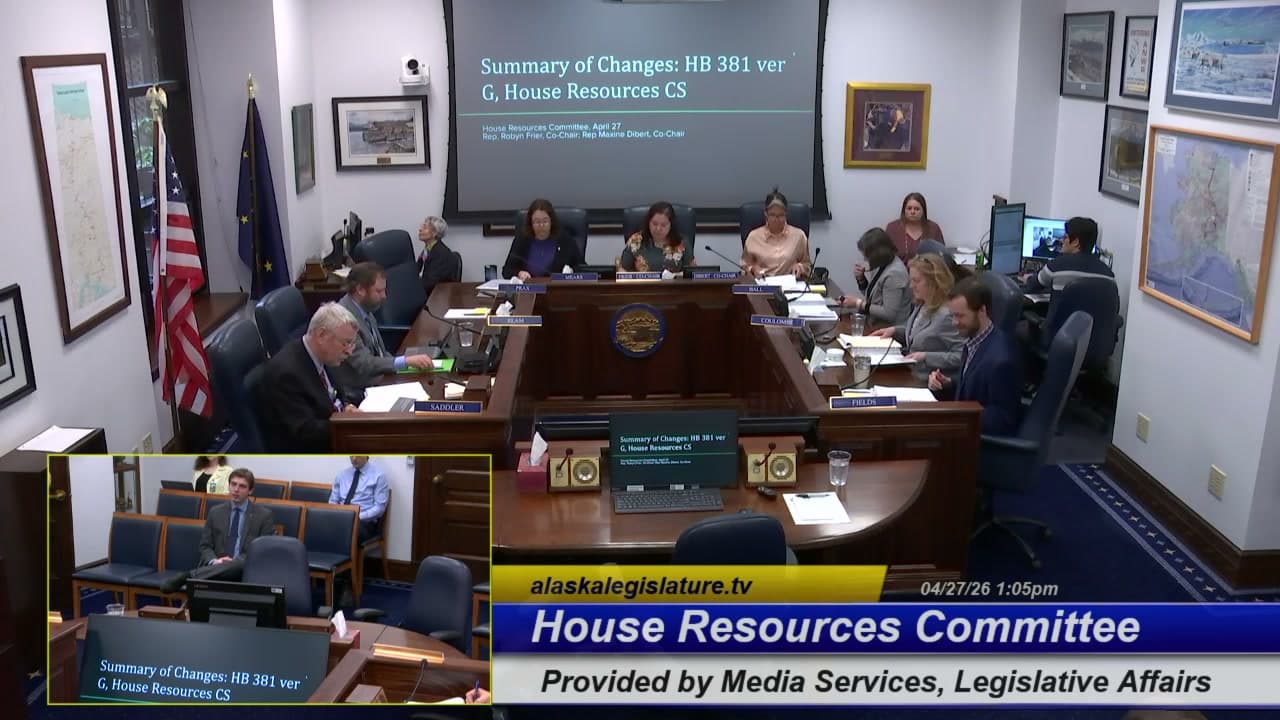
This article is based on a public meeting — Alaska Legislature: House Resources, 4/27/26, 1pm ().
AI-assisted. How we use AI Transcript byLucas Brown
Stay informed. Support what matters.
Free, permanent access to local news you can verify. Subscribe to support Alaska News and go ad-free.
Related Coverage
Alaska House Rewrites LNG Tax Bill, Raising Rate While Empowering Boroughs
Alaska News · 4mo ago
House Finance begins review of Alaska LNG tax bill with competing rate proposals
Alaska News · 4mo ago
Alaska LNG Tax Bill Stalls as Lawmakers Demand Project Cost Data
Alaska News · 4mo ago
Senate panel debates $1B tax break for Alaska LNG amid cost secrecy
Alaska News · 4mo ago
Senate panel examines LNG project economics, megaproject risks
Alaska News · 5mo ago
Comments
Sign in to leave a comment.
No comments yet. Be the first to share your thoughts.