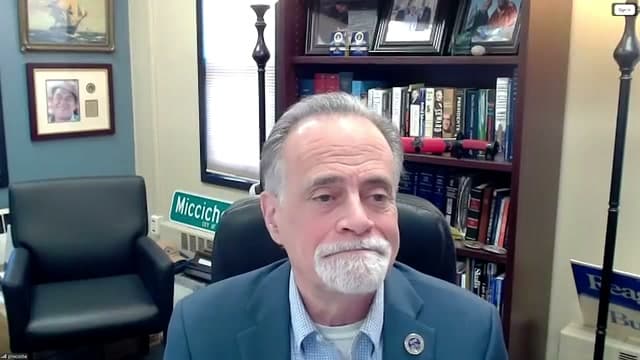
Frame from "Commonwealth North: North Slope Gas Pipeline Fiscal Forum, June 5 2026" · Source
Alaska LNG seeks 90% property tax cut from legislature
The Alaska LNG project is asking the Alaska State Legislature for a 90 percent reduction in property taxes, arguing the project would not be financially viable under the state's current 20-mill tax rate. Project backers call property tax the main financing hurdle. Borough officials say local taxpayers could be left covering impacts.
Under the governor's proposal transmitted in March 2026, the project would pay no state or municipal property tax during construction and ramp-up. Once throughput reaches 1 billion cubic feet per day for a full month, or 10 years after commercial operations begin, whichever comes first, the standard property tax would be replaced by an alternative volumetric tax of 6 cents per thousand cubic feet of gas throughput, increasing 1 percent annually. If commercial operations have not begun by January 1, 2040, the alternative tax structure automatically terminates and the standard oil and gas property tax regime is restored for the project.
Matt Kissinger, commercial director at the Alaska Gasline Development Corporation, said the project is marginal despite the enormous gas reserves on the North Slope. "This is a marginal project, and we don't need more studies to tell us that we know this is a marginal project simply by the fact that despite our need for it, despite this enormous amount of gas, we so far haven't been able to get it done," Kissinger said. He said the project brought in consultants who found Alaska's property tax rate roughly 10 times higher than other LNG jurisdictions.
Kenai Peninsula Borough Mayor Peter Micciche said the original bill left local governments short. The borough estimates $30 million in annual impacts from construction and operations. "An apples to apples comparison has been very difficult to find," Micciche said. "If you're accurate about those apples to apples impacts, I will tell you that the original bill left us short and with a worrisome potential outcome for our local taxpayers."
At the standard 9-mill rate neighboring facilities pay, the Kenai Peninsula Borough would collect $212 million to $255 million annually from the LNG facility. Micciche said the borough could accept a 75 percent reduction in property taxes, which would mean forgoing $132 million to $175 million. "We're giving up between 132 and $175 million with a 75% reduction in property taxes. And we're okay with that," Micciche said.
Cody Rice, an economist working with the borough, said the nominal tax rates for property tax on LNG facilities in the United States are comparable to Alaska's rate, particularly when accounting for the fact that Alaska's LNG liquefaction facility already does not pay state property tax. "When you look at the value of that over the project life on average, that takes us from a $20 mil project to around $14.6 mils to start with," Rice said. He noted that Texas and Louisiana offer temporary tax abatements of 80 to 90 percent for a period of time, but "a temporary tax abatement to, say, 2 or 3 or 6 mils is not the same as a permanent tax reduction to something similar in Alaska."
AI-assisted, reviewed by editors. Spot an error?
Related Coverage
Alaska LNG seeks 90% property tax cut; Kenai Peninsula pushes back
Alaska News · 8h ago · 3 views · 96% match
House panel hears tax proposal for Alaska LNG project
Alaska News · 1mo ago · 2 views · 89% match
House Finance begins review of Alaska LNG tax bill with competing rate proposals
Alaska News · 3w ago · 7 views · 88% match
Senate panel debates $1B tax break for Alaska LNG amid cost secrecy
Alaska News · 1mo ago · 5 views · 88% match
AGDC tells House Finance that Alaska property tax is 10 times higher than competing LNG projects
Alaska News · 1w ago · 8 views · 88% match
Comments
Sign in to leave a comment.
No comments yet. Be the first to share your thoughts.