AI image
Alaska LNG report targets 2028 completion for in-state pipeline
Glenfarne is targeting mechanical completion of the Alaska LNG Phase One pipeline in 2028, with first gas in 2029, according to the project's Oct. 1 semiannual report to the U.S. Department of Energy. That is the same 2028 target the project gave in its April report. The report states that Alaska LNG Project LLC holds no long-term LNG export or supply contracts, a statement that appears in the project's semiannual reports going back to at least 2020, and that construction remains "in the preliminary planning stages."
Here is where the project stands.
South Korea
The report was filed the day after an Oval Office event at which Commerce Secretary Howard Lutnick described three Korean energy projects, including "just over $50 billion" for Alaska LNG, as "fully paid for by the Korean government." Glenfarne said Sept. 30 that it welcomed President Donald Trump's announcement of a South Korean investment exceeding $50 billion whose structure is not yet final.
A joint U.S.-South Korean fact sheet released Oct. 1 says only that the two countries agreed to commence working on the project, subject to commercial reasonableness and legal requirements, and gives no dollar figure. South Korea says it agreed only to review the project, and its industry minister said he protested to Lutnick, Alaska News reported. South Korean President Lee Jae-myung wrote on X, in a post Alaska News translated using AI, that the project would move forward only once its commercial viability is confirmed and it meets South Korea's legal procedures.
The project
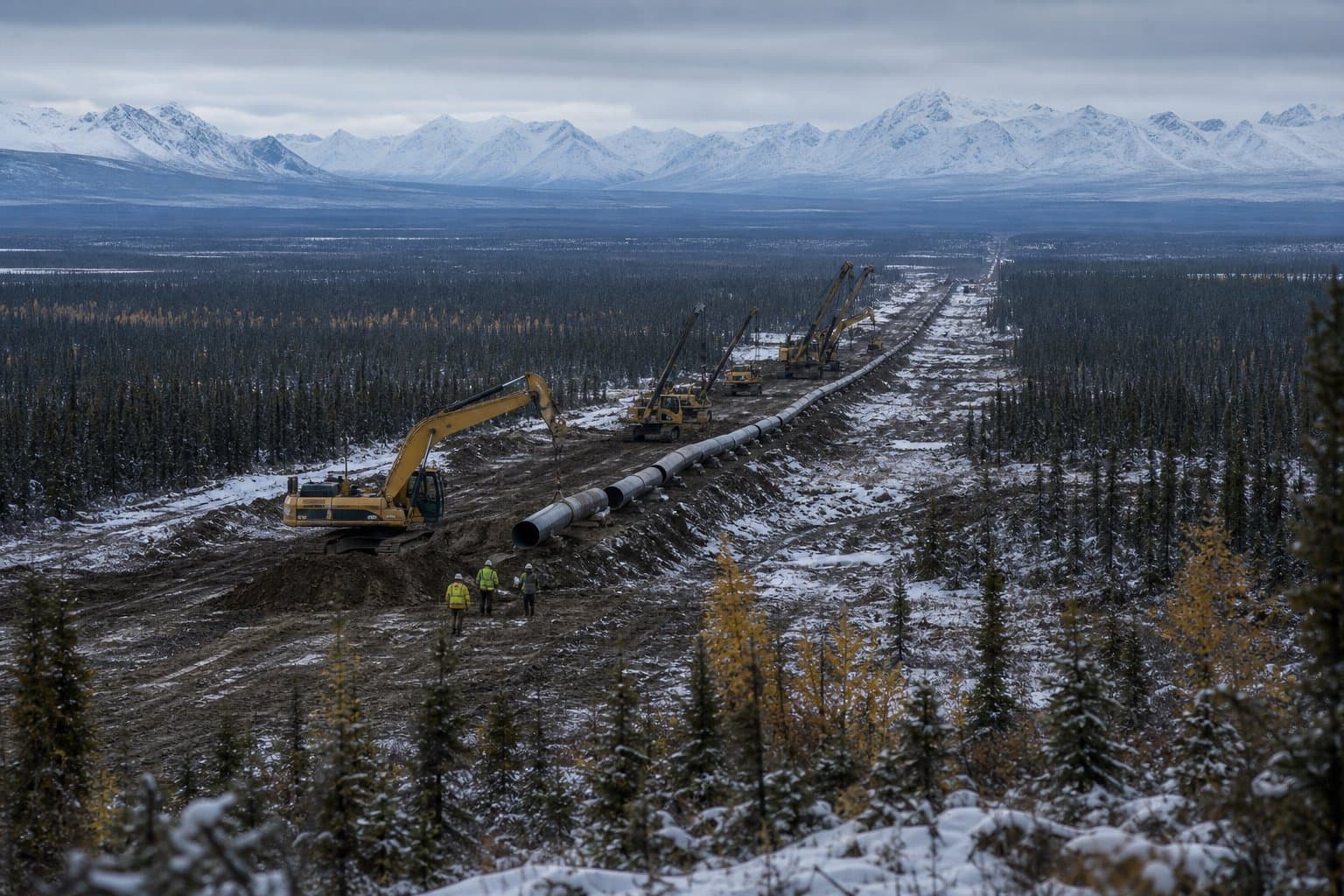
Phase One is a roughly 739-mile, 42-inch line designed to move North Slope gas to Southcentral Alaska, where a Cook Inlet gas shortage looms. The full permitted project also includes an 807-mile pipeline and a 20-million-ton-per-year export terminal at Nikiski, according to the federal permitting dashboard. 8 Star Alaska LLC, which holds the project's federal authorization, is owned 75 percent by Glenfarne and 25 percent by the state's Alaska Gasline Development Corporation (AGDC).
The timeline
The 2028 completion date matches March 23 testimony to the Alaska State House Resources Committee, which also projected LNG exports beginning in early to mid-2031. In February 2026, 8 Star filed a Federal Energy Regulatory Commission implementation plan for early Phase One works.
Permits
The underlying legal and regulatory path cleared last year. On April 15, 2025, the U.S. Court of Appeals for the D.C. Circuit denied petitions challenging the Energy Department's export orders. Three days later, the Federal Energy Regulatory Commission approved transfer of the project's federal authorization to 8 Star.
Buyers
Offtake agreements, the contracts that commit buyers to future gas volumes, remain preliminary rather than binding. The report cites one such agreement with PTT for 2 million tonnes per year over 20 years. Glenfarne said Sept. 30 that it holds commercial agreements covering 13 million tonnes per year of a 16-million-ton target.
Cost and the state's stake
"The developer of the project, 8Star, suffers from a transparency gap, especially in regard to project timelines and project costs," Doug Woodby told the Alaska State Senate Resources Committee on April 15. Cook Inletkeeper has written that independent analysts estimate total project costs could exceed $60 billion, above the $44 billion proponents cite, and that Glenfarne has declined to publish a definitive cost estimate.
AGDC told legislators in April 2025 that the state carries no risk unless it chooses to invest further, placing the state's Phase One option at about $800 million: 25 percent of roughly $3.2 billion in equity, or 7.5 percent of funding. A compromise version of the governor's bill addressing the project's property taxes failed in the Alaska State House on a 19-19 vote on July 16.
Assembled from public records the newsroom collected.
AI-assisted. Reviewed by Cale Green. How we use AI
Stay informed. Support what matters.
Free, permanent access to local news you can verify. Subscribe to support Melinda Communities.News and go ad-free.
Related Coverage
Alaska LNG Project Targets 2029 Gas Delivery as Developer Reports Major Contract Awards
Alaska News · 4mo ago
Trump says South Korea will finance $50 billion of Alaska LNG; Seoul hasn't committed
Alaska News · 4d ago
Seoul protested U.S. Alaska LNG announcement, says investment remains under review
Alaska News · 3d ago
Alaska LNG developer says financing secured, eyes 2027 start
Alaska News · 4mo ago
Alaska LNG project secures financing proposals, targets 2027 construction start
Alaska News · 4mo ago
Comments
Sign in to leave a comment.
No comments yet. Be the first to share your thoughts.