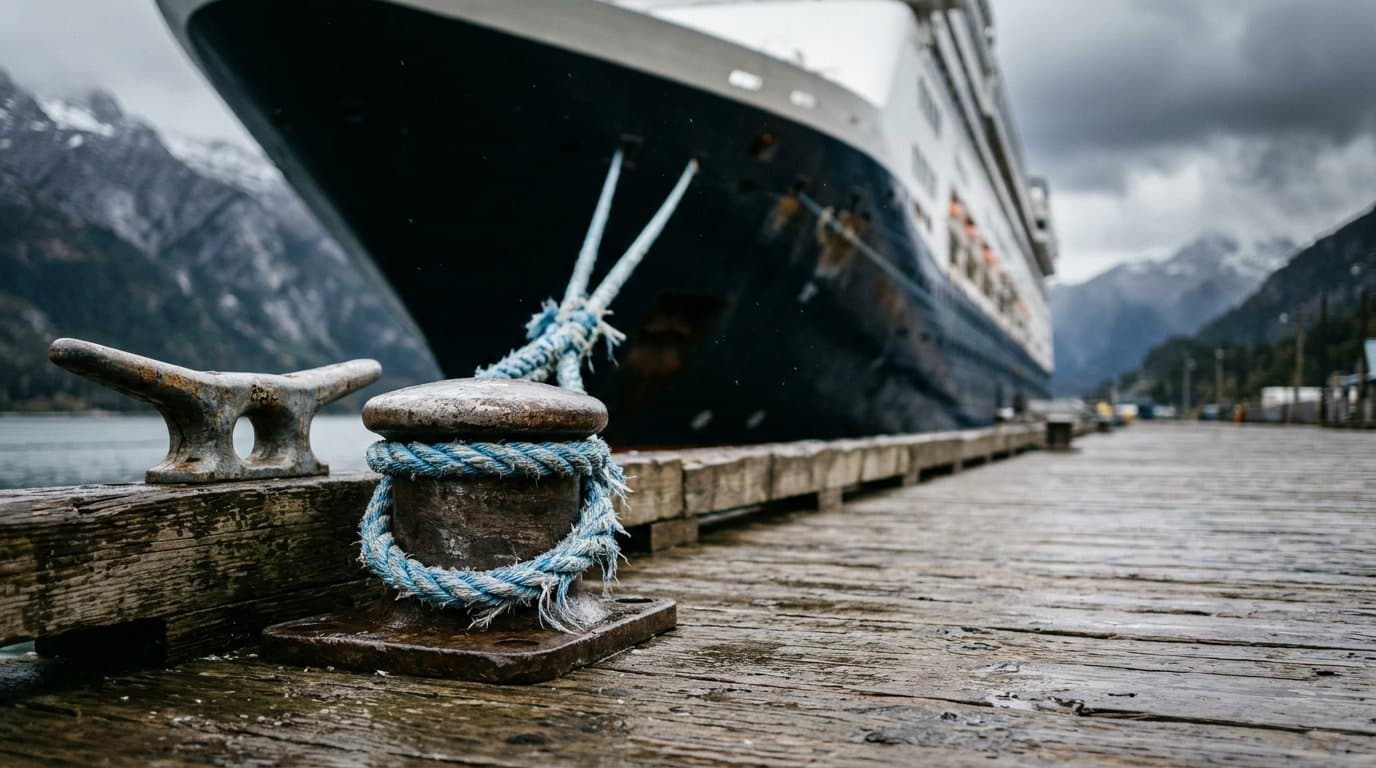
Photo by Cale Green
Alaska LNG project secures financing proposals, targets 2027 construction start
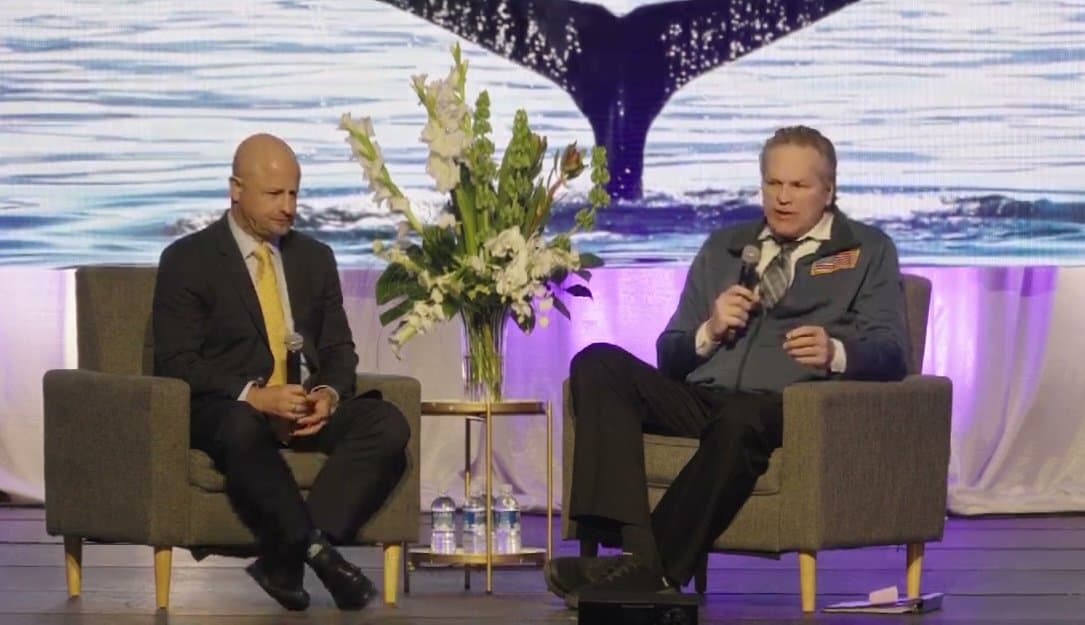
The Alaska LNG project moved closer to reality Thursday as Glenfarne Group CEO Brendan Duval announced the company has secured financing proposals from global banks to build the domestic pipeline, with construction targeted to begin in the first quarter of 2027.
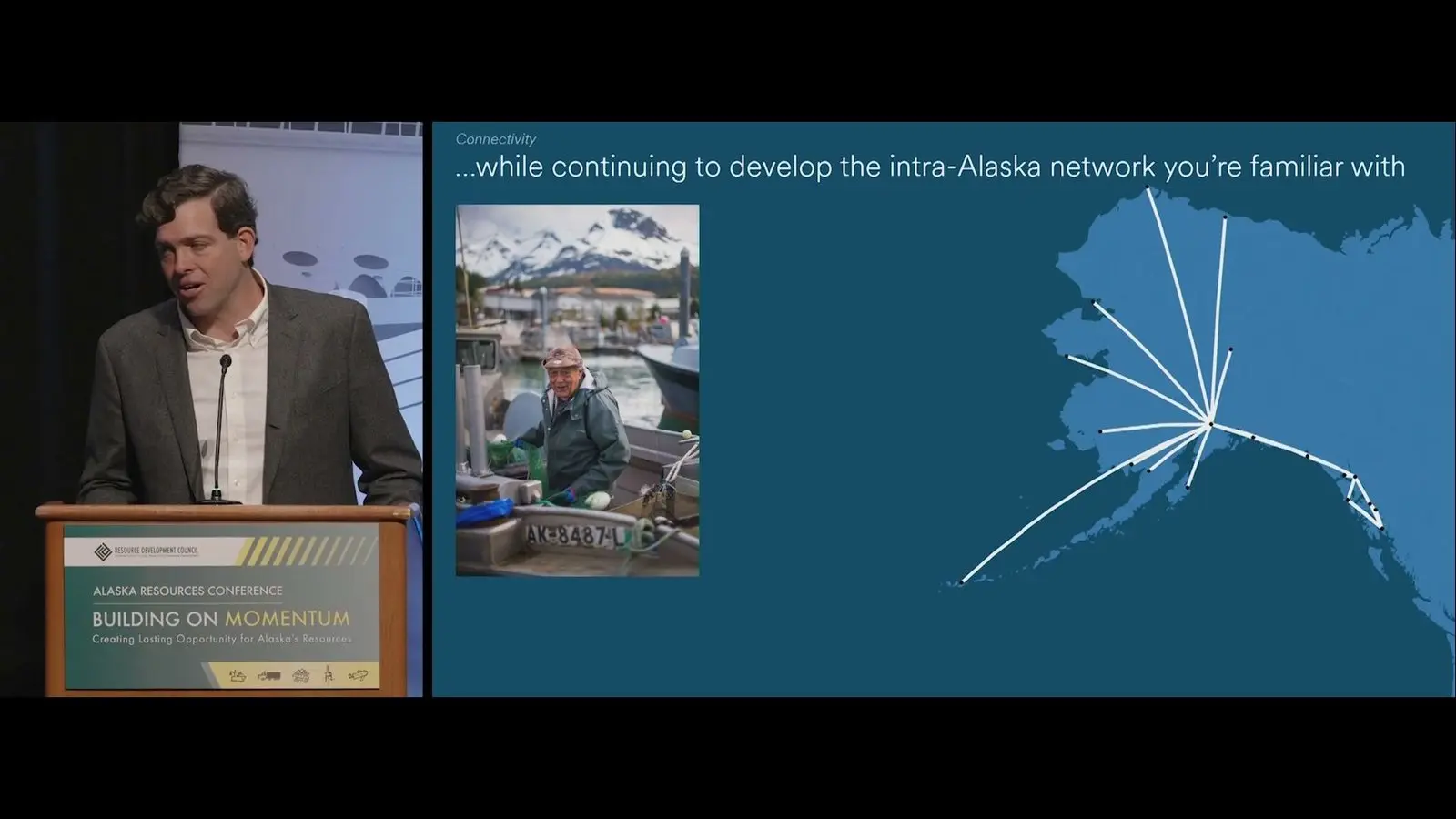
Speaking at the Alaska Sustainable Energy Conference, Duval said the project could deliver gas to Cook Inlet by late 2029 if two key approvals fall into place: tax stabilization legislation currently being negotiated in Juneau and Regulatory Commission of Alaska approval of an agreement with Enstar, the local gas utility.
"I can confirm I've received enough proposals of private financing on terms and conditions that once we convert that into long-form documentation, we can build the domestic pipeline, and that's very exciting," Duval said.
The financing proposals depend on two critical conditions. One is a form of tax stabilization arrangement being negotiated in Juneau. Senate Bill 275 was introduced March 5 and referred to the Resources and Finance committees. The other condition is RCA approval of the Enstar agreement, which Duval said is in its final stages. Duval said the Enstar agreement would deliver North Slope gas at lower cost than imported LNG.
Duval's announcement marks the latest in a series of Alaska LNG project milestones announced by state officials over the past decade. Previous governors have announced memoranda of understanding and financing commitments that did not result in construction. The current proposals have not been converted to binding contracts.
The project would solve Cook Inlet's gas shortage while enabling liquefied natural gas exports to Asia. The export facility would process 20 million tonnes of LNG annually, with 80 percent of that capacity already allocated to buyers in Taiwan, Thailand, Japan, Korea, and France under 20-year contracts, according to Duval.
Governor Mike Dunleavy emphasized the project's urgency for Alaska's energy security. Cook Inlet gas supplies are diminishing rapidly, and the state experienced record cold temperatures in Fairbanks this winter and record snows in January that drew down remaining reserves.
"That enormous amount of gas would enable us to get incredibly low prices, relatively speaking, here in-state in Alaska, which would reduce, as opposed to what's happening in other parts of the country, reduce the cost of energy for Alaskans. For the long term," Dunleavy said.
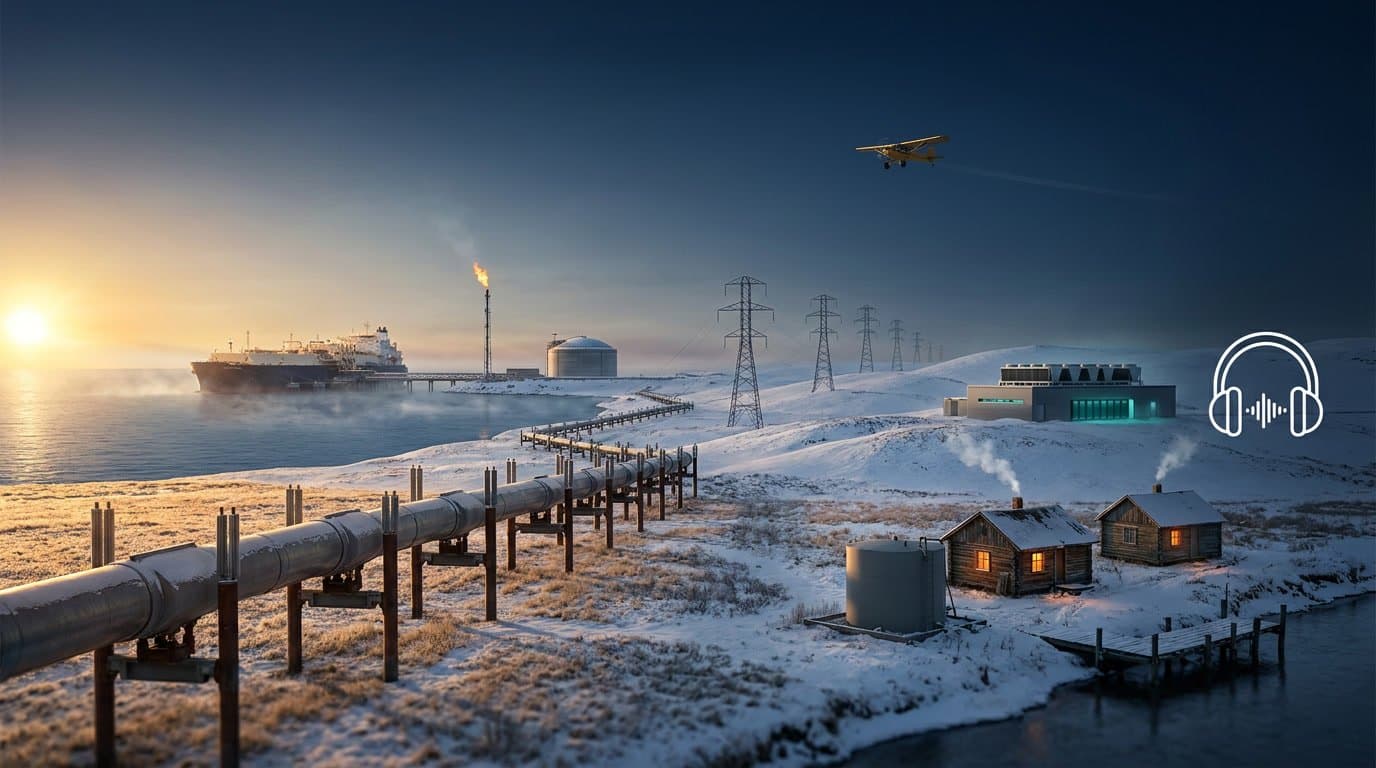
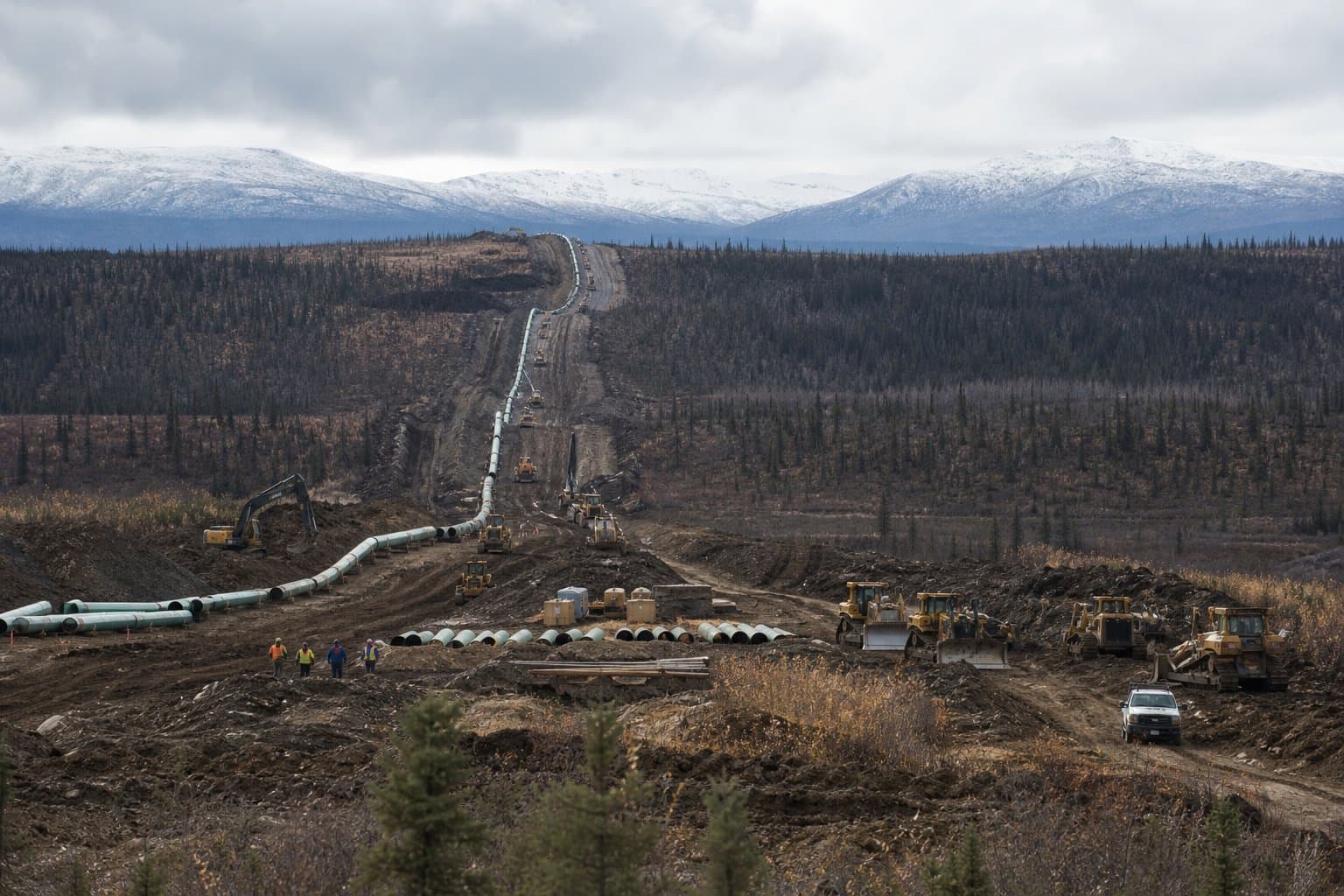
The project would be built in two phases with separate financings. Phase one focuses on the domestic pipeline to address Cook Inlet's gas needs. Phase two would add the export facility, with construction beginning roughly a year after pipeline work starts. The project would deliver gas through an 800-mile pipeline from the North Slope to Nikiski. Duval said the developer has gas supply agreements with Conoco, Exxon, Hilcorp and Pantheon for North Slope production.
The Legislature is reviewing the tax stabilization request as part of the current session. Senate Bill 275 must pass both chambers and be signed by the governor before the financing proposals can move forward. Duval said a 90 to 120 day documentation period with lenders and investors would lead to a final investment decision.
Correction, Nov. 14, 2026: Duval spoke during the Thursday session. Two quotations have been corrected to match the recorded wording.
What did you make of this story? (no account needed)
Made by our human newsroom with AI. How humans and AI work here · Grow with our newsroom · Transcript byLucas Brown
Keep Alaska News free for everyone.
No paywall, ever. Members pay so everyone can read the meetings and records Alaska News covers.
Get Alaska News in your inbox
Create your free account and get the day’s top stories around 6 each morning, in a few minutes’ read.
Top stories, around 6 each morning.
Stories on what you follow, on Sundays.
This article is based on a public meeting of Office of the Governor — 2026 Alaska Sustainable Energy Conference Thursday part 3 ().
Earlier in this story
Alaska LNG Project Targets 2029 Gas Delivery as Developer Reports Major Contract Awards
The Alaska LNG project aims to deliver natural gas in 2029, lead developer Brandon Duvall said Thursday at the Alaska Sustainable Energy Conference in Anchorage.
Glenfarne Alaska LNG awarded the bulk of construction contracts and secured 13 million tonnes of reservations over the past year, Duvall said. The company, which became majority owner and lead developer in March 2025, has prepared local offtake agreements and advanced a private financing process to final stages.
"We have let out the bulk of the construction, the equipment supply, the pipe," Duvall said from the main stage at the Dena'ina Center. "The Alaska LNG Project in particular, Phase 1 pipeline, is in a fantastic position to start delivering gas in 2029."
He said the project needed support in Juneau to cross the finish line soon.
The timeline and cost structure depend on the governor's proposed tax bill, which sets a 6 cent per MCF rate on the pipeline. Adam Prestidge, speaking for Glenfarne to legislators, called the rate fair and said it would allow the company to reach final investment decision quickly this year. A significant change from that rate would require reexamination of how the project moves forward, he said.
International Investors Join Project
The project has attracted investors and participants from Germany, Italy, Greece, Taiwan, Japan, and Korea, Duvall said. He hosted a stakeholder event the day before the conference that included site visits to the Kenai Peninsula and a dinner with Secretary Bergum.
Governor Mike Dunleavy, appearing at the same conference, described the Alaska LNG project as moving from concept to execution. He called it the largest energy infrastructure project ever undertaken in the Americas.
"Last year the focus was on the concept. This year the focus is on the execution steps in that gas project," Dunleavy said.
Dunleavy projected Alaska oil production could reach 900,000 barrels per day within 10 to 12 years, up from roughly 495,000 barrels per day today. He framed the LNG project in the context of global energy security, noting recent disruptions to oil tanker shipments and uncertainty about supply routes.
The governor urged lawmakers to reach agreement on the payment-in-lieu-of-taxes structure within three weeks so Glenfarne can finance the project, order pipe, and sign contracts.
Project Scope and Permitting
The project includes an 807-mile pipeline from Prudhoe Bay to Nikiski and a planned liquefied natural gas facility in Nikiski, according to the Alaska Gasline Development Corporation. Glenfarne describes Phase One as a 739-mile, 42-inch pipeline intended to meet Alaska's domestic energy needs before a later export phase.
A federal environmental record from December 2020 indicates the National Park Service will grant a right-of-way permit for the pipeline to cross Denali National Park and Preserve, a key milestone in the project's federal permitting arc.
Prestidge told legislators that Glenfarne supports elements beyond the governor's bill. The company backs community benefit agreements, a community impact fund for construction disruptions, a Fairbanks spur line with certain permitting conditions, and allowing municipalities to invest in equity alongside the state's 25 percent stake. Those additions would still allow the project to move forward successfully and quickly, he said.
Alaska's Export Advantage
Dunleavy noted Alaska's geographic advantage for energy exports. The state pioneered LNG export in the late 1960s and delivered reliable cargoes to Japan for nearly 50 years.
"Alaska can ship gas and oil to friends in Asia, for example Tokyo, 8 to 9 days away by shipping, straight shot, no contested waters, no straits to go through, no foreign actors to intervene," Dunleavy said.
Lieutenant Governor Nancy Dahlstrom, serving as conference emcee, said energy security is essential for Alaska and the nation.
"When Alaska has the energy it needs, not only is Alaska a safer, better place, but the country, the United States of America, is a safer and better place," Dahlstrom said.
Glenfarne and the Alaska Gasline Development Corporation announced their partnership in March 2025. Glenfarne took a 75 percent ownership stake and AGDC retained 25 percent through 8 Star Alaska. The deal made Glenfarne the lead developer responsible for advancing the project from front-end engineering and design through final investment decision.
The project represents the latest in decades of attempts to commercialize North Slope gas.






Comments
Sign in to leave a comment.
No comments yet. Be the first to share your thoughts.