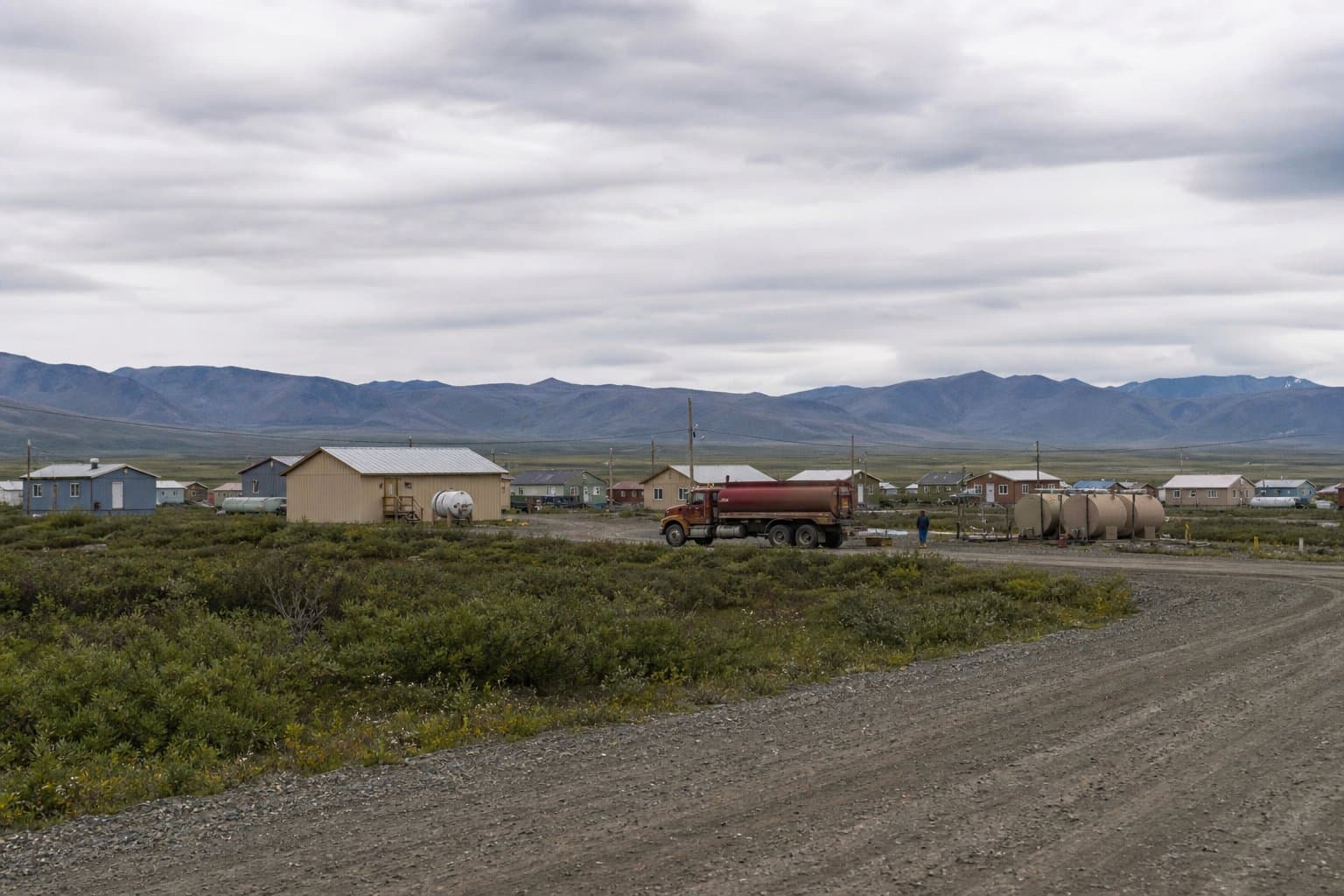
AI image
Alaska gas pipeline tax bill sets $40M milestone test for boroughs, schools, and rural heating fund
Billions in future revenue for Alaska boroughs, schools, and rural communities depend on whether a gas pipeline developer meets a series of hard deadlines under a 52-page conference committee substitute for House Bill 381, released Saturday as the Alaska State Legislature works through its third special session. The measure restructures how the state taxes the proposed Alaska LNG project, a North Slope-to-Southcentral Alaska pipeline and liquefied natural gas export facility. None of its tax abatement or revenue-sharing provisions take effect unless the developer clears multiple conditions: paying $40 million to the state, committing in writing to project labor agreements, and committing to build a Fairbanks spur line. Those commitments are contingent on a phase-one final investment decision by January 1, 2028, pipeline construction completed by December 31, 2034, and commercial operations of at least one major project component beginning by January 1, 2037. The state and municipalities also receive at least 180 days after a phase-one final investment decision to determine whether to exercise an equity option in the project, if such an option has been negotiated and notified.
The Alaska Department of Revenue projected the approach could raise more than $26 billion in tax and royalty revenue over 30 years, including nearly $4 billion for local governments. The North Slope Borough, pipeline-corridor municipalities, and unorganized-borough communities through statewide community assistance stand to gain from earlier revenue phases. Rural communities without direct pipeline access would benefit from a new Alaska Affordable Heating Fuel Fund directing 20 percent of royalty gas revenue toward reducing heating costs. The Kenai Peninsula Borough is projected to see the largest incremental school-funding impact under one version of the bill.
The bill originated as SB 280 and HB 381, introduced by Gov. Mike Dunleavy in February 2024 to replace Alaska's existing oil and gas property tax structure with an alternative volumetric tax. The conference committee substitute reflects changes from both chambers on municipal tax choice, treatment of the Alternative Volumetric Tax in school funding calculations, and consumer protections.
The Alternative Volumetric Tax starts at $0.062 per thousand cubic feet in Phase 1 and rises through multiple steps, reaching $0.424 by 2060. Revenue from the 2060 increase flows entirely to the state general fund. Earlier phases split revenue among the North Slope Borough, pipeline-corridor municipalities, and statewide community assistance. Tax rates grow annually based on the Consumer Price Index, with a minimum increase of 1 percent and a maximum of 3 percent.
The bill caps gas supply contracts for Alaska utilities at $16 per MMBtu, indexed for inflation, and bars utility customers from being charged for project construction cost overruns or from rate increases tied to lower throughput. The conditional effect provisions also require the developer to commit to project labor agreements covering phase-one construction, prevailing wage standards, and apprenticeship utilization, with a binding commitment to extend those agreements to phase two.
The Fairbanks spur line must begin operations within two years after a major project component begins commercial operations. A new income tax on oil and gas pass-through entities takes effect January 1, 2028. At least one legislator argued that provision would deter investment.
The school funding question remains unresolved between chambers. The House version excludes the Alternative Volumetric Tax from the Required Local Contribution calculation entirely. The Senate Finance Committee version includes 13 percent of AVT revenues in that calculation, which Legislative Fiscal Analyst Alexei Painter's projections show could reach $9.4 million annually for the Kenai Peninsula Borough by fiscal year 2040. Painter noted the difference directly: "The House version does not subject the AVT to the RLC at any point," while under the Senate version, "Functionally this means that 13% (2.65/20) of a municipality's AVT revenues are included in the RLC calculation." Legislative Finance recommended that the timing for the Required Local Contribution calculation be explicitly specified in law to avoid ambiguity, warning that without that clarification the provision's application is unclear. A Senate floor amendment would sunset the Required Local Contribution provision five years after the Phase 2 final investment decision. Under Legislative Finance's modeled assumptions, that amendment may effectively mean no AVT-based Required Local Contribution is ever paid.
Assembled from public records the newsroom collected.
AI-assisted. How we use AI
Stay informed. Support what matters.
Free, permanent access to local news you can verify. Subscribe to support Walter AlaskaNews and go ad-free.
Related Coverage
Where Alaska's gas-line tax deal stands, and what's still stuck
Alaska News · 3mo ago
HB 381 exempts Alaska LNG project property from municipal taxes, replaces with volumetric splits
Alaska News · 3mo ago
Alaska LNG Tax Bill Walks Tightrope Between Project Viability and Local Needs
Alaska News · 5mo ago
Alaska's LNG tax break now hinges on a gas line to Fairbanks
Alaska News · 3mo ago
House Finance advances Alaska LNG tax bill, curtailing North Slope's power to negotiate
Alaska News · 3mo ago
Comments
Sign in to leave a comment.
No comments yet. Be the first to share your thoughts.