Video Clips
Quoted moments from Alaska public meetings, hearings, and press conferences.
Tony Izzo
“We're the third largest buyer of gas in the Cook Inlet, and I give you some sense of scale here. Enstar clearly being number one, but John mentioned 3 BCF of gas. That's half a year for MEA.”Alaska Legislature: Alaska Gasline Caucus, 8/6/26, 9am · Aug 6, 2026
John Sims
“Now, if deliveries come as expected from the Cook Inlet for the remainder of the year, we will be 1 BCF short, which means I'll need 6 days of gas in the middle of winter for folks. That is under normal weather conditions.”Alaska Legislature: Alaska Gasline Caucus, 8/6/26, 9am · Aug 6, 2026
Tony Izzo
“We're seeing gas in the inlet, $16, $17 for what I would refer to as interruptible gas.”Alaska Legislature: Alaska Gasline Caucus, 8/6/26, 9am · Aug 6, 2026
John Sims
“So we're now telling the military, You need to plan on dual fuel.”Alaska Legislature: Alaska Gasline Caucus, 8/6/26, 9am · Aug 6, 2026
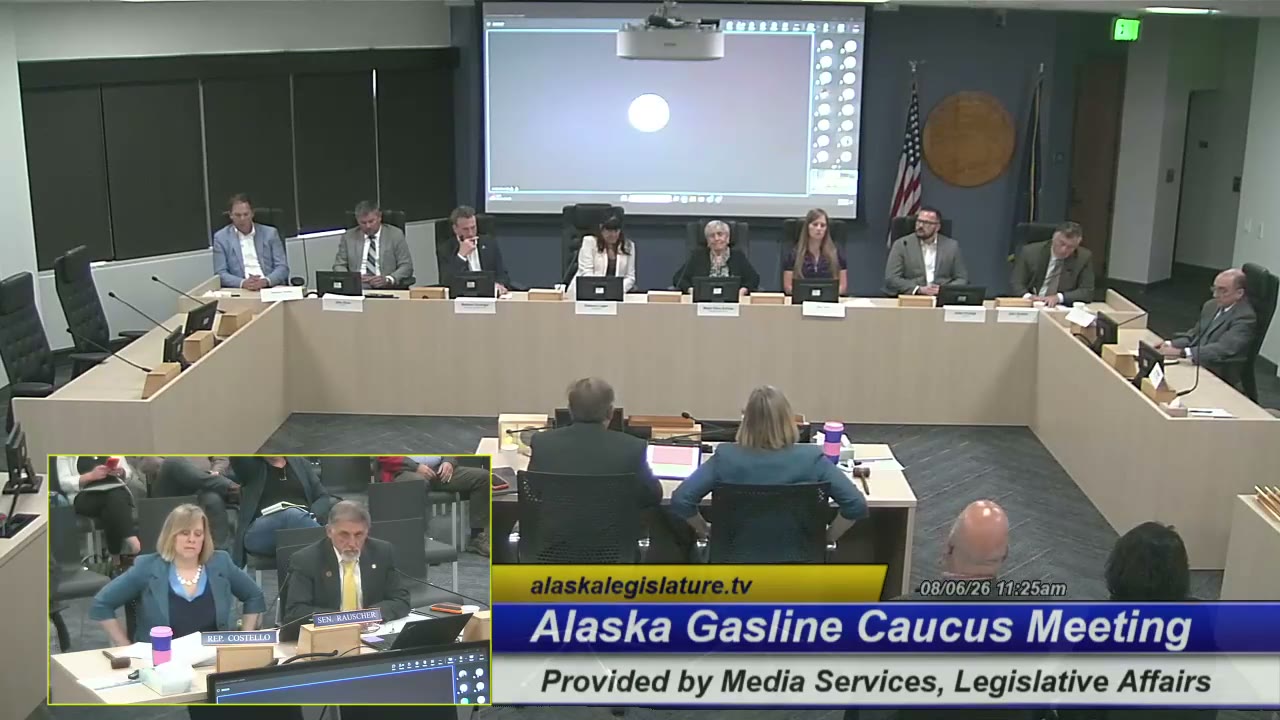
Mike Dunleavy
“I would just encourage everyone to understand where we are with gas. It's real. The shortage is real.”Alaska Legislature: Alaska Gasline Caucus, 8/6/26, 9am · Aug 6, 2026
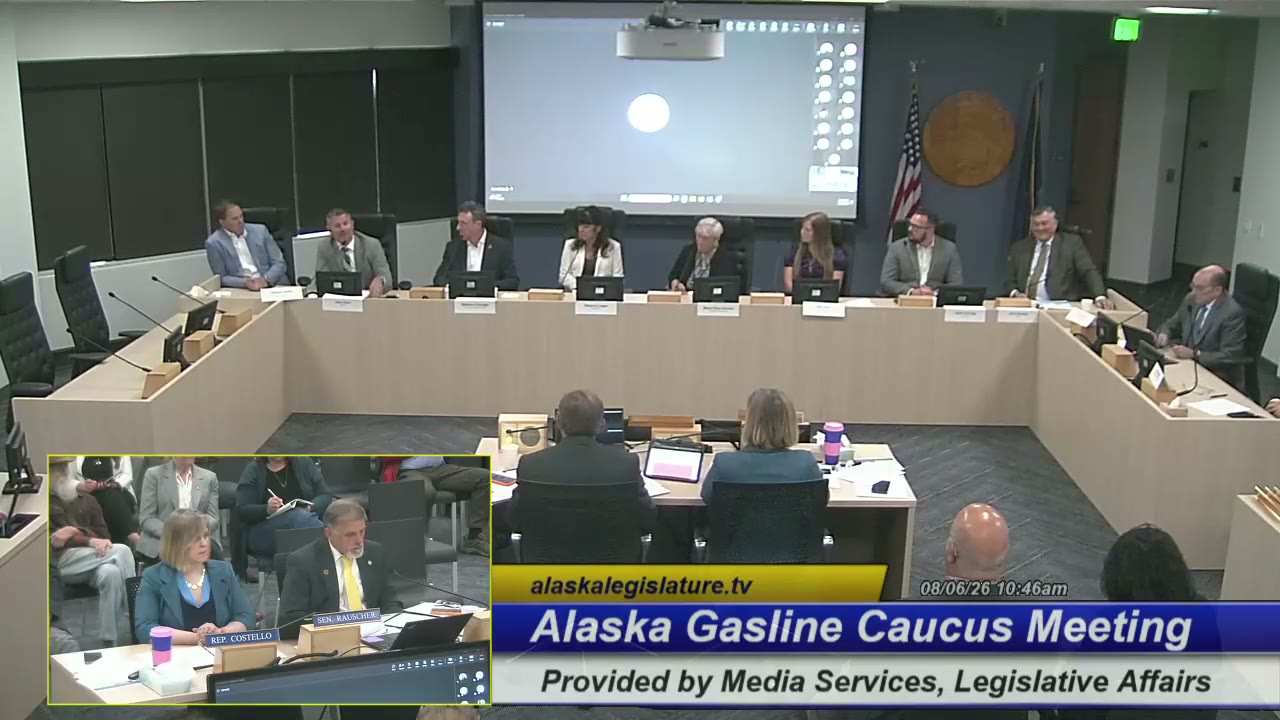
John Sims
“That is legislation out of necessity. That is the place we're in today. We have to have legislation out of necessity because as we are looking at things today, I am 18 days short of serving our customers. JBEHR reached out to me.”Alaska Legislature: Alaska Gasline Caucus, 8/6/26, 9am · Aug 6, 2026
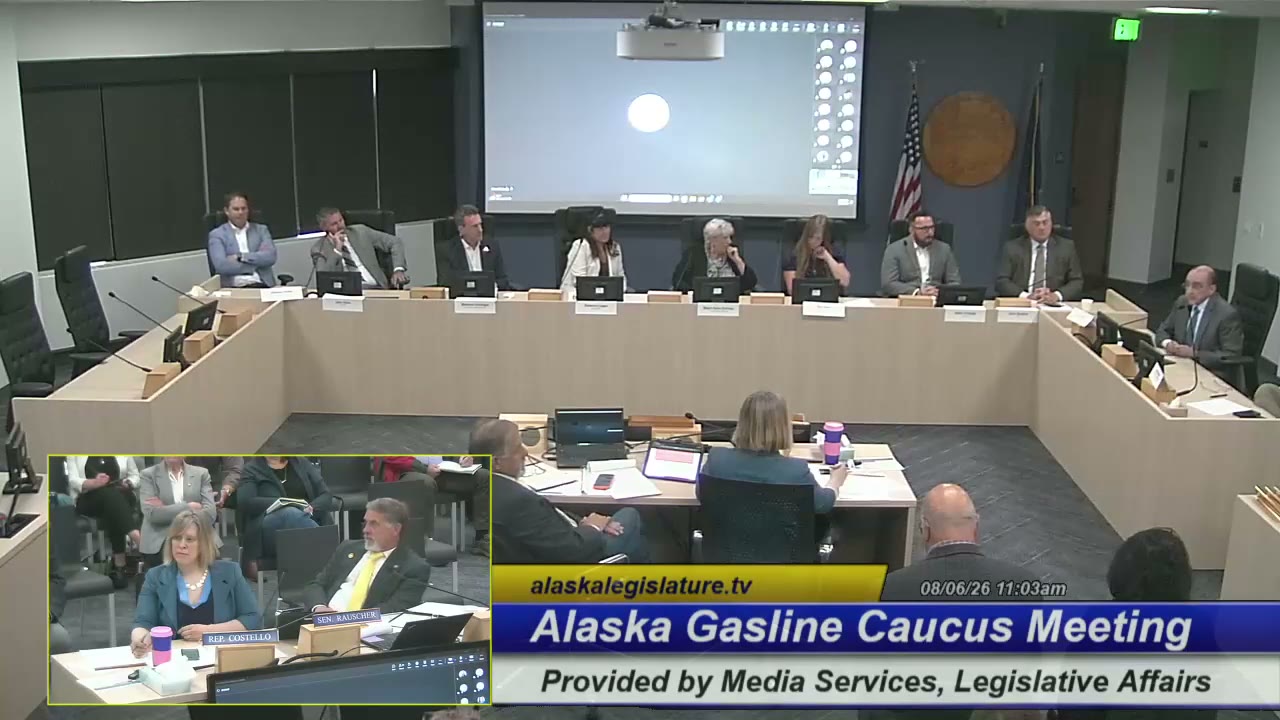
Tony Izzo
“It is not viable. I agree with Mr. Sims. It's not viable because there's no one's investing to develop it.”Alaska Legislature: Alaska Gasline Caucus, 8/6/26, 9am · Aug 6, 2026
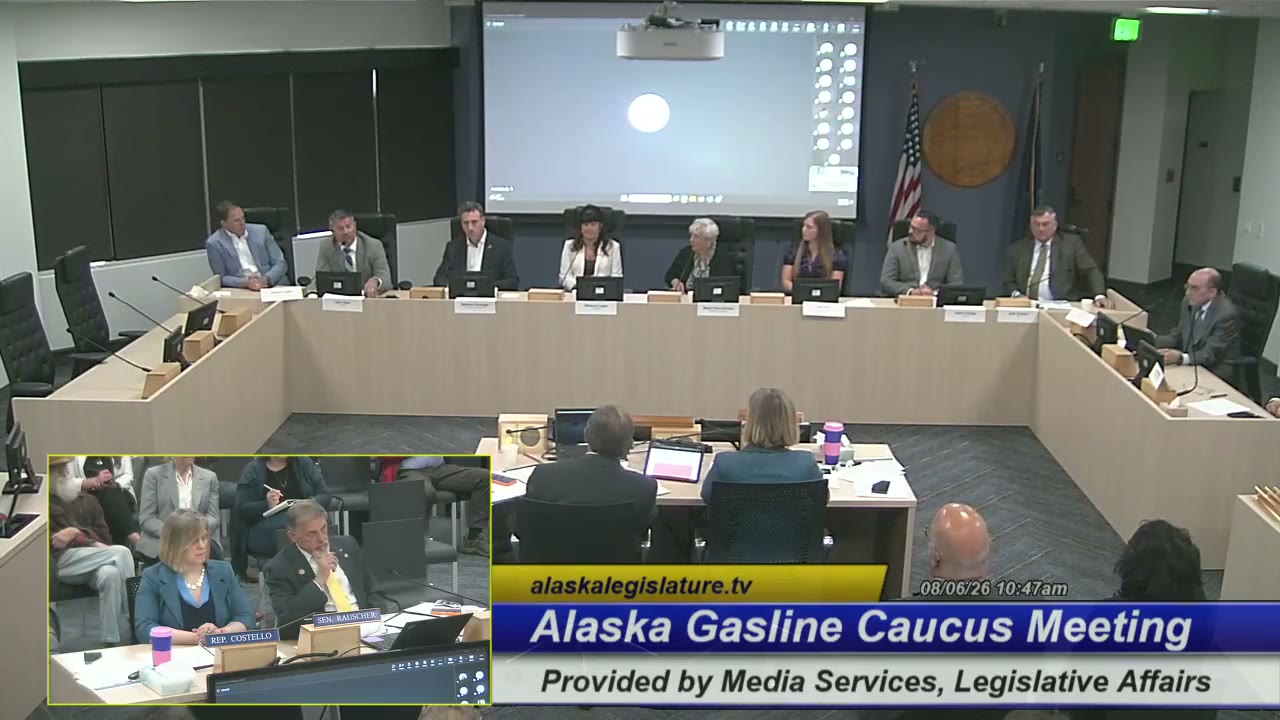
John Sims
“There's planned $6.9 billion worth of investment in JBEHR here. Fantastic news. New buildings. New infrastructure, new people moving up, $6.9 billion worth to expand JBER.”Alaska Legislature: Alaska Gasline Caucus, 8/6/26, 9am · Aug 6, 2026
Luke Sargey
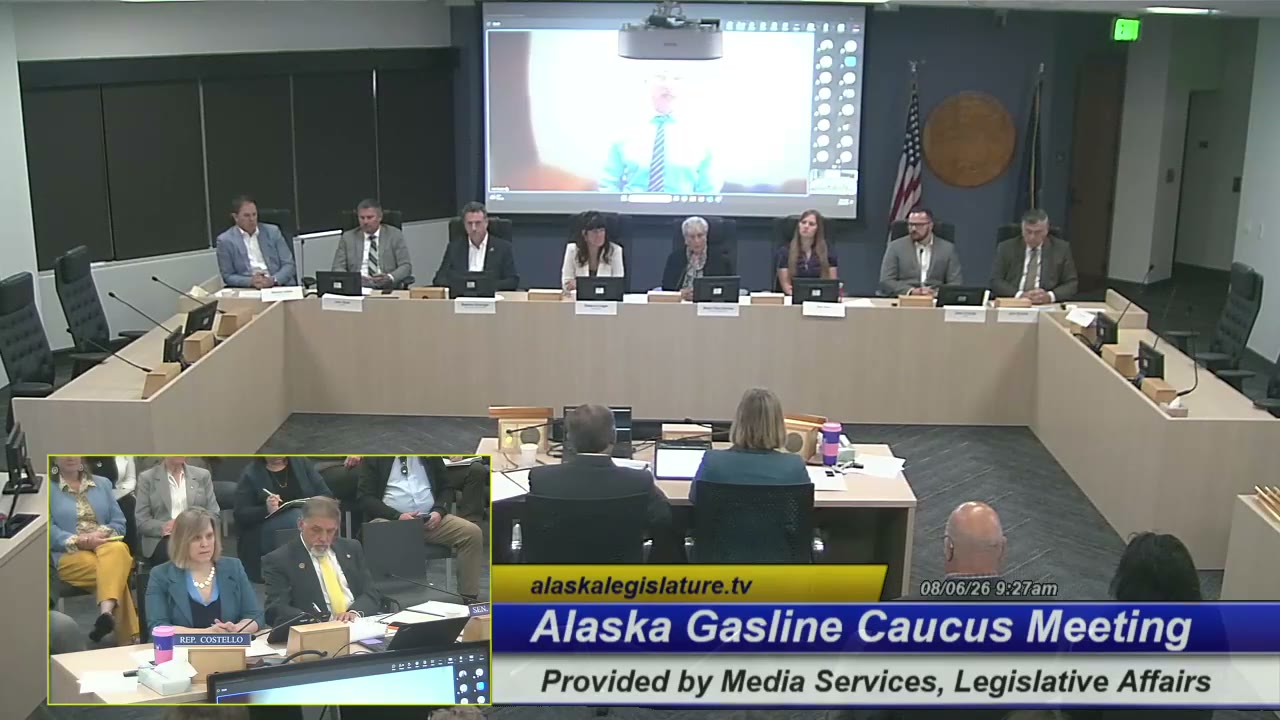
“But make no mistake, and I'm sure that Mr. Sims will reference this, we are getting dangerously close to not having enough gas to go around. And I think the utilities will affirm that they are expecting shortages here in the near term.”Alaska Legislature: Alaska Gasline Caucus, 8/6/26, 9am · Aug 6, 2026
Bert Stedman
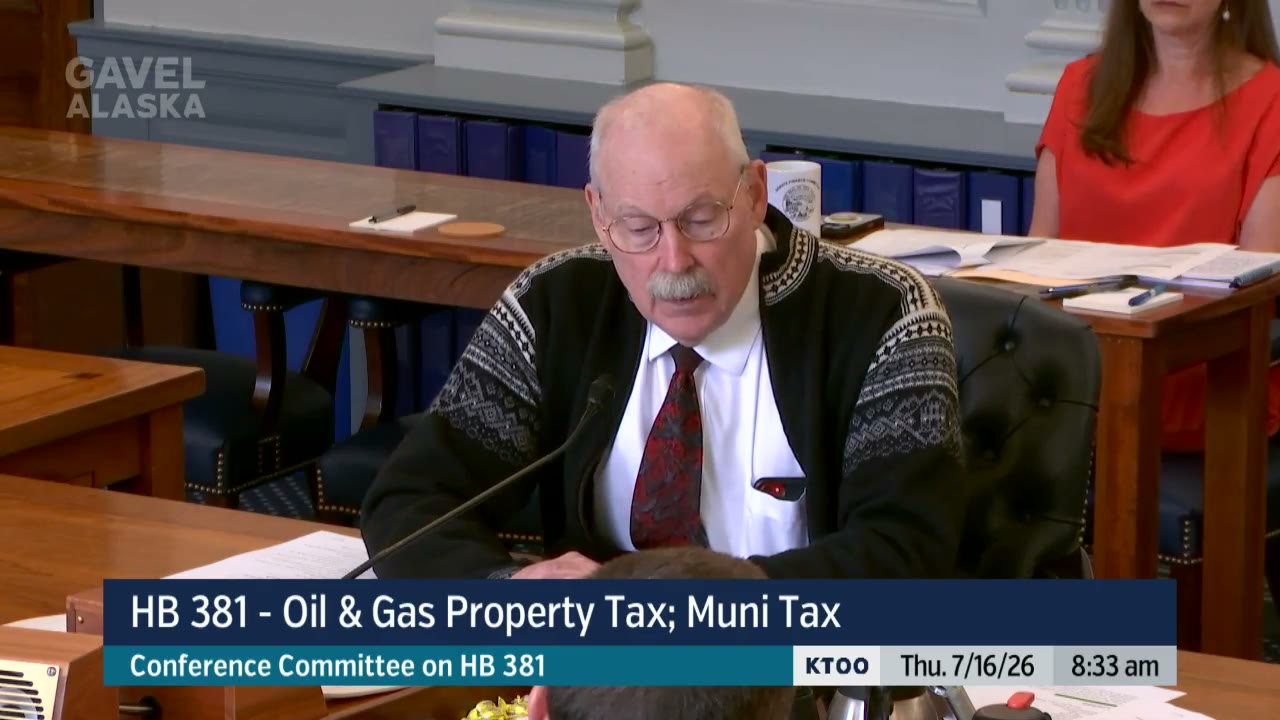
“one of the solutions that we talked about and the one that's in the bill here is a delayed effective date out to '29, tax year '29, and asking the impacted parties to submit hypothetical tax returns to the Department of Revenue so they can look through them, so they can get a good feel for, you know, what we're actually dealing with, and come back to the next legislature with cleanup language and I would expect a rate adjustment to something that would flow and be equitable to both the industry and the state and have a balance.”Alaska Legislature: MSC2-20260716-0800 · Jul 16, 2026
Justin Ruffridge
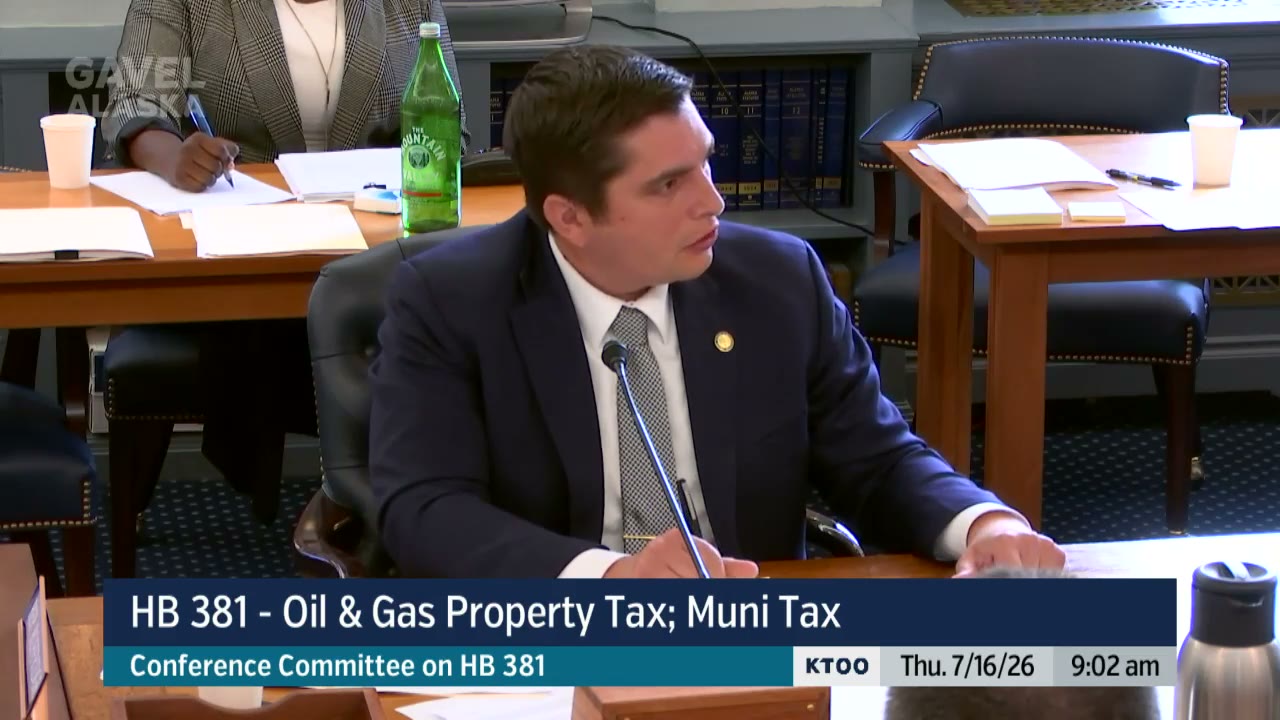
“It is saying that the state of Alaska can go into your municipality, exempt property taxes, and then take the tax for the state's own use.”Alaska Legislature: MSC2-20260716-0800 · Jul 16, 2026
Justin Ruffridge
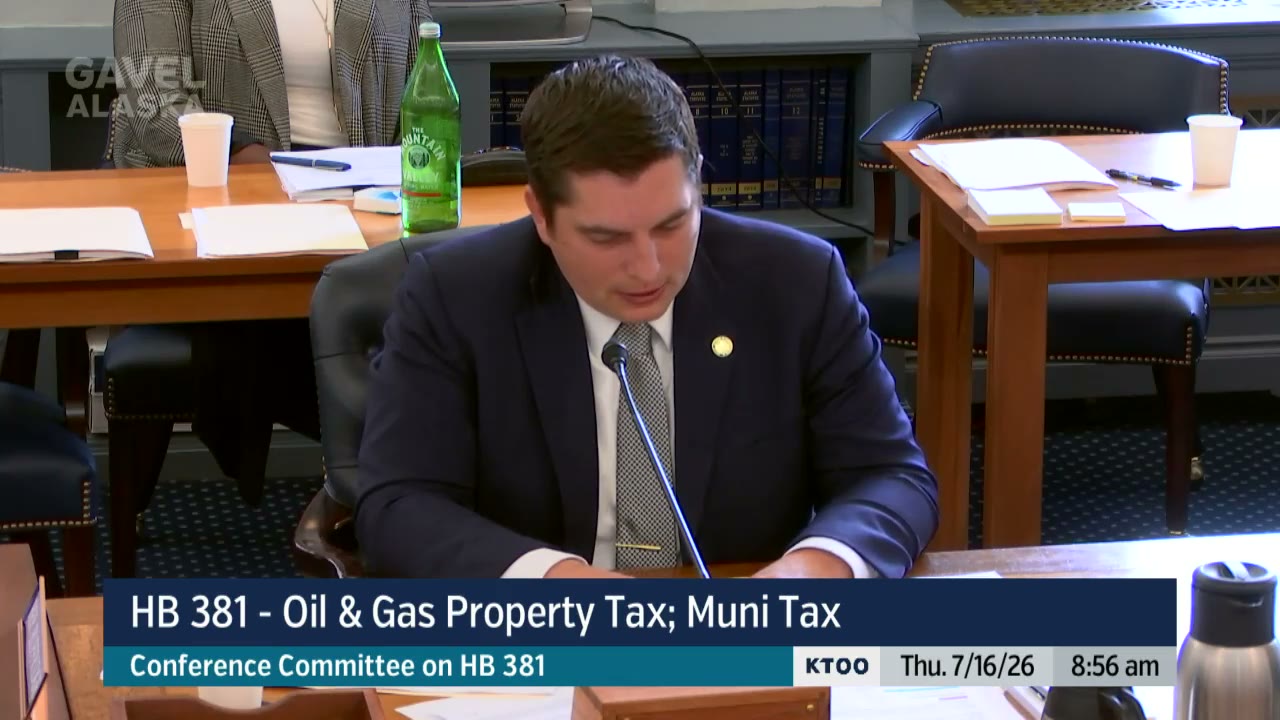
“Not hearing from the Department of Revenue about a large-scale change to our income tax structure seems a little irresponsible and maybe premature.”Alaska Legislature: MSC2-20260716-0800 · Jul 16, 2026
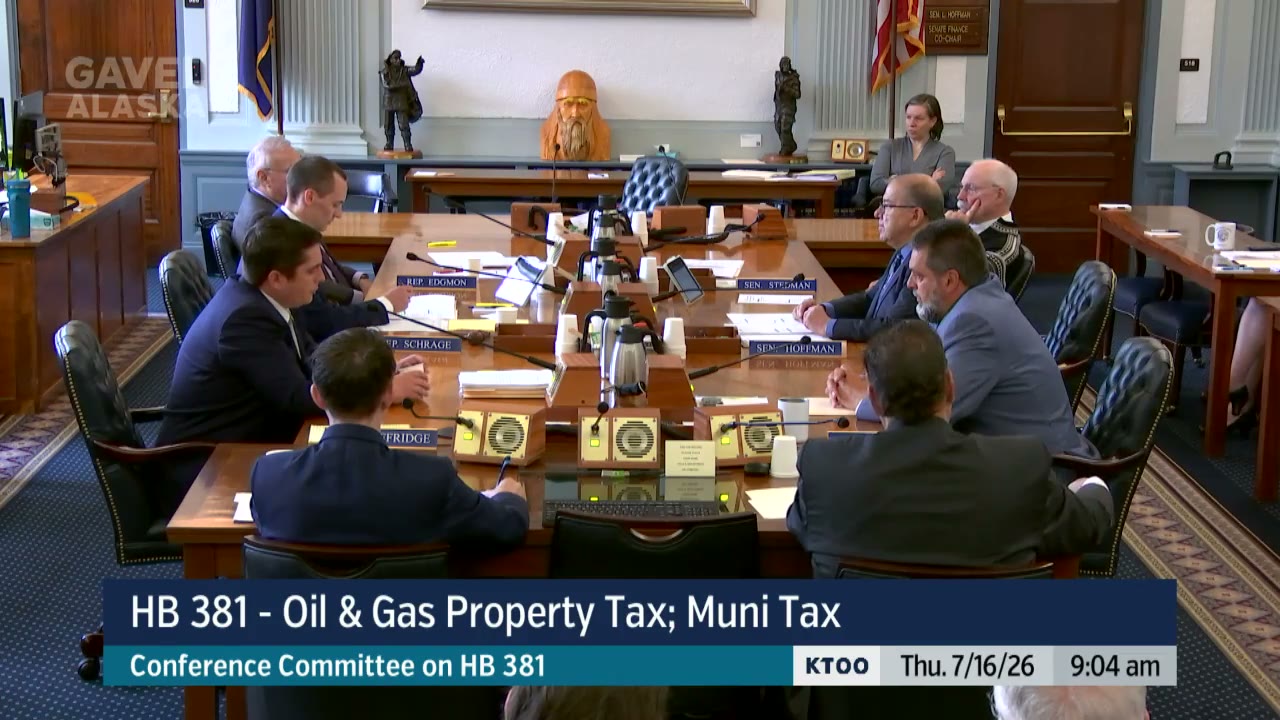
Calvin Schrage
“from the Senate we have 2 yeas and 1 nay, and from the House we have 2 yeas in one name, meaning that Work Draft 34-GH2038/E is moved from committee.”Alaska Legislature: MSC2-20260716-0800 · Jul 16, 2026
Bert Stedman
“It's just a step in the direction. And I think that should be clear to all the Alaskans that this does not get us a project. It helps in that direction is all it does.”Alaska Legislature: MSC2-20260716-0800 · Jul 16, 2026
Bert Stedman
“There's been a lot of marketing around the state that this is the, you know, the hinge that's going to open the door and we're going to get a project. That's complete marketing nonsense. It does not get this project economic. There's more hurdles that have to be crossed.”Alaska Legislature: MSC2-20260716-0800 · Jul 16, 2026
Justin Ruffridge
“what we do later on, on line 16 and line 18, is we double that AVT as we go through this project if it gets built. But those revenues do not go to the places where the property tax is being overrun by state law. It now is going to go to community assistance, and then in line 7, go to the state. The precedent we're setting here is not a good one.”Alaska Legislature: MSC2-20260716-0800 · Jul 16, 2026
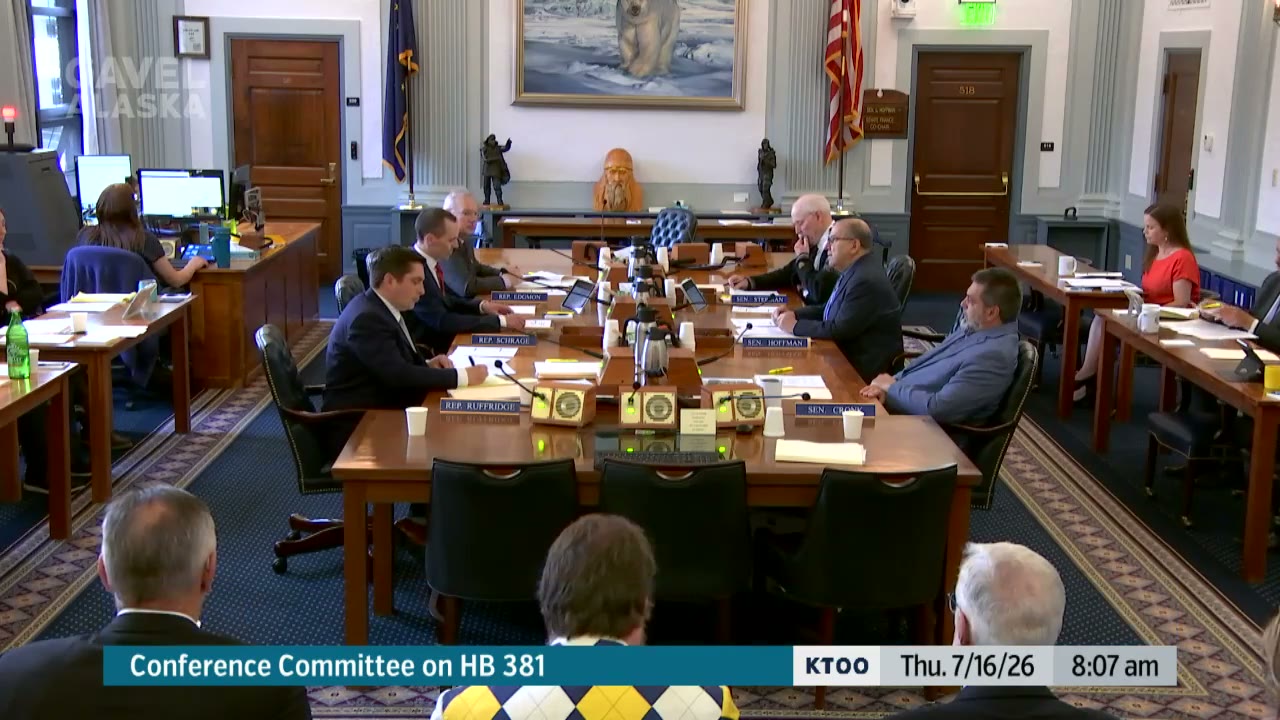
Calvin Schrage
“I move that the conference committee adopt work draft 34-GH2038/e as the working document for HB 381 and ask for an objection for the purposes of an explanation of changes.”Alaska Legislature: MSC2-20260716-0800 · Jul 16, 2026
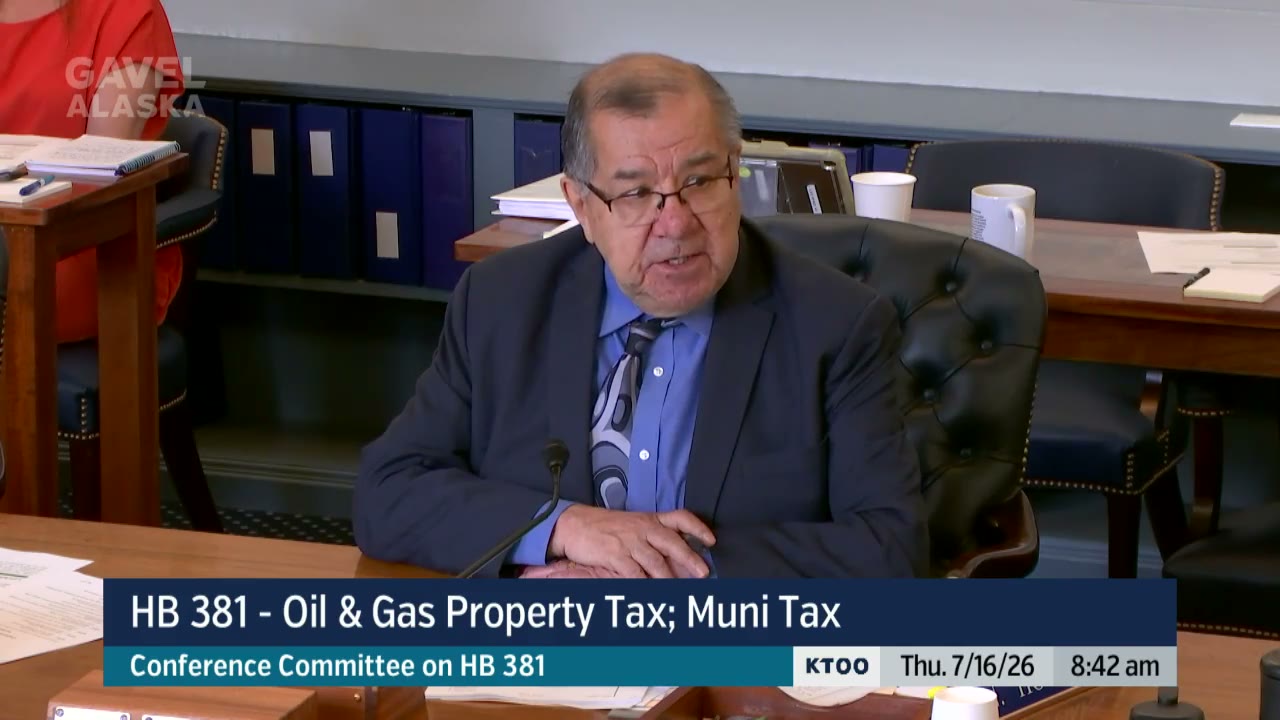
Lyman Hoffman
“I believe that this particular opportunity that we have before us is the best opportunity that I've seen in, in many, many years. So I'm here to support this particular piece of legislation with the understanding that additional work has to be made.”Alaska Legislature: MSC2-20260716-0800 · Jul 16, 2026
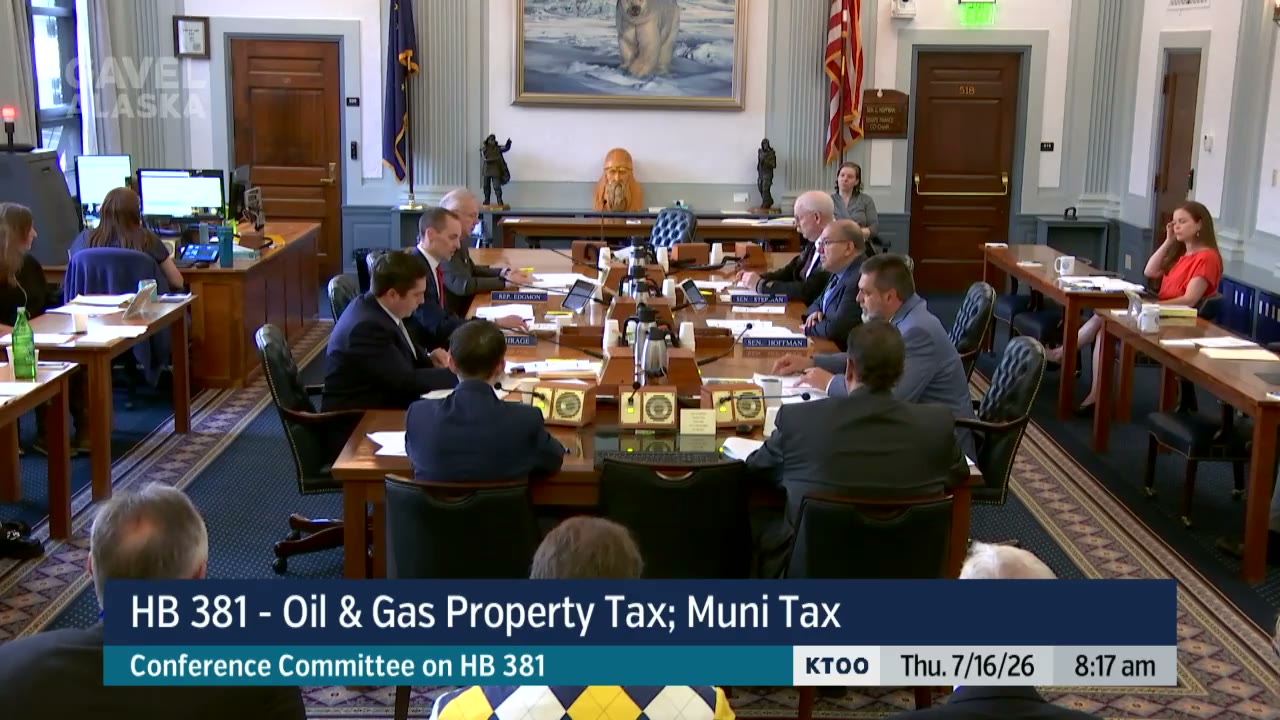
Justin Ruffridge
“There's a phrase here: income of an Alaska liquefied natural gas project as defined in AS 3125.390 is, I guess, exempted from the provisions of this proposed new income tax. I'm wondering how we define income of an Alaska liquefied natural gas project, and would that include sales of natural gas from producers into, into the gas pipeline proposal?”Alaska Legislature: MSC2-20260716-0800 · Jul 16, 2026
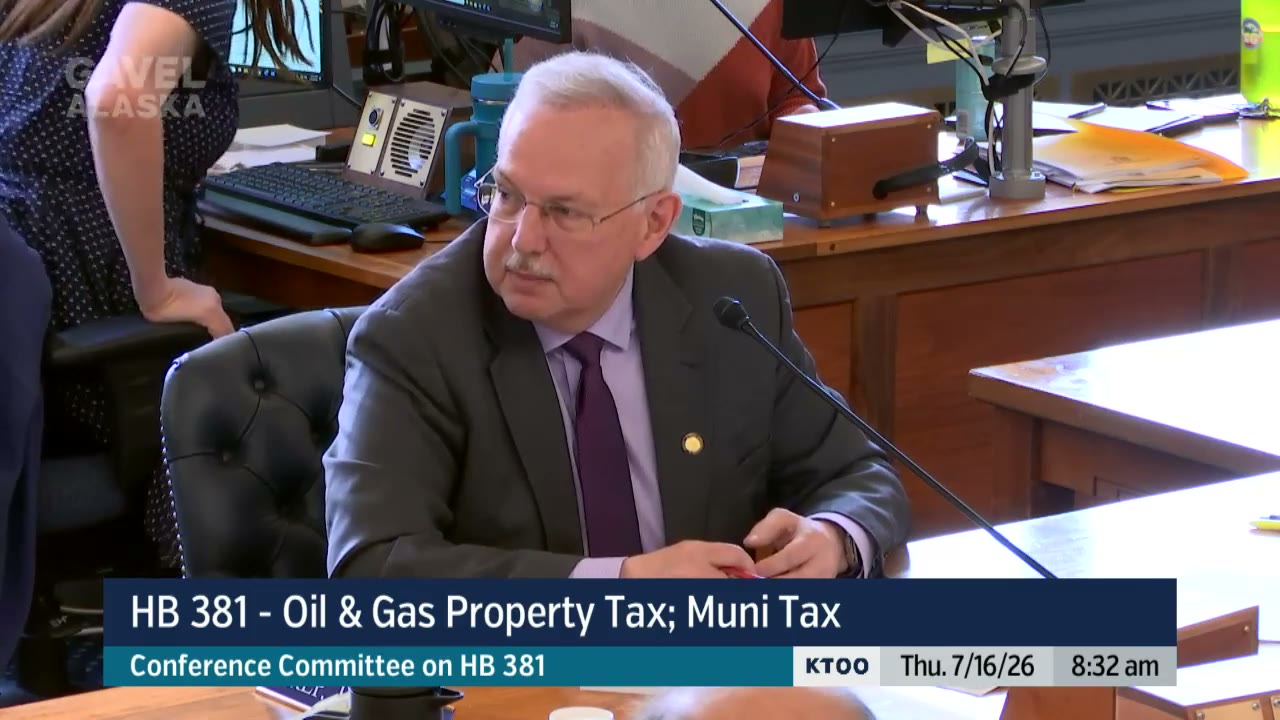
Bryce Edgmon
“is the bill in front of us perfect? Not by any stretch. I don't think to anyone's sort of, you know, sense of what could be in the bill or might not be in the bill. But I think it's a product that's, you know, is a vehicle that hopefully will get us there in the end.”Alaska Legislature: MSC2-20260716-0800 · Jul 16, 2026
Eric Gunderson
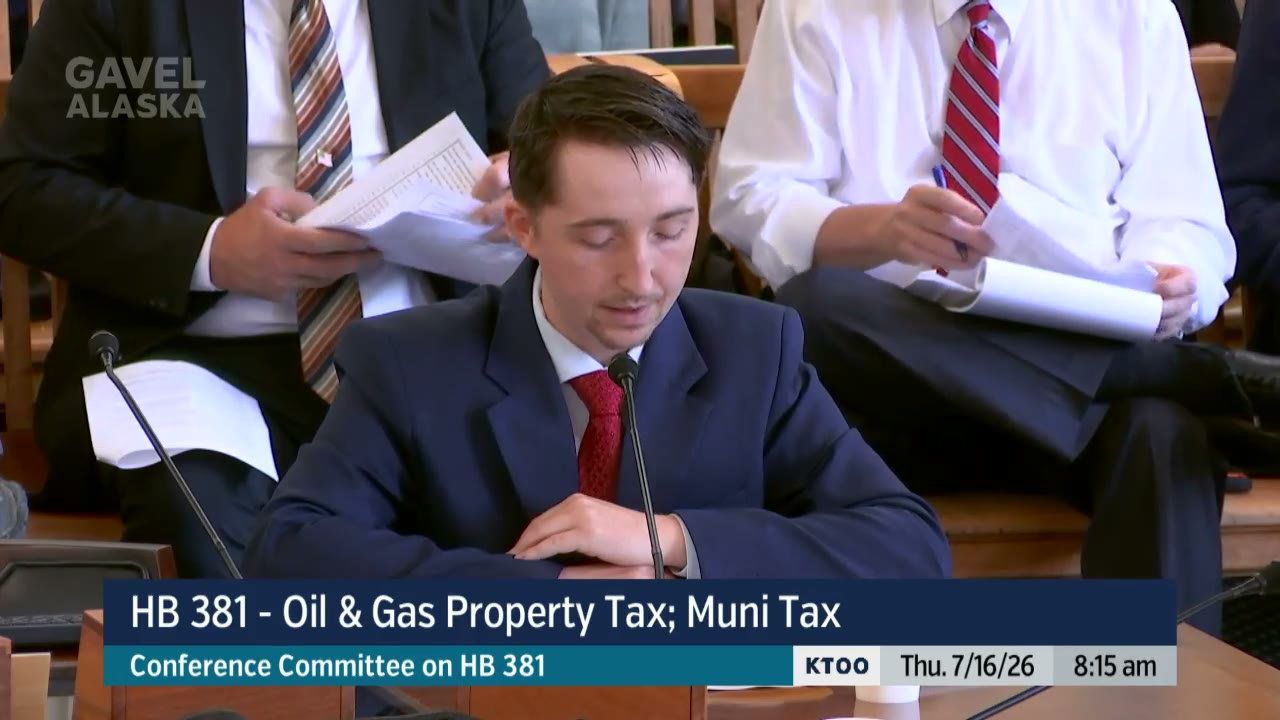
“the ACS amends subsection A-1 to increase the amount paid to the state by the project developer within 60 days after financial final investment decision on Phase 1 from $40 million to $50 million. It adds language stating that it is the intent of the legislature that $10 million from this amount be appropriated to workforce development projects for the AK LNG project.”Alaska Legislature: MSC2-20260716-0800 · Jul 16, 2026
Justin Ruffridge
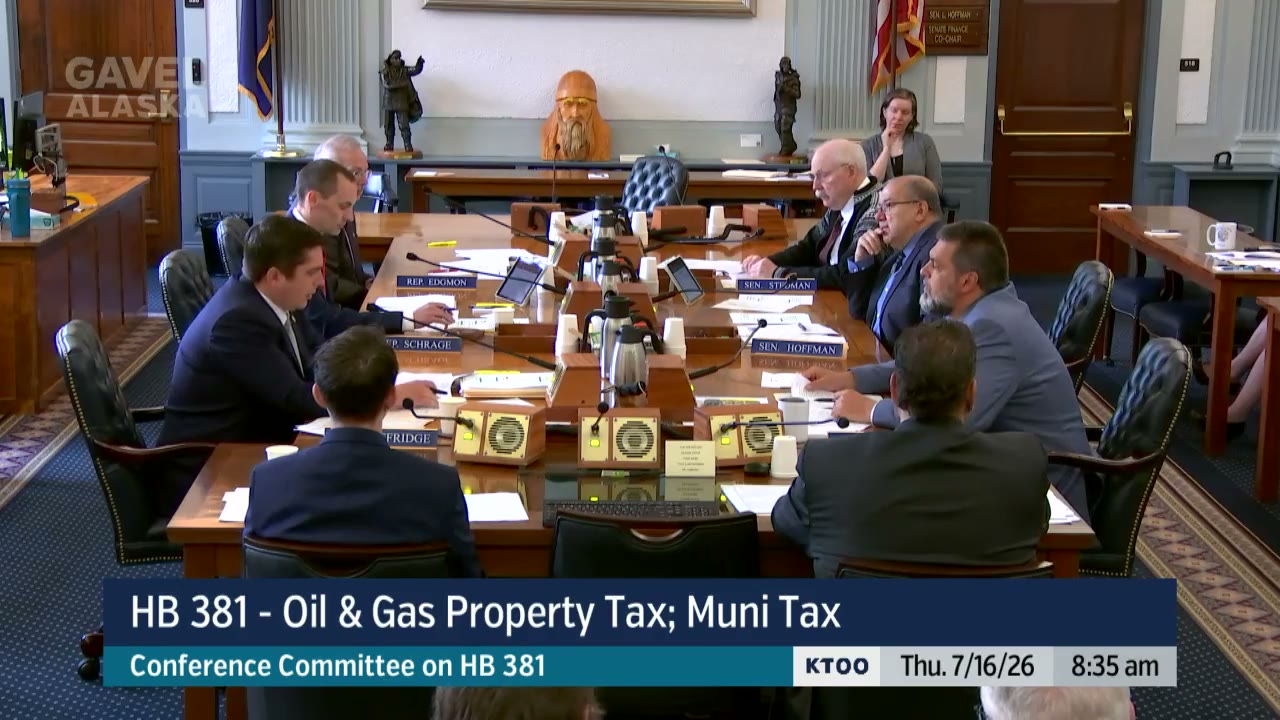
“If we pass this language forward, if it's the intention to have a new legislature fix it and reduce a tax, I don't— I'm not certain I've really ever seen that be a possibility to reduce a tax at a future date. We're going to put in a tax rate that that I think many of us would already say is too high for a lot of reasons.”Alaska Legislature: MSC2-20260716-0800 · Jul 16, 2026
Lyman Hoffman
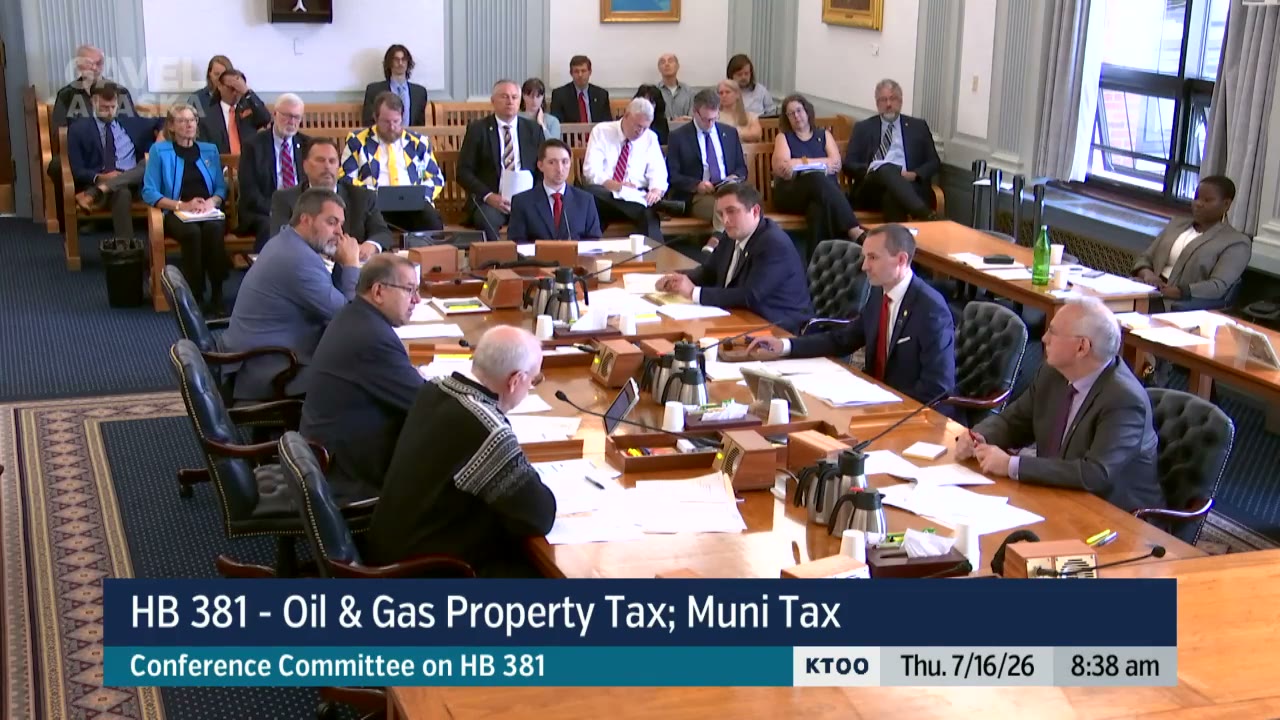
“The problem that this legislature is facing is that we are within a window. That has been explained time and time again.”Alaska Legislature: MSC2-20260716-0800 · Jul 16, 2026
Lyman Hoffman
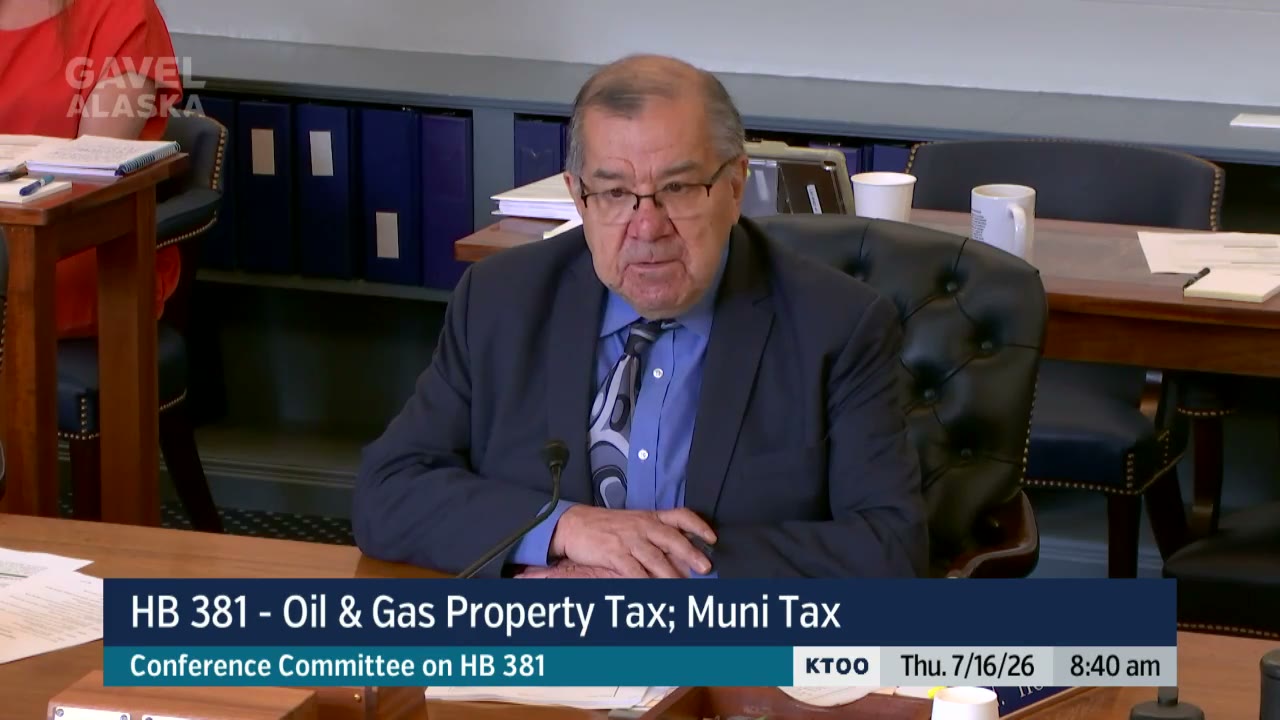
“acknowledging the shortcomings, it's not unheard of in crime bills, in many other pieces of legislation, that additional work is expected by the next legislature to address them, to have new eyes on it, and to make the necessary corrections. I think that for the most part, the intense work that has been performed by our legal department, by the administration, by the contractors, and specifically the interests of the State of Alaska are fairly represented in this particular piece of legislation.”Alaska Legislature: MSC2-20260716-0800 · Jul 16, 2026
Bryce Edgmon
“imperfect bill, imperfect process, imperfect everything else, but I think it's important to get this thing forward and achieve the underlying goal, which is to provide property tax relief so this project can attempt to move forward.”Alaska Legislature: MSC2-20260716-0800 · Jul 16, 2026
Justin Ruffridge
“this is not something that we heard it in committee before that is ready for prime time. You know, I think Speaker Edgeman talks about collaborative effort, and I mean, that is certainly a nice narrative to have, and there is obviously a lot of work that a lot of people have put forward to this bill, but collaborative it has not been. It has been essentially closed-door sessions, some work. This is— I saw this for the first time this morning.”Alaska Legislature: MSC2-20260716-0800 · Jul 16, 2026
Adam Prestidge
“Senator Steadman, I don't think there's any question on the labor side that this is a binding agreement. I think there was confusion or there was a concern that others out there thought that it wasn't, but I certainly believe that they agree that it's binding, want it to be binding. We feel the same way. It just seems that unfortunately some have interpreted it based on those headlines as non-binding, and that might be why some legislators thought it would be helpful to insert this amendment.”Alaska Legislature: Joint Conference on HB381, 6/27/26, 2PM · Jun 27, 2026
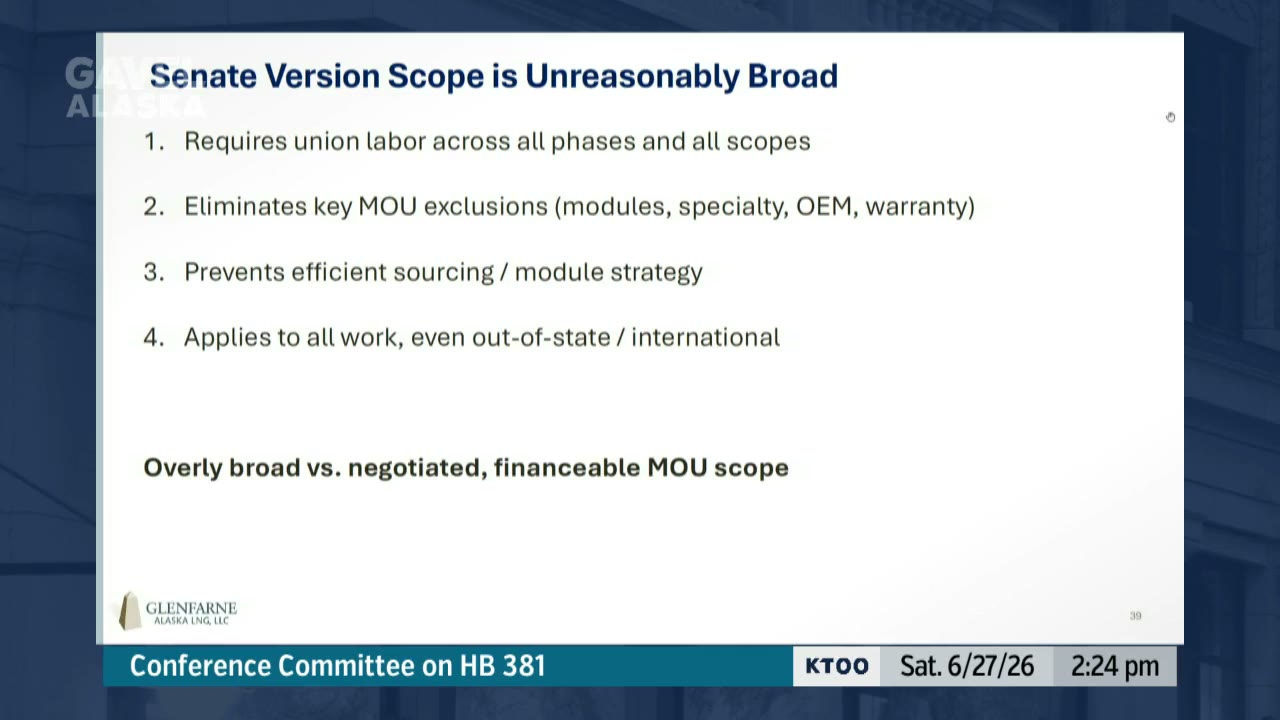
Adam Prestidge
“the scope of the amendment that was offered on the floor is very broad and doesn't reflect the careful discussion that the two parties worked on over the course of a 6-month negotiation and doesn't reflect the level of detail and complication that goes into labor planning for a mega project like this. And so I talked at the outset a little bit about the scope, how there are some exclusions. Most of the— a significant part of the project is allocated to be worked on by labor unions. The amendment that was proposed removes all of that and simply says all phases, all scopes, all contractors, all subcontractors must sign a PLA.”Alaska Legislature: Joint Conference on HB381, 6/27/26, 2PM · Jun 27, 2026
Adam Prestidge
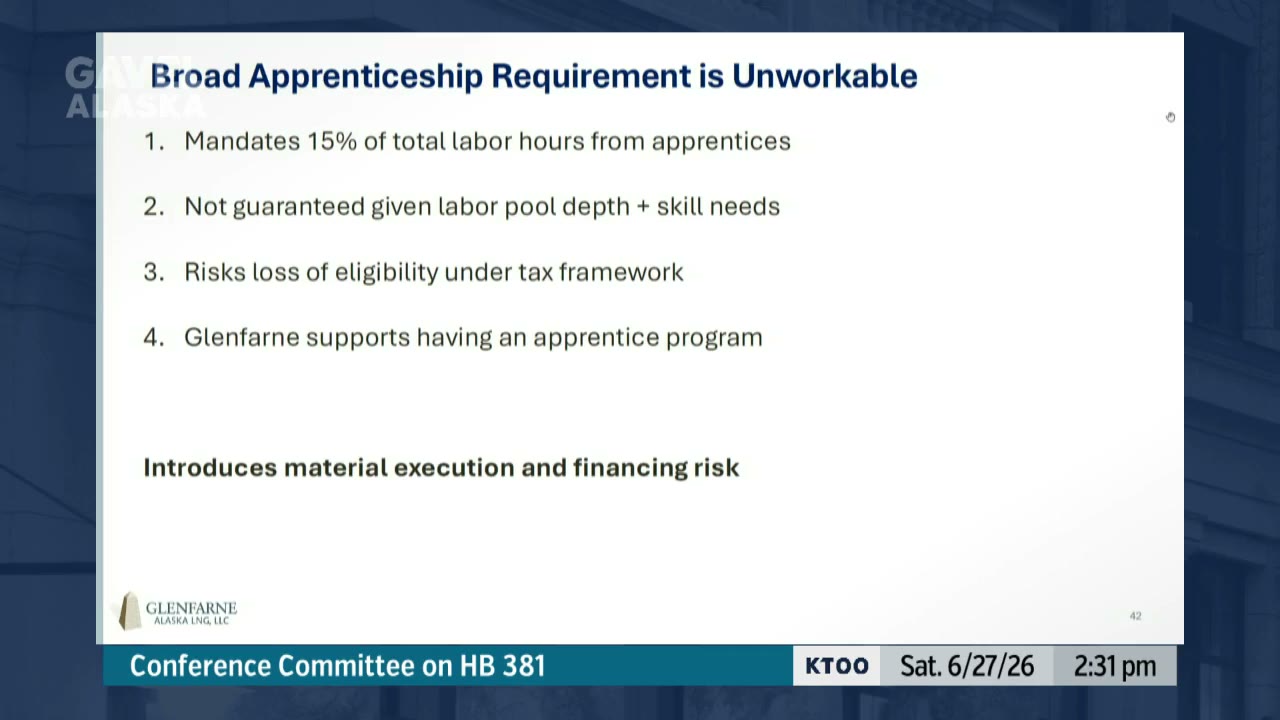
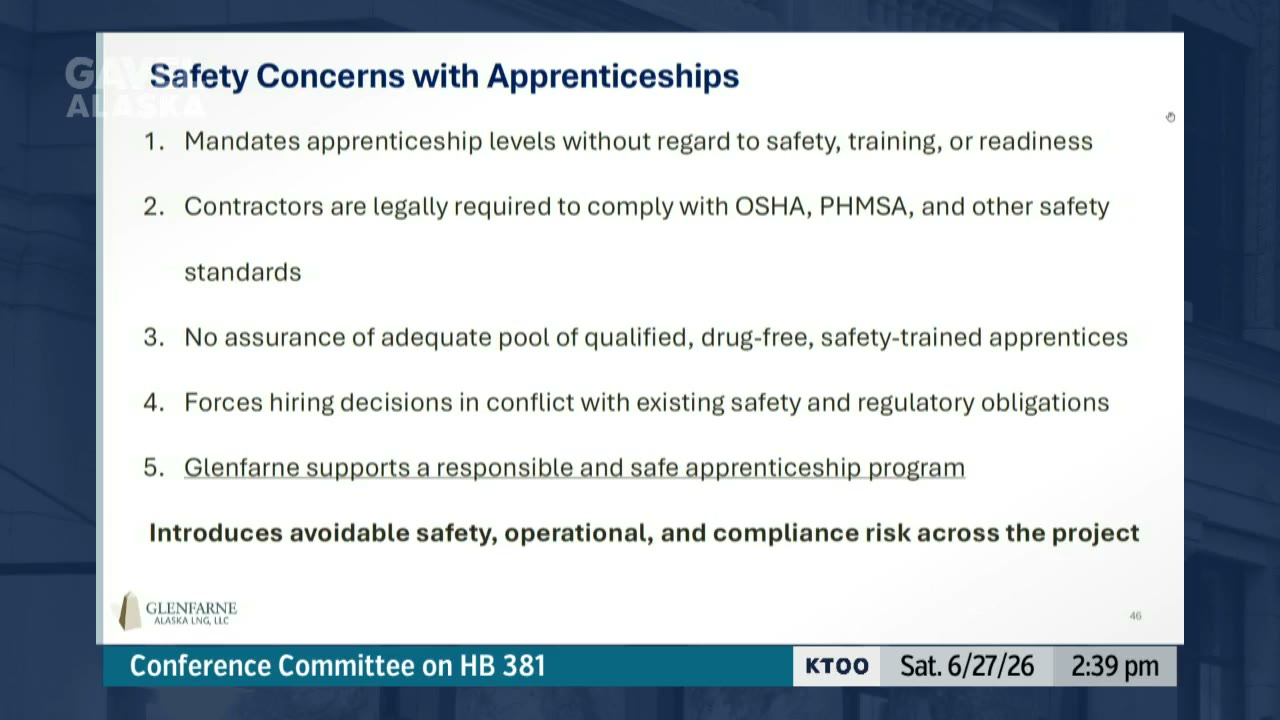
“having a bright line 15% requirement creates a lot— creates unworkable challenges for the project. First of all, there's no consideration in the amendment if there weren't available enough personnel to perform 15% of the hours as apprentices. It's just a flat requirement, 15% of the hours must be done by apprentices. And so the question would immediately come up, Well, if there weren't enough apprentices available to perform that much work, would we lose our tax eligibility?”Alaska Legislature: Joint Conference on HB381, 6/27/26, 2PM · Jun 27, 2026
Adam Prestidge
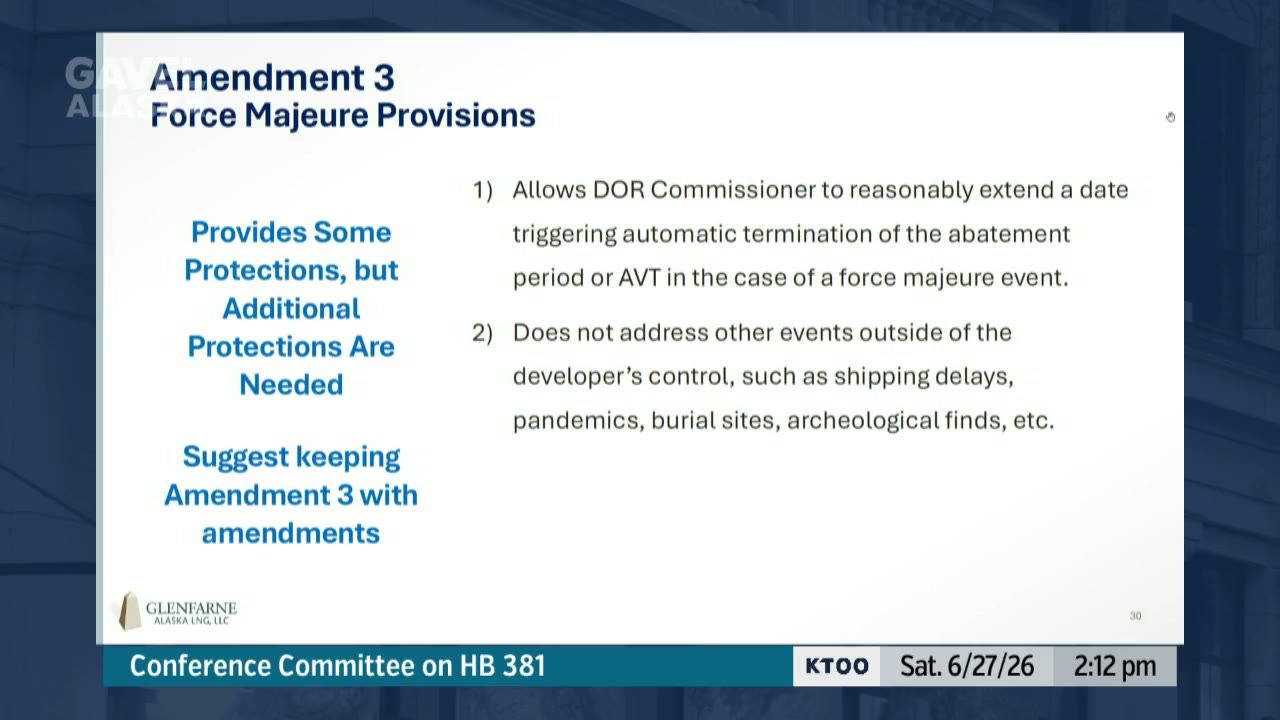
“It could be a little bit broader because force majeure is really kind of acts of God outside of the control of the project. There can be other delays to a project like this that wouldn't necessarily be picked up within a force majeure definition, such as archaeological finds or shipping delays. And so we'd advocate that it would be beneficial to the project to look at broadening that definition a little bit.”Alaska Legislature: Joint Conference on HB381, 6/27/26, 2PM · Jun 27, 2026
Adam Prestidge
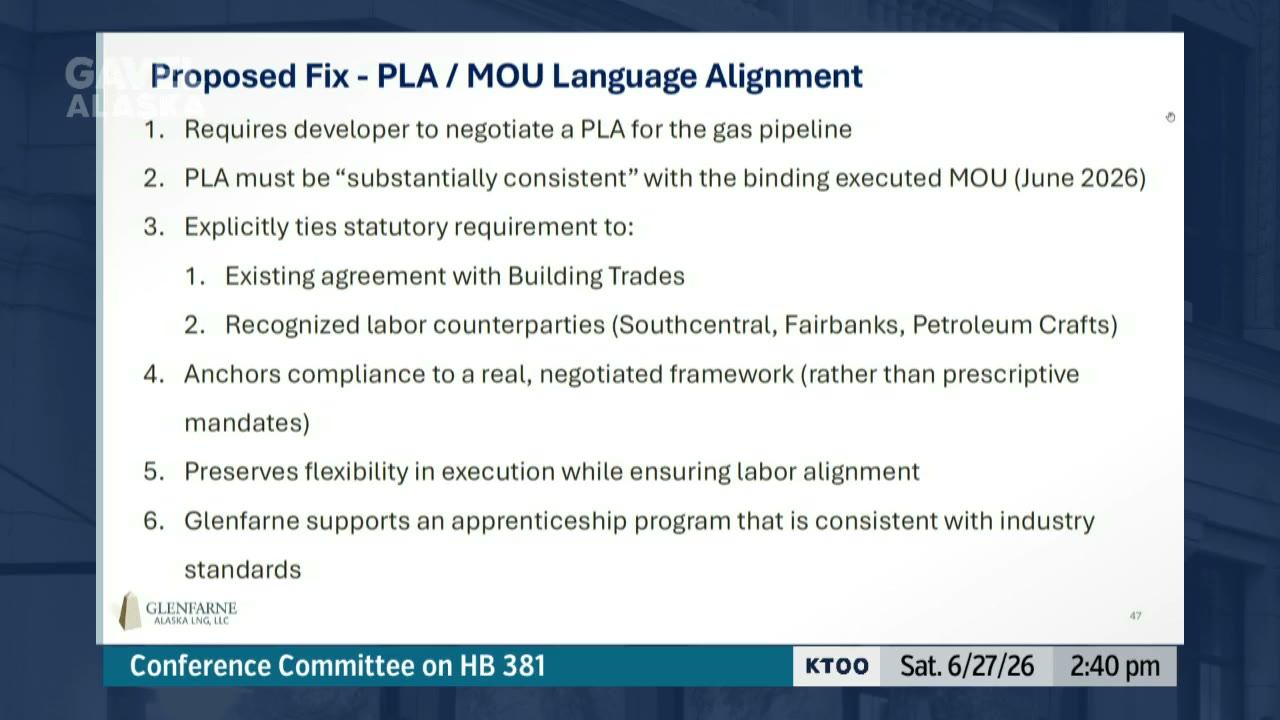
“On June 11th, uh, Glenn Fahren signed, executed, and announced a binding memorandum of understanding with the building trades councils from Fairbanks and Anchorage. And so, uh, what did that do? It set up a framework for future project labor agreements.”Alaska Legislature: Joint Conference on HB381, 6/27/26, 2PM · Jun 27, 2026
Adam Prestidge
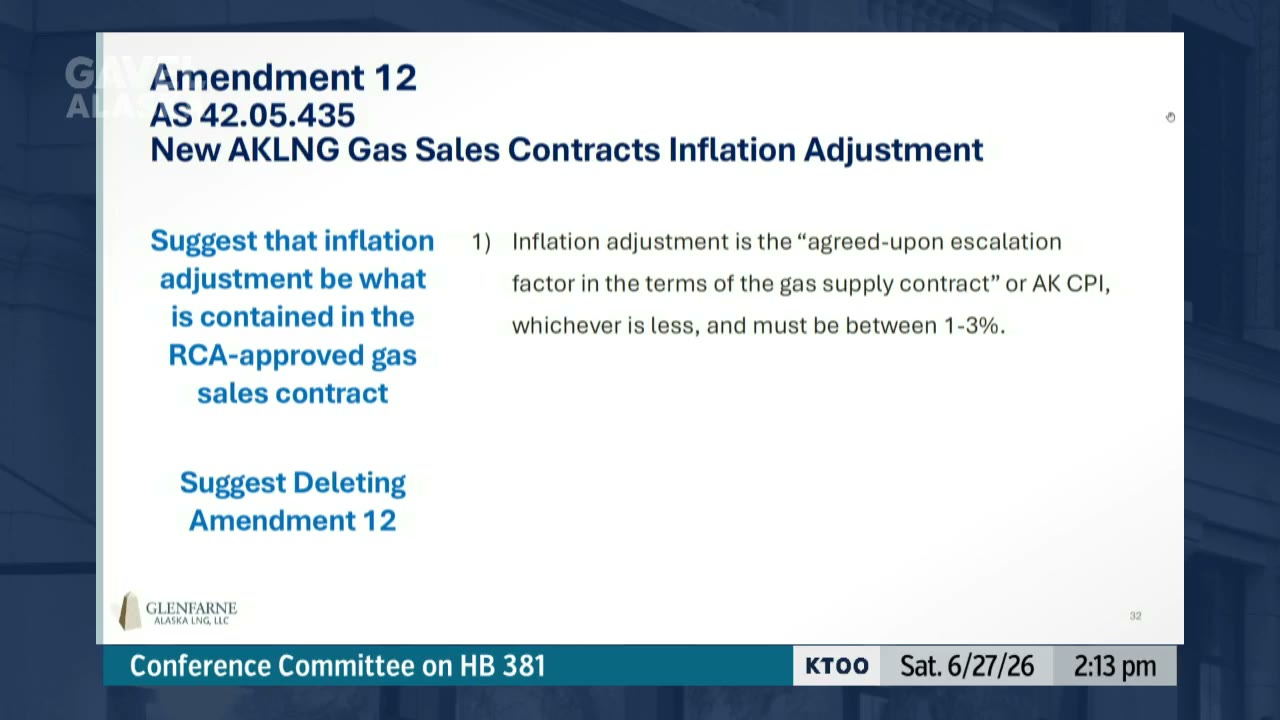
“Amendment 12 introduced Inflation language relating to the gas sales contracts from the pipeline to customers. Just to reiterate a bit of what we described earlier, this makes sense, but we'd suggest that it takes into account the inflation agreed between the project and the customer. That contract, of course, gets reviewed and approved by the RCA, and the project would not object to having a cap on that inflation of 3%. We just suggest that being US CPI, not Alaska CPI.”Alaska Legislature: Joint Conference on HB381, 6/27/26, 2PM · Jun 27, 2026
Adam Prestidge
“we'd be fully supportive of taking an additional step to have the bill, the legislation, require that the project establish an apprenticeship program that is consistent with industry standards and would be negotiated between the project and the appropriate labor unions”Alaska Legislature: Joint Conference on HB381, 6/27/26, 2PM · Jun 27, 2026
Adam Prestidge
“Putting this pass-through entity tax in the place where it would assign the pass-through entity tax of 9% at the LNG LLC level would be a unique burden on any project finance vehicle. Typically a project finance vehicle is set up as a pass-through entity and the upstairs shareholders pay tax on that because— so that they can all invest under their different arrangements.”Alaska Legislature: Joint Conference on HB381, 6/27/26, 2PM · Jun 27, 2026
Bryce Edgmon
“I guess I'll circle back for a third time to either Mr. Prestidge or Mr. Mahoney. Is this about opposition to the tax itself or is this about the need to fix it?”Alaska Legislature: Joint Conference on HB381, 6/27/26, 2PM · Jun 27, 2026
Bert Stedman
“on this amendment, the rate would be the highest in the country for states that don't have income tax. I think the other one is maybe 7% range or something like that, and this is a little over 9%.”Alaska Legislature: Joint Conference on HB381, 6/27/26, 2PM · Jun 27, 2026
Dan Stickel
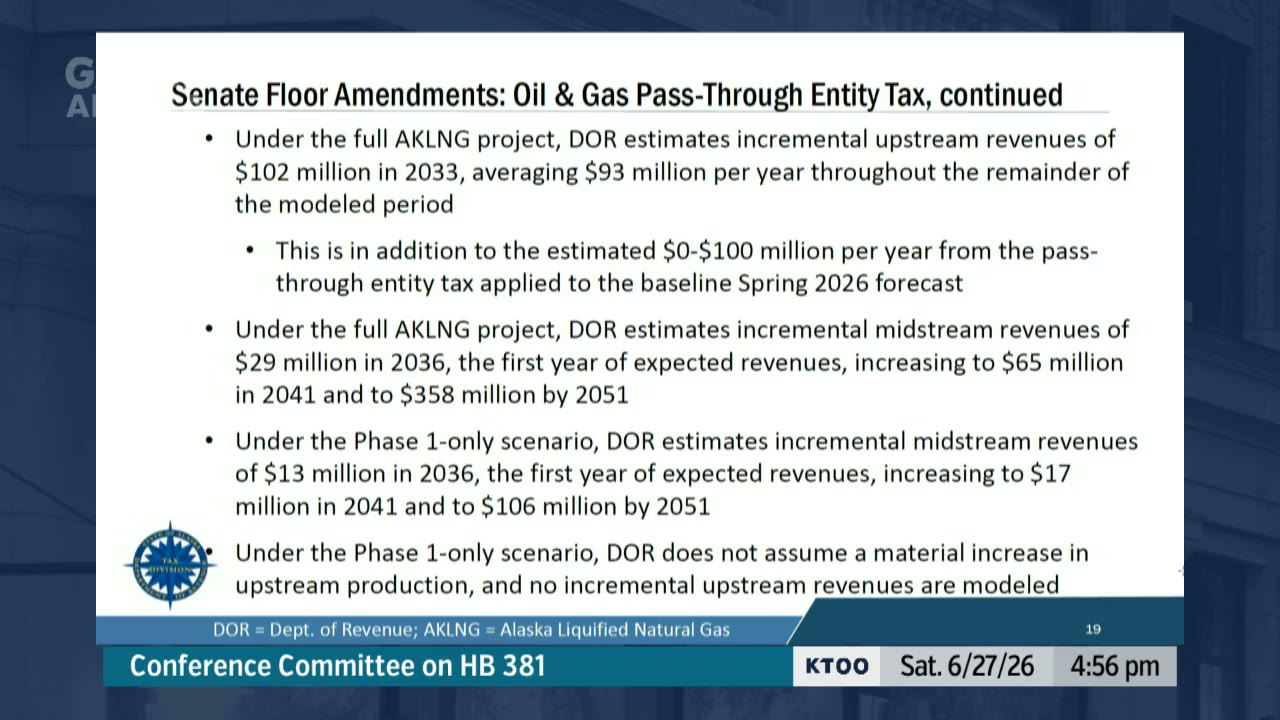
“We estimated under our baseline modeling first payments of the pass-through entity tax of $29 million in 2036, increasing to $65 million in 2041 and up to $358 million by 2051”Alaska Legislature: Joint Conference on HB381, 6/27/26, 2PM · Jun 27, 2026
Adam Prestidge
“our suggestion is that instead of having a broad amendment that dictates a few high-level principles about project labor agreements, we could instead legislate into law a requirement that the PLAs entered into will be substantially consistent with the binding MOU that was already executed between the project developer, between Glenfarm and the building trades councils.”Alaska Legislature: Joint Conference on HB381, 6/27/26, 2PM · Jun 27, 2026
Dan Stickel
“the reason that we present that as indeterminate in terms of state impact is that we don't know for certain whether the project goes forward. So to say with certainty that we— that if you enact this provision, we will get X dollars of revenue for a provision that we don't know with certainty whether the project will go forward, we've built on assumptions which are uncertain, and then there's the uncertain impact of implementation implementing this policy on the project. And we have heard concern from industry that it would affect their investment decisions.”Alaska Legislature: Joint Conference on HB381, 6/27/26, 2PM · Jun 27, 2026
Bryce Edgmon
“why wasn't this analysis done with other states? 99 Days later. You know, why on behalf of Alaska's interests did we not do the benefits? Because when I see these numbers, Alaska's PT, Proposed Rate, of 9.4% essentially tower over what other states that have non-elective taxes.”Alaska Legislature: Joint Conference on HB381, 6/27/26, 2PM · Jun 27, 2026
Adam Prestidge
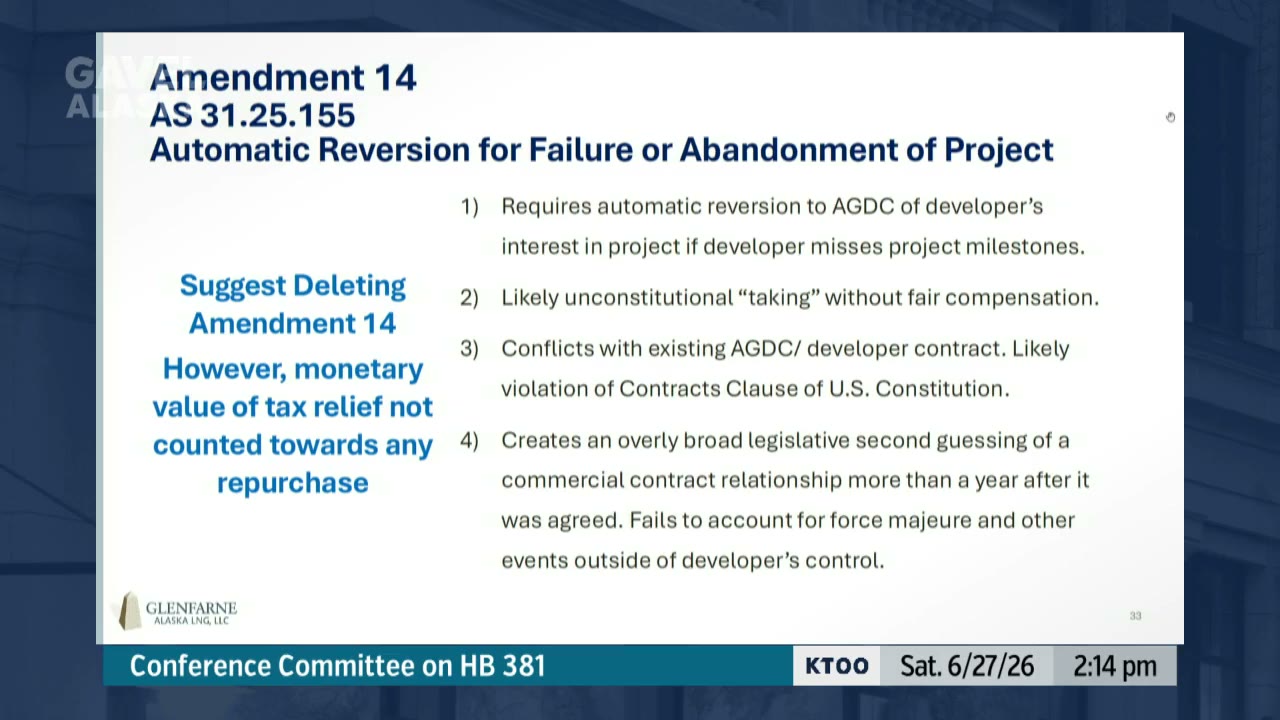
“Amendment 14, uh, um, Summarizing, relates to the state's clawback option, which we discussed at some length in the hearing yesterday. It basically takes the carefully negotiated arrangement between Glenfarm and AGDC and removes all of the, I guess, the careful considerations around it and institutes an automatic reversion to the state with no compensation to, to the developer in the event that a milestone is lapsed. It's— we'd view that as extremely punitive to the project. Our legal counsel advises us that that could potentially qualify as an unconstitutional taking and potentially a violation of the Contracts Clause of the U.S. Constitution and would severely hinder the developer's ability and willingness to continue to operate in the state of Alaska.”Alaska Legislature: Joint Conference on HB381, 6/27/26, 2PM · Jun 27, 2026
Adam Prestidge
“Amendment 3 provided force majeure allowance, basically that if there is a date, a deadline for the project, it can be reasonably extended by the Department of Revenue Commissioner in the event of a force majeure. That is a helpful addition. It is good for the project.”Alaska Legislature: Joint Conference on HB381, 6/27/26, 2PM · Jun 27, 2026
Adam Prestidge
“Representative Rutherford, through the chair, that's exactly correct. It's another reason why we would make the argument that this isn't necessary, because the bill already had a very clear requirement requiring a project labor agreement for the project.”Alaska Legislature: Joint Conference on HB381, 6/27/26, 2PM · Jun 27, 2026
Adam Prestidge
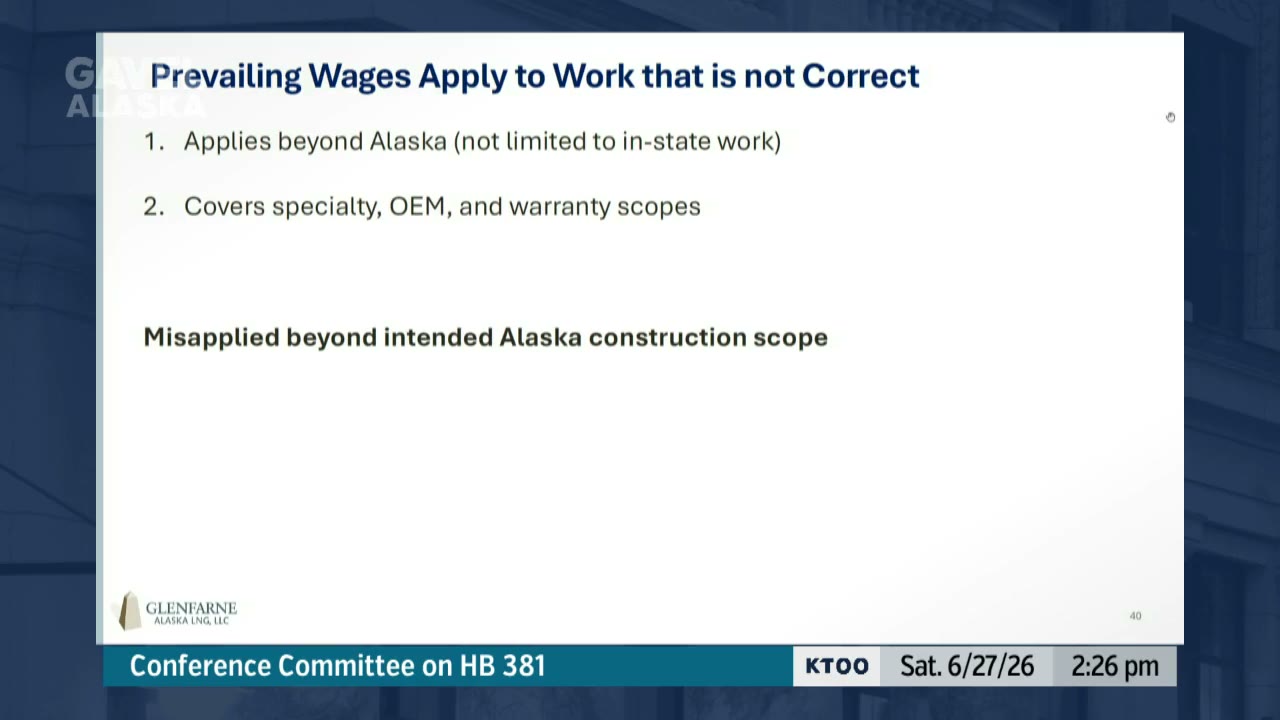
“if we take the example of some of the offsite fabrication that could be done internationally, paying Alaska prevailing wages at a fabrication yard in Korea, for just one example, doesn't make any sense and wouldn't be economically viable for the project.”Alaska Legislature: Joint Conference on HB381, 6/27/26, 2PM · Jun 27, 2026
Adam Prestidge
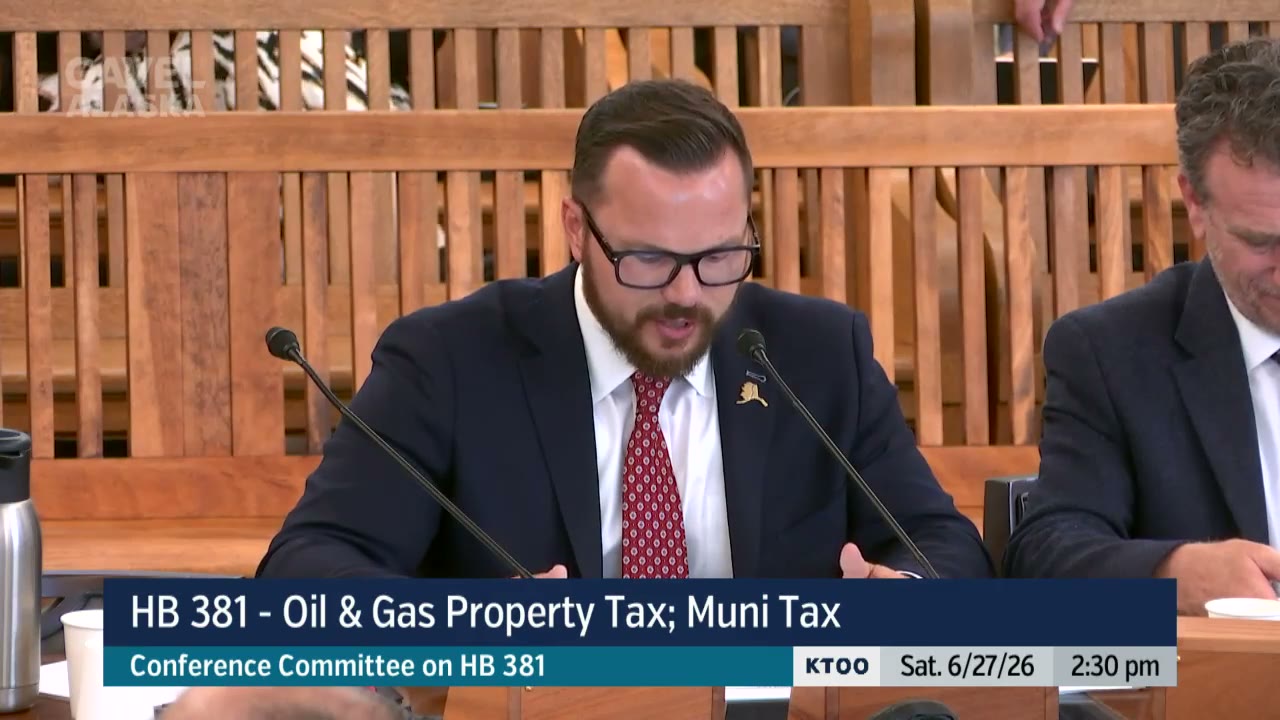
“the language of the amendment says 15 hours— 15% of all hours across the project must be performed by apprentices. I want to be totally clear, we are fully supportive of having an apprenticeship program on the Alaska LNG Project. We think it's fantastic. We want to be part of building a workforce for Alaska.”Alaska Legislature: Joint Conference on HB381, 6/27/26, 2PM · Jun 27, 2026
Adam Prestidge
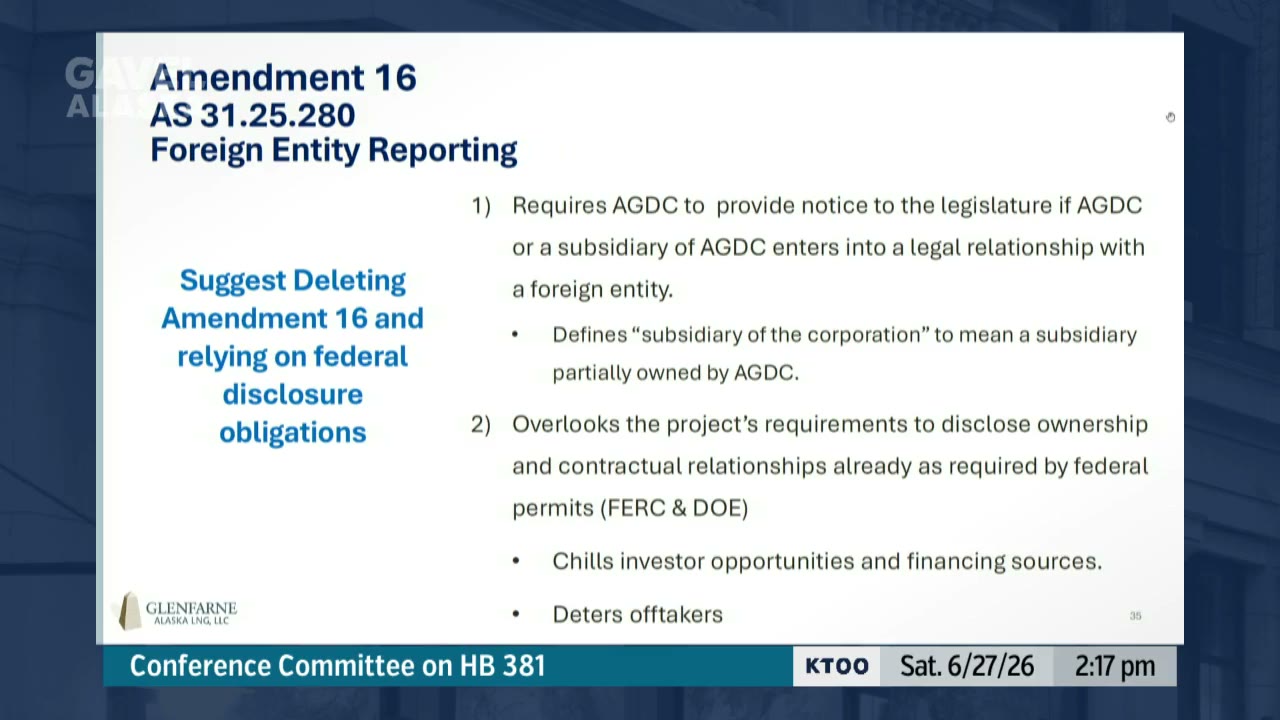
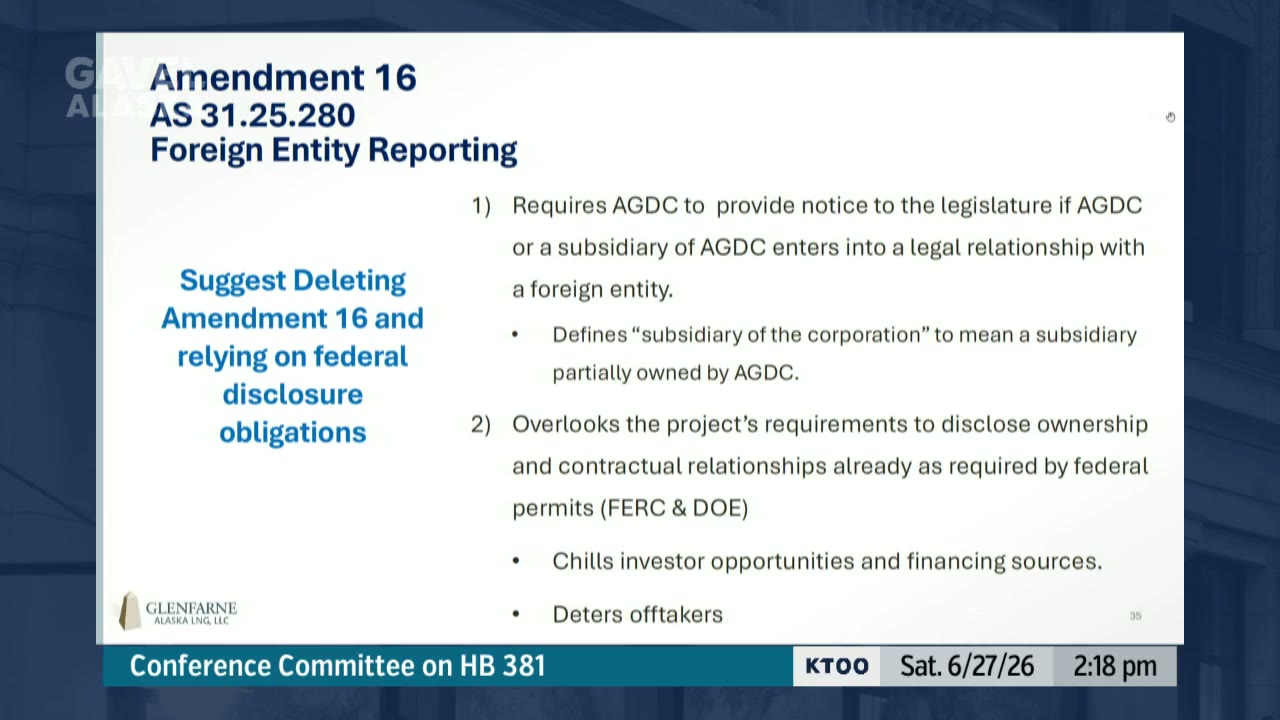
“Amendment 16 requires notification of any relationship with a foreign entity. That goes significantly beyond, beyond just ownership. It's really any contract, any joint venture, any type of agreement. That type of disclosure requirement would be unique and burdensome and would be a deterrent to counterparties potentially from wanting to be associated with the project, recognizing that they wouldn't have any commercial confidential protections.”Alaska Legislature: Joint Conference on HB381, 6/27/26, 2PM · Jun 27, 2026
Adam Prestidge
“as it stands, Amendment 16 would really chill off-takers and investors in the project.”Alaska Legislature: Joint Conference on HB381, 6/27/26, 2PM · Jun 27, 2026
Adam Prestidge
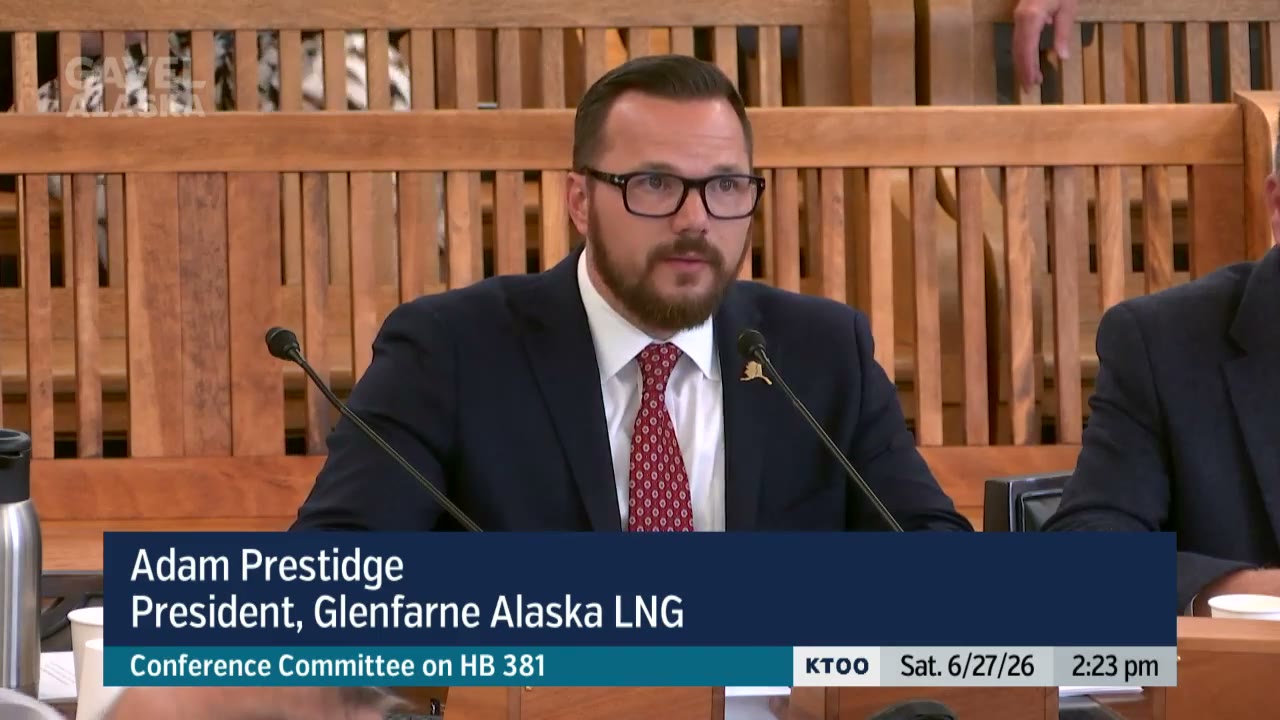
“This labor MOU was negotiated on a very careful, very intensive basis. A lot of time, a lot of meetings, a lot of people involved in a 6-month negotiation process to reach an agreement that worked for both sides.”Alaska Legislature: Joint Conference on HB381, 6/27/26, 2PM · Jun 27, 2026