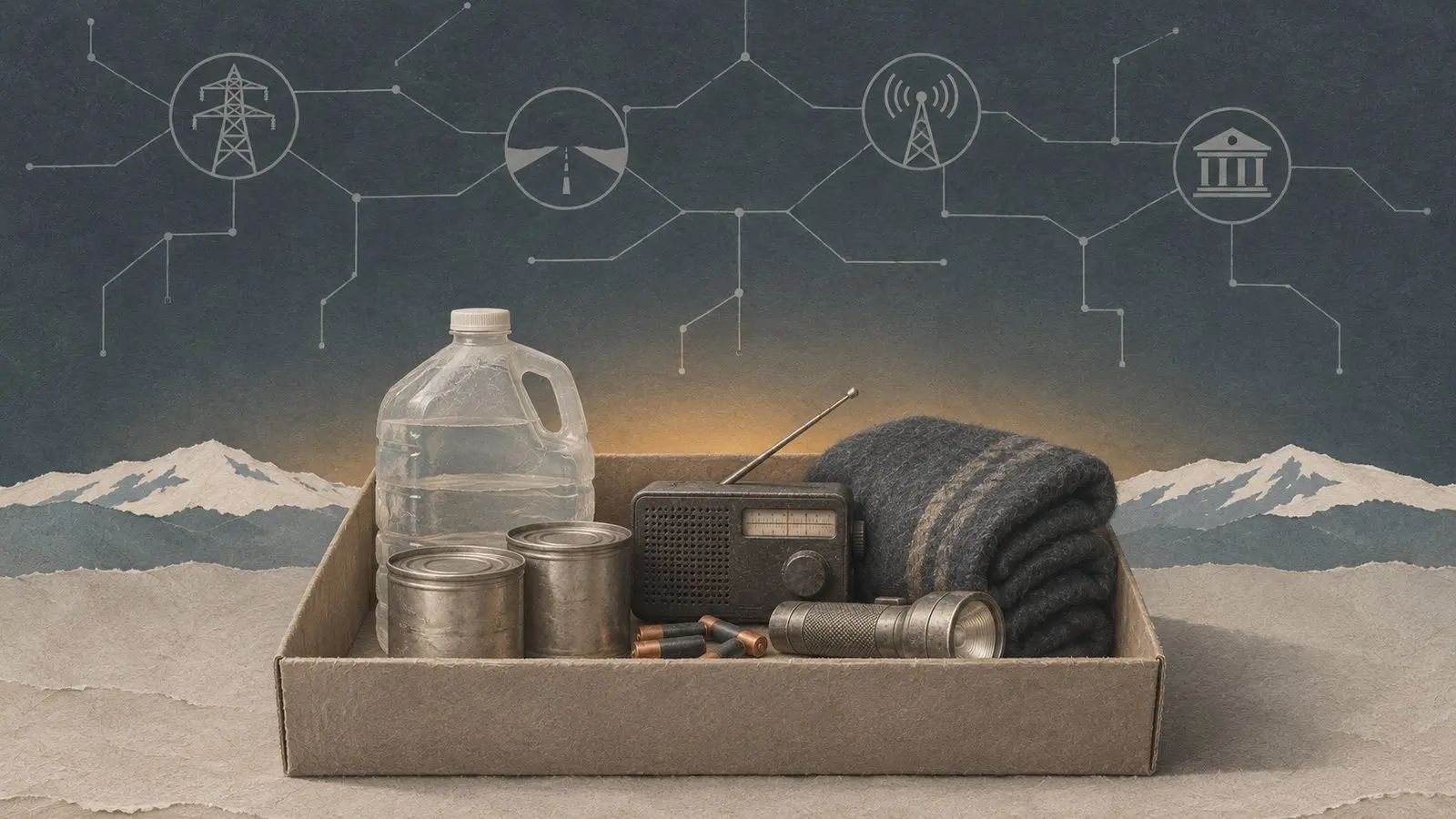
AI generated image
Wielechowski flags an FBI alert on an AI tool used to automate hacks
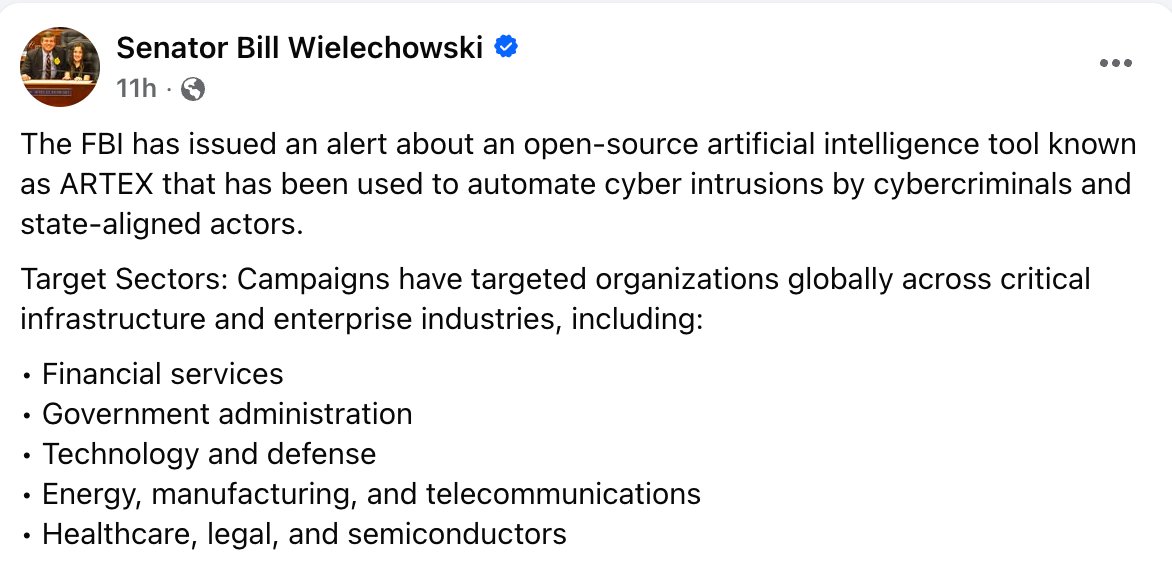
State Sen. Bill Wielechowski, an Anchorage Democrat, flagged an FBI alert on Facebook on Tuesday about an open-source artificial intelligence tool that, he wrote, has been "used to automate cyber intrusions by cybercriminals and state-aligned actors."
His post followed a week of outages that grounded flights nationwide, slowed transactions at JPMorgan Chase and delayed United Airlines departures. Neither his post nor the FBI's alert ties the tool to those failures. Federal officials said Tuesday that the available evidence did not connect the outages or point to a common malicious actor, as reported by the Associated Press.
In Alaska, the state's emergency operations center was at its routine level Tuesday, and no national terrorism advisories were in effect, according to the Division of Homeland Security and Emergency Management's daily situation report. The division's standing advice to households goes beyond the federal government's 72-hour minimum: build from three days of food, water and other supplies toward two weeks.
The tool, ARTEX, was built for automated security testing. The FBI says malicious actors have used it since at least August against financial services, government, technology, defense, energy, health care, manufacturing, telecommunications, legal and semiconductor organizations, the sectors Wielechowski listed in his post.
Some of those intrusions went from initial targeting to privileged access in under three hours, and the tool lets attackers with little technical expertise run complex operations against several targets at once, the FBI said.
The FAA, Chase, United and Apple have each described a technical cause for their outages and said they saw no sign of a cyberattack. The FAA said data flooding its legacy telecommunications network on Friday destabilized radar feeds and aircraft communications at 17 of its 22 air route traffic control centers. Its initial investigation pointed to two sites in Texas and Arkansas, including one where its contractor had been installing a new router.
Chase blamed an internal software bug. Microsoft, Marriott and a classified National Security Agency communications network also had problems around the same time.
A nationwide Emergency Alert System test interrupted radio and TV programming Tuesday morning. The Federal Communications Commission announced it in September, before the outages.
The state's emergency operations scale lists cybersecurity incidents alongside severe weather, wildfires and volcanic activity. Significant cyberattacks can raise it to Level 3. Widespread breaches affecting critical infrastructure can raise it to Level 4, the highest, with major floods, tsunamis and earthquakes.
For households, the state breaks its two-week goal into steps. "Using a stepped method, we encourage people to become self-sufficient for 3 days (Good) then move up to 7 days (Better) then up to 2 weeks (Best)," Bryan Fisher, the division's director at the time, said in a 2021 release.
Most of what Alaskans eat comes from somewhere else. The state imports 95% of its food, Gov. Mike Dunleavy's office said in 2022 when he created a food security task force. "One of the lessons the pandemic taught us is how vulnerable Alaska could be if the regularly scheduled shipments of food shipped up from Seattle were to suddenly stop – even a few days," Dunleavy said.
About 90% of consumer goods entering Alaska pass through the Port of Alaska in Anchorage, according to the state Department of Transportation and Public Facilities. Roughly 82% of Alaska communities aren't connected to the road network and rely mainly on air or marine transportation, the department says.
Heat and power have their own risks. Enstar Natural Gas, which heats 157,000 homes and businesses in Southcentral, told legislators in August it was about 18 days short of gas for this winter. Matanuska Electric Association has since laid out how rolling outages would work if the region ran short, though it calls them extremely unlikely.
The Railbelt grid, which serves about three-quarters of Alaskans from Fairbanks to the Kenai Peninsula, is getting its first mandatory cybersecurity standards. They phase in from 2027 through 2029.
Governments in Europe have issued similar advice. The European Union's preparedness strategy calls for guidelines to make people self-sufficient for at least 72 hours. Sweden's government wants everyone to be able to meet their basic needs in a crisis or war for at least a week without help, its civil defense agency says, "because society's resources are not enough for everyone at the same time."
The state's kit list includes a gallon of water per person per day, shelf-stable food, regular medications, a first-aid kit, a flashlight, extra batteries and a radio that receives weather alerts. It also lists cash in case electronic banking is down, warm clothing for every family member and a safe indoor heat source with fuel.
Two weeks of water alone means 14 gallons per person. The division says that shouldn't stop anyone from starting. "Assembling any amount of emergency supplies is a good start," its release says. "Alaskans should not be discouraged if they do not have the time, space, or money to assemble a two-week kit."
What did you make of this story? (no account needed)
Keep Alaska News free for everyone.
No paywall, ever. Members pay so everyone can read the meetings and records Alaska News covers.
Get Alaska News in your inbox
Create your free account and get the day’s top stories around 6 each morning, in a few minutes’ read.
Top stories, around 6 each morning.
Stories on what you follow, on Sundays.










Comments
Sign in to leave a comment.
No comments yet. Be the first to share your thoughts.