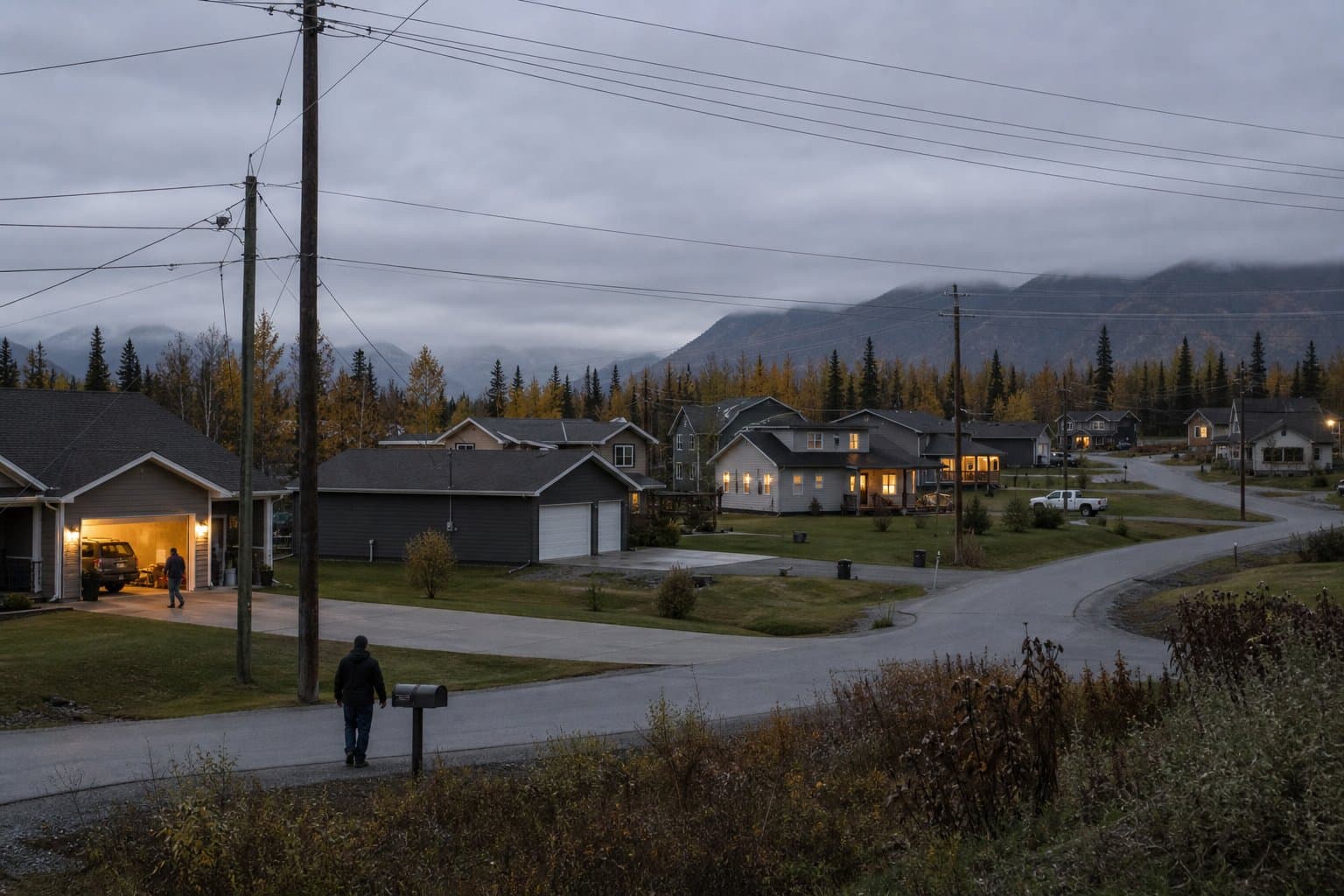
AI image
MEA lays out how rolling outages would work if Southcentral runs short of gas this winter
If Southcentral Alaska runs short of natural gas this winter, Matanuska Electric Association members could lose power for 30 to 45 minutes at a time, with their turn coming back around every few hours, under a plan the co-op laid out this week.
MEA says rolling outages would come only after every other option had run out, and it calls them extremely unlikely. Hospitals and other critical facilities would be exempt.
Under the plan, MEA's members across the Mat-Su Valley and Eagle River are split into nine groups. Each group would lose power for about 30 to 45 minutes, and MEA's two descriptions of the plan put the wait before the same group could be cut again at about four and a half to five hours. Members would learn their group and the rotation schedule on MEA's website and through member messages if the plan were activated. MEA says it would post alerts on its website and Facebook page, email members and staff its phone lines, and it is asking members to make sure their contact information is up to date.
MEA chief executive Tony Izzo described the approach at a Municipality of Anchorage press conference in late July. He said outages would be kept short, "on a 30-minute cycle because that's a heating cycle."
The risk comes from how much of the region runs on the same fuel. Most of MEA's electricity is generated with natural gas, and Enstar Natural Gas uses it to heat homes across Southcentral. Enstar president John Sims told legislators Aug. 20 that the utility was about 18 days' worth of gas short for a normal winter. He said deals it was negotiating to borrow gas from MEA and Chugach Electric would still leave it short. In a pinch, Izzo said in July, MEA may turn its own gas over to Enstar to keep homes heated.
MEA's new explainer, posted Sept. 24, lays out what would come before any outage. Utilities would first watch conditions and issue Energy Watch alerts asking people to cut back on power, especially at peak hours. They would lean on hydropower and buy electricity from Interior Alaska. MEA would then switch its Eklutna Generation Station from gas to diesel. The plant can run fully on diesel for up to three days from fuel stored on site, and MEA says more deliveries would begin right away. Rolling outages are the sixth and last step, and MEA says every Railbelt electric utility would take part, not MEA alone.
"Rolling power outages are not the first response to a natural gas supply concern," MEA wrote.
MEA says it has secured all the gas it needs for its own members this winter. If Enstar asks the co-op to burn diesel so more gas can go to heating, MEA says Enstar would reimburse it for the extra fuel.
Energy Watch is a green, yellow and red alert system covering Anchorage, the Mat-Su and the Kenai Peninsula. It dates to 2009, when the Municipality of Anchorage and the region's utilities set it up to ask people to conserve if gas deliveries ran low. MEA's Energy Watch page lists what members can do at each level.
Source: Matanuska Electric Association, Matanuska Electric has published what a rolling blackout would look like: 30 to 45 minutes at a time, nine groups. Its two pages disagree on how soon your turn comes round again, and neither tells you which group you are in. ().
Drafted with AI. Edited by Cale Green (1 revision). Reviewed by Cale Green. Who is accountable.
Stay informed. Support what matters.
Free, permanent access to local news you can verify. Subscribe to support Walter AlaskaNews and go ad-free.
Related Coverage
Utility warns of rolling blackouts in Southcentral as soon as this winter
Alaska News · 1mo ago
Fairbanks' utility is writing down when it would start turning off your power
Alaska News · 3w ago
MEA seeks new power supply as its Hilcorp gas contract winds down
Alaska News · 2d ago
MEA seeks RCA approval to pass gas storage costs to ratepayers
Alaska News · 3mo ago
Matanuska Electric goes on taproom tour as members absorb rising rates and a looming gas cliff
Alaska News · 1mo ago
Comments
Sign in to leave a comment.
No comments yet. Be the first to share your thoughts.