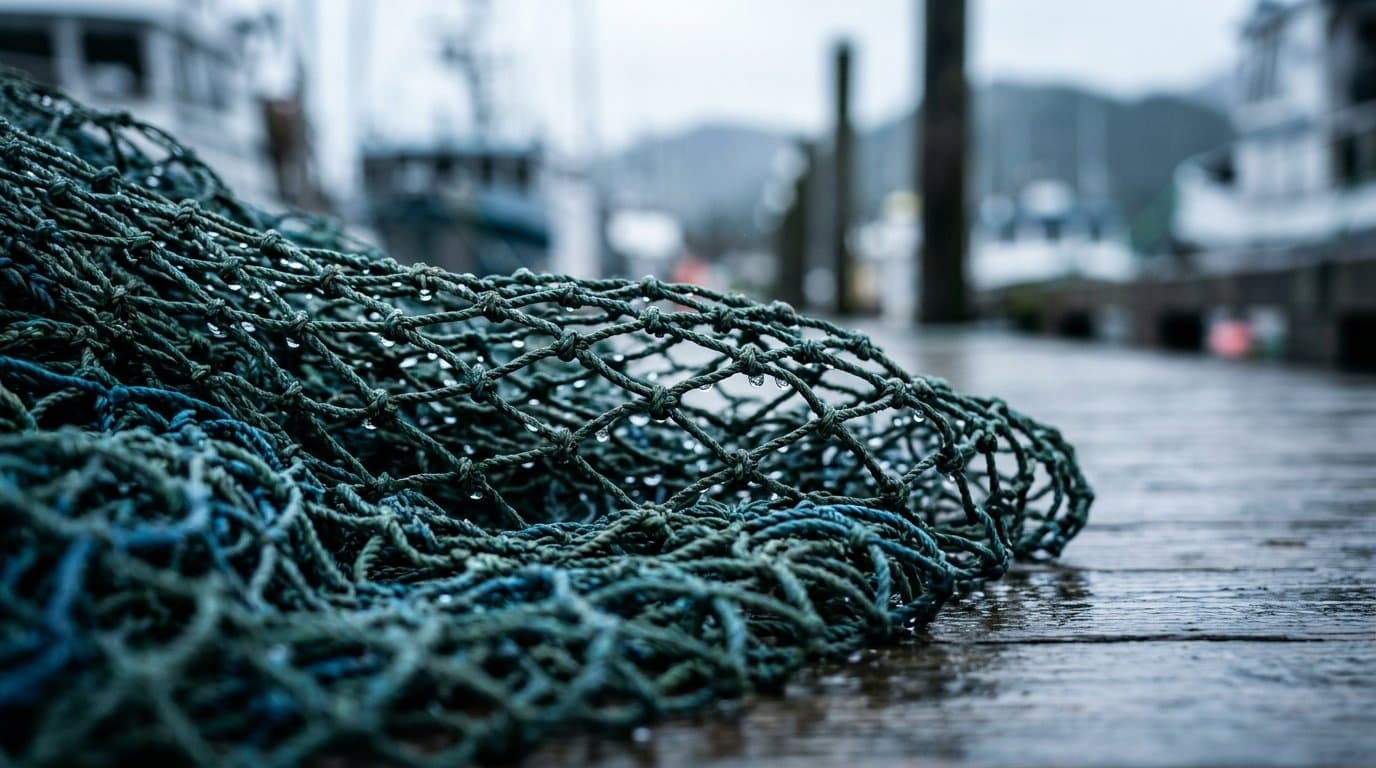
AI image
White House seafood plan promises 'U.S. Caught' label and a review of boat rules
The Trump administration released a national seafood strategy Oct. 23 that promises a voluntary "U.S. Caught Seafood" label and, within nine months, proposed rules aimed at making it easier for fishermen to replace aging boats.
The strategy doesn't name any U.S. state, Alaska included. The White House fact sheet released with it does. It says the plan encourages investment in processing jobs "such as those that provide the primary source of income to hundreds of rural Alaska communities," and it singles out Maine lobster.
The label would go on seafood caught by American commercial fishermen on U.S.-flagged vessels under U.S. fisheries management. It would add to country-of-origin labeling, not replace it. Two versions, "U.S. Caught Seafood" and "Made with U.S. Caught Seafood," are already available to download on Seafood.gov, a new federal website.
The Food and Drug Administration has issued nonbinding draft guidance on U.S.-origin seafood labels and asks for comments by Dec. 13. Under the draft, "U.S.-Caught" would fit fish caught in U.S. waters or by U.S.-flagged vessels. "USA Seafood" would mean the fish was caught, processed and sold in the United States. "Made with U.S.-Caught Seafood" could go on products made with U.S.-caught fish that was exported for processing.
The vessel review targets rules that keep fishermen in older boats because a replacement "could jeopardize permits, endorsements, eligibility, vessel characteristics, or other regulatory qualifications," the strategy says. NOAA will also look at its Capital Construction Fund to make it easier for fishermen to reinvest their earnings in American-built boats.
The strategy doesn't say which fisheries' rules the vessel review would reach. For the North Pacific, NOAA's priorities under the same executive order are to review Steller sea lion closure boundaries, "remove unnecessary requirements" and "increase flexibility," the agency said in a July release.
In early October, trawl groups asked the North Pacific Fishery Management Council to study shrinking those closures. Two conservation groups opposed a review, a Kuskokwim tribal fish commission warned against rolling back protections, and the council took no vote.
On trade, the strategy says Japan's tariffs of up to 10% and its import quotas put U.S. seafood at a disadvantage. Japanese buyers have expressed frustration that tariffs on Alaska seafood match those on Russian seafood, according to the Alaska Seafood Marketing Institute.
The strategy also calls the European Union's CATCH scheme a persistent barrier with "burdensome documentation and reporting requirements." The EU has been Alaska's largest direct trading partner for seafood by value since 2022, and Alaska seafood groups called CATCH a trade barrier in September.
The strategy doesn't mention Russia or China. Imports of Russian seafood have been banned since 2022. In December 2023, the ban was expanded to cover Russian salmon, cod, pollock and crab processed in other countries.
The strategy creates no new spending programs, according to Seafood.gov, and says its success "should not be measured by the amount of federal money spent." The White House paired it with more than $5 billion in USDA-guaranteed loans for meat, poultry and seafood processors, which seafood processors can now seek.
Source: The White House, White House seafood strategy offers a voluntary "U.S. Caught" label and a vessel-rule review, and never names Alaska, Russia or China.
Made by our human newsroom with AI. Reviewed by Cale Green. How humans and AI work here · Grow with our newsroom
Get Alaska News in your inbox
The day’s top stories, around 6 each morning, in a few minutes’ read. Free, and every email has a one-click unsubscribe.










Comments
Sign in to leave a comment.
No comments yet. Be the first to share your thoughts.