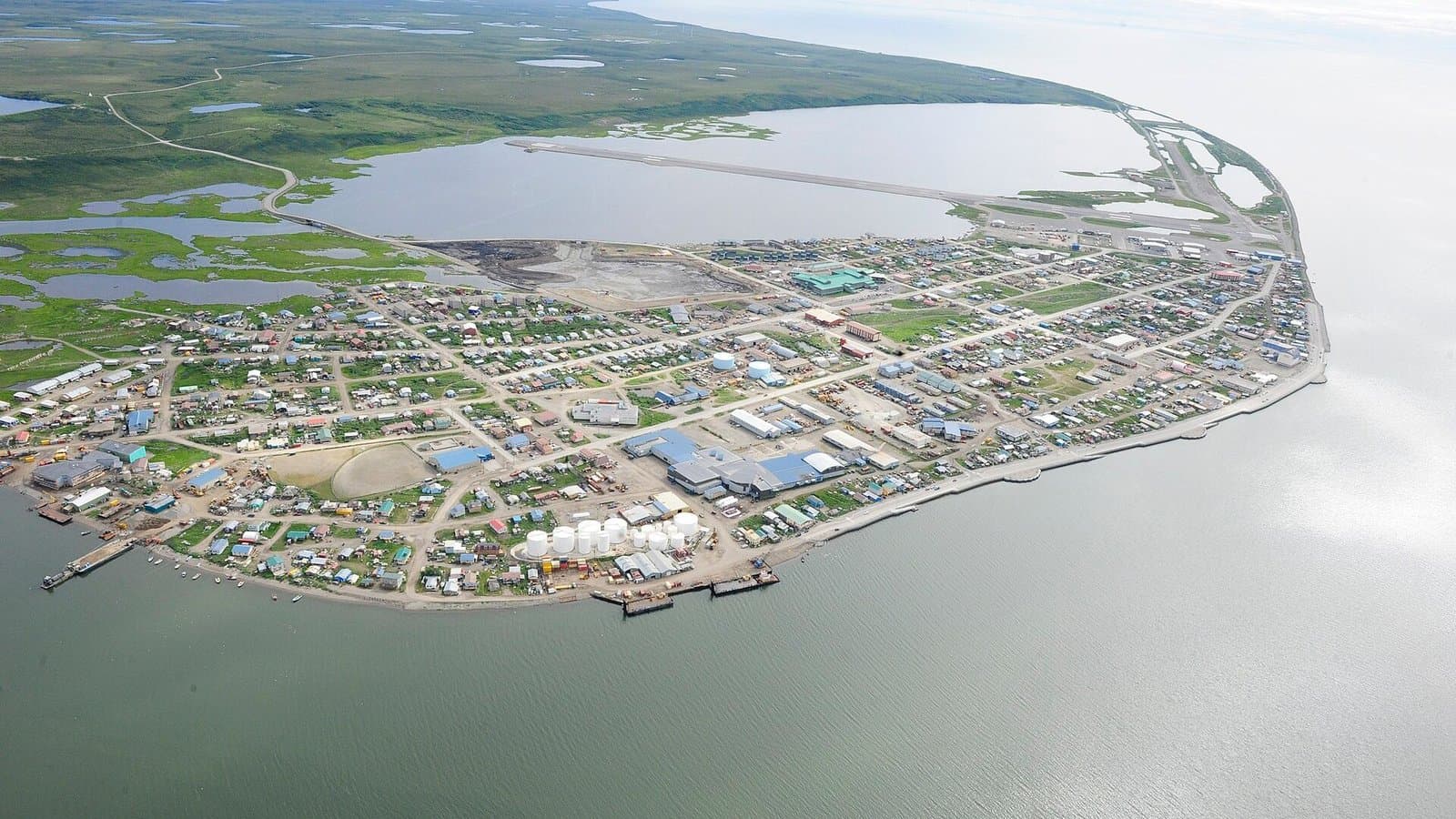
Photo: Petty Officer 1st Class Shawn Eggert via Wikimedia Commons · Photo source · Public domain
Teachers sponsored for green cards could owe Northwest Arctic schools up to $20,000
The Northwest Arctic Borough School District has drafted an agreement that would require employees it sponsors for green cards to repay the district up to $20,000 if they resign or are fired for cause within three years of becoming permanent residents.
The Kotzebue-based district employs 37 people on H-1B work visas and 20 on J-1 exchange visas, and all 37 H-1B holders have expressed interest in getting green cards, Human Resources Director James Stewart wrote in a report to the school board. Each would have to sign the agreement before the district begins sponsoring them, he wrote.
The board reviews the agreement at a work session in Kotzebue on Tuesday, Nov. 24, according to the agenda and packet. It isn't up for a vote.
H-1B status is generally limited to six years; a green card would let a teacher stay past that. Of Northwest Arctic's 37 H-1B holders, 17 are in their fourth year and 19 are in their third, Stewart's report says.
Alaska is "relying heavily on international teachers," according to testimony at a legislative hearing Nov. 12, which put the statewide count at 267 teachers on H-1B visas and 204 on J-1 visas, with 311 teacher vacancies on the first day of school. Kodiak's school district approved another $100,000 in September for lawyers to help its international teachers get green cards.
Under the draft, the district would act as the employee's immigration sponsor. The employee would agree to keep working for the district while on a district-sponsored work visa and, if the district pursues a green card, for three years after becoming a permanent resident, while keeping up "acceptable performance levels."
An employee who resigns or is fired for cause would owe less the longer they stay:
After a work visa the district sponsors: $10,000 in the first year, $7,500 in the second, $5,000 in the third and nothing after three years
After becoming a permanent resident: $20,000 within six months, $17,500 at six to 12 months, $15,000 at 12 to 18, $12,500 at 18 to 24 and $10,000 at 24 to 36 months
The agreement calls the payments liquidated damages and says they approximate what the district loses when an employee stops working. They can't include the legal fees for the H-1B or labor certification steps, which the agreement says Department of Labor regulations exclude.
The payments apply only to resignations and firings for cause. The agreement defines cause by the district's union contract and lists examples such as misconduct, insubordination, habitual lateness and intoxication on duty. If the district fires an employee without cause or fails to meet its sponsorship obligations, the employee owes nothing.
To collect, the district could deduct as much as state rules allow from the employee's final paycheck. It could also sue and recover attorney's fees and costs if it wins.
The draft also has a confession of judgment clause, printed in capital letters, under which the employee would authorize a court judgment against themselves in advance. "BY SIGNING THIS PAPER YOU GIVE UP YOUR RIGHT TO NOTICE AND COURT TRIAL," it warns. "IF YOU DO NOT PAY ON TIME, A COURT JUDGMENT MAY BE TAKEN AGAINST YOU WITHOUT YOUR PRIOR KNOWLEDGE."
Maine law would govern the agreement, it says.
The district doesn't promise that an employee will get or keep visa status or a green card, the draft says, and decisions on whether to sponsor anyone for a particular immigration benefit stay entirely with the district.
The agreement doesn't set a term of employment. The union contract still governs employment and wins out where the two conflict, and either side can end employment at any time under district policies.
A cost sheet in the packet from the Alaska Educator Retention and Recruitment Center prices a standard case at $4,250 for labor certification, known as PERM; $1,950 for the employer's I-140 petition; $1,950 for the employee's I-485 application; and a $2,000 support fee.
Employers must pay the PERM costs, and most also pay for the I-140, the sheet says; employees typically pay for the I-485. PERM alone takes an estimated 18 to 24 months.
In June, a federal judge in Massachusetts vacated Trump administration actions requiring a $100,000 payment for new H-1B visa petitions, a fee Alaska lawmakers and school officials had said threatened rural teacher hiring.
What did you make of this story? (no account needed)
Made by our human newsroom with AI. Reviewed by Cale Green. How humans and AI work here · Grow with our newsroom ·
Get Alaska News in your inbox
Create your free account and get the day’s top stories around 6 each morning, in a few minutes’ read.
Top stories, around 6 each morning.
Stories on what you follow, on Sundays.
Source: Northwest Arctic Borough School District.












Comments
Sign in to leave a comment.
No comments yet. Be the first to share your thoughts.