AI image
State testing finds little or no PFAS in Alaska marine fish, with one exception for pollock
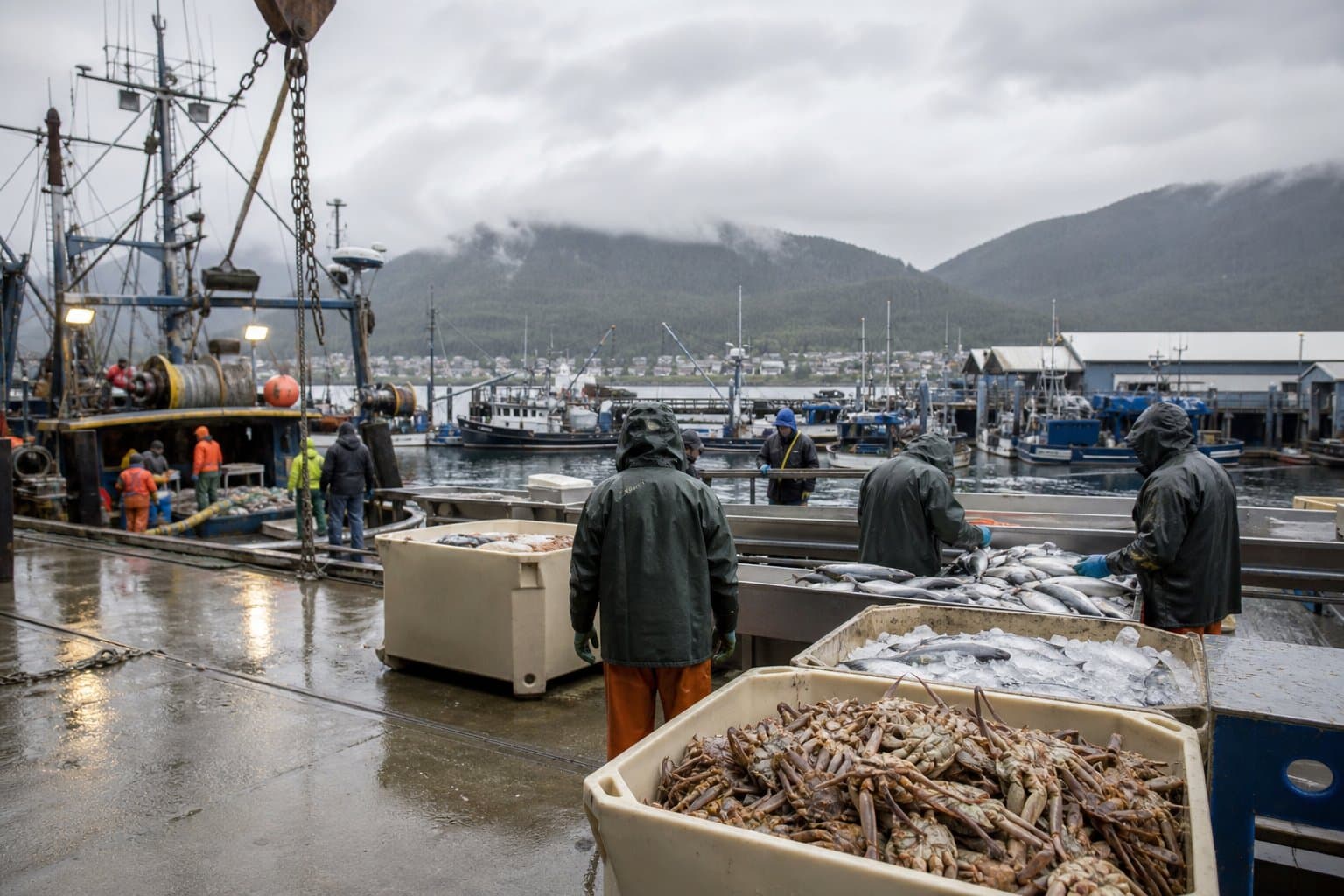
Alaska's commonly consumed marine fish and shellfish carry little or no PFAS, according to state testing released Wednesday. Researchers analyzed 610 individual specimens collected between 2022 and 2024 as 51 composite samples, including salmon, halibut and cod among other commonly consumed species. Measurable levels turned up in three of those samples: two Tanner crab composites and one pollock.
The Alaska Department of Health published the results in Epidemiology Bulletin No. 10 on Aug. 12. The underlying study appeared this year in the peer-reviewed journal Toxicology Reports, funded through a cooperative agreement with the Agency for Toxic Substances and Disease Registry. The bulletin concludes the tested species are unlikely to represent a significant source of dietary PFAS exposure. It also states that fish's nutritional benefits generally outweigh the low-level risks measured.
Crews collected samples from Southeast Alaska, the Gulf of Alaska, and the Bering Sea and Aleutians. Testing covered 40 target PFAS compounds using EPA method 1633. Only three compounds cleared the limit of quantification: PFOS, PFTrDA and PFUnA.
Every concentration measured fell below food guidance thresholds used in the European Union and Japan. At Alaska's high fish-eating rate, though, the study found pollock alone exceeded the EU threshold on estimated intake; its authors say that still does not show significant exposure risk. The comparison thresholds are not an Alaska or federal consumption standard. The U.S. Environmental Protection Agency has not established fish-specific PFAS consumption guidelines, which is why the study measured its results against European Union and Japanese guidance.
At an April 23 House State Affairs hearing, Rep. Carolyn Hall said PFAS is pervasive in the environment and can easily spread from its point of origin. Alaska Community Action on Toxics has said PFAS in fish remains a concern even at low concentrations, citing contamination found in some Alaska fish studies and consumption advisories other states have issued.
Alaska still has no PFAS-specific fish consumption guidance. The findings carry particular weight for subsistence and rural Alaska Native consumers, who rely on locally harvested fish for nutrition, cultural practice and household food security.
Based on a press release from Alaska Health.
Drafted with AI. Edited by Cale Green (1 revision). No full editor review is on record. Who is accountable.
Stay informed. Support what matters.
Free, permanent access to local news you can verify. Subscribe to support Walter AlaskaNews and go ad-free.
Related Coverage
PFAS found in three Anchorage Bowl wells, one pulled from service
Alaska News · 4w ago
A new federal water-testing rule could check rural Alaska for 'forever chemicals' — if it reaches us
Alaska News · 2mo ago
Don't eat the clams: ADF&G can't tell Juneau harvesters which beaches are safe — because nobody's regularly testing
Alaska News · 3mo ago
Juneau kelp farm study suggests minimal influence on fish and invertebrates
Alaska News · 19h ago
New EU paperwork could slow Alaska seafood shipments starting in September
Alaska News · 1mo ago
Comments
Sign in to leave a comment.
No comments yet. Be the first to share your thoughts.