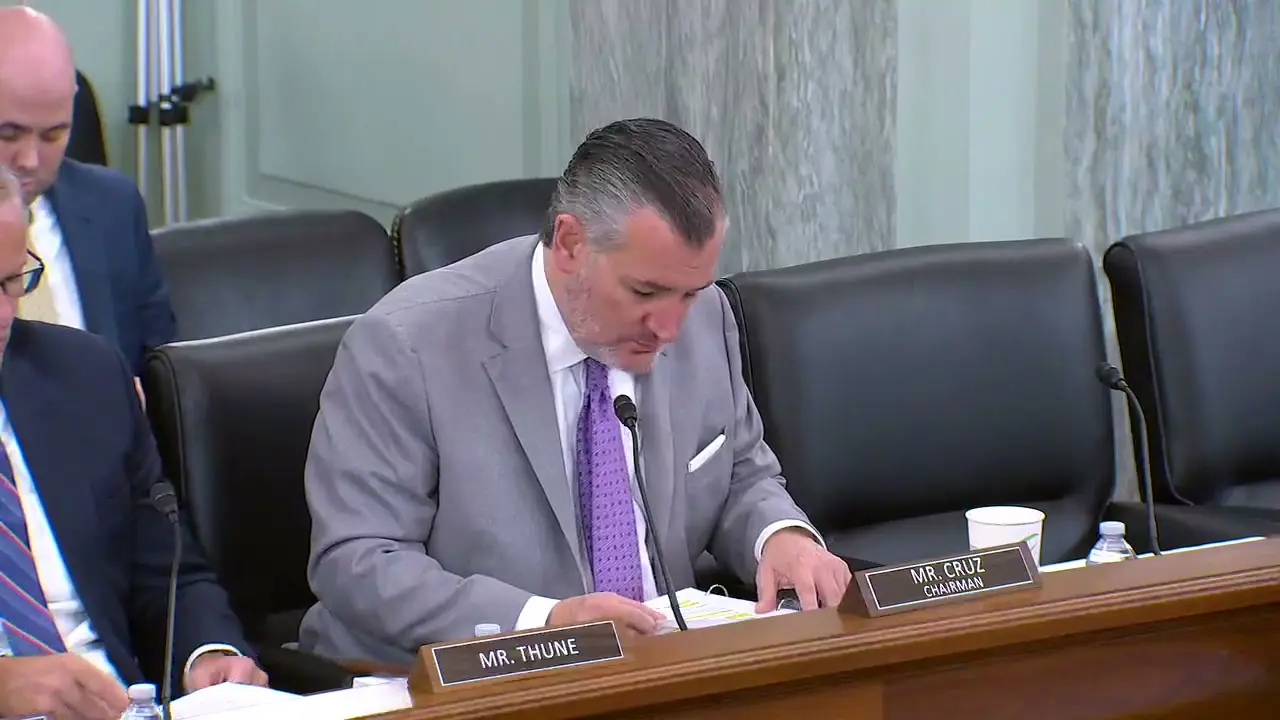
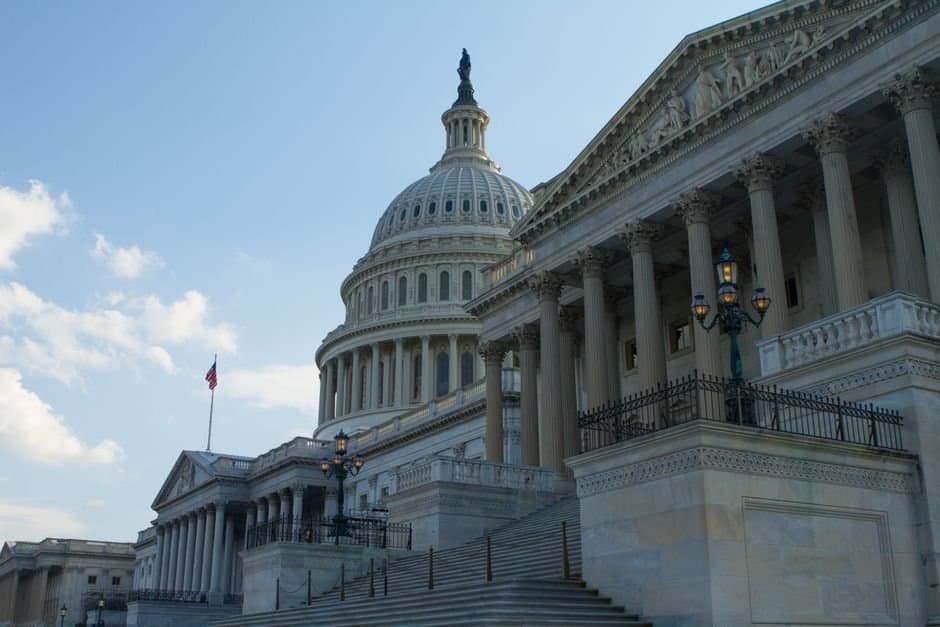
Frame from "Senate Commerce, Science, and Transportation: Business meeting (November 18, 2026)" · Photo source
Senate panel advances bill letting people sue platforms that censor them at federal request
A Senate committee on Wednesday advanced a bill that would let Americans sue social media companies that censor them at the federal government's request.
Right now, a federal law known as Section 230 generally shields platforms from lawsuits over content their users post. The bill would take that shield away for these claims, its sponsor says. People who sue could seek evidence of the government pressure behind a takedown, and platforms would still be free to enforce their own rules, he said.
The bill's sponsor, Sen. Eric Schmitt, a Missouri Republican, calls it the COLLUDE Act. He said it gives platforms "a strong legal and financial incentive to resist government censorship," and that the same protections would apply "no matter who occupies the White House."
The Senate Commerce, Science and Transportation Committee approved it by voice vote as part of a package of 12 bills. None of the committee's 13 Democrats were there. Cruz said they were boycotting over a nomination to the Federal Communications Commission.
Schmitt traces the bill to a lawsuit he brought as Missouri's attorney general. In 2022, Missouri and Louisiana sued the Biden administration, in a case known as Missouri v. Biden. Schmitt told the committee that evidence gathered in the case showed Biden administration officials "pressed social media companies to remove posts and change their moderation policies," and that the companies went along "because they thought it would help their bottom line."
In June 2024, the U.S. Supreme Court ruled that the plaintiffs lacked standing to seek a court order against the officials, without deciding whether the officials had violated the First Amendment. In March, Schmitt's office announced a settlement in which the government agreed to a 10-year, court-enforceable order barring the Surgeon General, the Centers for Disease Control and Prevention and the federal cybersecurity agency from threatening major platforms to get them to remove the plaintiffs' protected speech.
"As Attorney General, I had the resources of a state to investigate and fight back," Schmitt said Wednesday. "Most Americans do not, but they should not need an Attorney General to take up their cause to defend their freedom of speech."
The version the committee advanced included Schmitt's rewrite of the bill and an amendment from Sen. Maria Cantwell of Washington, the committee's top Democrat, even though she wasn't at the meeting.
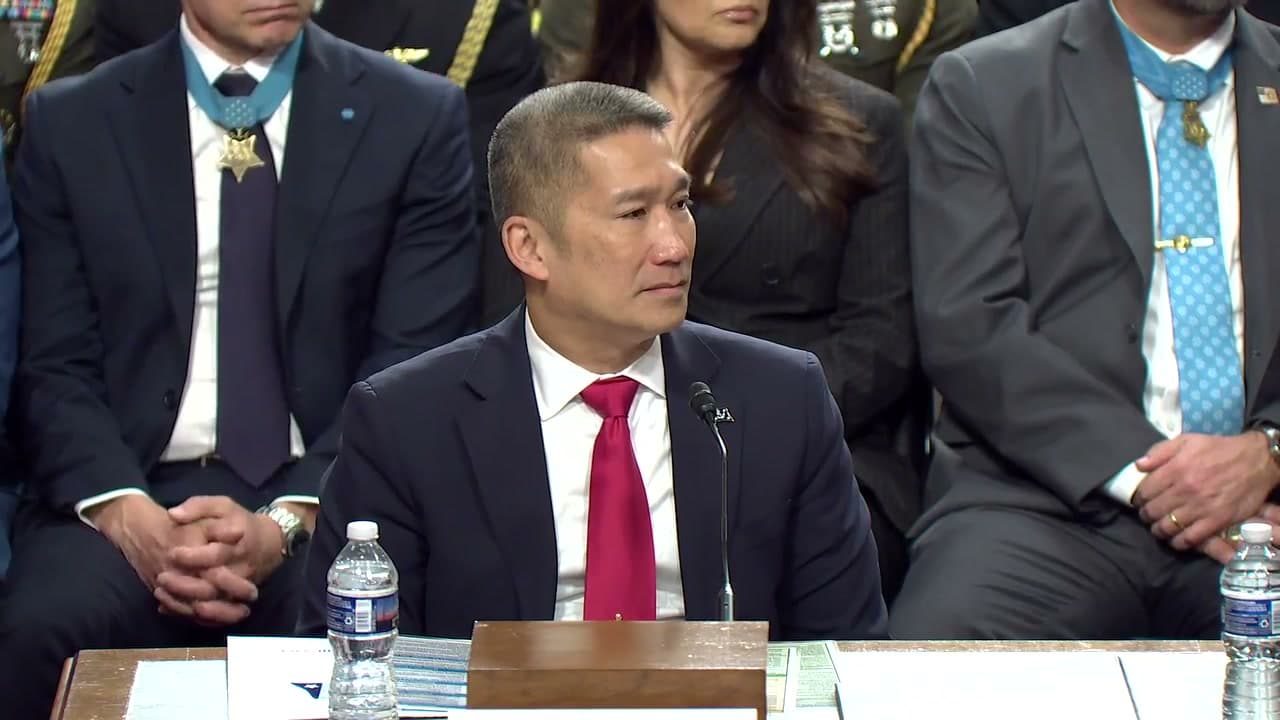
Cantwell and the other 12 committee Democrats had asked Chairman Ted Cruz, a Texas Republican, in a Nov. 16 letter to pull FCC nominee Danielle Thumann Severs from the agenda. They wanted her nomination held until the next Congress and paired with two Democratic FCC nominations. "There is no mandate for the outgoing majority to rush through a partisan FCC nomination in its final weeks," they wrote.
Cruz opened the meeting by criticizing the boycott, the second of a committee markup this Congress, he said. "Democrats will control the Senate, unfortunately, in January," he said. "But today is November 18th." The committee advanced the FCC nomination 15-0.
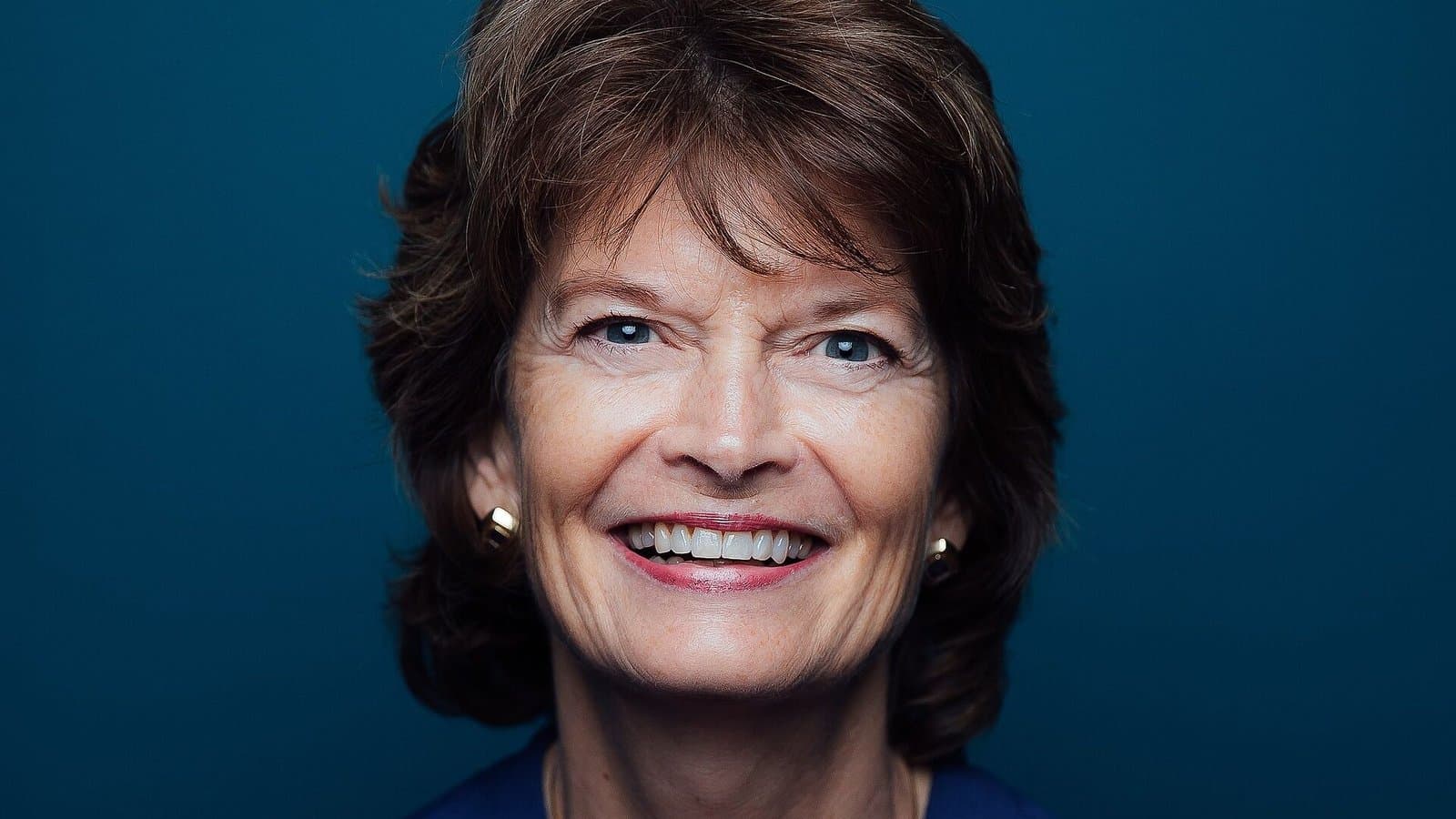
Alaska Sen. Dan Sullivan, a Republican on the committee, attended and voted for all four nominations that went to a roll call. He didn't speak about the bill. Unofficial results show him trailing Democrat Mary Peltola in his reelection race.
Cruz has his own bill on government pressure on platforms, which the committee advanced earlier. On Wednesday he said it provides "a very direct remedy if and when government agencies of either party violate free speech."
Schmitt's bill goes next to the full Senate. To become law, it would also have to pass the House.
What did you make of this story? (no account needed)
Made by our human newsroom with AI. Reviewed by Cale Green. How humans and AI work here · Grow with our newsroom · Transcript byLucas Brown
Keep Alaska News free for everyone.
No paywall, ever. Members pay so everyone can read the meetings and records Alaska News covers.
Get Alaska News in your inbox
Create your free account and get the day’s top stories around 6 each morning, in a few minutes’ read.
Top stories, around 6 each morning.
Stories on what you follow, on Sundays.
This article is based on a public meeting of Senate Commerce, Science, and Transportation — Senate Commerce, Science, and Transportation: Business meeting (November 18, 2026) ().
Watch key moments from the source meeting. Click to expand.




Comments
Sign in to leave a comment.
No comments yet. Be the first to share your thoughts.