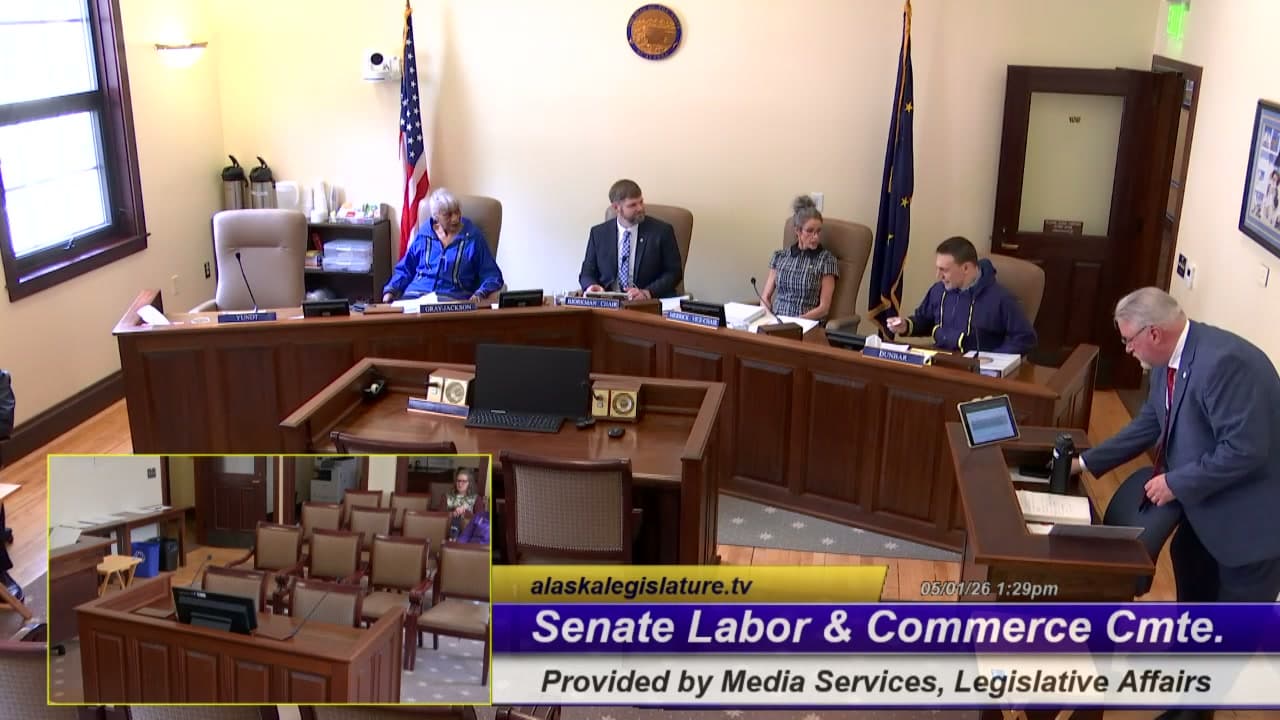
Alaska Senate Panel Advances Social Media Ban for Minors Under 16
The Alaska Senate Labor and Commerce Committee advanced legislation Friday that would ban social media accounts for residents under 16 and prohibit algorithmic content feeds for those under 18. The move came despite warnings from opponents that similar laws have been blocked in courts across the country.
The committee moved Senate Bill 262 forward without objection after hearing testimony that linked social media use to rising teen suicide rates, cyberbullying, and mental health crises in Alaska communities. The bill would also allow the state attorney general and individual minors harmed by platforms to take legal action against social media companies.
Alaska lawmakers removed social media age verification provisions from a related bill in April over First Amendment concerns. But supporters of Senate Bill 262 said the mental health crisis among Alaska youth justifies the restrictions. The House passed House Bill 47 in February with social media restrictions for minors under 18, including parental permission requirements and curfews. The Senate Community and Regional Affairs Committee later stripped those provisions, citing constitutional issues.
Jeffrey Dlifka, a Kenai Peninsula attorney and youth advocate, told the committee he has seen the damage firsthand in Alaska communities. He cited Centers for Disease Control data showing 50 percent of high school girls and 29 percent of high school boys felt persistently sad or hopeless in 2021. Twenty-two percent of high school students seriously considered suicide.
"I have a client whose special needs daughter was lured through a social media website, you know, 14, and was raped," Dlifka said.
Noah Shields, a licensed marital and family therapist, said he is seeing increasing levels of anxiety, depression, and relational disconnection among Alaska youth that correlate strongly with excessive screen use. A 2021 Common Sense Media survey found teens average over eight hours of screen media use per day, not including schoolwork. Social media occupies a significant portion of that time.
Committee Chair Jesse Bjorkman, who sponsored the bill, said the issue came to his attention after incidents in his school district where social media interactions spilled over into violent altercations at school.
"We have had some significant incidents in my school district, and I know many school districts around the state, with students having some very, very negative interactions that have spilled over into school because of things that have started on social media," Bjorkman said. "Sometimes violent altercations and interactions that have led to threats of pretty, pretty intense violence at school, and then sometimes violence gets carried out."
Opponents said the bill faces the same constitutional challenges that have blocked similar legislation in Louisiana, California, Arkansas, and Ohio. Amy Boss, vice president of government affairs for NetChoice, told the committee the Supreme Court has consistently protected minors' First Amendment rights. Blanket age bans do not survive constitutional scrutiny, she said.
NetChoice obtained a permanent injunction against Louisiana's nearly identical Act 456 in December. Boss said enforcing an age ban would require platforms to collect government IDs, biometric data, or financial information from every user. That creates privacy and security risks, she said.
Boss also pointed to early results from Australia, which outlawed social media for residents under 16. The country's eSafety Commissioner reported no notable change in cyberbullying complaints in January and February compared to the same period last year. Among parents whose children held accounts on Instagram, Snapchat, and TikTok before the ban, about 70 percent reported their child still had access, in part through VPN tools that hide identity.
"Social media bans for youth, we believe, do not work in practice and bring substantial downsides to privacy and free speech," Boss said.
Dlifka acknowledged the legal uncertainty but said the mental health crisis justifies the fight. He noted that Arkansas, Florida, Louisiana, Mississippi, Ohio, Tennessee, California, Utah, and Texas have already enacted some form of social media ban. Federal legislation led by Senator Ted Cruz has significant bipartisan support, he said.
"Two recent court cases, KGM v. Meta and Google and New York Attorney General v. Meta, in both those cases, juries found that, found against the Meta and Google and instituted civil fines," Dlifka said. "They found the companies were negligent in their platform design and that features like infinite scroll, autoplay, aggressive push notifications were engineered to be addictive."
Dlifka also cited a recent case where age restrictions were allowed for pornography sites. That suggests a legal path forward for social media restrictions, he said.
The bill now moves to the full Senate for consideration. No timeline was announced for a floor vote.
This article is based on a public meeting — Alaska Legislature: Senate Labor & Commerce Committee ().
AI-assisted. How we use AI Transcript byLucas Brown
Stay informed. Support what matters.
Free, permanent access to local news you can verify. Subscribe to support Alaska News and go ad-free.
Related Coverage
Senate Committee Advances Bill to Raise Alaska's Age of Consent Amid Sexual Violence Crisis
Alaska News · 6mo ago
Alaska Senate Panel Advances Youth Suicide Prevention Bill
Alaska News · 5mo ago
Senate panel hears testimony on bill to ban youth gender care
Alaska News · 4mo ago
House Finance Advances Mental Health Education Guidelines for Schools
Alaska News · 5mo ago
Alaska Advances Mental Health Education Guidelines Without Mandates
Alaska News · 5mo ago
Comments
Sign in to leave a comment.
No comments yet. Be the first to share your thoughts.