Senate leaders release bipartisan permitting overhaul that would change NEPA reviews
Senate leaders from both parties released a 417-page bill Wednesday, Sept. 30, that would change how the federal government reviews and permits energy, mining and infrastructure projects, starting with the National Environmental Policy Act.
The Bipartisan American Affordability and Jobs Act was introduced by the leaders of the two committees that handle permitting: Sens. Shelley Moore Capito, R-W.Va., and Sheldon Whitehouse, D-R.I., of the Environment and Public Works Committee, and Sens. Mike Lee, R-Utah, and Martin Heinrich, D-N.M., of the Energy and Natural Resources Committee, according to a committee release.
The bill includes sections on NEPA, the Clean Water Act, the Endangered Species Act, electric transmission, energy leasing and permitting on federal lands and offshore, hydropower, geothermal energy and historic preservation. One provision directs the energy secretary to consider transmission bottlenecks within Alaska, in consultation with the state and affected tribes.
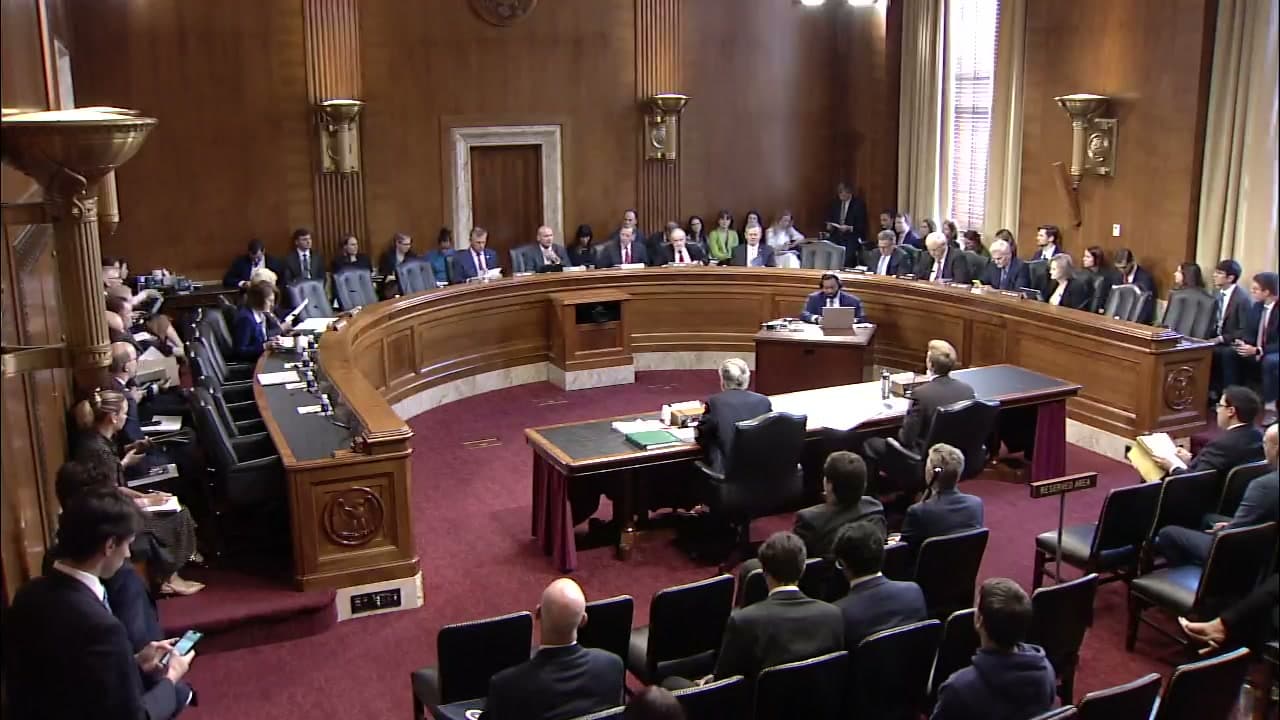
Lee announced the agreement earlier Wednesday at an Energy and Natural Resources Committee business meeting. "Republicans and Democrats have reached an agreement on a bipartisan deal," he said. Sen. Lisa Murkowski, a member of the committee, called it "so good" for people "whether you're from very rural Alaska or urban urban New York."
A January 2026 Senate hearing record estimated that federal permitting takes four to five years and stalls up to $1.5 trillion in investment across eight sectors.
Reaction split along familiar lines. The American Petroleum Institute welcomed the bill, saying it would "modernize NEPA, reduce duplicative reviews and unnecessary litigation." The Center for Biological Diversity said it would give the fossil fuel industry long-term advantages and weaken protections for endangered species.
In March, Whitehouse and Heinrich tied their support to protections for already-permitted wind projects and faster solar permitting. On Sept. 25, the two warned against a vote without "good, strong, legislative text," saying rushing "could sabotage the entire effort." The committees have not voted on the bill.
This article is based on a public meeting of Senate Energy and Natural Resources — Senate Energy and Natural Resources: Business meeting ().
AI-assisted. Reviewed by Cale Green. How we use AI Transcript byWalter AlaskaNews
Stay informed. Support what matters.
Free, permanent access to local news you can verify. Subscribe to support Bill AlaskaNews and go ad-free.
Related Coverage
A permitting bill could open the federal fast lane to Alaska projects
Alaska News · 2mo ago
Why Washington's permitting overhaul lands harder in Alaska than almost anywhere
Alaska News · 3mo ago
Murkowski targets federal conditions on Southeast's hydropower licenses
Alaska News · 2mo ago
Fish and Wildlife Service seeks $5M to cut energy permit times in half
Alaska News · 3mo ago
Senate committee advances hydropower bill backed by Murkowski
Alaska News · 3mo ago
Comments
Sign in to leave a comment.
No comments yet. Be the first to share your thoughts.