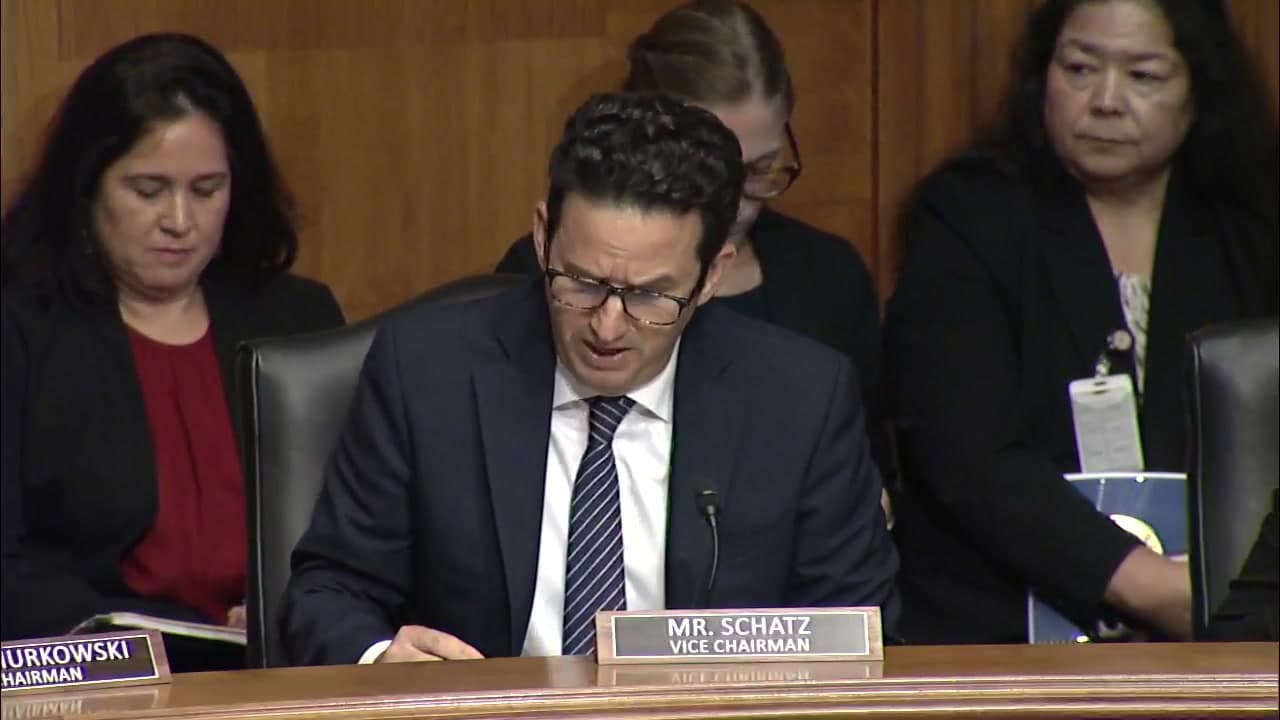
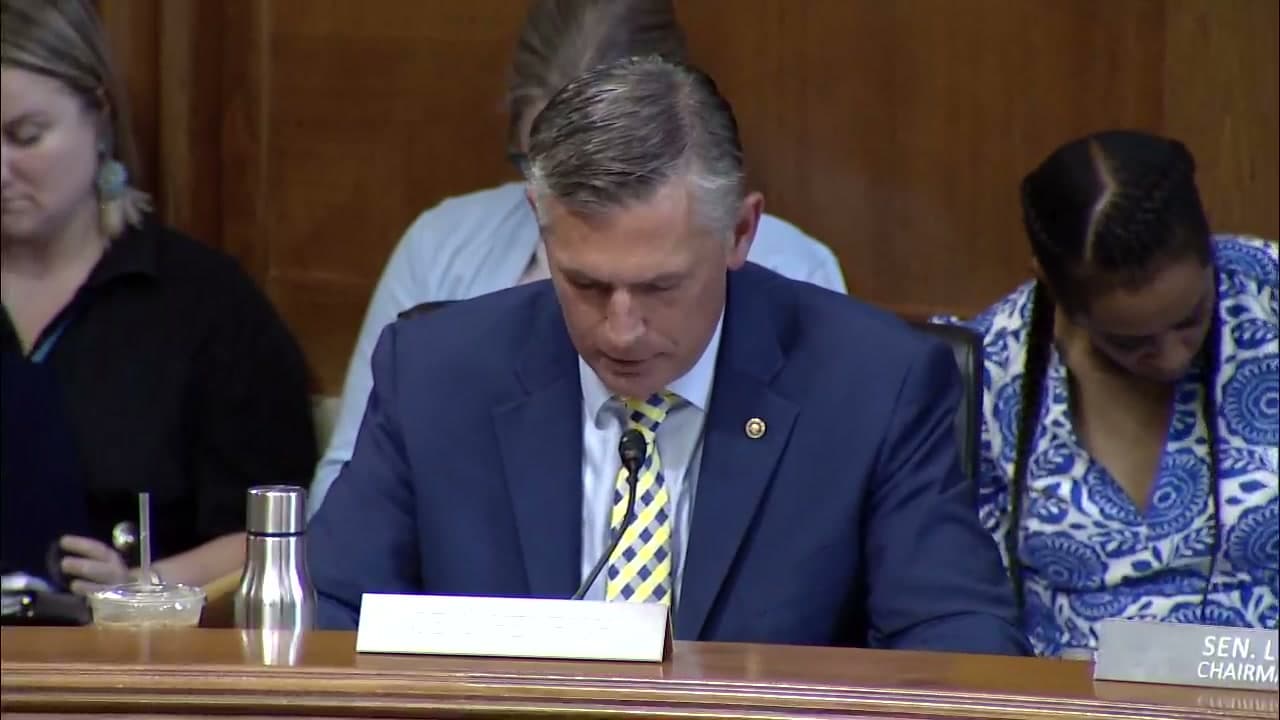
Frame from "Senate Indian Affairs · Photo source
Senate panel advances Crow coal land swap 6-5, rejects four amendments
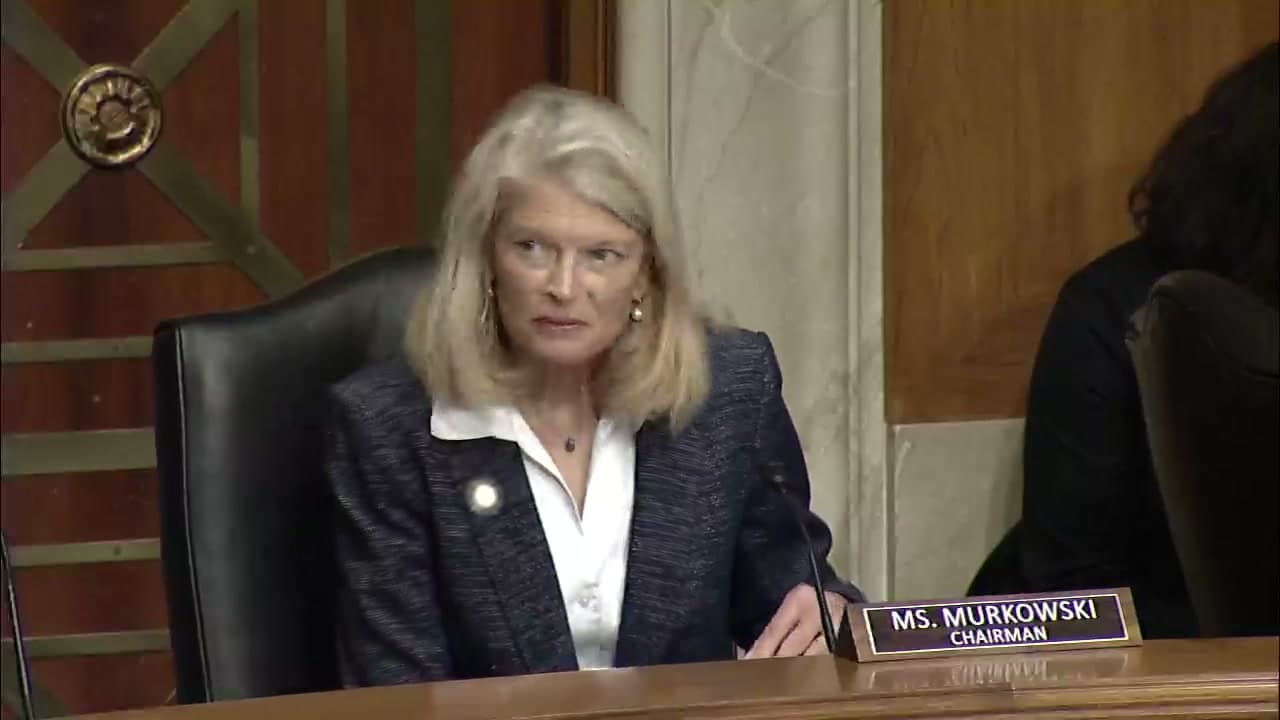
The Senate Committee on Indian Affairs voted 6-5 Wednesday to advance the Crow Revenue Act, as amended, clearing a Montana coal land exchange that would skip environmental review. Chair Lisa Murkowski opposed every amendment offered. A revenue-sharing guarantee would "probably make it harder for parties to reach the revenue sharing agreement that is required in the base text here," she said.
The bill would convey federal parcels in Montana's Bull Mountains, north of Billings, to the Hope Family Trust, which plans to partner with current lessee Signal Peak Energy to mine coal. In exchange, Murkowski said, substantial privately owned mineral interests within the Crow Reservation would return to the Crow Tribe. She said the tribe would receive a continuing share of revenue from any future development of the exchanged Bull Mountain mineral interest, and that a related land exchange would improve public access. The bill does not name Signal Peak. It requires no appraisal. It exempts the mining from review under the National Environmental Policy Act.
Vice Chair Brian Schatz offered four amendments. All four failed 5-6. One would have named Signal Peak in the text. The others addressed appraisal requirements, revenue-sharing guarantees and a delayed effective date. Schatz cited Interior inspector general findings that Signal Peak submitted false royalty invoices from 2016 to 2018. Before the final vote, the committee adopted an amendment from Sen. Steve Daines by voice vote, with Sens. Lujan, Smith, Schatz and Cantwell recorded as voting no.
Daines, the sponsor, said the structure protects tribal revenue. He called Schatz's revenue-sharing amendment an affront to tribal sovereignty and opposed the others as unnecessary or as stalling implementation. Crow Tribe leadership backs the underlying arrangement as a way to protect tribal income and sovereignty, and Chairman White Clay attended the markup. Daines said the tribe should be left to negotiate its own terms. Environmental groups oppose the swap, arguing it favors coal development at the expense of environmental review in the Bull Mountains.
The Crow Tribe testified in 2024 that it hoped to earn $100 million over 10 years from the coal. The Congressional Budget Office estimates the bill would cost $72 million over 10 years in uncollected federal royalties.
The measure now goes to the full Senate.
Made by our human newsroom with AI. How humans and AI work here · Grow with our newsroom Transcript byLucas Brown
Get Alaska News in your inbox
Create your free account and get the day’s top stories around 6 each morning, in a few minutes’ read.
The day's top stories around 6 each morning. Unsubscribe in one click.
This article is based on a public meeting of Senate Indian Affairs (Murkowski) — Senate Indian Affairs (Murkowski): Business meeting to consider S.239, to take certain mineral interests into trust for the benefit of the Crow Tribe of Montana, S.1055, to amend the Indian Health Care Improvement Act to modify the notification requirement for emergency contract health services for certain beneficiaries, S.1514, to take certain land in the State of Washington into trust for the benefit of the Quinault Indian Nation, S.3219, to transfer certain Federal land into trust for certain Indian Pueblos in the State of New Mexico, and H.R.2400, to take certain Federal land in the State of California into trust for the benefit of the Pit River Tribe. ().
Watch key moments from the source meeting. Click to expand.





Comments
Sign in to leave a comment.
No comments yet. Be the first to share your thoughts.