Anchorage health facility secures federal approval for land transfer to expand services
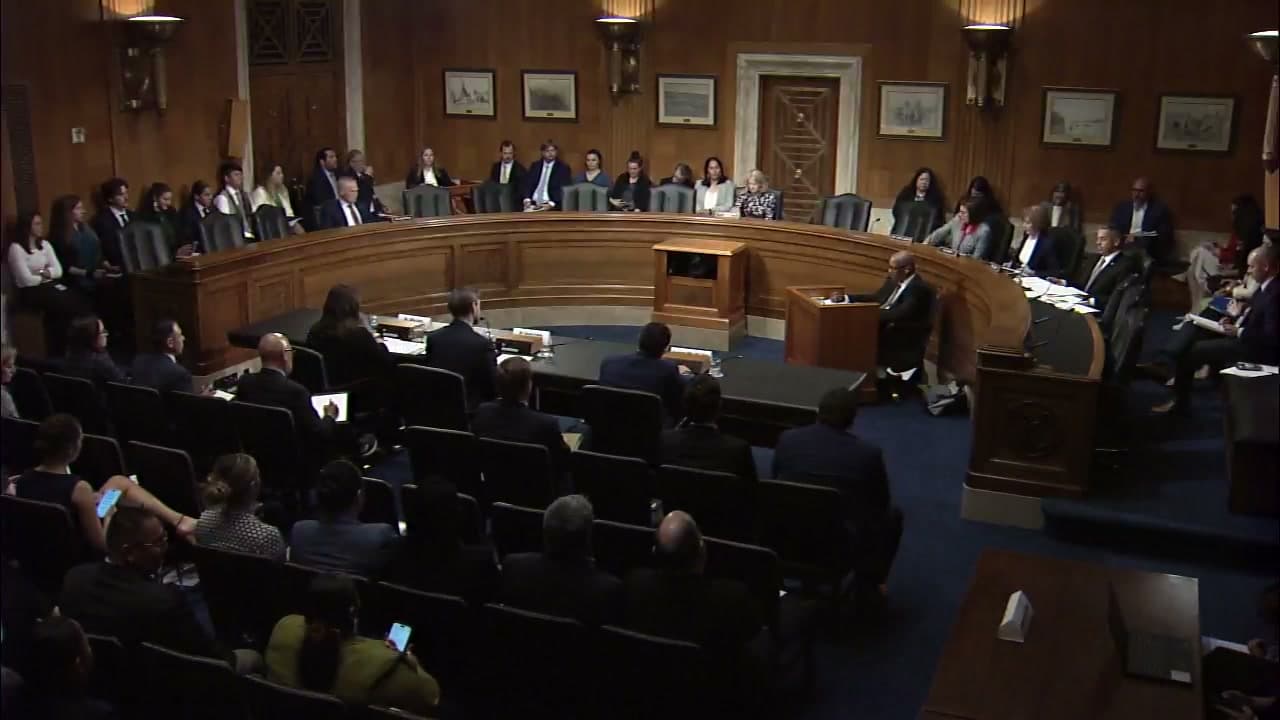
The Senate Committee on Indian Affairs voted Wednesday to advance legislation transferring 3.37 acres from the Department of Health and Human Services to Southcentral Foundation in Anchorage. The bill would allow the foundation to expand outpatient mental health and substance use services.
Lisa Murkowski sponsored the measure. She said the transfer would allow Southcentral Foundation to continue providing services through the Quyana Clubhouse and enable financing of capital improvements to expand outpatient programming.
The committee approved the legislation en bloc with seven other tribal land bills without objection.
Southcentral Foundation operates the Alaska Native Medical Center under a compact with the Indian Health Service. The organization serves more than 65,000 Alaska Native and American Indian people in the Anchorage service area.
Broader legislation package
The committee advanced eight bills supporting tribal land and economic development nationwide. Other measures authorize 99-year leases for the Mashpee Wampanoag Tribe and the Wampanoag Tribe of Gay Head in Massachusetts. The bills transfer more than 1,000 acres to the Lower Elwha Klallam Tribe in Washington. They place Bureau of Land Management acreage into trust for the Shingle Springs Band of Miwok Indians in California.
The Shingle Springs legislation would enable the tribe to build housing for tribal members on 185 acres while managing remaining acreage to reduce wildfire risk.
Budget hearing follows vote
The business meeting preceded a budget hearing where Vice Chairman Brian Schatz said the administration's proposed cuts were disappointing and would harm tribal services. The overall request for the Bureau of Indian Affairs totals $1.8 billion, a $647 million decrease from fiscal year 2026.
Schatz said the cuts would reduce funding for job training, roads, housing, teachers, schools, and compliance with the Indian Child Welfare Act. The budget eliminates funding for tribal colleges and universities except for two directly operated by the Bureau of Indian Education. It cuts the Bureau of Indian Education by 32 percent and the Bureau of Indian Affairs by 27 percent.
Murkowski raised concerns about proposed sanitation funding cuts. The budget is about $93 million below fiscal year 2026 enacted levels. She said Infrastructure and Jobs Act funding was intended to supplement base funding, not replace it. She stressed the importance of clean water and wastewater systems for public health and safety in tribal communities.
Assistant Secretary Billy Kirkland said the budget focuses on carrying out core responsibilities in a more effective and accountable way. He said it strengthens tribal communities, improves service delivery, supports economic opportunities, and ensures the federal government remains a reliable partner to tribal nations.
The committee will hold the hearing record open for two weeks for members to submit additional written questions.
This article is based on a public meeting — Senate Indian Affairs (Murkowski): Business meeting to consider S.236, to amend the Act of August 9, 1955 (commonly known as the "Long-Term Leasing Act"), to authorize leases of up to 99 years for land in the Mashpee Wampanoag Tribe Reservation and land held in trust for the Wampanoag Tribe of Gay Head (Aquinnah), S.1513, to take certain Federal land in the State of Washington into trust for the Lower Elwha Klallam Tribe, S.2098, to provide for the conveyance of certain property to the Southcentral Foundation located in Anchorage, Alaska, S.2735, to take certain Federal land in the State of California into trust for the benefit of the Shingle Springs Band of Miwok Indians, H.R.681, to amend the Act of August 9, 1955 (commonly known as the "Long-Term Leasing Act"), to authorize leases of up to 99 years for land held in trust for the Mashpee Wampanoag Tribe and the Wampanoag Tribe of Gay Head (Aquinnah), H.R.2302, to take certain Federal land in the State of California into trust for the benefit of the Shingle Springs Band of Miwok Indians, H.R.2388, to take certain Federal land in the State of Washington into trust for the Lower Elwha Klallam Tribe, and H.R.3620, to provide for the conveyance of certain property to the Southcentral Foundation located in Anchorage, Alaska; to be immediately followed by an oversight hearing to examine the President's proposed budget request for fiscal year 2027 for the Bureau of Indian Affairs and the Indian Health Service. ().
AI-assisted. How we use AI Transcript byLucas Brown
Stay informed. Support what matters.
Free, permanent access to local news you can verify. Subscribe to support Maggie AlaskaNews and go ad-free.
Related Coverage
Senate sends Anchorage Quyana Clubhouse land transfer to president
Alaska News · 4d ago
Senate Indian Affairs Committee advances Native housing rewrite to full Senate
Alaska News · 1w ago
Senate committee advances bill to give land to five landless SE Alaska Native communities
Alaska News · 2mo ago
Tribal consortium takes ownership of Alaska Native Medical Center
Alaska News · 4w ago
Southcentral Foundation asks Congress to make IHS contract support costs mandatory
Alaska News · 1mo ago
Comments
Sign in to leave a comment.
No comments yet. Be the first to share your thoughts.