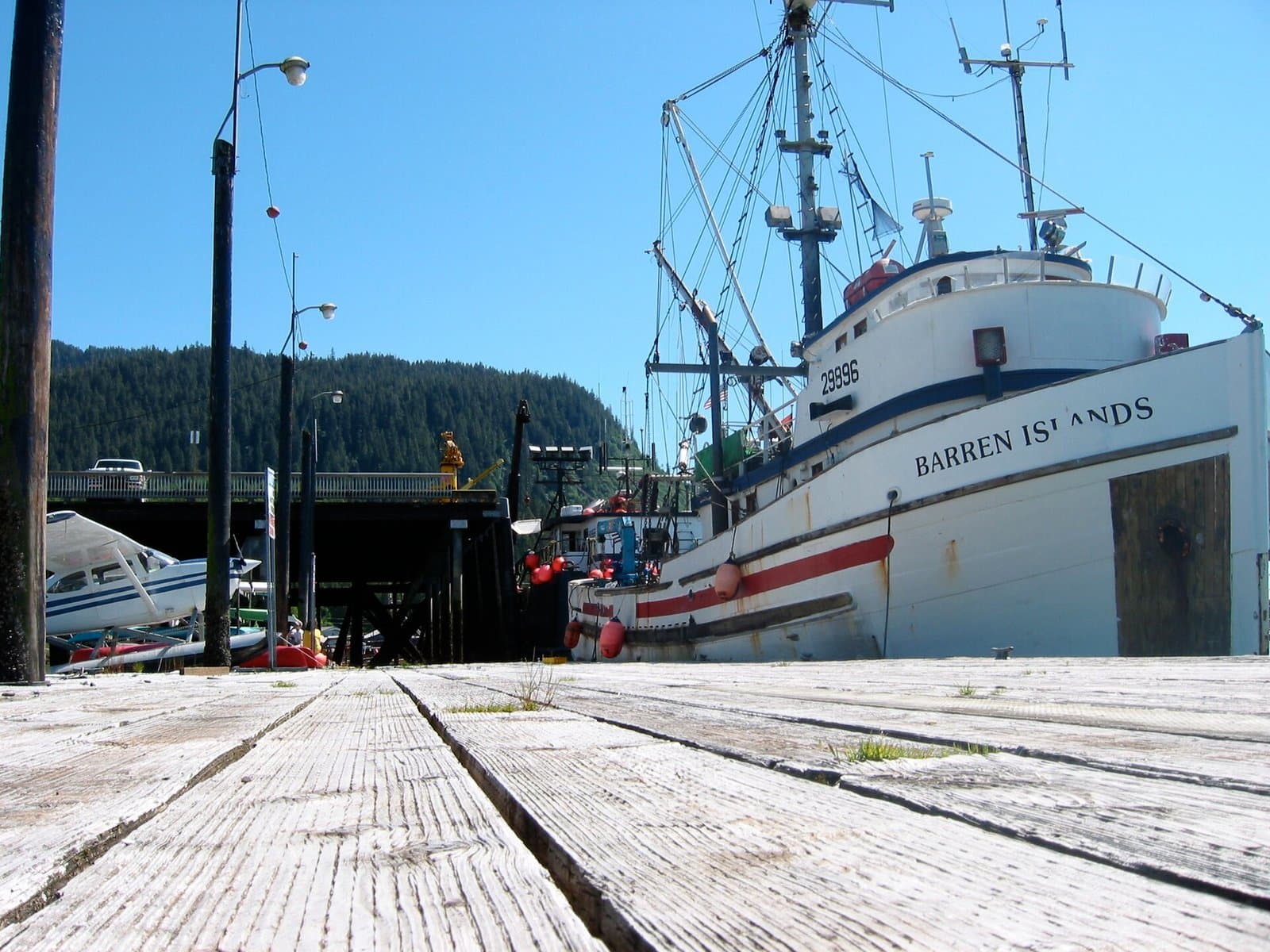
Photo: James Crippen via Wikimedia Commons · Source
Outside scientists find NOAA's Alaska fishing observer program sound, recommend no 2027 changes
Three fisheries scientists from Canada, France and Norway have found that the way NOAA decides which Alaska groundfish boats carry a human observer or an onboard camera is scientifically sound, and they recommended no changes for 2027, a NOAA scientist told the North Pacific Fishery Management Council on Friday.
Observers and cameras are how fishery managers learn what boats actually catch and throw back. Their data are used to count catch during the season and in the stock assessments behind catch limits, said Jason Jannot, program manager for analytical services at the Alaska Fisheries Science Center.
The June review in Seattle, run by NOAA's Center for Independent Experts, was the first of the North Pacific Observer Program. As far as Jannot knew, it was also the first such review focused solely on any U.S. observer program. These reviews usually examine stock assessments.
The reviewers found the program's methods sound, justified and consistent with the best available science. That includes how it sorts the fleet into groups and decides where coverage goes, which two of the three reviewers called innovative. All three were impressed with the system boats use to log their trips, which helps make sure observed trips represent the fleet's fishing. The three experts, Jannot said, "deemed the North Pacific Observer Program a world-class monitoring and data collection program."
They did suggest further research. One recommendation was to identify gaps in what the program samples and test how its approach to assigning coverage would hold up if those gaps were filled. Another was a comparison of the strengths and weaknesses of cameras and human observers.
The council commended NOAA on the results and supported sharing them with its science advisers and the International Pacific Halibut Commission. The chair of the council's monitoring committee said a fresh look at the program could reduce confusion at the halibut commission.
The final reviewer reports arrived only recently, Jannot said. Science center staff are developing a plan to address the recommendations and will report back to the council.
This article is based on a public meeting of NPFMC - Council & SSC Meetings — NPFMC 280 Day 2 - October 9, 2026 ().
Made by our human newsroom with AI. Reviewed by Cale Green. How humans and AI work here · Grow with our newsroom Transcript byWalter AlaskaNews
Watch key moments from the source meeting. Click to expand.
Stay informed. Support what matters.
Free, permanent access to local news you can verify. Subscribe to support Bill AlaskaNews and go ad-free.
Related Coverage
North Pacific council directs Ecosystem Committee to revise 2004 groundfish policy goals
Alaska News · 4mo ago
The panels that shape Alaska's pollock and cod catch limits meet next month
Alaska News · 1mo ago
Pollock fleet asked to repeat voluntary crab closures in 2027 after proof-of-concept season
Alaska News · 4mo ago
Council scientists back new Gulf of Alaska pollock model as survey mismatch persists
Alaska News · 2d ago
Council votes 8-3 to study halibut bycatch rules for Golden Fleece replacement vessel
Alaska News · 4mo ago
Comments
Sign in to leave a comment.
No comments yet. Be the first to share your thoughts.