NSF awards UAF $462,771 to reconstruct Bering Land Bridge flooding
A two-year study of how the Bering Land Bridge drowned is set to begin at the University of Alaska Fairbanks on Aug. 1 under a $462,771 National Science Foundation award, and its stated payoff is contemporary: insight into current and future coastal flooding hazards for residents of the region.
The award, number 2603624, funds a postdoctoral fellowship through July 31, 2028, with Jessica DePaolis as principal investigator. Its most recent action date was July 28, 2026. The money comes from the NSF Directorate for Geosciences under the agency's Geosciences Workforce program.
The Method: Reading Ancient Water in Microscopic Algae
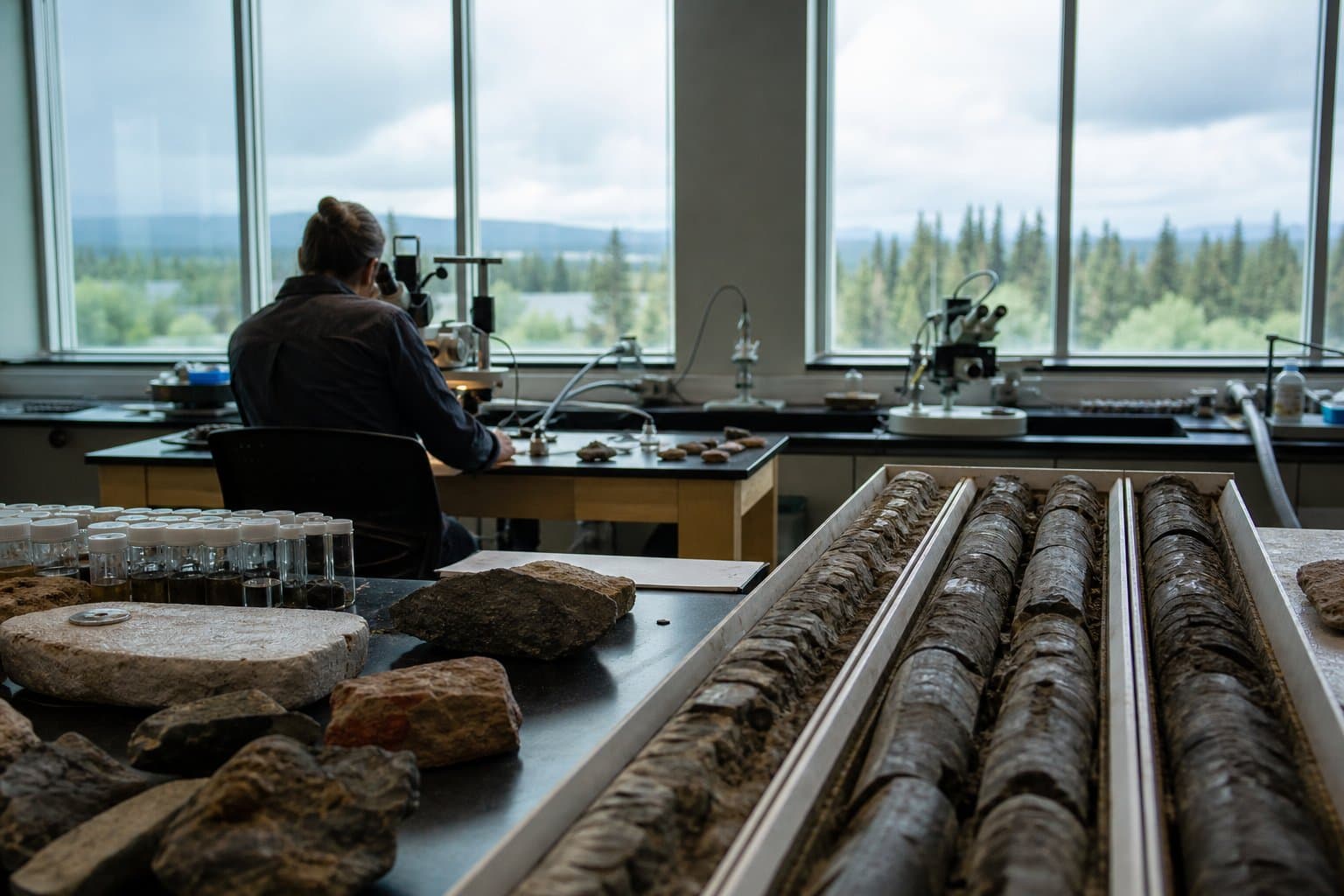
The research centers on diatoms, microscopic algae preserved in sediment cores. DePaolis will study them to reconstruct the environments of the Bering Land Bridge and to characterize the landscape changes that occurred before and during its submergence. That work involves three steps: building an expanded modern diatom database, reconstructing the land bridge's ancient freshwater environments, and characterizing the transitional intertidal environments that formed as the sea advanced. The abstract places the land bridge between 26,500 and 19,000 years ago, when sea level stood roughly 120 meters lower and Beringia carried humans, animals, and plants between continents.
The abstract says direct observations are limited because the land bridge now lies submerged beneath the Bering Sea, leaving little known about the character or timing of its flooding.
The award follows other recent NSF grants to UAF, including $360,443 for a Shishaldin Volcano study. It also fits a longer pattern of federal investment in Arctic and climate research at the university: NSF awarded UAF $16.3 million to support Toolik Field Station as a major Arctic research facility, and NSF's Office of Polar Programs funded UAF and six other institutions under the Study of Environmental Arctic Change, or SEARCH, to synthesize what is known about the changing Arctic environment and its consequences.
AI-assisted, reviewed by editors. Spot an error?
Related Coverage
NSF awards UAF $678,748 to study seafloor mineral formation at Davidson Seamount
Alaska News · 52m ago · 82% match
NSF awards UAF $877,501 for mass spectrometer to support fisheries and minerals research
Alaska News · 1w ago · 81% match
NSF awards UAF $1.77 million to build AI geohazard forecasting tools
Alaska News · 2w ago · 80% match
UAF scientist gets $300K to unlock permafrost's carbon time bomb
Alaska News · 2mo ago · 79% match
NSF awards UAF $360,443 to study Shishaldin eruption signals
Alaska News · 23h ago · 78% match
Comments
Sign in to leave a comment.
No comments yet. Be the first to share your thoughts.