NSF awards UAF $324,995 to research rural microgrid stability
A $324,995 federal grant will fund three years of work on a control problem that makes battery storage harder to add to village diesel plants, work the National Science Foundation says could lower energy costs, cut diesel reliance and improve resilience for rural and remote communities that already face some of the nation's highest electricity prices. The NSF recorded its most recent award action to the University of Alaska Fairbanks on Aug. 10, with a performance period running Aug. 15, 2026, through July 31, 2029. Remote Alaska communities often pay more than $0.50 per kilowatt-hour for diesel-generated electricity, and sometimes more than $1, according to a Department of Energy report.
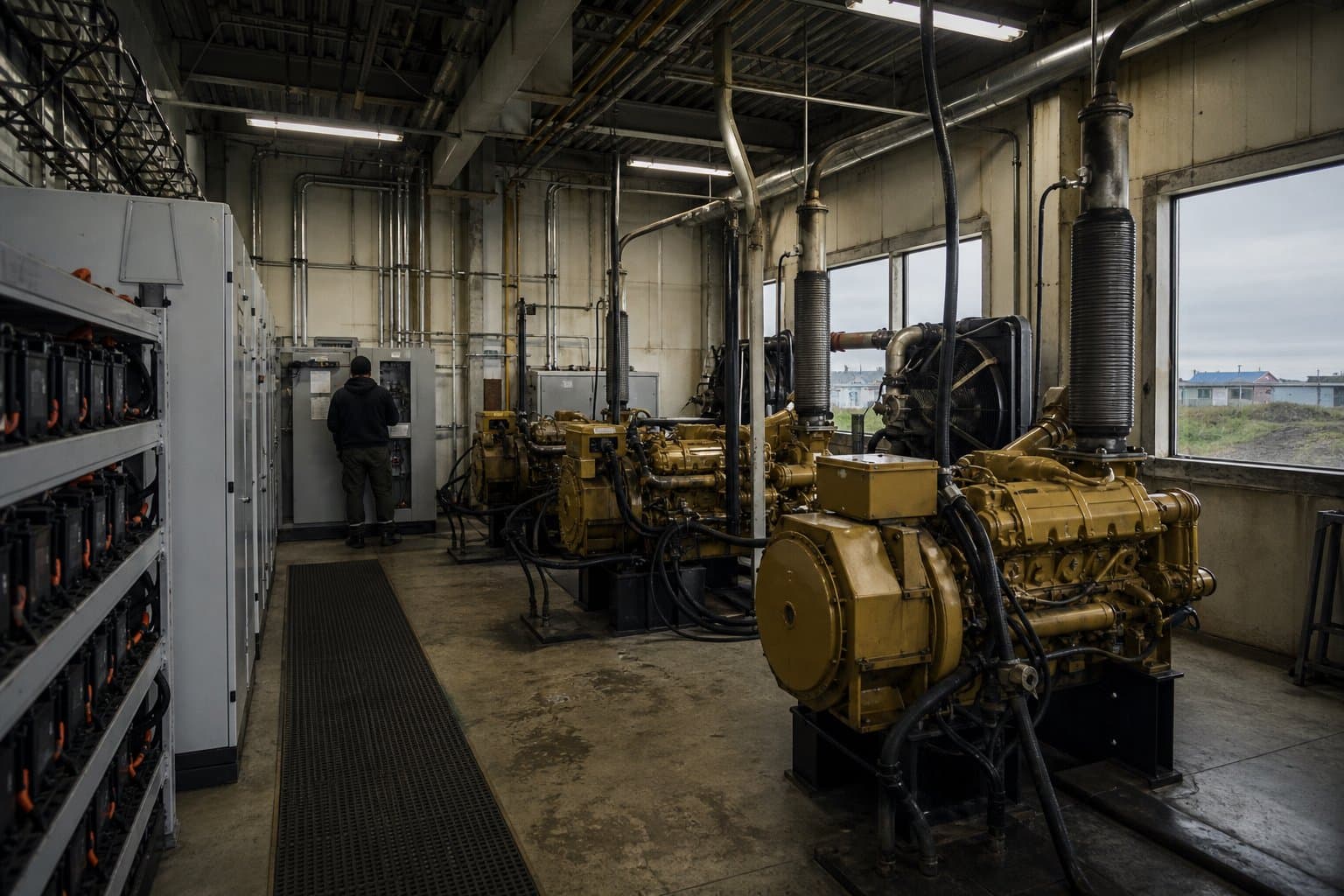
In small isolated grids, a grid-forming inverter, a power electronic device that imposes the grid's voltage and frequency, often sits beside diesel generators of comparable size and close electrical proximity. Under those conditions, according to the award abstract, the two can interact and produce sustained oscillations. Methods developed for large transmission systems, where such units are far apart and can be analyzed separately, fail in low-voltage community grids, where accurate generator models are usually unavailable.
The project targets utilities that cannot commission specialized interconnection studies, a common condition in remote Alaska. Prior Alaska News coverage has noted that rural residents pay electricity costs three to five times urban rates, driven by diesel microgrids and fuel delivery. "Many rural Alaska communities have some of the highest fuel and energy costs in the nation," Chad Rupe, administrator of USDA's Rural Utilities Service, said in a news release on grants for remote Alaska energy projects.
Principal investigator Mariko Shirazi will use the battery inverter itself to probe the grid, determine how each unit responds, and adjust the battery controls with active damping functions to hold the system stable. Validation is planned on a 500-kW-scale laboratory test bed including grid-forming inverters and diesel generators.
Operators have described tuning as the persistent cost of hybrid plants. At the Alaska Sustainable Energy Conference in May, Bailey Gamble said of one such system, "inevitably there will be a need for adjustments to programming, and we found that here."
The award funds laboratory validation, not deployment. Whether the method reaches a village powerhouse depends on work the grant does not cover.
AI-assisted, reviewed by editors. Spot an error?
Stay informed. Support what matters.
Free, permanent access to local news you can verify. Subscribe to support Melinda Communities.News and go ad-free.
Related Coverage
Rural Alaska Electricity Costs Run Three to Five Times Urban Rates
Alaska News · 3mo ago · 82% match
A $1.6 million grant to help Alaska burn on purpose, before wildfire does
Alaska News · 1w ago · 80% match
NSF awards UAF $877,501 for mass spectrometer to support fisheries and minerals research
Alaska News · 3w ago · 79% match
A UAF mathematician is building better tools for understanding networks
Alaska News · 6d ago · 79% match
An Alaska village will own its solar power — and sell it back to the utility
Alaska News · 1mo ago · 79% match
Comments
Sign in to leave a comment.
No comments yet. Be the first to share your thoughts.