
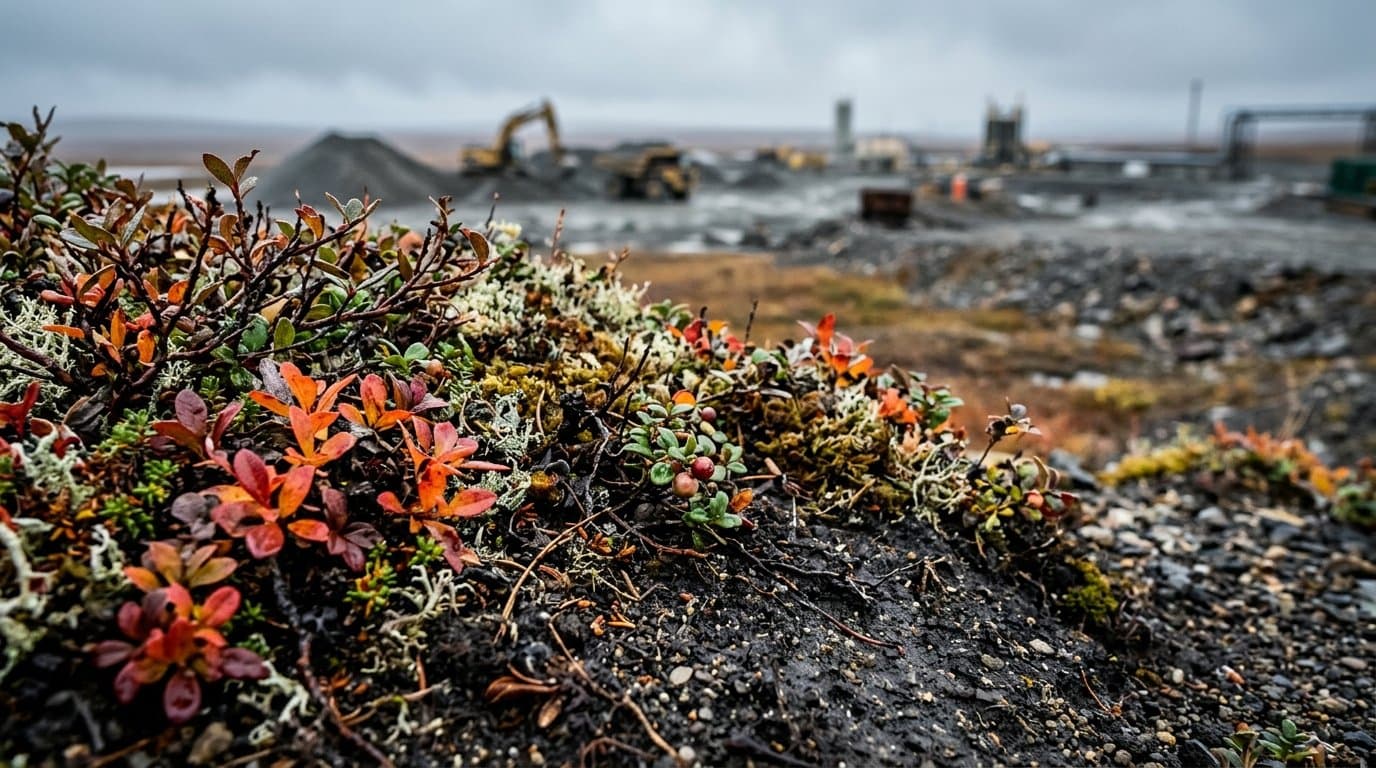
Ai Generated Image
North Slope Borough sues to block state rule expanding oil drilling tax exemption
The North Slope Borough sued the state Thursday to stop a proposed rule that would list the costs of completing wells and building drilling pads and access roads among the drilling expenses oil companies can leave out of the value Alaska taxes.
Alaska Beacon reporter James Brooks first reported the lawsuit Friday.
Borough Finance Director Fadil Limani estimated in an affidavit that the change could put "more than 70%" of the borough's assessed property tax base at risk. He called that an estimate of exposure, not a finding that tax collections would fall by the same share.
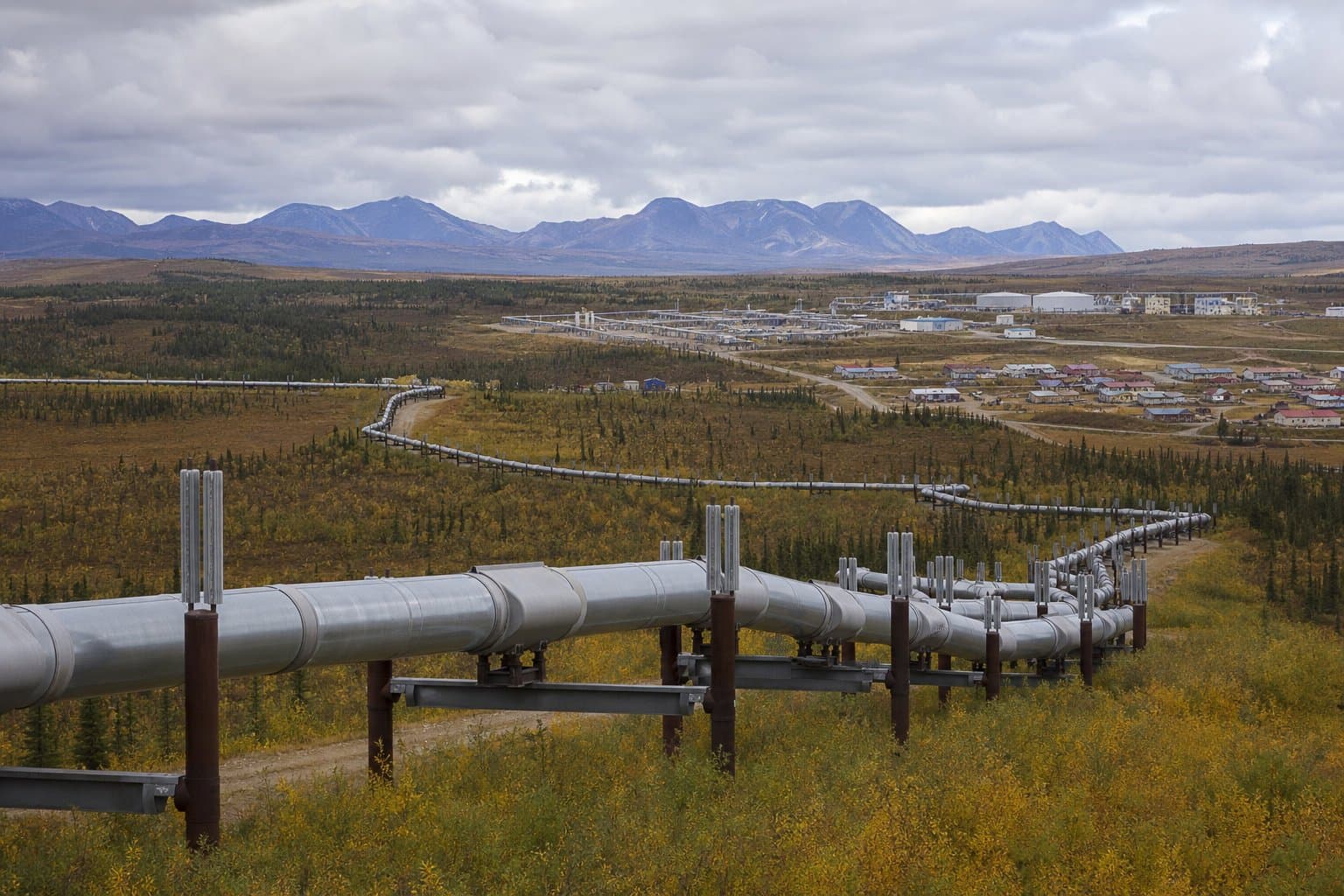
The rule would apply statewide, but pipelines and processing plants would stay taxable, so it would matter most where Alaska's oil and gas fields are, on the North Slope and around Cook Inlet. The Kenai Peninsula Borough, which also taxes oil and gas property, estimated in a preliminary review that the change would cut its petroleum property tax revenue by $10.9 million.
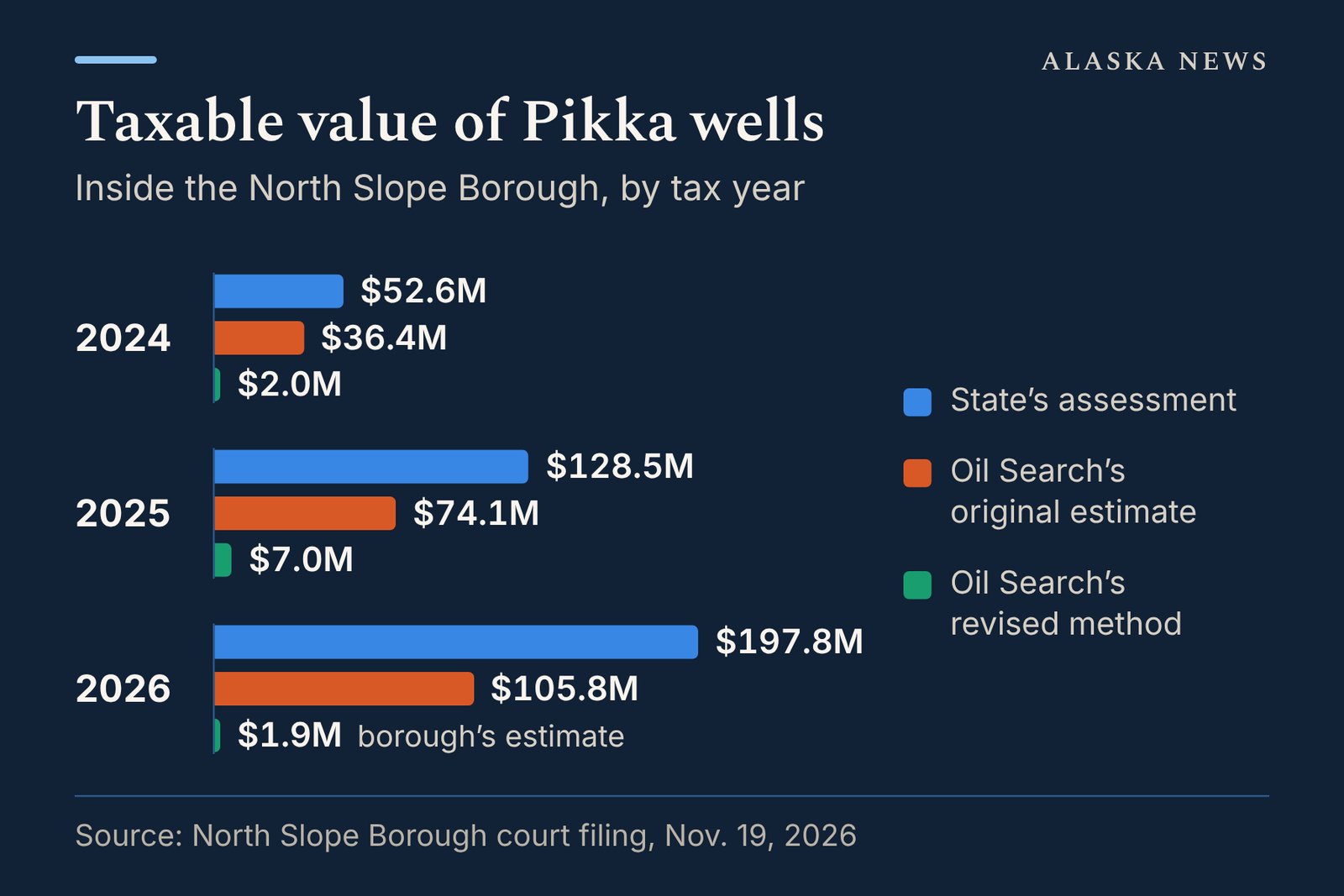
The borough's main example is Pikka, the field Santos brought into production this year. The Department of Revenue valued Pikka's wells within the borough at $197.8 million for 2026.
The borough says revised figures the field's operator produced in September use the same approach as the proposal. Applying that method, it estimates the 2026 value would fall to about $1.9 million, a comparison it calls an illustration. At the borough's tax rate, that drop would be worth about $3.5 million in 2026 taxes on Pikka's wells alone, before appeals, tax limits or other adjustments.
The lawsuit's main claim is that the department lacks the authority to exempt costs the Legislature left taxable. The borough also argues the proposal is meant to give Pikka's operator, the Santos subsidiary Oil Search (Alaska) LLC, what it has sought in its tax appeals, including pad and road costs the state's tax appeals board declined to treat as exempt.
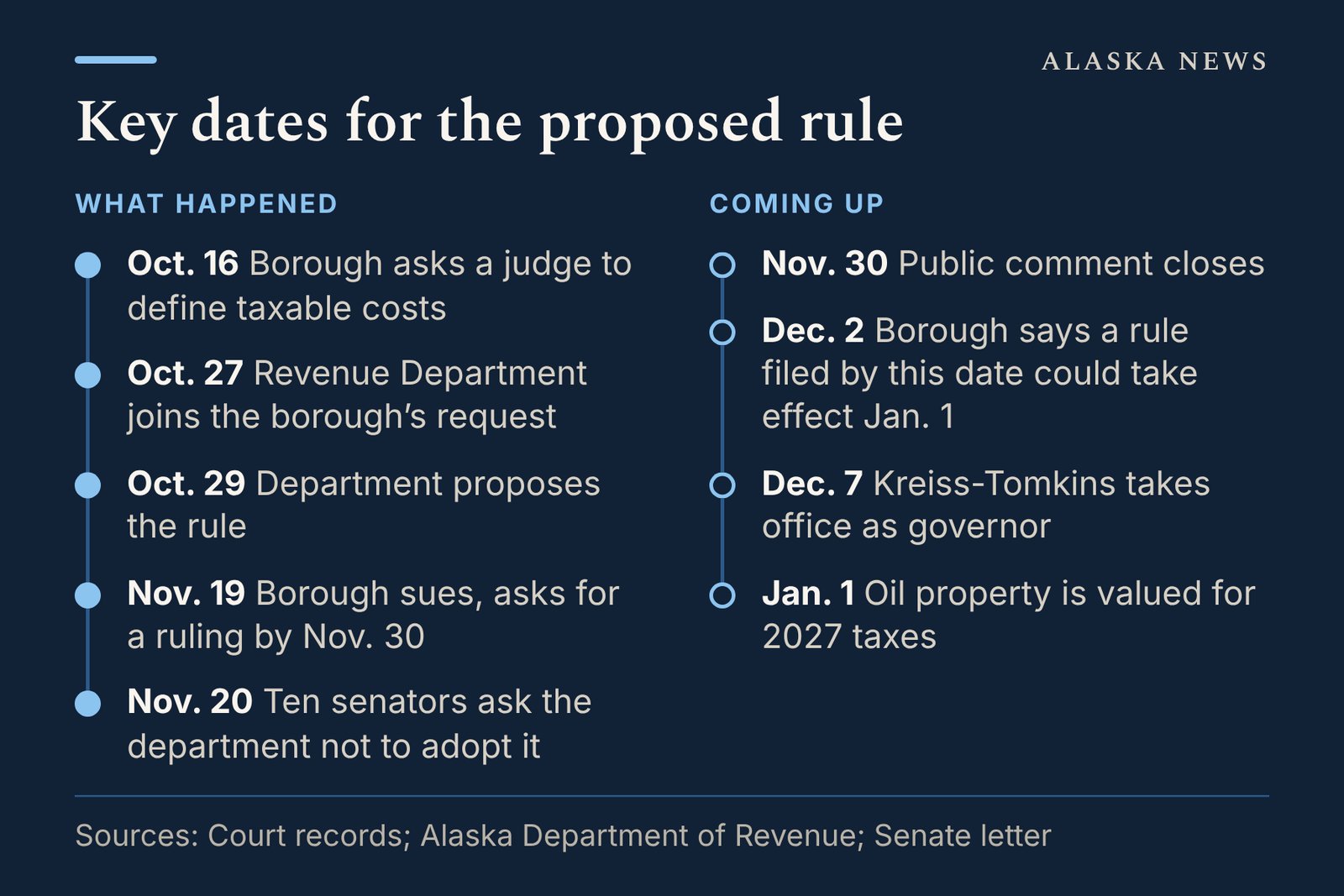
The borough says the Dunleavy administration is pushing the change through before Jonathan Kreiss-Tomkins takes office as governor Dec. 7. Its lawyers asked Superior Court Judge Yvonne Lamoureux to act by Nov. 30, when public comment on the rule closes. In a separate letter dated Friday, 10 state senators asked the department not to adopt the rule and to extend public comment to Dec. 18.
The Department of Revenue, which published the proposal Oct. 29, says in its notice paperwork that the change would "expand and revise" the categories of costs left out of oil property values "to reflect specified federal drilling and development cost categories, subject to Alaska statutory authority." It also says the change would "streamline regulatory ambiguity" under Gov. Mike Dunleavy's 2025 regulatory reform order.
The department's one-page fiscal note shows a $0 change in state revenue for the next three budget years and includes no calculations or explanation. A $0 change could be consistent with a rule that writes down how the department already treats these costs. If the rule changes what gets taxed, the published paperwork doesn't explain how the department reached zero.
Where its paperwork asks who originated the proposal, the department checked "General public." Deputy Commissioner Lee Cruise prepared that form and the fiscal note. The change also wasn't among the oil property tax rules the department listed in its August regulatory reform plan.
The senators who signed include Senate Majority Leader Cathy Giessel of Anchorage and Senate Finance Co-Chair Donny Olson, whose district includes the North Slope. They wrote that it's unclear why the change is needed, how it would affect municipal budgets or what analysis the department did, and that neither borough was consulted. The department generally has authority to adopt regulations carrying out the laws it enforces, they wrote, but it "does not have the authority to rewrite statutes."
The state had not filed a response in court as of Sunday. Oil Search is not a party to the lawsuit.
Limani wrote that a final number for the borough's exposure would take the state's own valuation models. The borough filed his affidavit unsigned, saying he was traveling and would file a signed copy.
Property taxes, mostly on oil and gas property, make up about 90% of the revenue in the borough's $559.3 million operating budget, Limani wrote. That money supports public safety, search and rescue, water and sewer systems, roads and schools in eight communities spread across 94,000 square miles.
"The revenues at issue are not simply figures on an assessment roll," Mayor Josiah Patkotak wrote in a Nov. 18 comment letter quoted in the borough's filing.
Alaska taxes oil and gas property at 2% of its value each year. Local governments can tax the same property, and companies subtract what they pay locally from what they owe the state. At the borough's current rate, about nine of every 10 dollars of that tax on North Slope oil property goes to the borough, so a drop in value there costs the borough far more than the state.
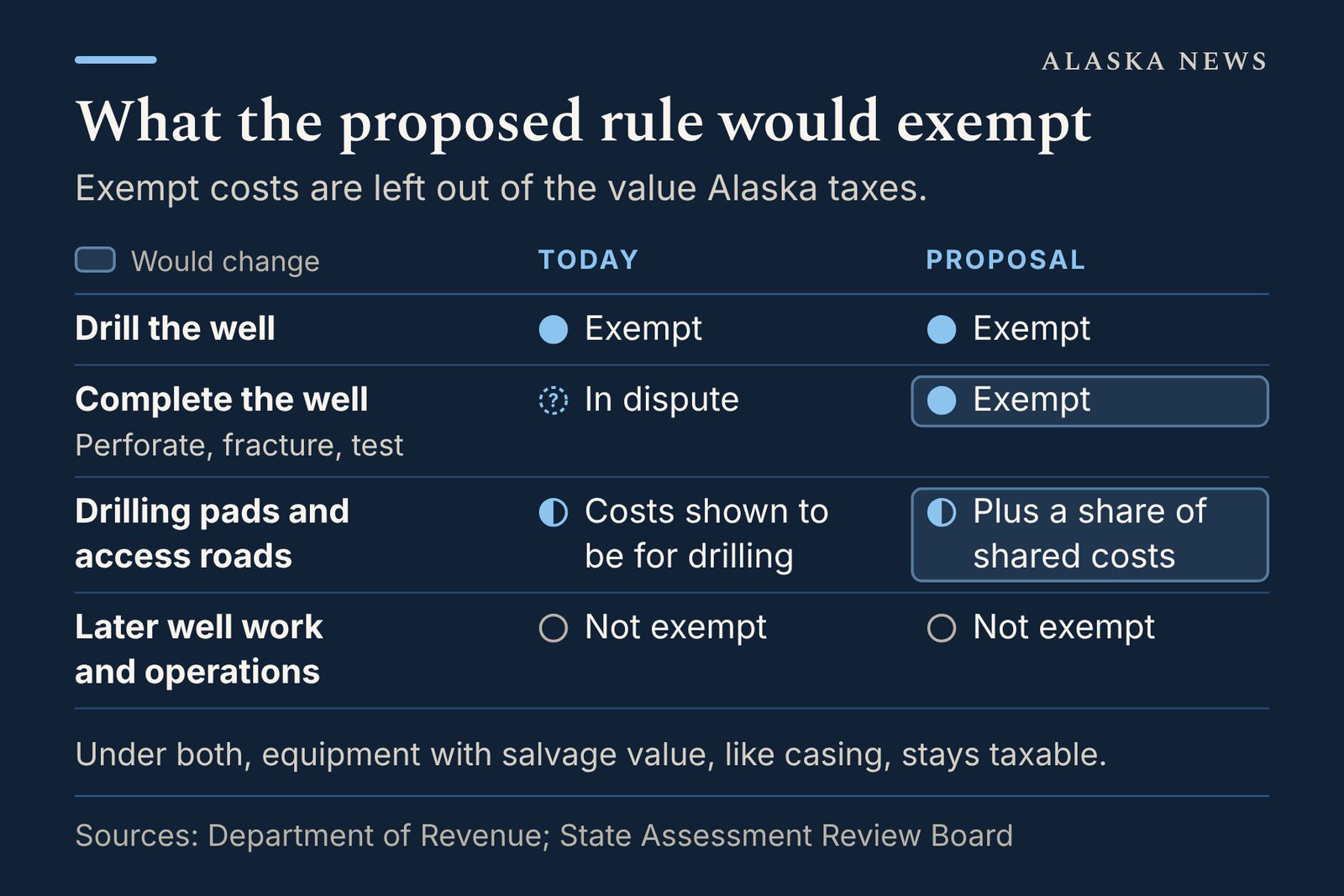
The fight is over an exemption as old as the tax. When the Legislature created the tax in 1973, it exempted "intangible drilling expenses." The department's rule defining that phrase, in effect since 1975 and last changed in 2003, covers spending on labor, fuel, hauling and similar costs of drilling that leaves behind nothing with salvage value.
Today the rule covers those costs when they are needed for "drilling wells," including clearing ground and building roads needed to drill. It says the exemption doesn't include "intangible development expenses," without defining them.
The proposal would expressly extend the exemption to "drilling and initially completing wells." Completion is the work that turns a drilled hole into a well that can produce: perforating the casing, fracturing the rock so oil can flow, installing equipment and testing. The rule would list items including rig mobilization and setup, hydraulic fracturing, flowback and well testing, repeated completion attempts and installation of completion equipment.
It would also cover qualifying costs for building and maintaining drilling pads, including gravel installation, and access roads needed to move drilling equipment or support drilling and initial completion. When a pad or road serves drilling and other uses, companies would have to split the costs "using a reasonable, documented method," and continued use after drilling wouldn't by itself disqualify an otherwise qualifying cost.
Equipment with salvage value, such as casing and tubing, would stay taxable. Later work on wells, routine operations and separate production, processing, storage and transportation facilities not needed for drilling or initial completion would stay outside the exemption.
Where drilling ends and development begins has been argued over for at least a decade. In a 2016 decision, the State Assessment Review Board, which hears oil property tax appeals, declined to overrule the department's approach of exempting intangible completion costs, finding the borough hadn't proved the department wrong. The board said "downhole activity" or "activity before first oil" might be the best fit for "drilling," and noted the two would identify different taxable costs. It said it wasn't deciding where drilling ends and development begins, and encouraged the department to put its approach in regulation.
In a May decision on Pikka, the board turned down a similar request from the borough and said the line between drilling and development "is not clearly defined in law for property tax purposes." It said it wasn't aware of the department ever reading the rule the way the borough does. It also noted it had urged the department in 2016 to spell out its interpretation, and said amending the regulation was one way to do that.
The borough's lawsuit points to an older record. It says 1973 committee minutes show legislators struck "development" from the exemption on purpose, with the result that completion costs would stay taxable. It also says the department has argued in court that companies must document specific drilling costs rather than claim a percentage of a road or pad.
In its May decision, the board wrote that, according to the state's assessor, splitting a dual-use road or pad by percentage "might make sense for accounting purposes, but it is not appropriate for property assessment." The board agreed. The proposed rule would require a reasonable, documented split of qualifying costs for pads and roads with mixed uses.
Oil Search argued at that hearing that a substantial portion of its drilling pad and part of the road used to move its rig should count as drilling costs, and that the assessor had treated part of such costs as exempt before. The board agreed the assessor had done so in earlier years, in valuations the board approved, but upheld the 2026 pad and road values because the company hadn't identified the particular costs that would qualify.
The proposal arrived in the middle of that fight. Five appeals over Pikka's assessments for 2021 through 2026 are consolidated before Superior Court Judge Josie Garton. In July, the department and the borough jointly opposed Oil Search's motion on drilling costs in those appeals.
On Oct. 16, the borough asked Garton for a ruling defining which costs are taxable under current law. Oil Search opposed the request Oct. 26. The department joined the borough's request Oct. 27 and published the proposed rule two days later.
Oil Search has since opposed the department's joinder, and the department asked Nov. 10 for more time to respond, court records show. Oral arguments in the appeals are set for Dec. 1 and Dec. 11, and a trial for October 2027.
The borough built its Pikka comparison from confidential records in those appeals. In supplemental assessments issued this year, the department valued Pikka's wells within the borough, property account 002-000-2302, at $52.6 million for 2024 and $128.5 million for 2025. Oil Search had originally estimated $36.4 million and $74.1 million. In September, the company revised those estimates to about $2 million and $7 million.
The $1.9 million figure for 2026 is the borough's own calculation using the company's revised method, not an Oil Search estimate for that year. Oil Search's original 2026 estimate was $105.8 million. The calculation assumes the amount of Pikka well costs assigned to Fairbanks stays the same, as it did in the company's revised figures for 2024 and 2025; the borough's exhibit says the 2026 amount isn't yet known.
The borough calls the comparisons illustrations, not projections the department has checked. The board set the combined 2026 value of Pikka property held by Oil Search and its pipeline affiliate, Pikka Transportation Co., at about $3.3 billion.
The borough's injunction motion says the rule appears to be the result of lobbying by Oil Search, citing what it calls a precise correspondence between the proposal's terms and cost categories in the company's records. For that comparison, the motion relies on an affidavit from David Ross, a drilling expert, which isn't among the court documents available online. The motion offers no drafts, emails or other records showing who wrote the language. The borough asks the department to disclose the source.
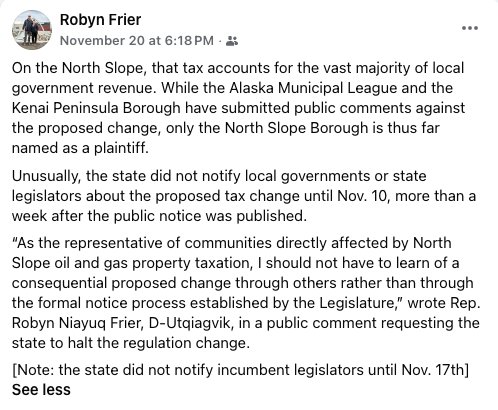
The lawsuit also says the department fell short on notice. State law requires notice at least 30 days before a rule is adopted; the borough says the department didn't email its list of interested parties, which includes the borough, until Nov. 10 and may not have notified legislators until Nov. 17. The senators wrote that their offices didn't receive that notice until Nov. 18 and asked for the extension so legislators would get the full 30-day comment period.
The borough also says the department left blank the form's estimates of costs to municipalities, that public comments couldn't be viewed online as of Nov. 14 and that the department's Tax Division, which assesses oil property, wasn't included in developing the proposal.
Rep. Robyn Niayuq Frier of Utqiagvik, whose district covers the North Slope and Northwest Arctic, wrote Nov. 15 that she hadn't received the legislative notice the law requires.
In a Nov. 13 letter, the Kenai Peninsula Borough also estimated that revenue for its affected service areas would fall by nearly 40%, with education, emergency services and senior services hit hardest. It said it supports "clear, consistent, and legally sound assessment standards" and asked the department to withdraw or suspend the proposal and confirm whether the Tax Division was consulted. The Alaska Municipal League also objected.
Randy Hoffbeck, who helped write the 2003 version of the rule as the state's petroleum property assessor and later worked as the North Slope Borough's finance director and as revenue commissioner under Gov. Bill Walker, called the proposal "a major tax policy decision being accomplished through a regulatory rewrite" in a public comment quoted in the borough's filing. He estimated it could cut the property tax on wells by more than 90%.
Comments close at 11:59 pm Nov. 30. The department's notice says it will then adopt the proposal or other provisions on the same subject without further notice, or decide to take no action. A regulation ordinarily takes effect 30 days after the lieutenant governor files it, following a Department of Law review. The borough says a rule filed by Dec. 2 could take effect by Jan. 1, the date oil property is valued for 2027 taxes.
The suit names the state, Dunleavy and three officials involved in reviewing, approving or filing regulations: Lt. Gov. Nancy Dahlstrom, Acting Attorney General Cori Mills and Rebecca Polizzotto, the Department of Law's regulations attorney. Dunleavy and Dahlstrom leave office Dec. 7, when Kreiss-Tomkins and Zac Johnson are set to be sworn in as governor and lieutenant governor.
The borough asked Lamoureux to bar the state from adopting or carrying out the rule for 30 days and to set a hearing on a longer injunction. Court records showed no hearing scheduled as of Sunday.
What did you make of this story? (no account needed)
Made by our human newsroom with AI. How humans and AI work here · Grow with our newsroom ·
Keep Alaska News free for everyone.
No paywall, ever. Members pay so everyone can read the meetings and records Alaska News covers.
Get Alaska News in your inbox
Create your free account and get the day’s top stories around 6 each morning, in a few minutes’ read.
Top stories, around 6 each morning.
Stories on what you follow, on Sundays.
Source: Alaska Court System, Alaska Court System: Other Superior Court Complaint: North Slope Borough v State Of Alaska v Dunleavy, Michael J v Dahlstrom, Nancy.







Comments
Sign in to leave a comment.
No comments yet. Be the first to share your thoughts.