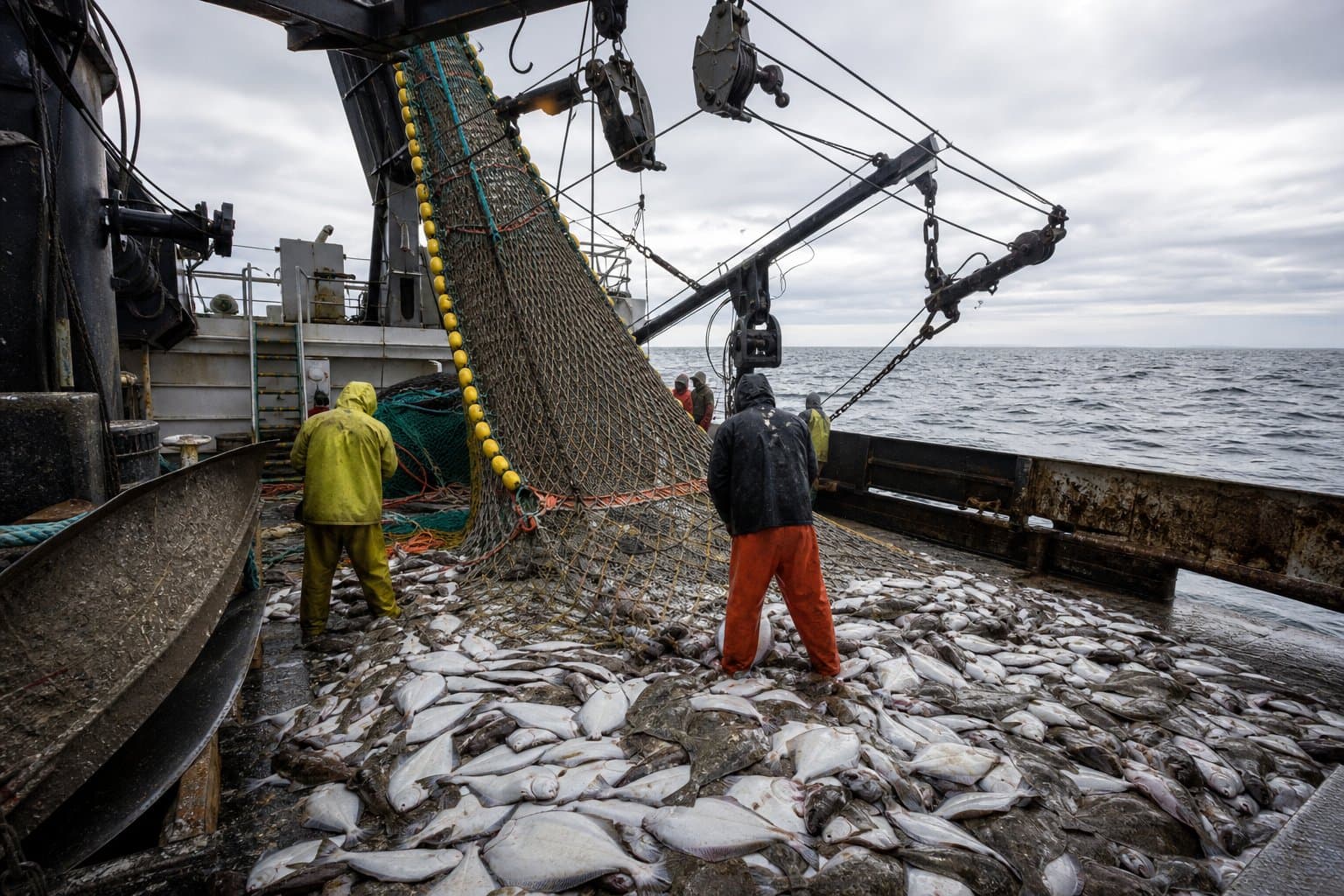
NMFS raises halibut bycatch cap to 115 tons for BSAI cod C season
The National Marine Fisheries Service has reapportioned 100 metric tons of unused halibut prohibited species catch allowance to the trawl limited access catcher vessel C season, raising that sector's halibut bycatch cap in the Bering Sea and Aleutian Islands Pacific cod fishery from 15 metric tons to 115. The temporary rule takes effect on publication and runs through 2400 hours Alaska time on Nov. 1, 2026.
The 100 metric tons came out of the Pacific Cod Trawl Cooperative Program, which held a 220-metric-ton halibut bycatch limit for its A and B seasons and did not use all of it before the B season closed June 10. The regional administrator for the NMFS Alaska Region determined the unused amount could move to the C season, which opened the same day, under the reapportionment provision at 50 CFR 679.131(c)(3). Without the transfer, NMFS said, the catcher vessel sector could exceed its halibut limit.
There was no public comment period. NMFS invoked good cause to waive both notice and comment and the standard 30-day delay, stating that the most recent halibut bycatch data became available only on Aug. 4, the same day Shannon Bettridge, acting director of the Office of Sustainable Fisheries, signed the rule.
Halibut taken in groundfish trawls counts as mortality against a stock that commercial, charter and subsistence users also draw on. The North Pacific Fishery Management Council states that "all halibut caught incidentally in groundfish fisheries must be discarded, regardless of whether the fish is living or dead." NMFS and council analysts have said the caps have already been substantially reduced over multiple rounds and are meant to balance minimizing bycatch against optimum yield from Bering Sea groundfish fisheries, not simply cap halibut mortality.
The two sides most directly affected read the arithmetic differently. Alaska halibut fishermen and coastal communities that depend on the directed fishery treat large trawl bycatch allowances as waste that shrinks what is left for small-boat operators; the advocacy group SalmonState, publicizing NOAA figures, said "draggers have bycaught over 3 million pounds of halibut in the Bering Sea & the Gulf of Alaska this year so far." Trawl limited access catcher vessels and their crews, whose position is reflected in council and NMFS economic analyses of Amendment 111, hold that they need sufficient halibut PSC to keep fishing groundfish at all, and that shifting unused caps between seasons is what prevents early closures.
Alaska News previously covered the Pacific halibut spawning biomass sitting near its lowest level since the 1970s, with Alaska taking the sharpest 2025 catch reductions. The council cut BSAI halibut bycatch caps to a combined 3,515 metric tons under Amendment 111 in 2016, and in 2023 tied the Amendment 80 sector's limit to abundance indices under Amendment 123. This reapportionment moves allowance inside the existing Pacific cod apportionment rather than adding to it.
AI-assisted, reviewed by editors. Spot an error?
Related Coverage
BSAI Pacific cod trawl season ends early for AFA catcher/processors
Alaska News · 2w ago · 85% match
A halibut-bycatch report is dropped for the Bering Sea's biggest bycatch fleet
Alaska News · 6d ago · 83% match
NOAA Sets West Coast Halibut Season Opening June 23 With 261,211-Pound Cap
Alaska News · 1mo ago · 81% match
West Coast sablefish season loses its time-of-day rules Aug. 6
Alaska News · 2w ago · 80% match
Council votes 8-3 to study halibut bycatch rules for Golden Fleece replacement vessel
Alaska News · 1mo ago · 80% match
Comments
Sign in to leave a comment.
No comments yet. Be the first to share your thoughts.