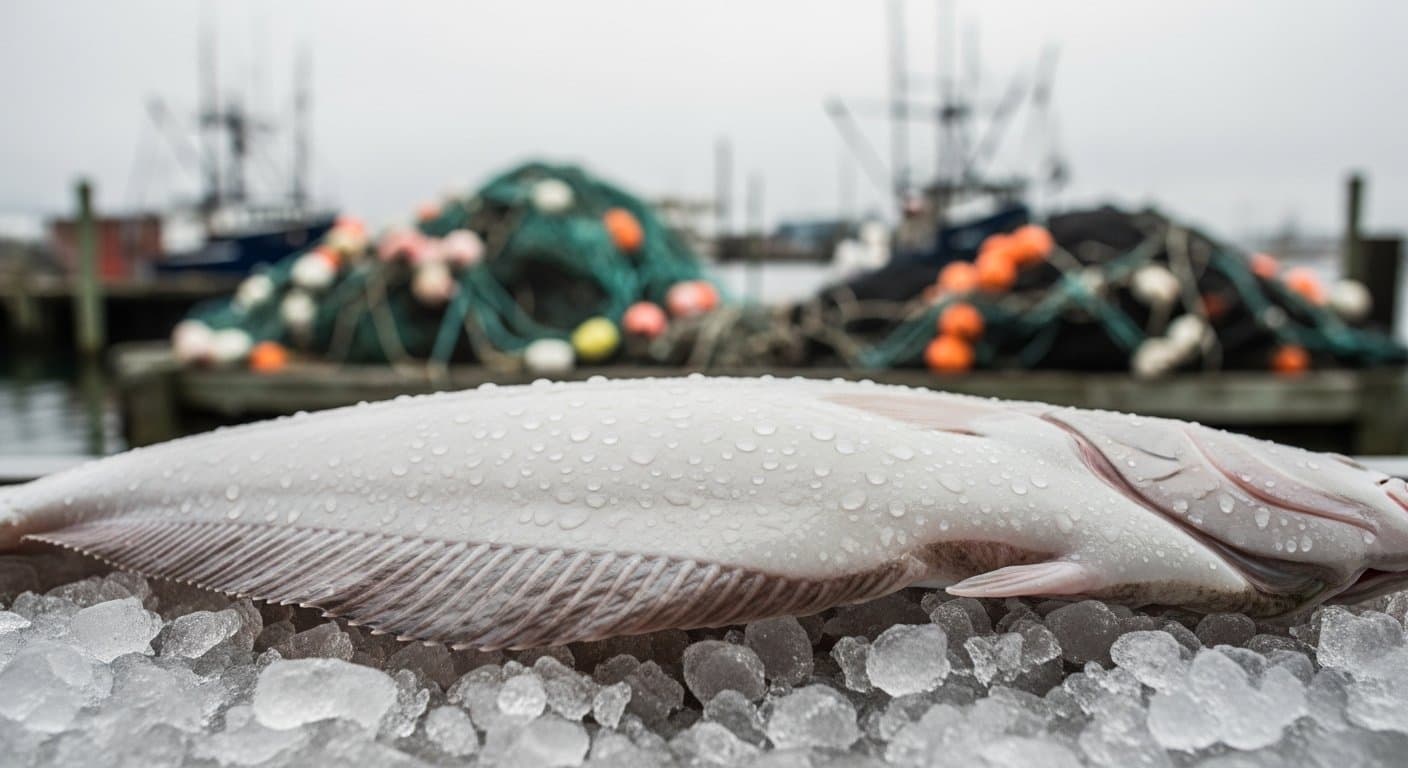
AI image
NOAA Sets West Coast Halibut Season Opening June 23 With 261,211-Pound Cap
NOAA Fisheries has set the 2026 commercial Pacific halibut season for the U.S. West Coast — and for all the regulatory machinery behind it, the fishery is a sliver of a resource that Alaska dominates.
The rule, published June 16, governs Area 2A, the waters off Washington, Oregon, and California and the southernmost slice of the Pacific halibut range. Its entire non-tribal directed commercial allocation is 261,211 pounds — less than one percent of the roughly 29.3-million-pound coastwide mortality limit the International Pacific Halibut Commission set for 2026. The bulk of that coastwide total belongs to Alaska. The IPHC — the U.S.–Canada body that manages the stock — apportions the catch across regulatory areas running from California up through British Columbia, Southeast Alaska, and the Central and Western Gulf of Alaska to the Bering Sea, with Alaska's areas accounting for the lion's share of the harvest.
Within that small Area 2A pie, the season comes in narrow windows: June 23–25 and July 7–9, with a third opening July 21 only if quota remains. Vessel catch limits scale by boat length, from 2,000 pounds for vessels 35 feet and under to 5,000 pounds for those 56 feet and over.
Permit holders receive inseason openings and closures by direct email and through the Federal Register, and standard logbook and closed-area rules apply — including non-trawl Rockfish Conservation Areas, depth-based zones off-limits to certain gear.
Based on a press release.
AI-assisted. No editor review is on record for this article. Who is accountable.
Stay informed. Support what matters.
Free, permanent access to local news you can verify. Subscribe to support Bill AlaskaNews and go ad-free.
Related Coverage
The West Coast dips into the halibut stock Alaska shares
Alaska News · 2mo ago
The West Coast halibut fleet left most of its quota for the July 7 opener
Alaska News · 2mo ago
West Coast halibut catch falls to a fifth of June's rate as NOAA adds a sixth period
Alaska News · 4d ago
North Coast Chinook Troll Fishery Opens 5 Days, Then Closes
Alaska News · 3mo ago
NOAA would let one boat take far more western halibut to get anyone fishing it
Alaska News · 1w ago
Comments
Sign in to leave a comment.
No comments yet. Be the first to share your thoughts.