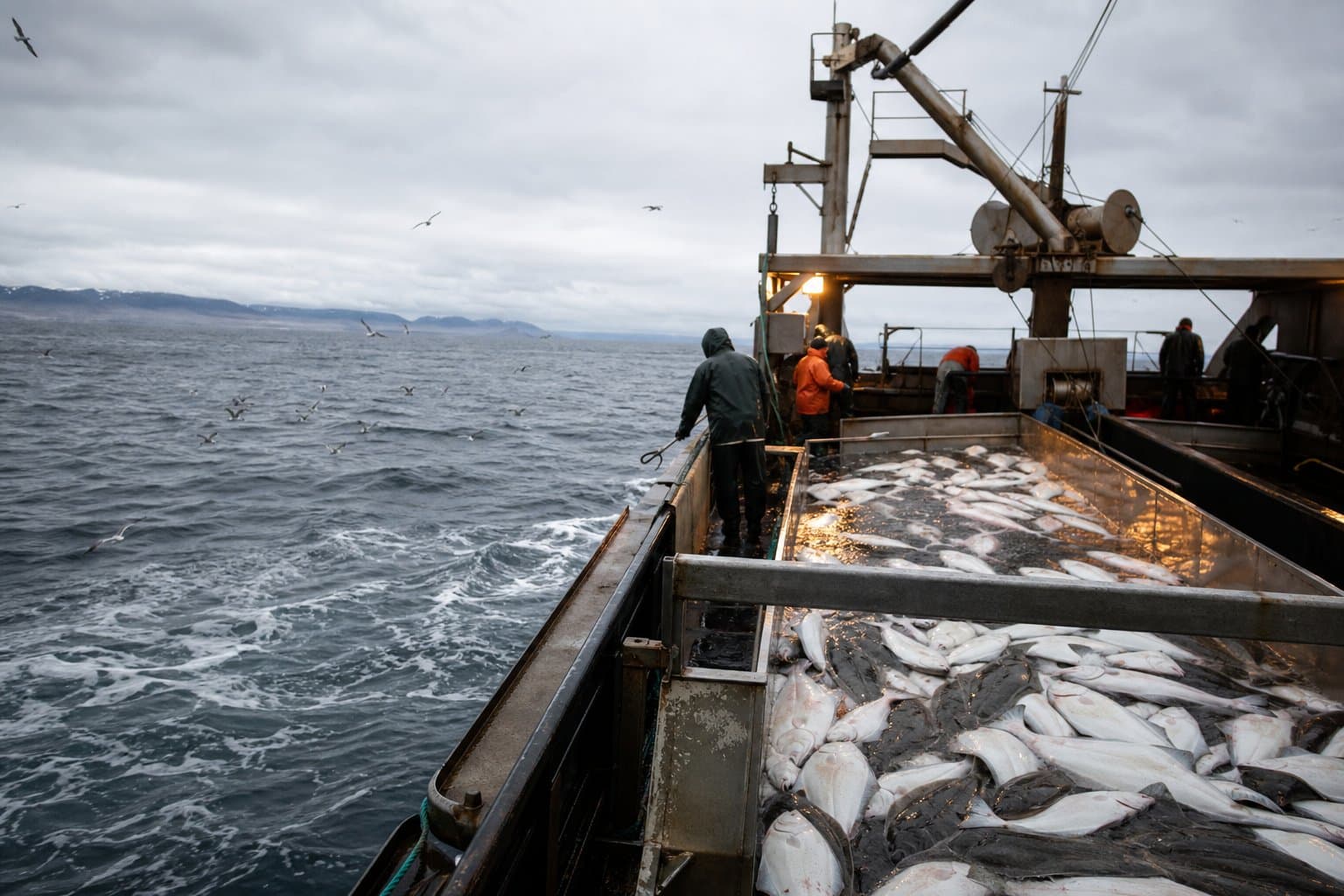
AI image
Managers want to double a halibut cap. Their own analysis warns against it.
Federal fishery managers want to roughly double the limit on how much halibut a single boat can catch in the Bering Sea and Aleutians, and their own analysis says it would benefit a few large vessels at the expense of the rest of the fleet.
The National Marine Fisheries Service has proposed setting the cap at 5 percent of the combined Area 4 catch limit, about 132,900 pounds at this year's numbers. That is nearly double the statewide cap set to return in 2028, and the two don't stack: a boat could take the full Area 4 amount and still have room to fish Southeast and the Gulf. Comments are open through Oct. 5.
The catch is what the public notice leaves out. The agency's own regulatory analysis says that in an intensely competitive quota fishery, a larger cap would likely help a few boats while costing the rest, and could mean fewer crew jobs, harm to related businesses, and higher rental fees for the quota holders who don't own boats. The phrases "fewer crew jobs" and "rental fees" appear once each in the 64-page analysis and nowhere in the six-page Federal Register notice, which frames the change as added flexibility and stability.
The agency's other justification is that a higher cap would get more of the quota caught. Its own analysis won't vouch for it. Halibut use in Area 4 actually fell after the caps were suspended: one key sub-area landed 98 percent of its quota in 2018 and just 24 percent in 2025. Whether that reflects the missing caps or something else, the analysis says, is unclear.
Vessel caps exist to limit consolidation and protect smaller, part-time and entry-level operators. Very few boats would actually hit the proposed cap, at most two in any recent year. But under the tighter cap returning in 2028, more than a dozen boats a year would have gone over, which is the point of the comparison: the proposal loosens the limit right as a stricter one was due.
Underneath the cap fight is a fishery emptying out. Boat counts have collapsed across the region. St. Paul went from eight or nine vessels a year before 2020 to one or two after. Savoonga had nine in 2019 and none since 2022. Atka went from four to zero. The analysis blames falling quotas, rising costs, killer whales stripping fish off the gear, and the loss of places to land a catch. St. Paul has not processed Area 4 halibut since 2019, and boats now travel farther to a processor than they once did.
The North Pacific Fishery Management Council chose the 5 percent cap in April 2025 and declined to attach any scheduled review. As proposed, the limit has no expiration and no required reassessment.
No fisherman, crew member, quota holder, processor or community is quoted anywhere in the rule or its analysis.
Source: The Bering Sea halibut cap being raised would have bound two boats in five years, and the warning about who pays for raising it is in the analysis rather than in the notice ().
AI-assisted, reviewed by Cale Green. Who is accountable.
Stay informed. Support what matters.
Free, permanent access to local news you can verify. Subscribe to support Walter AlaskaNews and go ad-free.
Related Coverage
Bering Sea halibut boats would get a catch cap double the rest of Alaska
Alaska News · 6d ago
NOAA would let one boat take far more western halibut to get anyone fishing it
Alaska News · 1w ago
Regulators shift unused halibut allowance to Bering Sea trawlers
Alaska News · 1mo ago
Rules on remote Alaska communities' fishing quota return to council
Alaska News · 2w ago
Pacific halibut hit a 40-year low as Alaska absorbs the deepest cuts
Alaska News · 1mo ago
Comments
Sign in to leave a comment.
No comments yet. Be the first to share your thoughts.