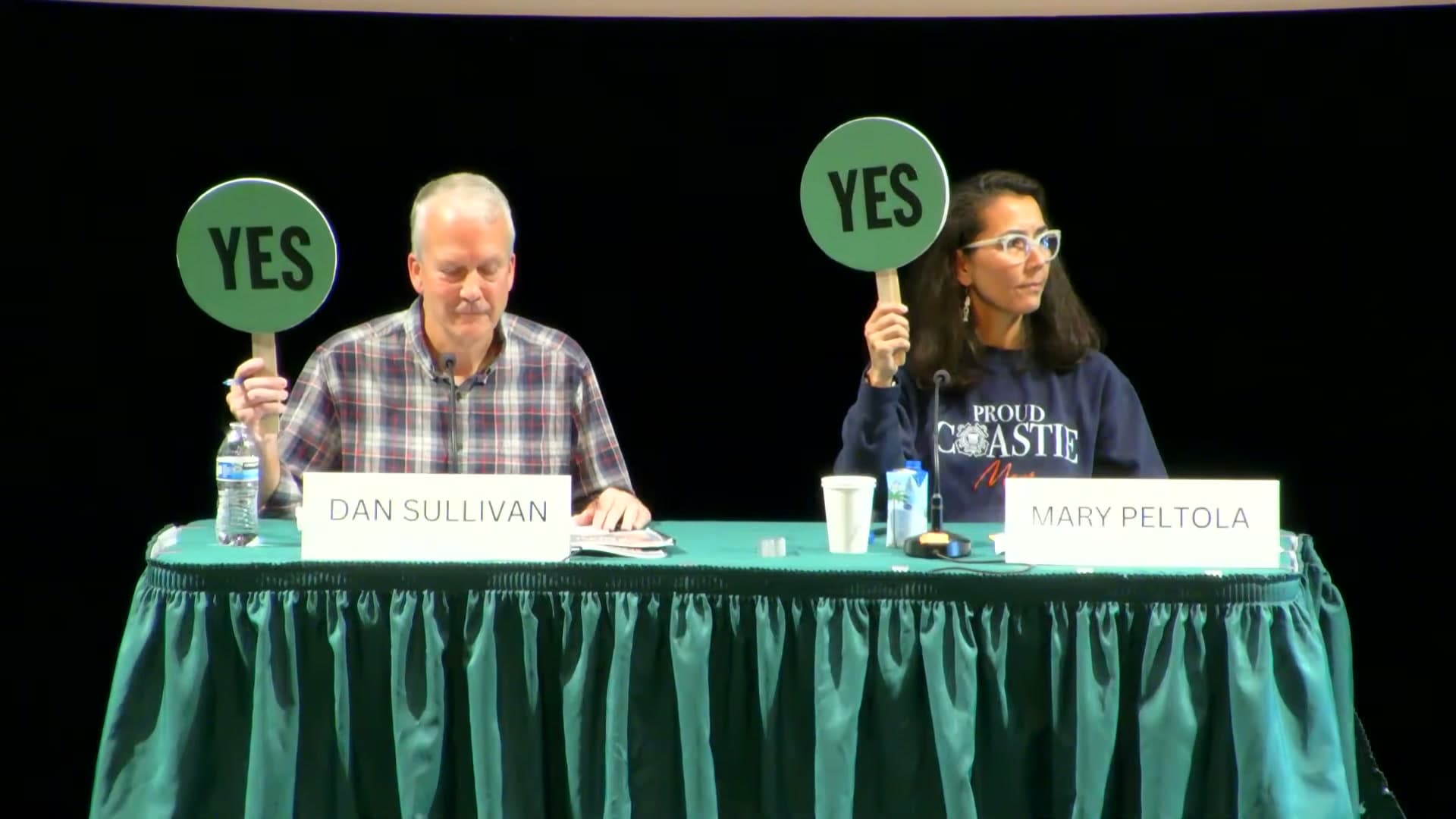
In Kodiak, Sullivan and Peltola agreed on the problems and fought over the fix
Sen. Dan Sullivan and Mary Peltola agreed on most of the diagnosis at Saturday's fisheries debate in Kodiak. Climate change is already reshaping Alaska fisheries. The North Pacific Fishery Management Council and NOAA do not adequately account for subsistence users, salmon migration or Indigenous ways of life. Federal science, processing, vessel safety and the Coast Guard all need more money.
The argument was over what counts as results. Sullivan measured them in laws passed, dollars secured and seniority accumulated. Peltola measured them in salmon that did not come back.
On bycatch, Sullivan pointed to his Bycatch Reduction Act, which gets its first committee vote Wednesday, three months after he introduced it. The bill would set standards to keep trawl nets off the seafloor, require salmon excluders in the pollock fleet, expand monitoring, and restrict imports from countries with weaker rules. He said the council was moving too slowly and needed deadlines from Congress. Peltola said NOAA already has bycatch rules it is not enforcing, and called for reauthorizing the Magnuson-Stevens Act, tightening its national standards, and restricting factory trawling. She did not say which existing rules NOAA is failing to enforce; he did not say what level of seafloor contact would trigger his bill's penalties.
On the council, both said it is falling short. Sullivan said Congress should not be running fish allocation, since "you don't want 100 U.S. senators trying to legislate fish allocation in the North Pacific," but that intervention is warranted when the council fails on bycatch. Peltola wants one or two seats reserved for Alaska Natives so representation does not depend on who gets appointed, and said ordinary residents get a few minutes to testify on decisions that determine whether their communities can fish at all.
On why the salmon are gone, both named many causes: warm rivers, poor snow, ocean warming, predators, Russian hatcheries, bycatch. Sullivan said the answer is research first, and cited the salmon task force report his 2022 legislation required. Peltola said uncertainty about every cause is no reason to wait on the one Congress can control. "Let's start where we can," she said. NOAA's own research says bycatch explains a small fraction of the historic Chinook decline, and also records the inequity of communities barred from subsistence harvest while salmon are caught offshore.
On records, Sullivan said Peltola passed no fisheries bill in two years in the House. She introduced two in 2024, on bottom trawling and bycatch; neither left committee. Sullivan's own bycatch bill lists him as sole sponsor and has, until Wednesday, gone nowhere since June. Peltola said the question is not what passed but what changed on the water.
Reading this? Tell us what you make of it. (no account needed)
On the USDA seafood office, Sullivan called its creation an achievement that could open farm-style loans and insurance to fishermen. Peltola said it could help but needs oversight and a focus on wild fish, and called it the "Dan Sullivan Office of Farmed Fish," a campaign line rather than a description of any policy the office has adopted.
On fuel, Peltola tied prices to the war involving Iran and Sullivan's votes on it. Sullivan did not address the votes; he said the answer is more Alaska energy and that Peltola's party opposes it.
The pattern held from their first forum: agree on the Alaska goal, then accuse the other of empowering outsiders who would block it. Sullivan named Seattle senators, Russia, China and national Democrats. Peltola named Lower 48 trawlers, corporate donors and federal officials who have never been to a fish camp.
What the debate settled is the test each wants voters to apply. Sullivan asked to be judged on what he has passed and what his bill may become. Peltola asked voters to judge that record against the rivers.
This article is based on a public meeting of YouTube — LIVE: 2026 Alaska Congressional Fisheries Debates ().
AI-assisted, reviewed by Cale Green. Who is accountable. Transcript byLucas Brown
Watch key moments from the source meeting. Click to expand.
Stay informed. Support what matters.
Free, permanent access to local news you can verify. Subscribe to support Alaska News and go ad-free.
Related Coverage
Sullivan and Peltola, fighting over the same salmon
Alaska News · 2mo ago
Peltola tours the Interior on fish and costs — into a contested field
Alaska News · 2mo ago
Peltola releases Alaska fisheries platform anchored in factory trawling ban
Alaska News · 2mo ago
Sullivan and Peltola clash in a combative first forum, previewing a bitter Senate race
Alaska News · 2w ago
Sullivan's Bycatch Bill Wades Into Alaska's Hardest Fish Fight
Alaska News · 2mo ago
Comments
Sign in to leave a comment.
No comments yet. Be the first to share your thoughts.