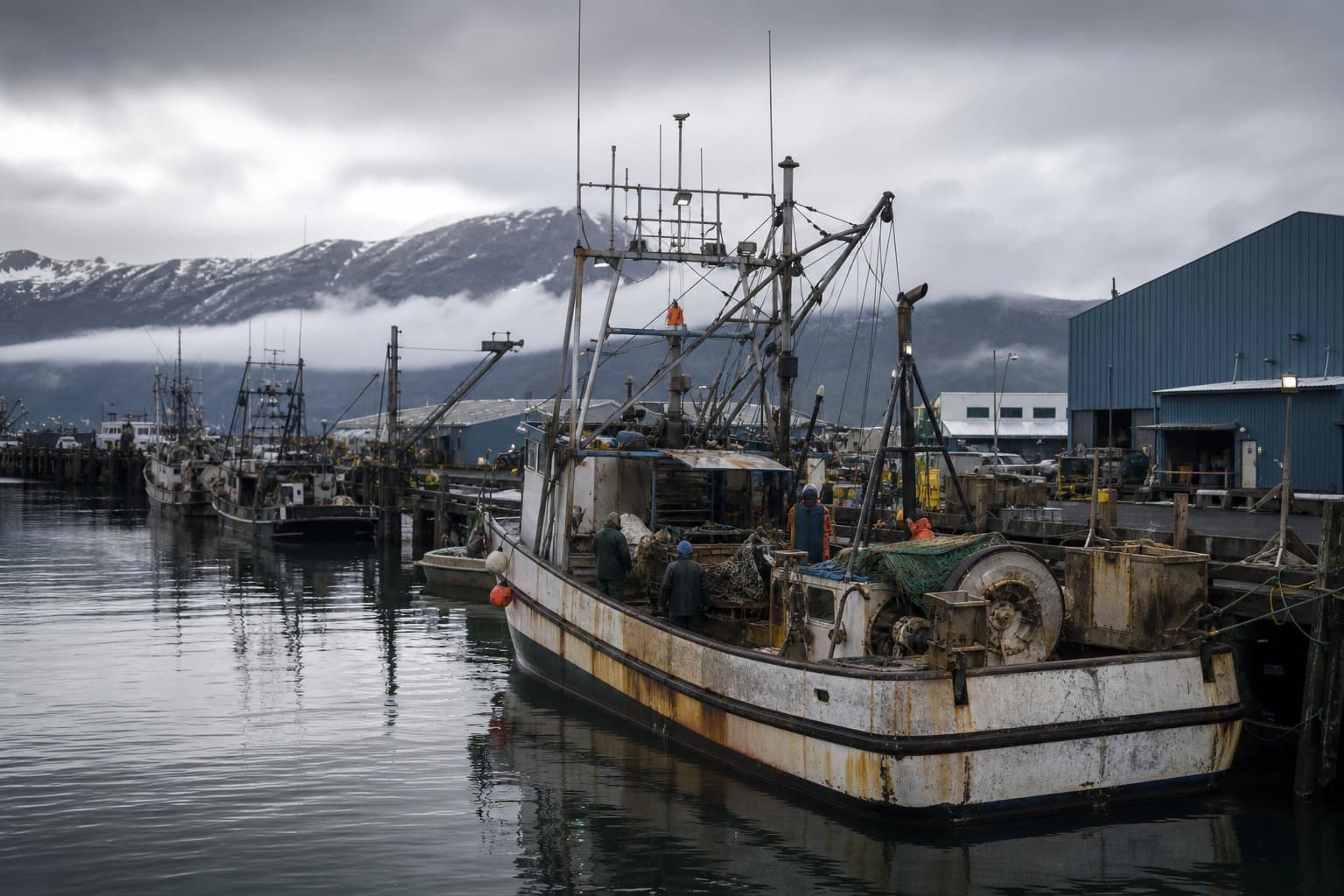
AI image
Federal fishery disaster relief of $99M headed to Alaska after years of waiting
The most telling number behind Alaska's latest fishery-disaster aid isn't the dollar figure — it's how much of the country's total the state claimed. When the U.S. Department of Commerce announced the money June 18, about $99 million of the roughly $123.6 million it split among six declared disasters nationwide went to three Alaska collapses — four out of every five dollars, for a single state.
The biggest of the three reads like science fiction. Since 2018, more than 10 billion snow crab have vanished from the eastern Bering Sea — a crash of more than 90%, and one of the largest die-offs of marine life ever tied to a marine heatwave. It forced the first closure of the snow crab fishery in its history, then a second the next year, and NOAA Fisheries links the loss to the warming of the Bering Sea. That collapse alone accounts for about $75 million — for a fishery that as recently as 2021 brought $219 million into communities from just 59 boats.
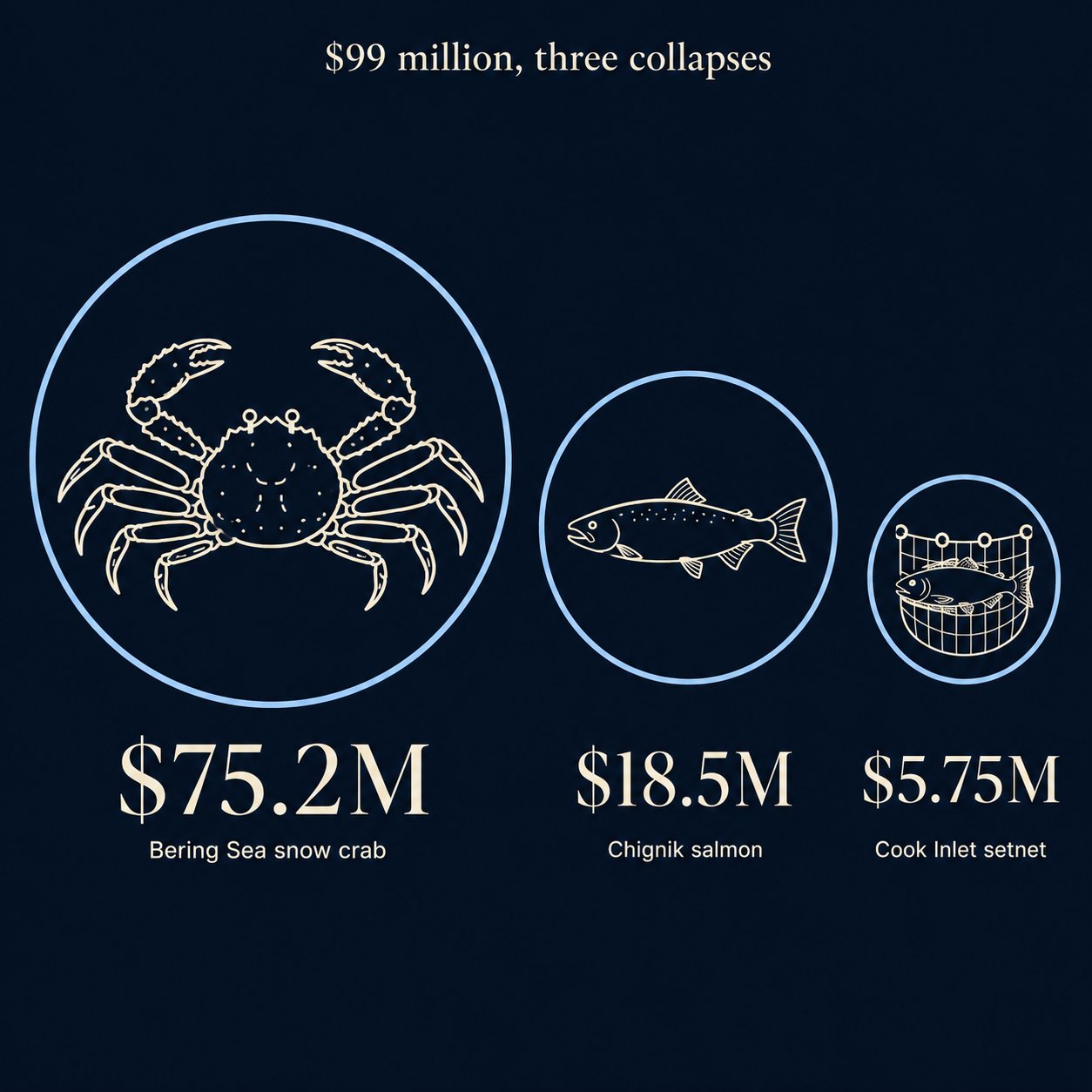
The rest covers the 2022 failure of the Chignik salmon run ($18.5 million) and the 2023 shutdown of Upper Cook Inlet's East Side setnet fishery ($5.75 million), where fishermen were shut out to protect weak king salmon runs. "Our fishing industry is part of the beating heart of coastal Alaska," said Sen. Lisa Murkowski, "but seemingly every fishery over the last decade has been hit hard by disasters beyond their control."
For all that scale, none of the money has reached anyone. Before a dollar moves, NOAA Fisheries, the state, and the Pacific States Marine Fisheries Commission must jointly write a distribution plan — with no deadline set. Sen. Dan Sullivan called the allocation a recognition of "the extraordinary scale of the challenges facing Alaska's fisheries."
And even this haul covers only the disasters that made it through. In a recent social media post, citing NOAA records, former state senator Thomas Begich flagged that 13 more Alaska disaster requests are still sitting in the federal queue with no money attached — a longer line running from Western Alaska's failing rivers to Prince William Sound, Cook Inlet, and the Bering Sea crab towns. Among them is a request for the 2024 Prince William Sound pink and chum salmon season.
That line crawls by design. There is no standing fund for fishery disasters; each one has to clear a federal determination and then a separate act of Congress — money that can arrive years late, below what was asked, and split among every affected state and tribe. And as NOAA's own records frame it, these collapses are largely the work of a warming ocean — not something a check can undo.
The aid is already years behind the disasters. The line behind it is longer still. And for the snow crab, at least, the ocean that emptied hasn't refilled.
Assembled from public records the newsroom collected ().
Drafted with AI. Edited by Cale Green (3 revisions). No full editor review is on record. Who is accountable.
Stay informed. Support what matters.
Free, permanent access to local news you can verify. Subscribe to support Walter AlaskaNews and go ad-free.
Related Coverage
Eight Alaska fishery disaster requests are past the deadline federal law sets
Alaska News · 4w ago
State opens comment on $5.8 million Cook Inlet setnet relief plan
Alaska News · 1mo ago
ADF&G opens comment on three federal fishery disaster spend plans
Alaska News · 2mo ago
Alaska fishery disaster funds stalled at OMB despite congressional approval
Alaska News · 3mo ago
Alaska's fishermen got left out of an $11 billion farm rescue
Alaska News · 1mo ago
Comments
Sign in to leave a comment.
No comments yet. Be the first to share your thoughts.