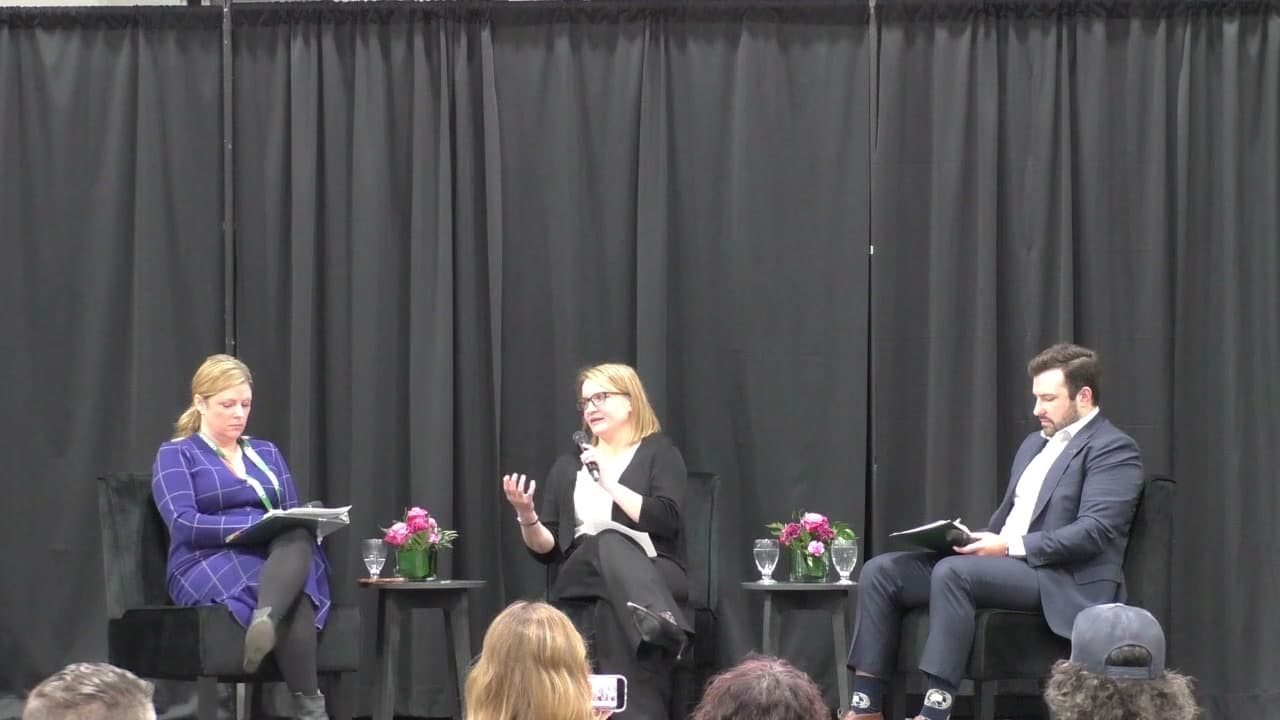
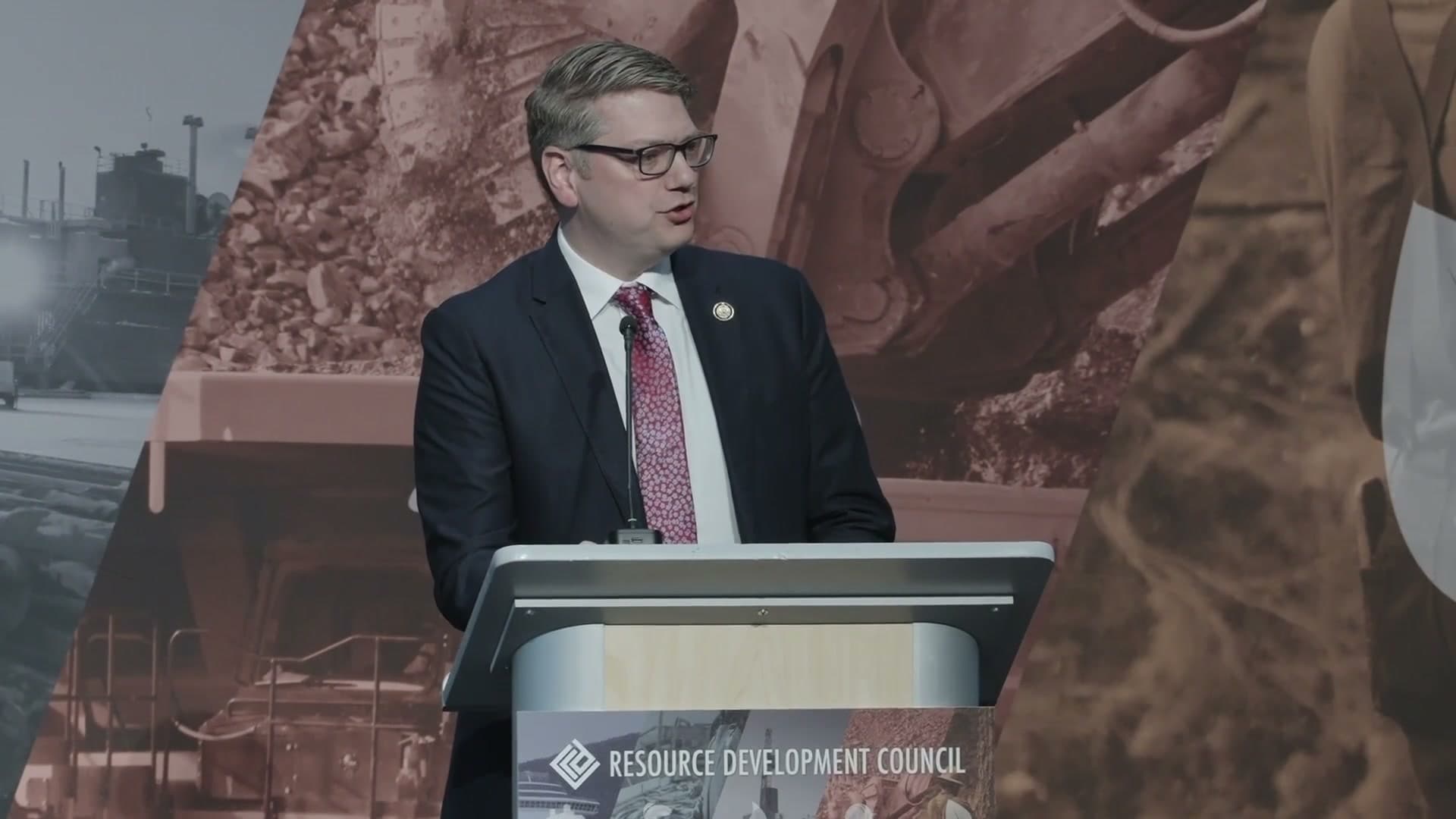
Frame from "11-5-2026 RDC/AMA Breakfast Forum" · Photo source
EPA drafts rules on whether used work gloves count as hazardous waste
The U.S. Environmental Protection Agency has drafted rules addressing whether the leather work gloves worn across Alaska's oil fields and mines must be handled as hazardous waste once they're thrown away, the agency's regional administrator said Nov. 5.
Emma Pokon, who runs EPA's Region 10, told a Resource Development Council and Alaska Miners Association breakfast forum in Anchorage that she had recently learned the package was at the federal Office of Management and Budget. It hasn't been released for public comment, and Pokon didn't say what it would require. As of Monday, the office's public list of rules under review showed no EPA hazardous-waste rule.
The question came from the Alaska Miners Association's executive director, who said members of both groups had raised concerns about having to treat leather gloves as hazardous waste under the federal Resource Conservation and Recovery Act.
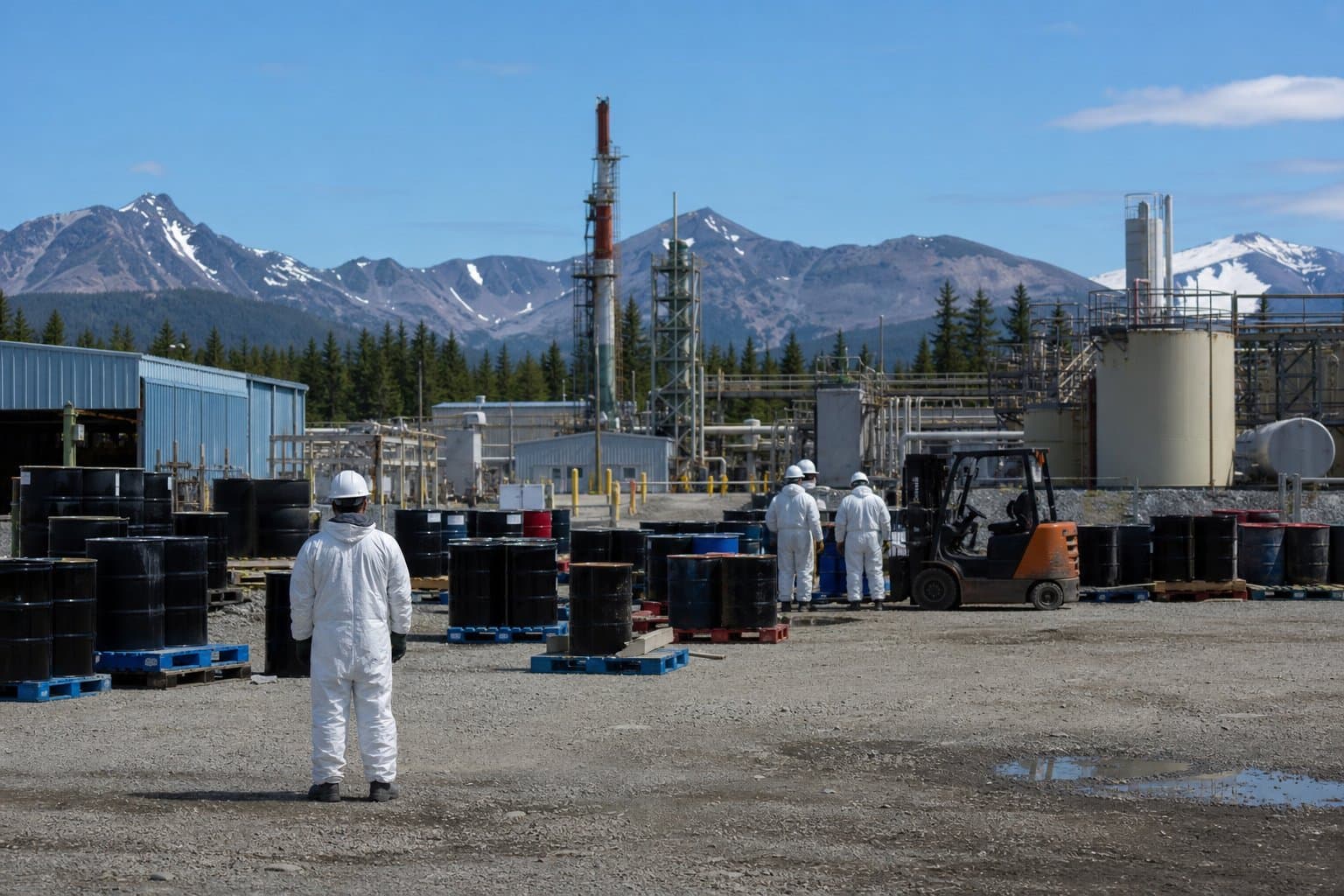
Gloves can fall under hazardous waste rules. EPA guidance says gloves and protective clothing may be regulated when they contain hazardous waste or show its characteristics. The Alaska Oil and Gas Association has pointed to another issue: leather can contain chromium from the tanning process. In comments on the state's takeover of the program, the group asked the state for guidance that used leather not be classified as hazardous because of that chromium unless it's visibly contaminated with another hazardous substance.
Pokon said the issue first reached her when she was Alaska's environmental conservation commissioner, after enforcement actions surprised oil and gas operators and mines. She described the tension this way: "We have employees that are wearing these for 8+ hours a day and then you tell us that they're hazardous."
Since joining EPA, she said, she has learned that some states that run the federal program don't classify the gloves as hazardous waste. Because state programs have to be at least as strict as the federal one, she said, that "suggests at a minimum there's some gray area." After her office raised it with EPA headquarters, she said, "now suddenly there's like a regs package that's been drafted and is waiting to get out for public comment."
Alaska took over the federal hazardous waste program Aug. 6 after EPA approved its application, and the state Department of Environmental Conservation now handles permits, inspections and enforcement.
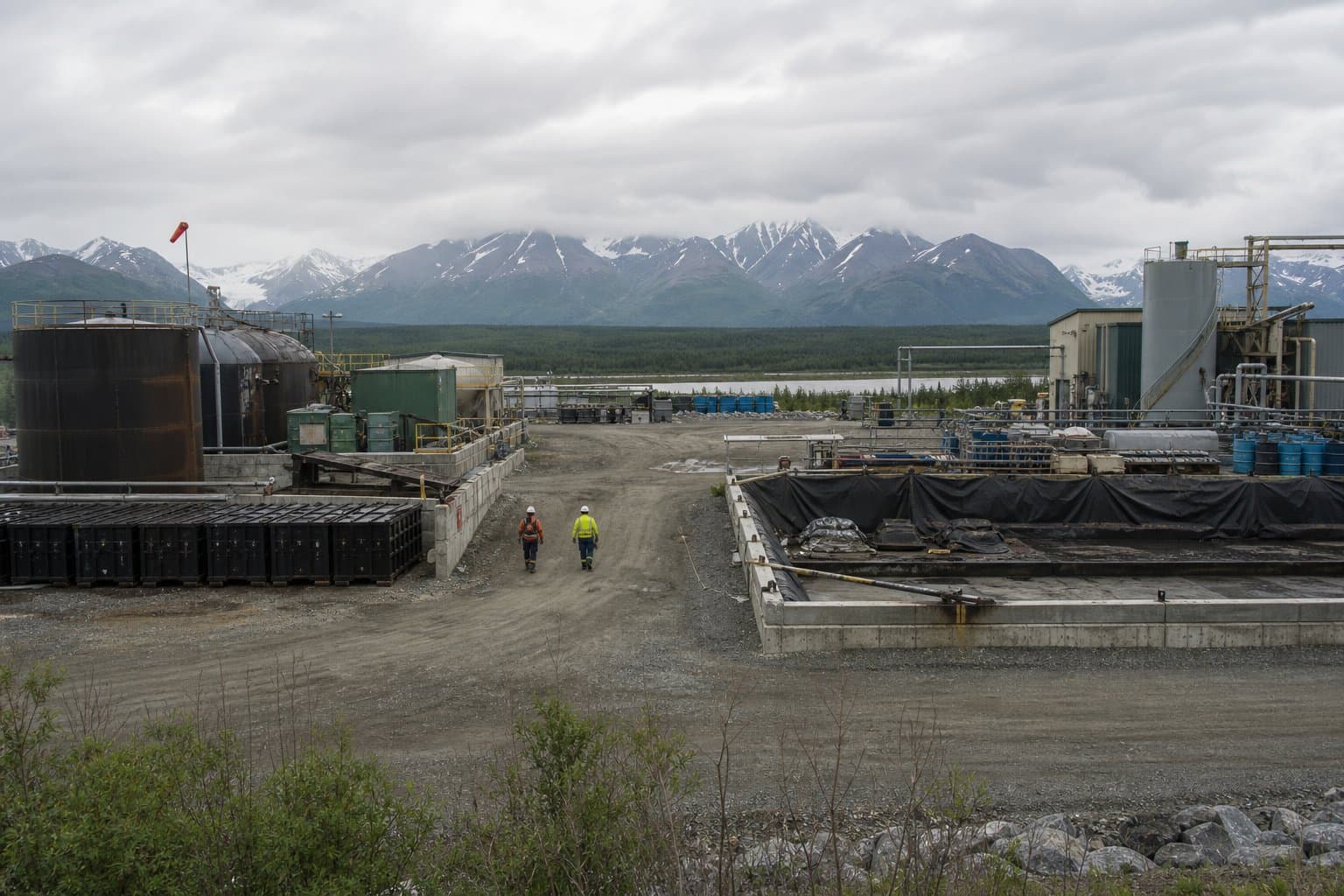
Pokon said a recent EPA roundtable also looked at how the program works in Alaska. Limits of 90 or 270 days on how long hazardous waste can be stored can be hard to meet for communities and some industries off the road system, she said, and participants said barge space sometimes has to be planned two years out. She called the roundtable fact-gathering, with "no final determinations."
What did you make of this story? (no account needed)
Made by our human newsroom with AI. Reviewed by Cale Green. How humans and AI work here · Grow with our newsroom · Transcript byLucas Brown
Get Alaska News in your inbox
Create your free account and get the day’s top stories around 6 each morning, in a few minutes’ read.
Top stories, around 6 each morning.
Stories on what you follow, on Sundays.
This article is based on a public meeting of Resource Development Council for Alaska — 11-5-2026 RDC/AMA Breakfast Forum ().
Watch key moments from the source meeting. Click to expand.














Comments
Sign in to leave a comment.
No comments yet. Be the first to share your thoughts.