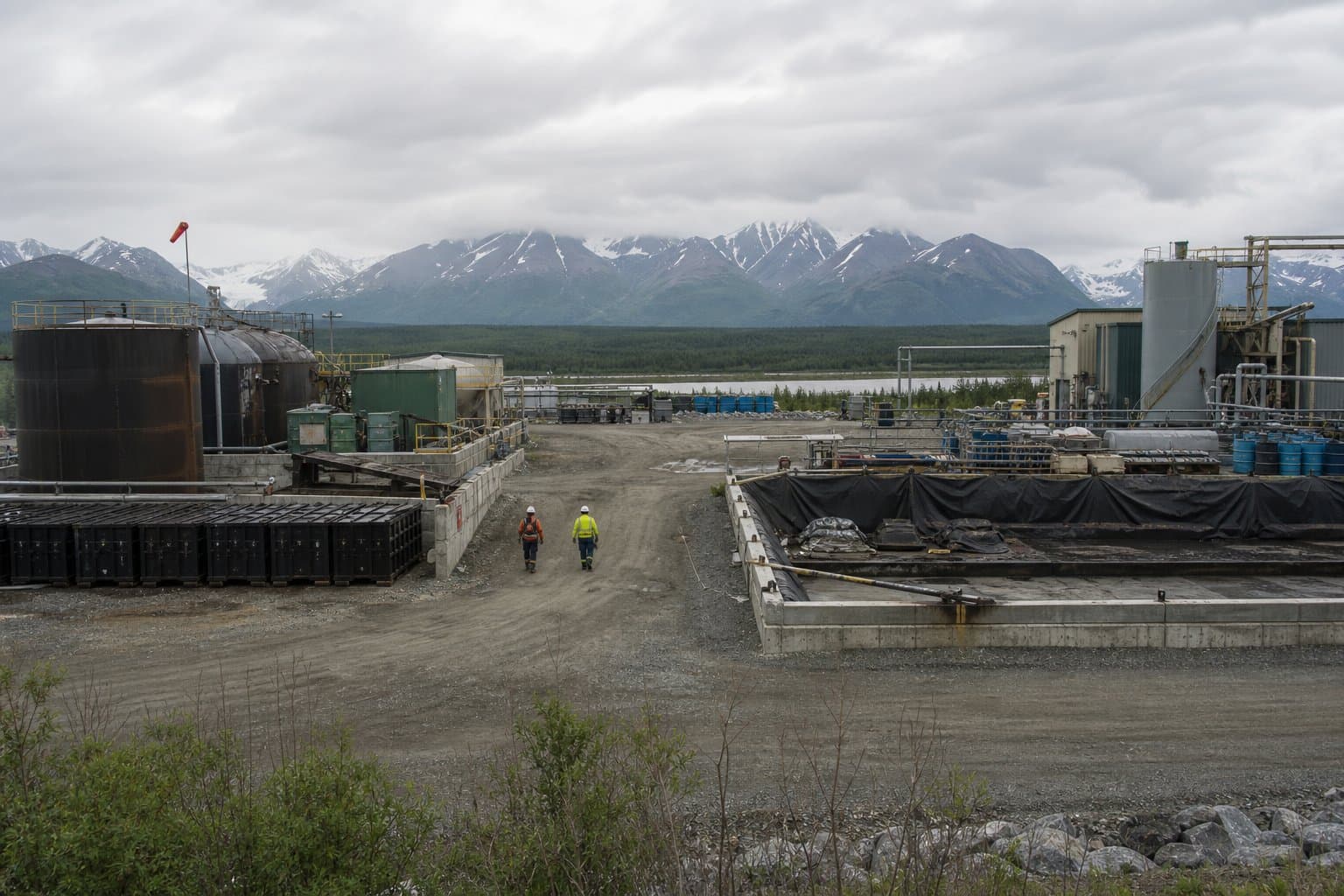
AI image
EPA grants Alaska authority to permit hazardous waste facilities
The Alaska Department of Environmental Conservation takes over permitting and enforcement for hazardous waste treatment, storage and disposal facilities in the state on Aug. 6. EPA Region 10 Administrator Emma Pokon signed the final authorization July 31. It takes effect when it publishes in the Federal Register.
Three of the four written comments EPA received on Alaska's application asked the agency to hold off. EPA declined all three requests to delay. The agency concluded that the issues the comments raised fell outside the scope of its decision and gave it no reason to deny, delay or modify the approval.
EPA made the findings the Resource Conservation and Recovery Act requires before a state can take over. It found that Alaska's program is equivalent to the federal program, consistent with the federal program and other state programs, and provides for adequate enforcement of compliance with hazardous waste requirements.
The change does not create new rules. It does not alter the state hazardous waste regulations already in effect at 18 AAC 62. It changes which government administers and enforces them. The state department becomes the permitting and enforcement agency, operating under those state regulations in place of the federal program.
Persons in Alaska subject to the federal act must comply with the authorized state requirements in lieu of the corresponding federal requirements. They must also comply with applicable federal requirements that the state program does not supplant, including Hazardous and Solid Waste Amendments regulations for which Alaska has not yet received authorization. EPA will continue to implement those requirements, including issuing permits, until the state is authorized for them.
Not everything moves to the state. EPA retains full authority in Indian country and in areas of exclusive federal jurisdiction. The authorization cites Denali National Park, where section 11 of the Alaska Statehood Act acknowledges the United States retains exclusive jurisdiction. Alaska did not seek authority over Indian lands. EPA also keeps independent power to inspect facilities, require monitoring and testing, and bring its own enforcement actions.
Existing EPA-issued permits stay in force until they expire or are terminated. Once Alaska either incorporates the terms and conditions of the federal permits into state permits or issues state permits to those facilities, EPA will terminate the earlier federal permits and rely on the state ones. EPA will not issue new permits for the provisions Alaska is authorized to administer.
Federal rules require state programs to be at least as stringent as the federal program and allow them to be more stringent or broader in scope. EPA identified three Alaska provisions it considers more stringent. They are added reporting and notification requirements, the state's adoption of EPA's 2009 groundwater monitoring guidance as a regulatory requirement, and corrective action standards that fold in the state Contaminated Sites Program. The state requires annual notification from small quantity generators, large quantity generators and transporters, which the federal program does not. Alaska also adds electronic waste as a universal waste stream, a step the Alaska Oil & Gas Association told EPA that only five states have taken.
State requirements that are equivalent to or more stringent than the federal rules become part of the authorized program and are federally enforceable. Requirements that are broader in scope remain state requirements. Those are not part of the authorized program and are not federally enforceable. EPA found that some of the requirements in Alaska's siting rules for new hazardous waste facilities at 18 AAC 63 are not addressed in the federal regulations and are therefore broader in scope.
The comment period ran from May 14 to July 2. The Alaska Oil & Gas Association asked EPA to delay authorization until the state addressed its electronic waste and leather waste rules, which the association said needed more clarity or revision. Aditi Vig argued that electronic waste should be treated as hazardous waste rather than solid waste, saying the potential health effects are detrimental to exposed populations, particularly rural ones.
The Chugach Regional Resources Commission asked EPA and the state department to first evaluate cumulative risks to subsistence resources, food security and Tribal governance, and to create a Tribal co-stewardship working group. The inter-Tribal organization also asked the agencies to maintain clear points of contact for rural and Tribal hazardous waste concerns, provide plain-language guidance on rules and reporting, commit to regular rural and Tribal outreach, ensure public access to permits and compliance information, and support capacity-building for Tribal governments. The commission also said a state-administered program could offer opportunities for program design and budgeting that reflect rural Alaska hazardous waste issues that may not be fully addressed under a federal program. An anonymous commenter asked EPA not to approve the authorization until hydrocarbon leaks, spills and emissions were prevented, and argued for a transition to renewable energy.
EPA concluded that the comments did not provide reason to deny, delay or modify the authorization. The agency recognized that certain commission comments were relevant to how the program is implemented. It said implementation and coordination become the state's responsibility once authorization takes effect, that Tribes may continue to request government-to-government consultation with EPA, and that it will keep working with state and Tribal partners in Alaska. On the electronic waste comments, EPA said review of individual chemical toxicity and potential health effects is not part of its state authorization process under the federal act. On the leather comments, EPA said they concerned regulatory interpretations the association wants the state to adopt and did not provide a basis to deny or delay authorization.
Under the memorandum of agreement, EPA will assess the state program on a continuing basis. It may weigh written comments from Tribal governments and ANCSA corporations.
Source: Environmental Protection Agency, Environmental Protection Agency: State Hazardous Waste Program: Alaska; Final Authorization ().
AI-assisted. No editor review is on record for this article. Who is accountable.
Stay informed. Support what matters.
Free, permanent access to local news you can verify. Subscribe to support Maggie AlaskaNews and go ad-free.
Related Coverage
Alaska takes over hazardous waste rules, with enforcement in question
Alaska News · 1mo ago
Alaska takes over hazardous waste permitting — the first state to do so in 25 years
Alaska News · 1mo ago
Alaska seeks control of hazardous waste program as rural areas face shift
Alaska News · 4mo ago
Alaska's environmental chief calls EPA partnership under Trump the best of his career
Alaska News · 4mo ago
Alaska tightens stormwater rules for industrial sites, with no more easy "too expensive" exits
Alaska News · 3mo ago
Comments
Sign in to leave a comment.
No comments yet. Be the first to share your thoughts.