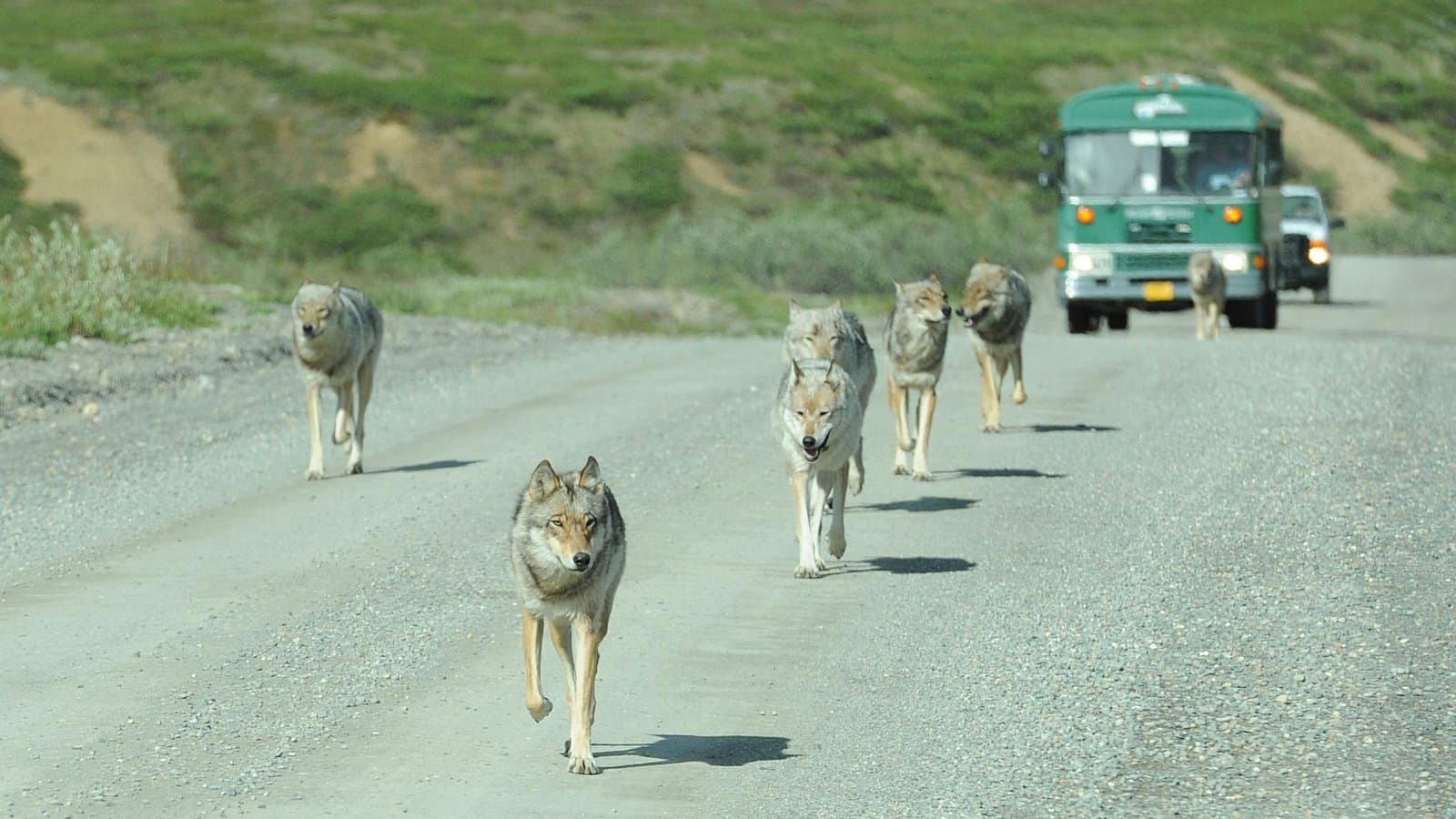
Five wolves trot down the Denali Park Road ahead of a bus in summer 2010. Photo by visitor Shawn Quinn, via the National Park Service. · Photo source · Public domain
Denali biologists' wolf count is near the bottom of a 40-year record
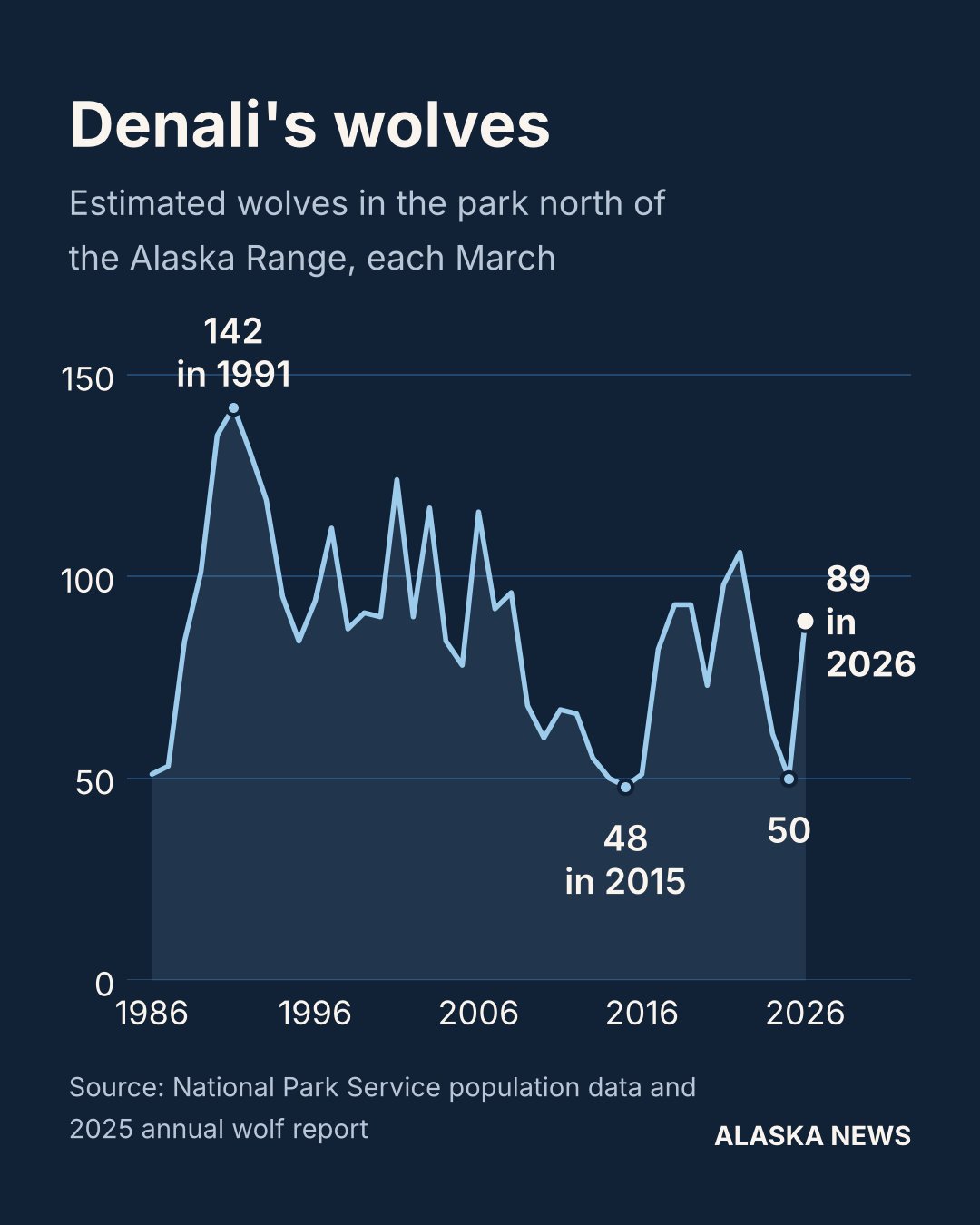
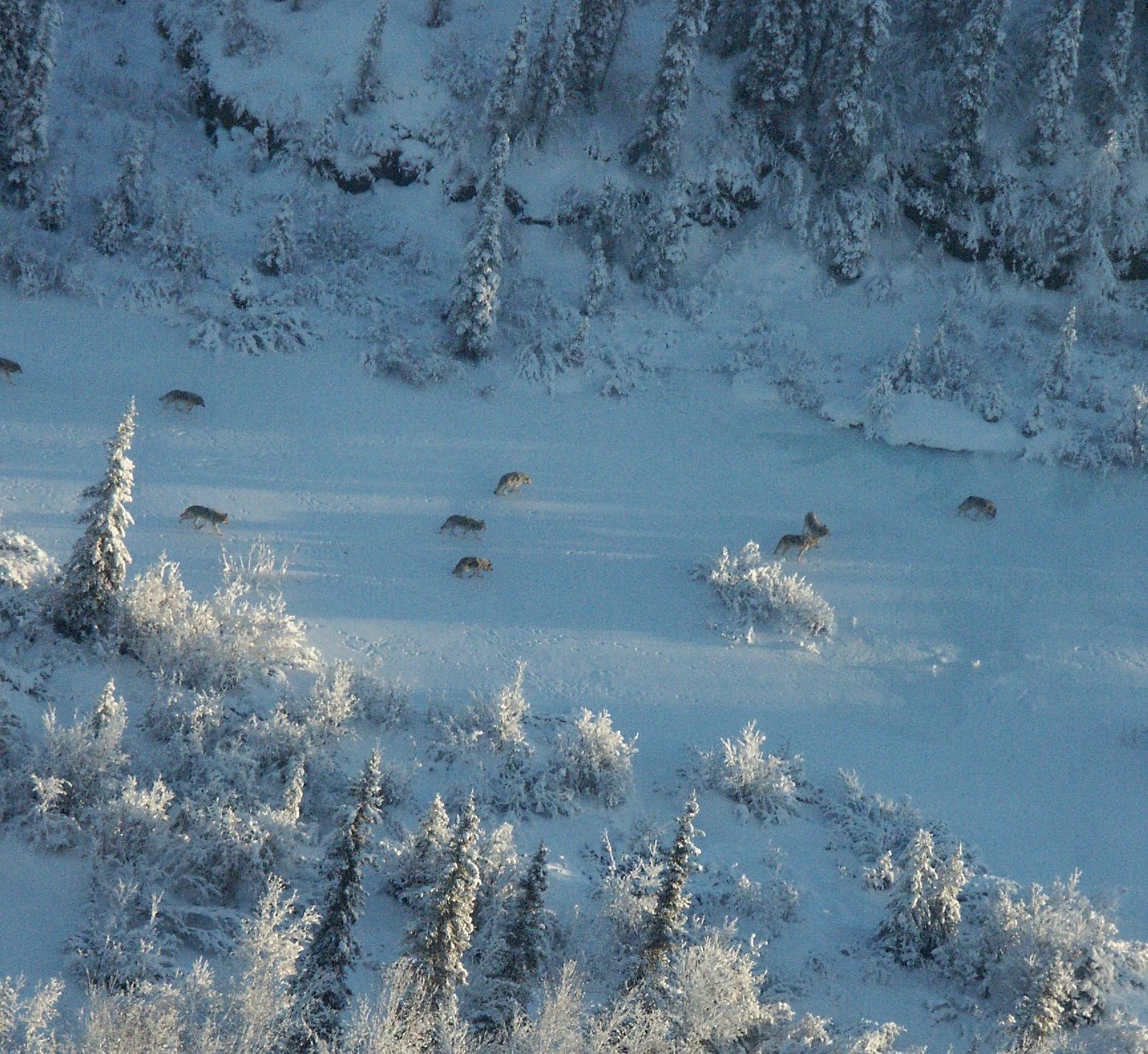
National Park Service biologists estimated that 89 wolves lived in the part of Denali National Park north of the Alaska Range in March, up from an estimated 50 a year earlier.
That 2025 estimate was among the lowest in the 40 years the park has been collaring its wolves and tracking them from the air.
The estimates have swung widely over those years, according to the park's population data and its latest annual report. The March estimates have ranged from 142 wolves in 1991 to 48 in 2015, and last year's 50 tied for the second-lowest.
Biologists count again in the fall, a separate survey; last fall's estimate was 58. The fall estimate fell from 103 in 2022 to 60 in 2023.
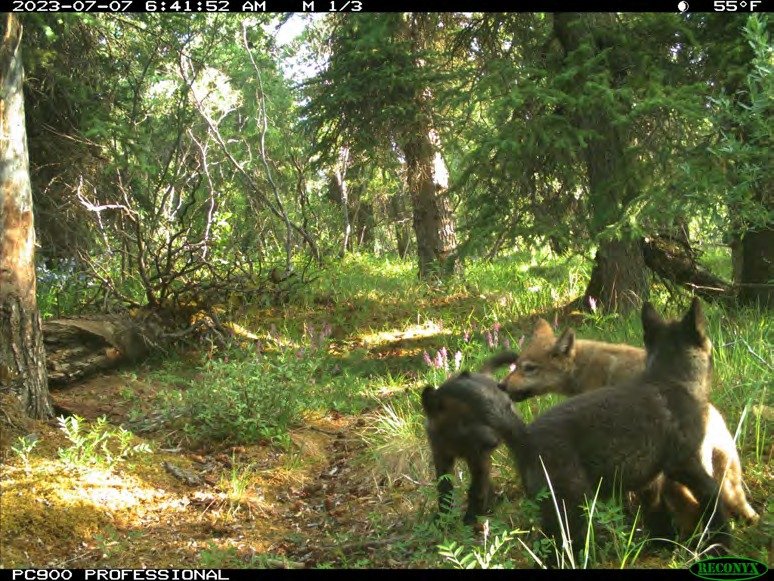
That year, 12 collared wolves died, including three harvested, three that starved and two killed by other wolves, and three of the 11 packs that denned recruited no pups, the park's 2023 report says.
Denali's wolves are "one of the longest-studied wild wolf populations in the world," the National Park Service says. Biologist Adolph Murie began studying them in 1939. Park-wide monitoring started in 1986 and has run every year since.
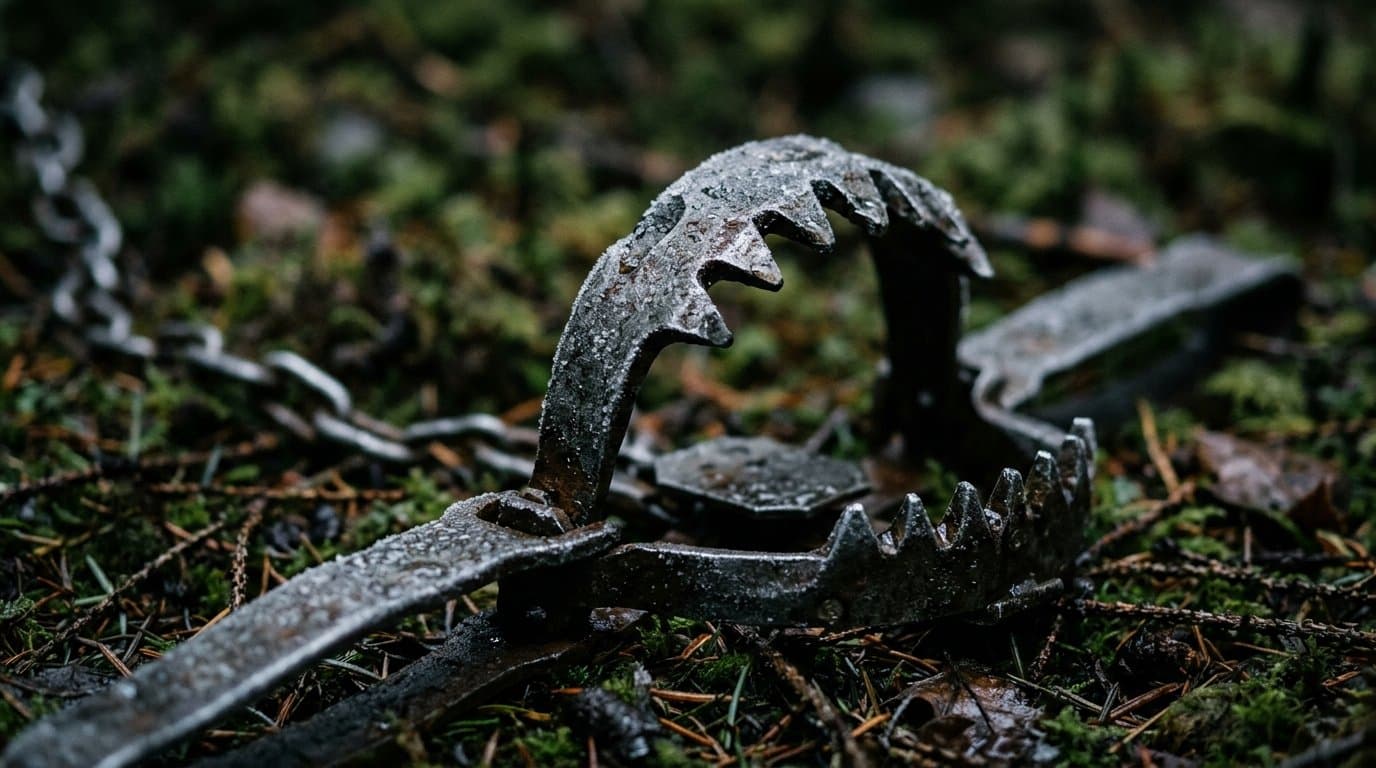
Next March, the Alaska Board of Game will consider whether to close state land in the Stampede Road corridor, just outside the park's northeast boundary, to wolf hunting and trapping.
Four of the park's collared wolves that had left their packs or territories were harvested in what the park calls the Stampede area between February 2025 and January 2026, according to the park's 2025 annual wolf report.
How the study works
The monitoring began after park employees found the skinned carcasses of seven wolves in remote parts of Denali in spring 1985, according to a Park Service history.
John Dalle-Molle, the park's resource manager, worried how little was known about its wolves, and he set out to learn how widespread aerial poaching was, what killed most wolves and how often they left the park. Researchers L. David Mech and Layne Adams began collaring wolves in early 1986.
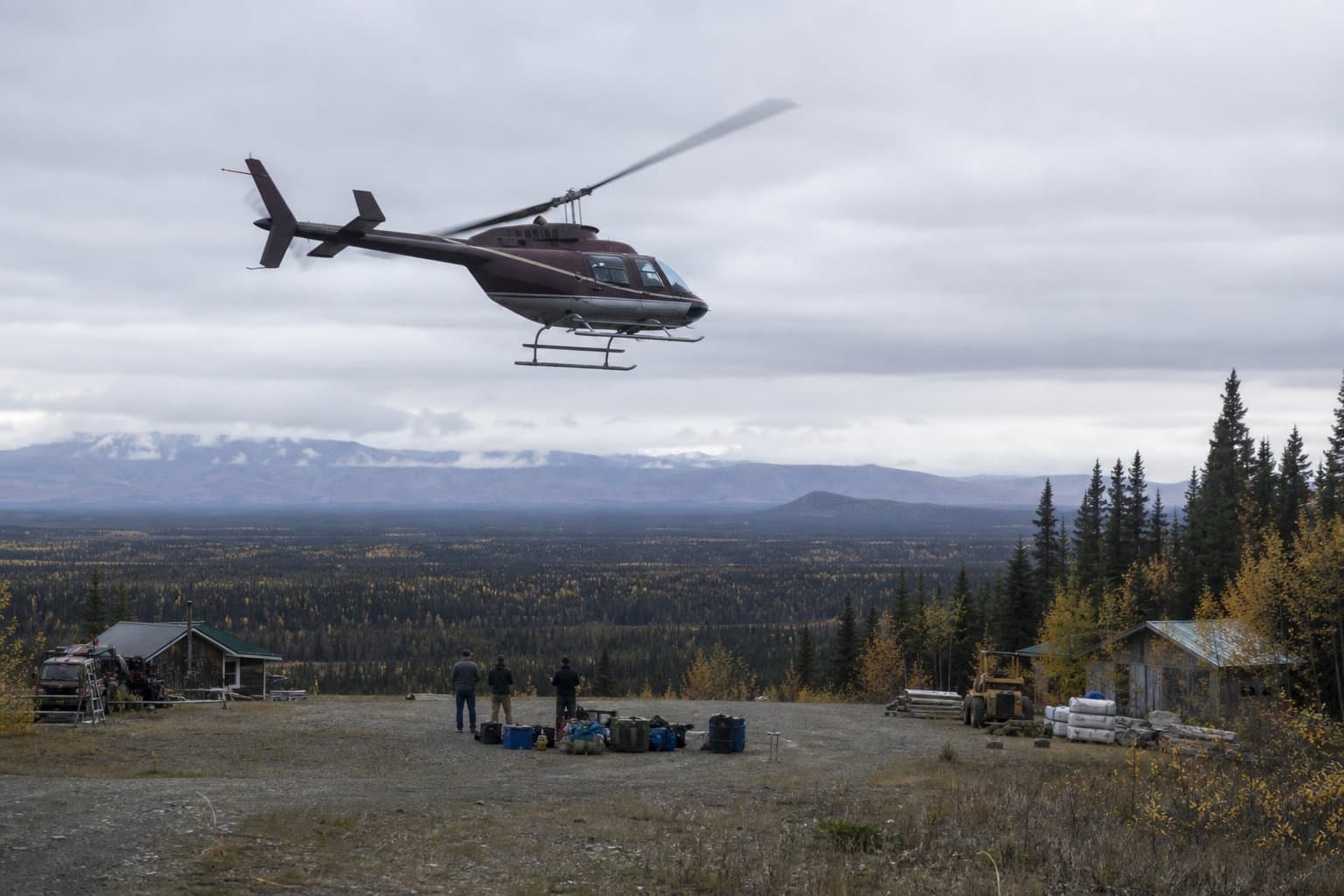
Biologists dart a wolf from a helicopter, measure it, check for disease or injury, take blood and tissue samples and fit it with a collar.
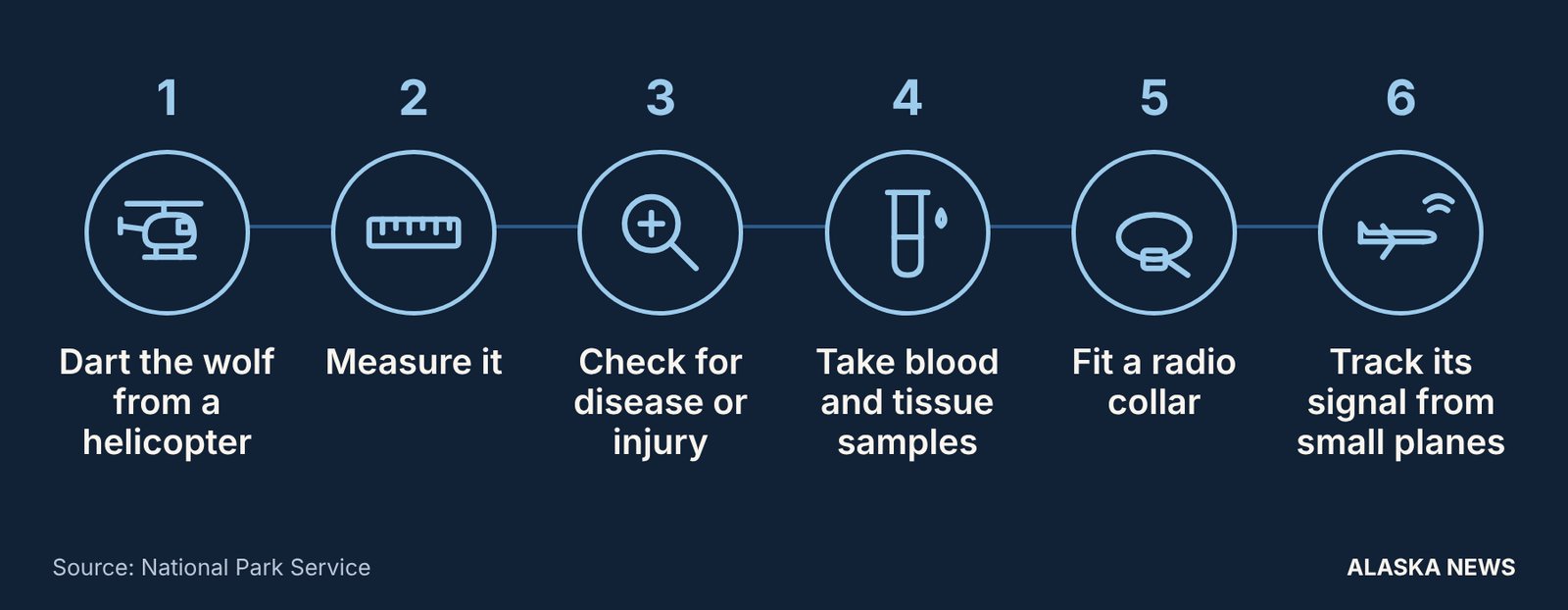
The goal is one to three collared wolves in every pack in the study area. Crews in small planes then home in on the collars' radio signals, about twice a month from March through September and occasionally in winter, counting pack members, spotting pups and finding dens. Some collars also report GPS locations by satellite.
The project also collars up to five coyotes a year along the park's northeast boundary, according to Denali's list of 2026 projects. A Park Service history last updated in 2017 put the number of wolves collared at more than 400.
Biologist Bridget Borg has run the program since 2017, with biological technician Kaija Klauder.
Last year, the crew captured and collared 11 wolves, two of them recaptures to replace aging or failed collars, and made 17 rounds of aerial tracking.
The report documents 13 times wolves were seen feeding at kills, six caribou and seven moose, and 10 collared wolves that died: five harvested, two starved and three of unknown natural causes.
Federal spending
Federal award records show some of what the Park Service has committed to flights and collars, though not the program's full cost; the awards often cover more than one species, and they don't include staff pay.
This year's awards include a helicopter award to Chena River Aviation of Fairbanks, currently valued at $160,000, for Denali wildlife work in February and March, and $126,192 to Wing & A Prayer Aviation of Cantwell for what the records call "DENA wildlife locations."
In 2024, the Park Service obligated $109,128 for wolf and caribou collars for Denali from Telonics, an Arizona company. In 2011, an order of radio tracking collars for Denali's wolves came to $19,350.
Wolf numbers and distribution are a "vital sign" tracked over the long term by the Park Service's Central Alaska Network inventory and monitoring program, which covers Denali, Yukon-Charley Rivers National Preserve and Wrangell-St. Elias National Park and Preserve.
What the collars have shown
Researchers following collared wolves visited more than 850 kill sites between 1986 and 1993.
Wolves killed many very young and older moose, caribou and Dall sheep, but few young adults. In winters without much snow, they ate mostly moose; in deep-snow winters, more caribou.
In the northwestern part of the park, wolves also feed on salmon at spots where rivers stay open in winter. Adams calculated that the biomass of chum salmon there equals that of moose and caribou.
From 1986 to 2013, other wolves killed more of the park's collared wolves than people did. Of 238 collared wolves that died in that time, at least a third were killed by neighboring packs and about a quarter by people, mostly through legal harvest outside the park. The rest, about 42%, died of other natural causes, often ones biologists couldn't determine.
The park also uses the tracking data to find active dens in heavily visited areas, which it closes to people to protect the pups. Last year, the South Sanctuary area was closed from May 19 to Sept. 19.
The life of 1501GM
This year's report devotes six pages to the life of a single wolf, a gray male known as 1501GM, pieced together from collars, GPS points and DNA.
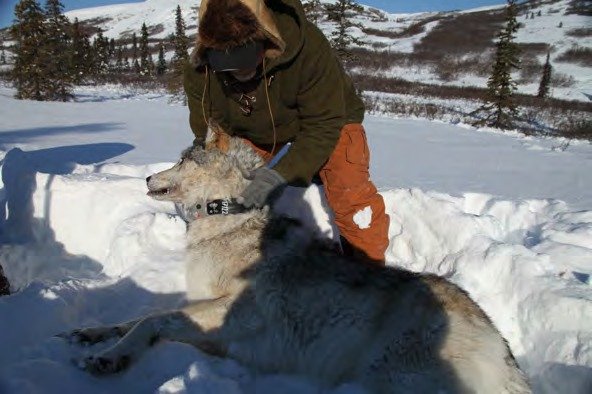
He was born in 2011 to the leaders of the Grant Creek pack and was collared in March 2015, weighing 113 pounds, after he rejoined the pack. Biologists concluded he had become its breeding male.
In 2016, two females in the pack had pups, and he spent the summer commuting about 20 miles over the crest of the Alaska Range between dens on either side. By fall, the pack was 12 strong.
That December, Grant Creek met the neighboring Riley Creek pack, led by 1501GM's aunt, near their shared border. Riley Creek followed Grant Creek about 20 miles into Grant Creek's territory and caught up in less than two days. 1501GM's mate and their daughter were left dead in the snow.
On the next monitoring flight, he was with just one other wolf.
"For most wolves, this would likely have been the end of their story," Klauder wrote. "But not, as it turned out, for 1501GM."
About three weeks later, he crossed back over the range and paired up with the breeding female of a pack of two, an experienced wolf nearly 8 years old. Klauder called it "akin to winning the lottery twice."
The pack grew to 14 by 2020, though DNA later showed he hadn't fathered the three wolves biologists collared from its litters. At 9, he stopped going to the den and spent his last summer with another old wolf.
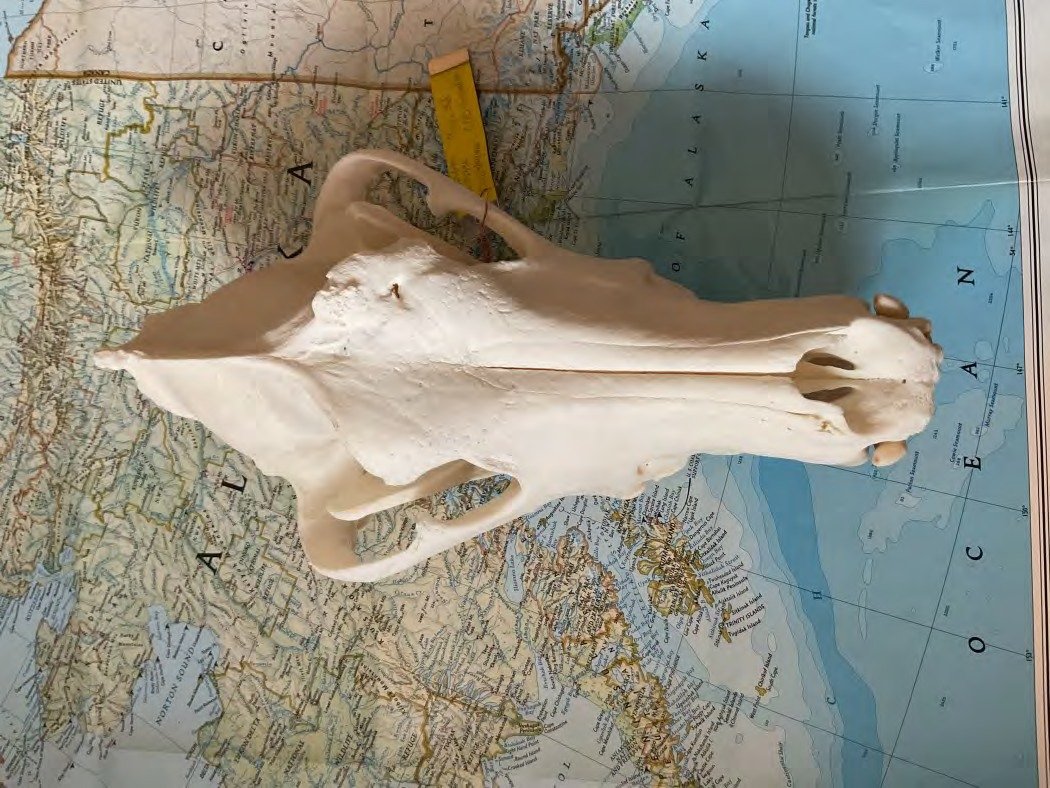
He died of starvation in 2020, lying beside a mossy moose antler. His skull sits on a shelf in Klauder's office.
Viewing and the Stampede corridor
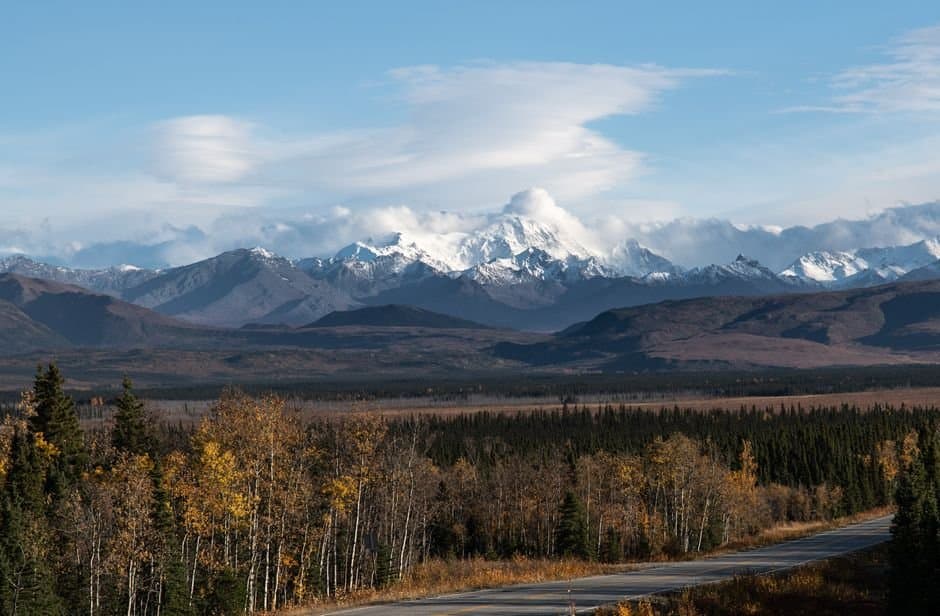
Denali is "one of the best places in the world for people to see wolves in the wild," the Park Service says, and hundreds of visitors see them along the park road each year.
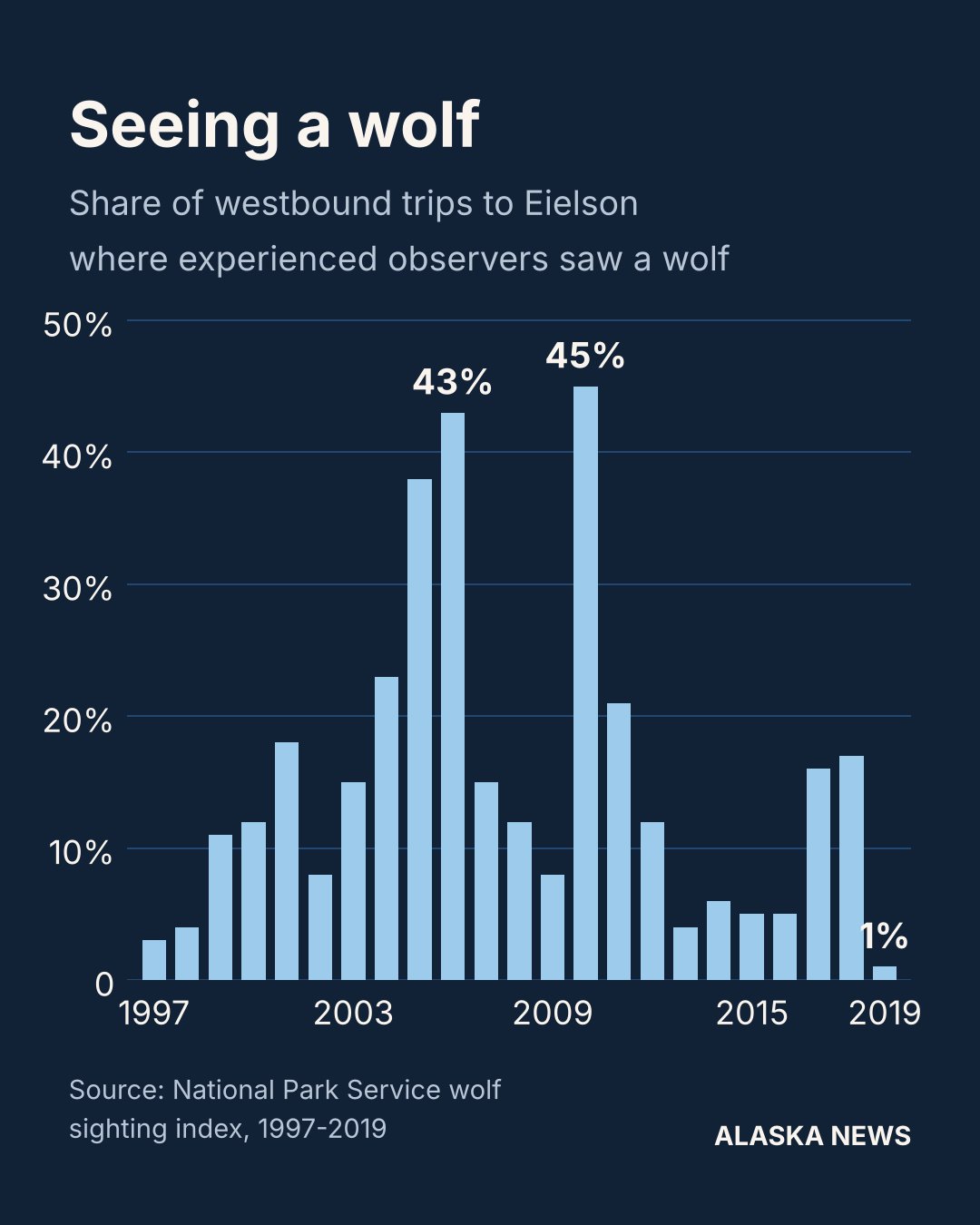
The park's index of how often experienced observers on westbound trips to Eielson Visitor Center saw a wolf ranged from 3% of trips in 1997 to 45% in 2010 and 1% in 2019.
Buses haven't reached Eielson since a landslide closed the road in 2021 and aren't scheduled to until the 2027 season. In 2023, on the stretch of road to East Fork that stayed open, observers saw wolves on 2 of 135 trips.
From 2000 to 2010, the state barred wolf hunting and trapping in two areas bordering the park, the Stampede and Nenana Canyon closed areas, to protect two of the three packs visitors saw most often.
In 2010, the Park Service asked the Board of Game to extend the Stampede closure. The board instead eliminated both.
The Park Service says harvest of wolves, especially breeding animals, has the potential to reduce wolf numbers, affect pack structure and reproduction, change behavior and reduce chances for visitors to see wolves.
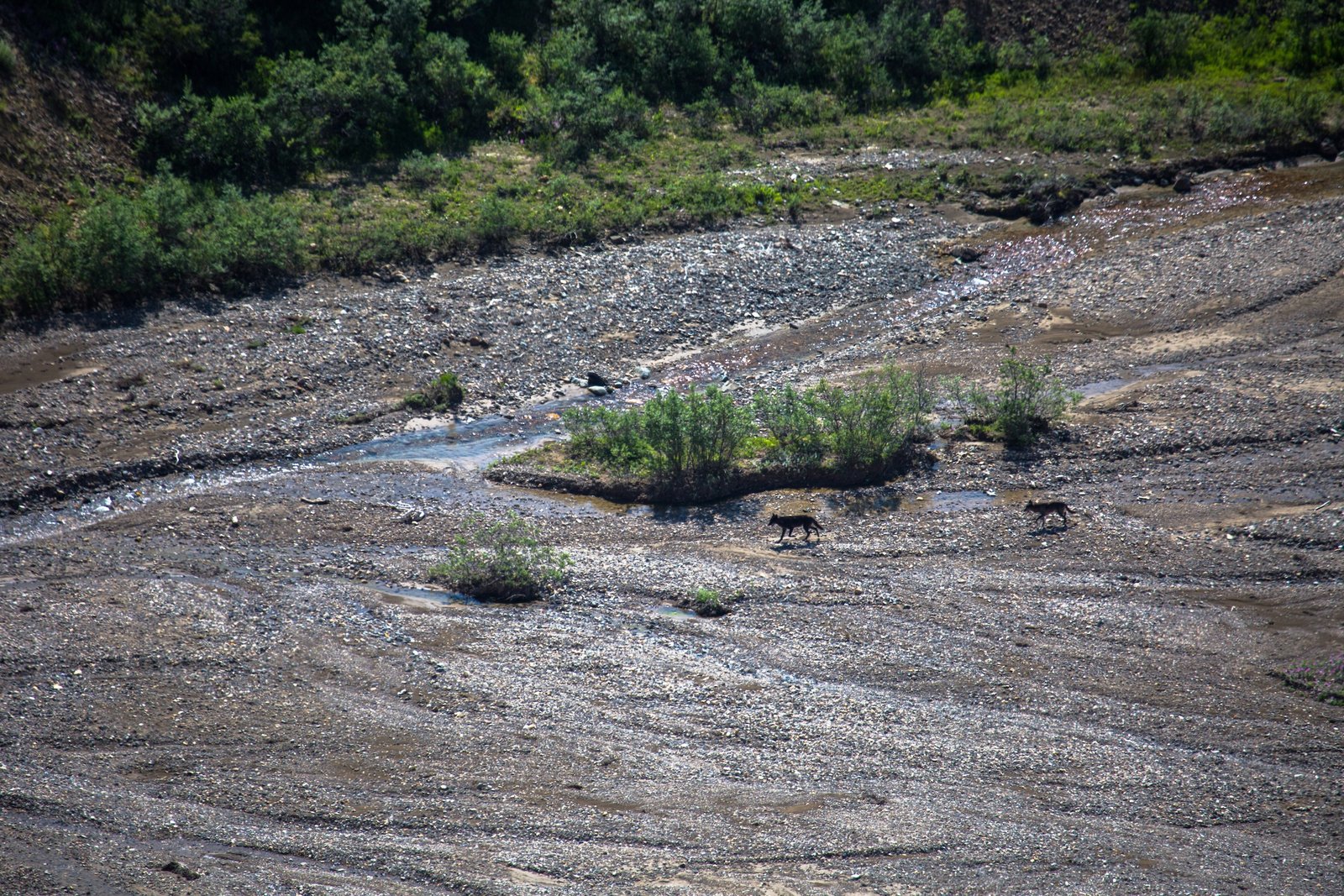
It says that can matter for visitors "even if harvest occurring outside of the park has little effect on larger-scale wolf population dynamics."
In 2018, the Alaska Department of Fish and Game closed wolf hunting and trapping along the Stampede Trail weeks early by emergency order, to keep the harvest closer to its five-year average of about four wolves a year. Preliminary data showed up to eight taken that season.
The department's wildlife director said then that "current levels of wolf harvest do not cause a biological or conservation problem for wolves" in the game unit, which includes a large portion of the park.
The new proposal, Proposal 215, would close state land in what it calls the Stampede Road Townships to hunting and trapping of wolves, coyotes, wolverine and lynx year-round, using the boundaries of the 2018 order.
Its author, Kneeland Taylor, writes that people riding buses on wildlife tours along the park road "substantially exceed 100,000 every year, while only a handful of hunters and trappers" take those animals there. He cites a March ruling by an Anchorage Superior Court judge that wildlife viewing is a use protected by the Alaska Constitution.
The board takes up the proposal at its Interior meeting in Fairbanks, scheduled for March 19-26, in a cycle that also includes a proposal to extend wolf and bear control around McGrath.
"Wolves are important to people in Alaska," the park's report says. "Some value the opportunity to hunt or trap wolves while others value their existence or the opportunity to see a wolf."
What did you make of this story? (no account needed)
Made by our human newsroom with AI. Reviewed by Cale Green. How humans and AI work here · Grow with our newsroom ·
Keep Alaska News free for everyone.
No paywall, ever. Members pay so everyone can read the meetings and records Alaska News covers.
Get Alaska News in your inbox
Create your free account and get the day’s top stories around 6 each morning, in a few minutes’ read.
Top stories, around 6 each morning.
Stories on what you follow, on Sundays.
Source: Federal Contracting — Alaska roundup.








Comments
Sign in to leave a comment.
No comments yet. Be the first to share your thoughts.