Photo by Александра Колпакова on Pexels · Source
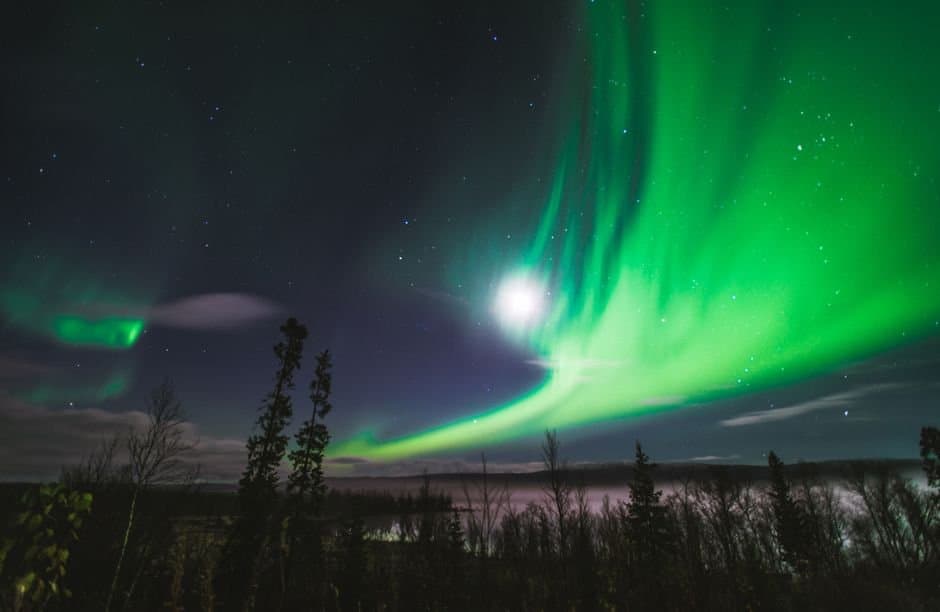
Coronal hole wind lights up Fairbanks aurora through bright moonlight
Fast solar wind from a coronal hole, an opening in the sun's outer atmosphere, kept Earth's magnetic field at active levels through much of this week. Over Fairbanks, the aurora was bright enough to overpower a nearly full moon.
The University of Alaska Fairbanks Geophysical Institute's all-sky camera at Poker Flat Research Range recorded the display from about 1:38 to 1:57 a.m. Alaska time Sept. 25. The moon sat at the top of the fisheye frame, washing out the sky.
On paper, the stream fell short. It stirred the field only to active levels, just shy of the G1 minor storm that NOAA's Space Weather Prediction Center had flagged Sept. 23. G1, the lowest rung of NOAA's storm scale, begins at 5 on the 0-to-9 Kp index of magnetic disturbance. NOAA's three-day forecast issued Sept. 24 had put the odds of active conditions at 40% for both Sept. 25 and Sept. 26, with minor-storm probabilities of 25% and 10%.
"This was the best show of the season," Vincent Ledvina, a Geophysical Institute space physics doctoral student who studies substorm onset and guides aurora tours, wrote on X on Sept. 24.
The next day, Ledvina posted video of what he called a "crazy substorm" with almost a "three-stage" onset, "which is not usual." He wrote that onset "typically" happens directly overhead in Fairbanks. This time, he wrote, it began "south of Fairbanks, maybe over Gakona." The institute's aurora guidance notes that in solar maximum years many substorms start south of Fairbanks.
Ledvina also wrote on Bluesky that a guest proposed on one of his tours. He called the back-to-back clear nights "the two best nights of the season." Those accounts come from his own posts and were not independently confirmed.
The Geophysical Institute puts the Fairbanks viewing season at roughly Aug. 21 through April 21. Its aurora forecast guidance says that clear weather and a stay of at least three nights make a sighting highly likely but never certain.
NOAA's 27-day forecast called for active to G1 levels Sept. 24-25, with a top Kp of 5 on Sept. 25, and unsettled to active levels Sept. 26-27, driven by the coronal hole stream. The index peaked at 4 overnight into Sept. 25 and again Friday evening, Alaska time.
The stream is now waning, its wind slowing from about 500 to 450 kilometers per second. NOAA expects quiet to unsettled conditions Sunday, with no period above Kp 3, and mostly quiet levels Monday. NOAA's next unsettled to active window is Oct. 4-8.
Assembled from public records the newsroom collected ().
AI-assisted. No editor review is on record for this article. Who is accountable.
Stay informed. Support what matters.
Free, permanent access to local news you can verify. Subscribe to support Maggie AlaskaNews and go ad-free.
Related Coverage
Vivid Northern Lights Draw Fairbanks Viewers to Night Sky
Alaska News · 4mo ago
Fairbanks and Kodiak Residents Capture Last Aurora Displays Before Midnight Sun
Alaska News · 5mo ago
Northern lights draw crowds to Fairbanks and Kodiak viewing spots
Alaska News · 5mo ago
Aurora Borealis Lights Up Kodiak and Interior Alaska Skies
Alaska News · 4mo ago
An eclipsed Moon rises over Alaska Wednesday, with aurora possible after
Alaska News · 1mo ago
Comments
Sign in to leave a comment.
No comments yet. Be the first to share your thoughts.