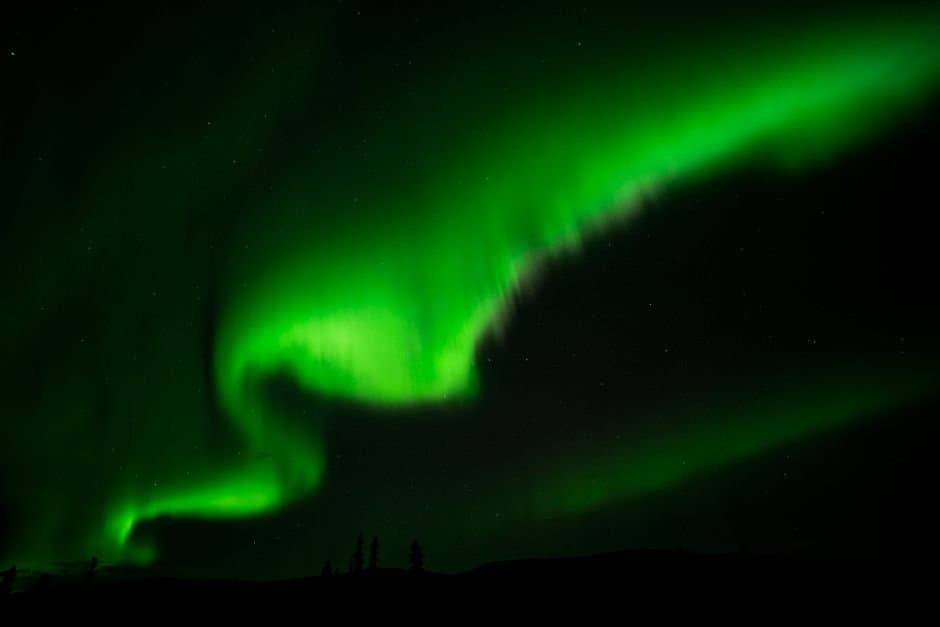
Vivid Northern Lights Draw Fairbanks Viewers to Night Sky
Fairbanks and North Pole residents stepped outside on the evening of April 19, 2026, to watch vivid aurora borealis displays that lit up the Interior Alaska sky. Green curtains, pulsing arcs, and formations some observers described as angel-like shapes stretched overhead.
The displays matched forecasts from the University of Alaska Fairbanks Geophysical Institute, which predicted active auroral activity for the region that night. Clear Arctic skies and minimal light pollution gave viewers across the area opportunities to see the show.
The timing aligns with a period of heightened solar activity following the 2024-2025 solar maximum. According to the Fairbanks Museum, April is a peak viewing month for auroras due to solar dynamics that scientists have not fully explained. The current solar cycle is expected to produce frequent displays for one to two more years.
Fairbanks sits beneath the auroral oval, the ring-shaped zone around the magnetic north pole where auroras appear most frequently. The UAF Geophysical Institute provides aurora forecasts that predict activity levels for Alaska locations and update regularly based on solar wind data and geomagnetic measurements.
Source: Vivid Aurora Borealis Displays Captivate Fairbanks Residents.
AI-assisted. How we use AI
Discussed in
Stay informed. Support what matters.
Free, permanent access to local news you can verify. Subscribe to support Alaska News and go ad-free.
Related Coverage
Northern lights draw crowds to Fairbanks and Kodiak viewing spots
Alaska News · 5mo ago
Fairbanks and Kodiak Residents Capture Last Aurora Displays Before Midnight Sun
Alaska News · 5mo ago
Aurora Borealis Lights Up Kodiak and Interior Alaska Skies
Alaska News · 4mo ago
Northern lights outshine a nearly full moon over Fairbanks as solar wind keeps the aurora active
Alaska News · 2d ago
Alaska residents share bear and moose encounters as spring wildlife season begins
Alaska News · 5mo ago
Comments
Sign in to leave a comment.
No comments yet. Be the first to share your thoughts.