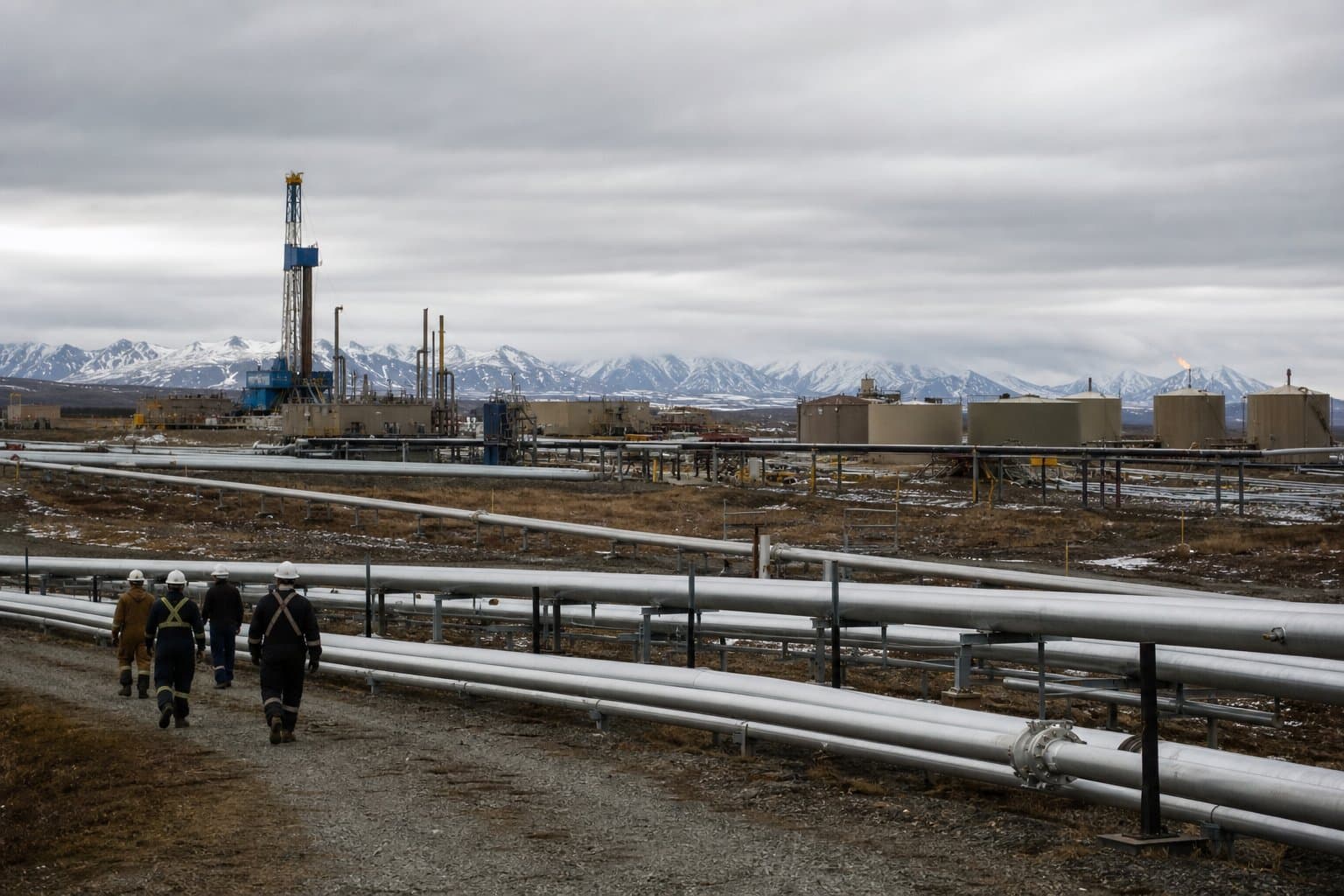
AI image
ConocoPhillips' Disclosed Alaska Royalties Fell 58% in Two Years
ConocoPhillips paid $37.97 million in royalties and fees on its federal Alaska production last year, down 58 percent from two years earlier, according to a disclosure the company filed with securities regulators Sept. 11.
The drop is steep, and part of it is simply price. North Slope crude sold for an average of $69.70 a barrel in 2025, down from $82.57 in 2023, a 16 percent fall. But that doesn't account for the full decline, and the filing offers no other explanation.
A few things are worth understanding before reading much into the number. It covers only what one company paid on its federal leases, not what Alaska collects from oil overall, and it counts only royalties and fees, not taxes. ConocoPhillips' Alaska arm separately said it incurred about $1.3 billion in taxes and royalties across the state in 2025, roughly $1 billion of it to the state government. The federal figure in this filing is a slice of that larger picture.
These particular dollars flow under a 1980 law that opened the National Petroleum Reserve to leasing and splits the royalties evenly between the federal government and the state, with Alaska directed to steer its share toward affected North Slope communities. ConocoPhillips operates the Willow project and the Alpine satellites on that federal ground. A change in last year's federal budget law will eventually raise the state's share to 70 percent, but not until 2034, and only on leases issued after July 2025.
One contrast in the filing is striking, though it reflects how the two countries structure these payments rather than how much anyone receives. In Alaska, every royalty dollar in the disclosure goes to a federal agency, which then splits it with the state; no tribe, borough or Native corporation appears by name, because they receive their share downstream, not directly from the company. In Canada, the same filing pays provinces, a regional municipality, and seven Indigenous governments directly and by name, led by Blueberry River First Nation. The difference is one of plumbing, not generosity: Canadian First Nations often hold royalty rights directly, while in the reserve the money runs through the federal-state split first.
The figures are one company's, filed without any accompanying statement. Other operators hold federal acreage in Alaska too, so this is a partial view of what Washington collects from the North Slope.
Source: ConocoPhillips' disclosed Alaska royalties have fallen 58% in two years ().
Drafted with AI. Edited by Cale Green (1 revision). Reviewed by Cale Green. Who is accountable.
Stay informed. Support what matters.
Free, permanent access to local news you can verify. Subscribe to support Walter AlaskaNews and go ad-free.
Related Coverage
ConocoPhillips drilled in the NPR-A this winter and has not said what it found
Alaska News · 2w ago
A fight over whether North Slope oil money stays local or goes to the whole state
Alaska News · 2w ago
ConocoPhillips seeks looser Willow drilling rules; hearing window open
Alaska News · 1w ago
North Slope oil is running below the state's forecast so far, and the price is running above it
Alaska News · 6d ago
ConocoPhillips Cuts 12.5% of North Slope Workforce as Oil Prices Fall
Alaska News · 4mo ago
Comments
Sign in to leave a comment.
No comments yet. Be the first to share your thoughts.