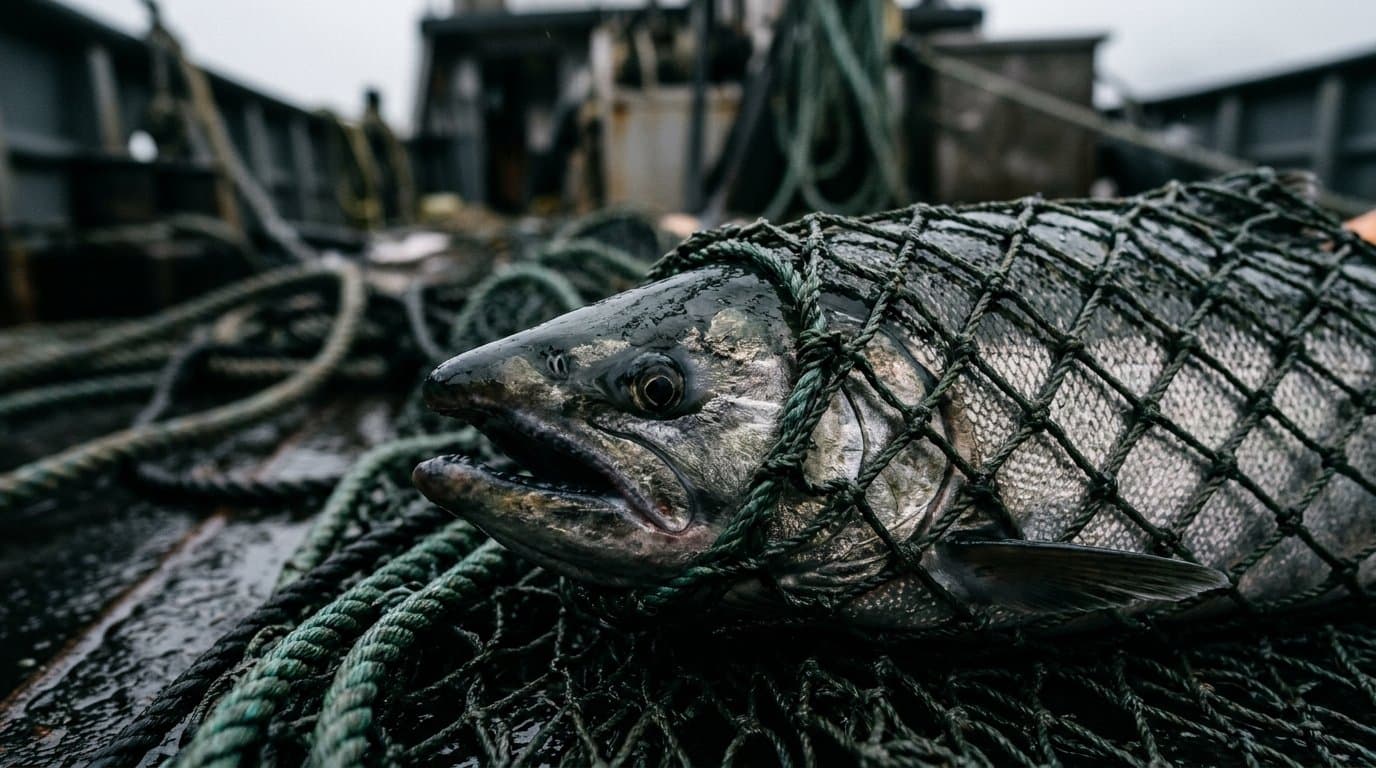
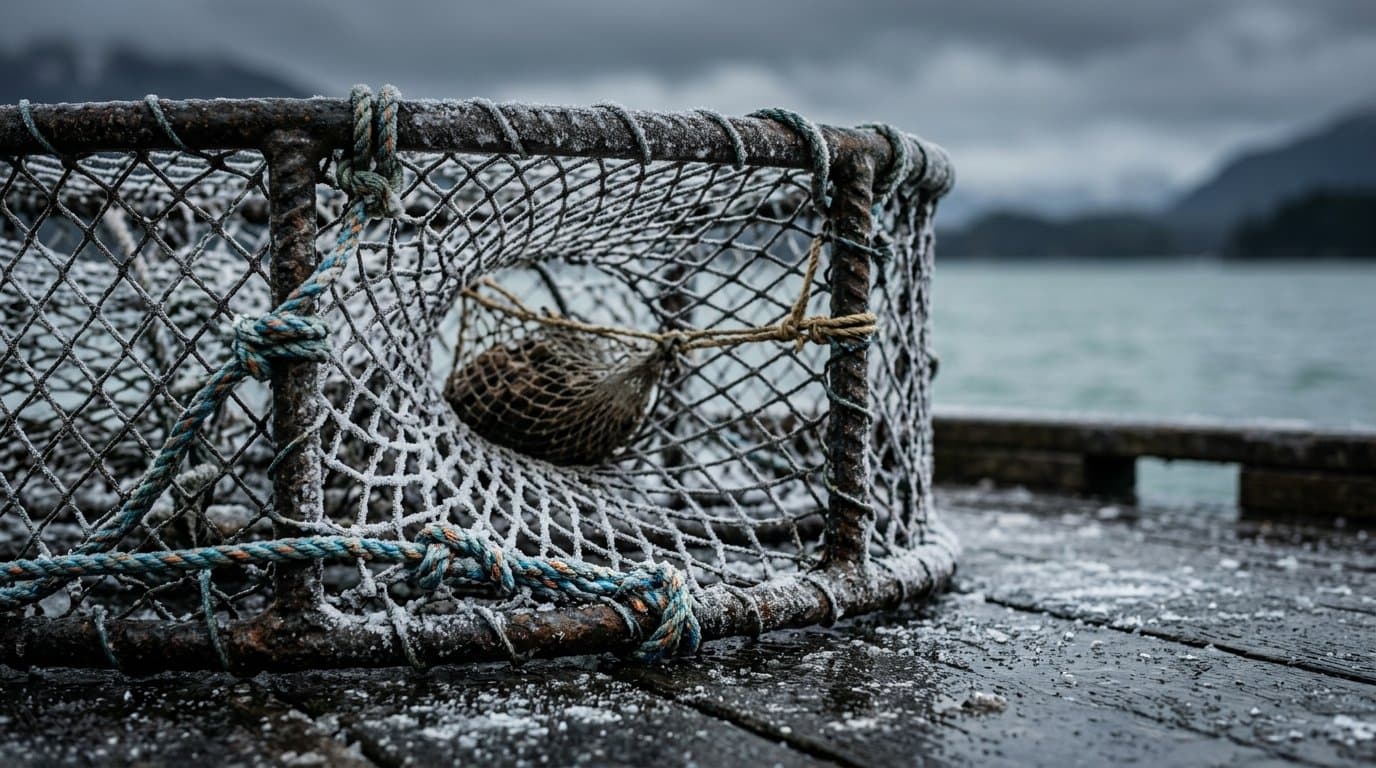
AI image
Central Gulf pollock trawlers reached 87% of Chinook limit at a higher rate than last year
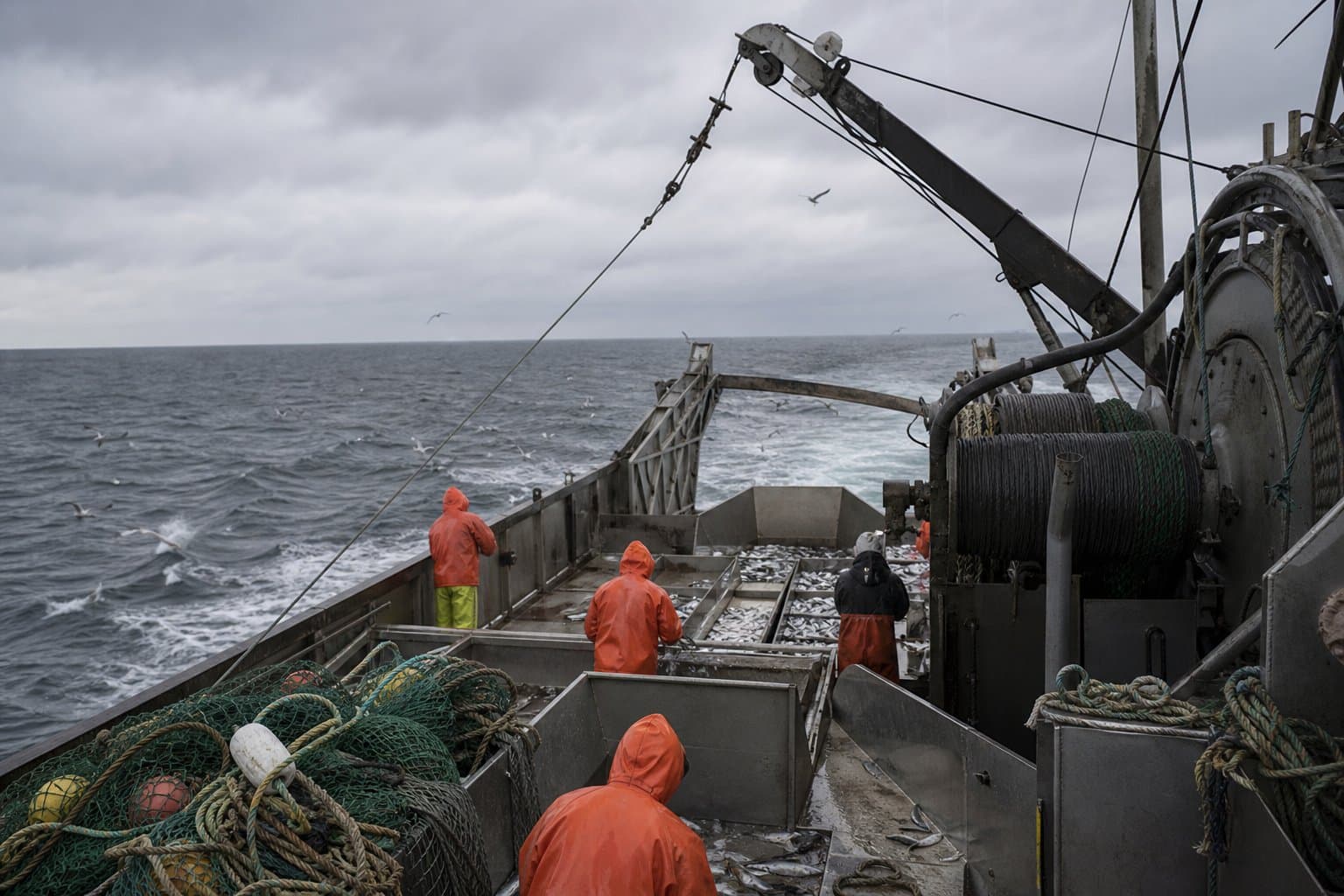
Central Gulf of Alaska pollock trawlers caught 15,890 Chinook salmon through Oct. 24, 87% of their annual limit of 18,316 fish, leaving 2,426, according to a National Marine Fisheries Service report run Oct. 29.
Federal rules require NMFS to close an area to fishing that targets pollock when its Chinook limit will be reached. The agency did that in 2024, when the fleet went over.
This fall, pollock closed the fishery. NMFS closed Area 620 (Chirikof) at noon on Oct. 21 and Area 630 (Kodiak) at noon on Oct. 28, both through Dec. 31. Both orders say the closures were needed to keep the fleet within its pollock catch limits. Neither mentions salmon.
The fleet caught more Chinook on less pollock. The two areas' combined pollock limit fell about 26%, from 133,870 metric tons in 2025 to 98,413. Boats landed 95,905 tons through Oct. 24, against 118,692 for all of last year, while Chinook rose from 10,662 to 15,890. Those NMFS figures work out to about 0.166 Chinook per ton of pollock this year against about 0.090 last year, an increase of about 84%. The 2026 numbers are partial. The 2025 figures cover the full year.
NMFS, which measures its rate against all groundfish, put it at 0.13 Chinook per ton through Sept. 27, against 0.07 a year earlier. In an Oct. 2 report to the North Pacific Fishery Management Council, NMFS wrote that 2026 Chinook prohibited species catch and rates in the pollock fisheries are higher than in 2025. Prohibited species catch is bycatch the pollock fishery cannot land or sell. Gulf pollock boats must keep all salmon until delivery so observers can count and sample them. NMFS has not said in its published reports why the rate rose.
Much of the count came late: 7,278 Chinook in the five weeks from the week ending Sept. 26 through the week ending Oct. 24, including 2,505 in the week ending Oct. 10.
In mid-September, the count matched 2024's. That year, the fleet caught 12,022 Chinook in the week ending Sept. 21 alone. NMFS closed the fishery Sept. 25, and the year ended at 20,332 Chinook, 2,016 over the limit. The two areas finished 2024 about 49,000 tons short of their combined pollock limits. The NMFS report does not say how much of that the closure caused.
Among NMFS year-end counts back to 2015, this year's partial count already ranks second, behind only 2024. An NMFS table of all Gulf pollock fisheries, Central and Western, shows 44,769 Chinook in 2010 and 35,096 in 2007, against 25,772 in 2024.
Most of the Chinook caught are not Alaska fish. The Alaska Department of Fish and Game reported to the Board of Fisheries on Oct. 28 that from 2021 through 2025, about 47% of Gulf pollock Chinook bycatch came from British Columbia stocks, about 29% from the West Coast of the Lower 48 and about 18% from Northeast Gulf and Southeast Alaska stocks. The report's chart puts the Northwest Gulf, which the department's presenter said includes Kodiak, Cook Inlet and the Copper River, at about 5%. Those are five-year averages, not 2026 figures. The department also says most bycaught Chinook are immature, so fewer would have returned as adults than the number caught.
The state report says federal rules require Bering Sea pollock vessels to fish under Chinook avoidance plans. A December 2025 Pacific Seafood Processors Association reference for policymakers says that in the Gulf, "participants have a voluntary Chinook avoidance agreement in place each year." It does not lay out the agreement's terms.
Seafood processors have defended the fishery. Association staff told legislators the Gulf fishery does not catch western Alaska Chinook. Trident Seafoods told the board that closing state waters to pelagic trawling, which uses nets meant to stay off the seafloor, "will decrease the areas the fleet can go to both find productive fishing and low rates of Chinook bycatch."
In an Oct. 13 letter, Emily Scott, outreach coordinator for the Alaska Longline Fishermen's Association in Sitka, urged the board to "advance measures to reduce salmon bycatch," including state-approved salmon excluders on pelagic gear in state waters.
The final 2026 count is not yet known. The NMFS report stops at Oct. 24, four days before Area 630 closed.
The council meets Dec. 4 through Dec. 9 in Anchorage. Its preliminary schedule lists Gulf groundfish catch limits for Dec. 7 and Dec. 8, subject to change. No item on that schedule names Gulf Chinook bycatch. Written comment, including on issues not on the agenda, opens Nov. 6 and closes at noon Alaska time on Nov. 27 through the council's December meeting page.
What did you make of this story? (no account needed)
Made by our human newsroom with AI. How humans and AI work here · Grow with our newsroom ·
Get Alaska News in your inbox
Create your free account and get the day’s top stories around 6 each morning, in a few minutes’ read.
The day's top stories around 6 each morning. Unsubscribe in one click.
Source: NOAA Fisheries, Central Gulf pollock boats took 15,890 Chinook by Oct. 24, 87% of their cap, at nearly twice last year's rate per ton, released .




Comments
Sign in to leave a comment.
No comments yet. Be the first to share your thoughts.