Betting apps take bets in Alaska as a Senate panel weighs the fallout
Prediction-market apps are already taking sports bets in Alaska, where sports betting has not been legalized, tribal gaming leaders told a U.S. Senate roundtable this week. One witness held up an advertisement clipped that morning offering bets in all 50 states, including Alaska, and on one app, to anyone 18 or older.
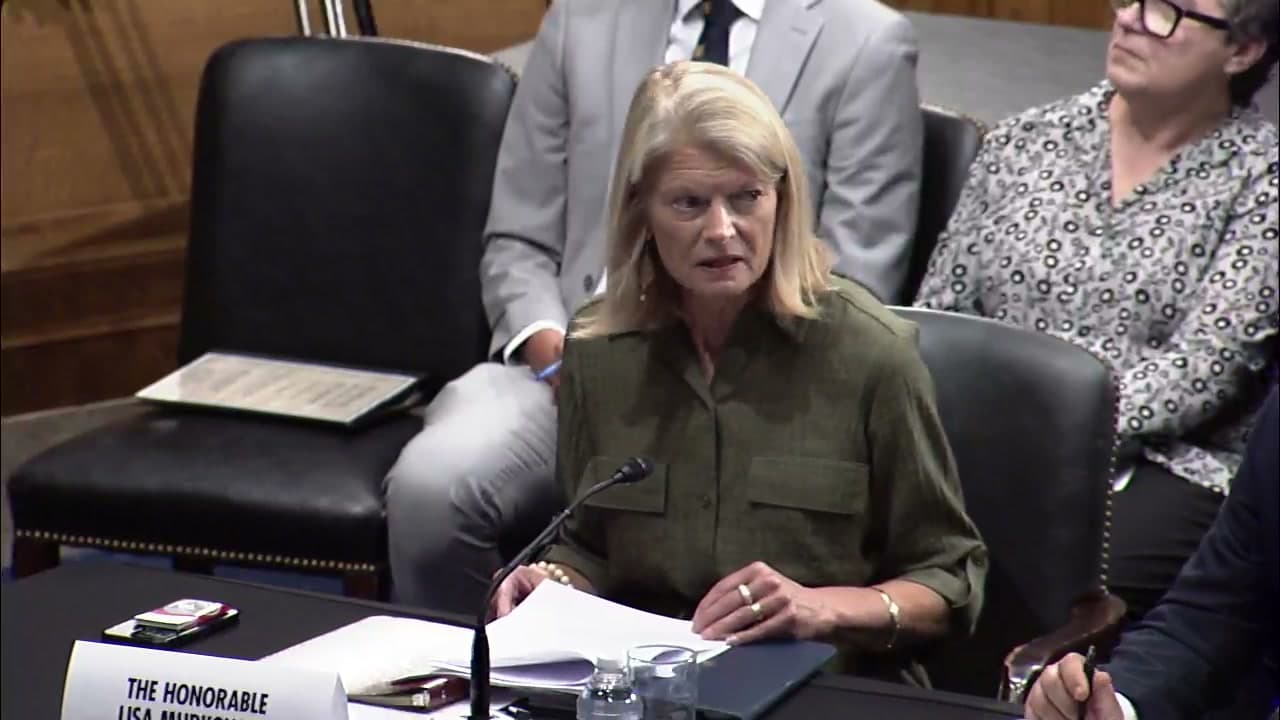
Even the committee's chair, Alaska Sen. Lisa Murkowski, had been caught off guard. "I'll be the first one to admit that I was asleep at the switch when it came to what was going on with prediction markets," she said.
Alaska has no legal sports betting, though an industry already operates in the state illegally, and lawmakers have weighed legalizing mobile sports betting for a projected $12 million to $18 million a year in tax revenue. On the Senate floor in May, Sen. Jesse Kiehl said of electronic gambling games, "They are built for addiction."
Witnesses warned that the newest form of the industry doesn't even look like gambling. Six clients in the recovery group of Harry Levant, a gambling-addiction clinician and recovering addict, have returned to betting on prediction-market apps in the past three months, and none thought they were gambling. "Because they thought they were making investments," said Levant, gambling policy director at Northeastern University's Public Health Advocacy Institute. He placed his own last bet the night he survived a suicide attempt, and was later disbarred and convicted of felonies for misappropriating client funds. He is not a prohibitionist, he said; he wants Congress to set minimum federal safety standards and let states and tribes go further.
The dispute turns on what these sports-event contracts legally are. Many tribes and states call them gambling subject to gaming law; the platforms and the Commodity Futures Trading Commission call them financial products, or swaps, under the agency's exclusive jurisdiction. Vice Chair Brian Schatz rejected that comparison. "It is not a commodities contract to hedge against the variability in the price of fertilizer or corn," he said, calling it "a workaround" of federal and tribal gaming law. No prediction-market operator or CFTC official took part in the roundtable.
Tribal gaming generated a record $46.2 billion last year, money witnesses said funds health care, education, housing and public safety in tribal communities, and tribes spend more than $450 million a year regulating it, safeguards they say prediction markets lack. Forty-four states have pushed back on the CFTC's proposed rule. Murkowski, who also chairs the Interior appropriations subcommittee, said that if the apps displace tribal gaming, she would face the question of where to backfill the lost revenue.
The committee took no action; the session was a roundtable rather than a hearing. "It is moving so fast, the impact is so great, and we don't have all of the data that we need now," Murkowski said.
This article is based on a public meeting of Senate Indian Affairs (Murkowski) — Senate Indian Affairs (Murkowski): Hearings to examine tracking prediction markets' exponential growth, focusing on tribal implications and beyond. ().
Drafted with AI. Edited by Cale Green (1 revision). No full editor review is on record. Who is accountable. Transcript byLucas Brown
Stay informed. Support what matters.
Free, permanent access to local news you can verify. Subscribe to support Maggie AlaskaNews and go ad-free.
Related Coverage
Alaska Senate committee advances sports betting bill with tax revenue promise
Alaska News · 4mo ago
The Senate blocked federal crypto rules. Alaska already wrote its own
Alaska News · 3d ago
Juneau's new casino, and the land the city can't reach
Alaska News · 2mo ago
Murkowski flagged Alaska parallels at a Senate deep-sea mining hearing
Alaska News · 3mo ago
Alaska Lawmakers Advance Electronic Pull-Tab Gaming Bill
Alaska News · 4mo ago
Comments
Sign in to leave a comment.
No comments yet. Be the first to share your thoughts.