Alaska Senate committee advances sports betting bill with tax revenue promise
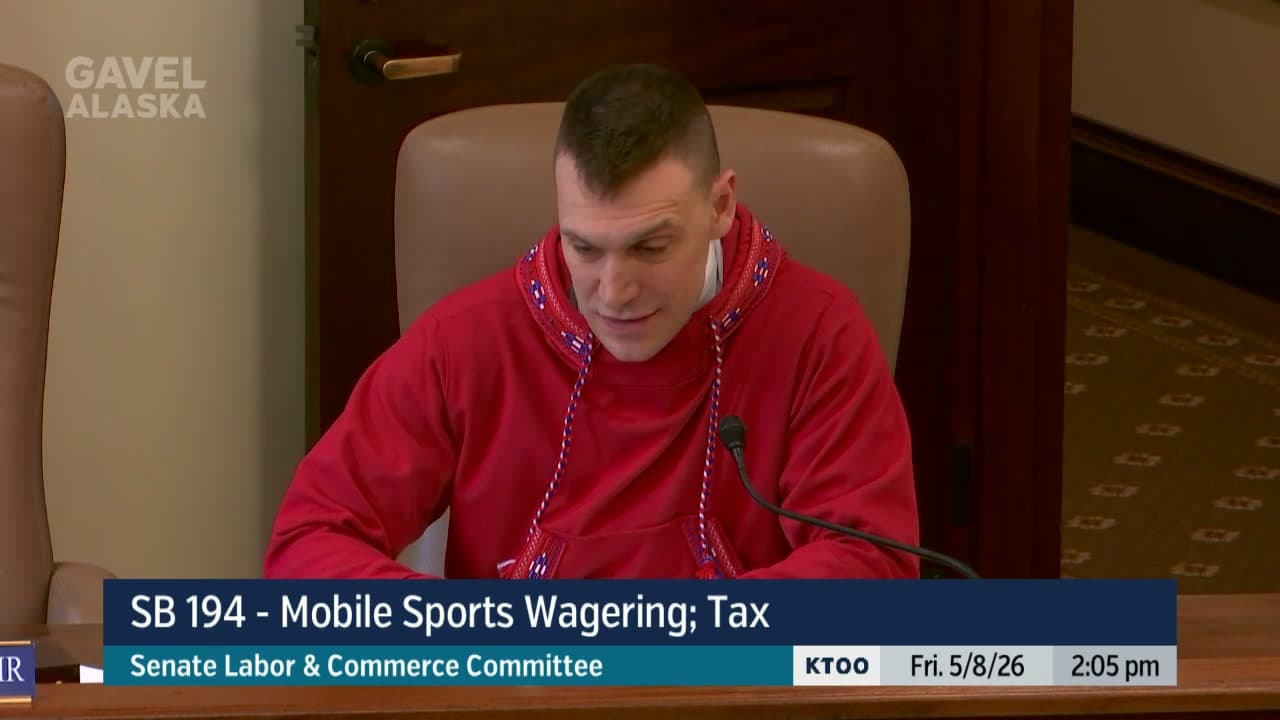
The Alaska Senate Labor and Commerce Committee heard testimony Friday on legislation that would legalize mobile sports betting and impose a 20 percent tax on operator revenue, potentially generating millions in new state revenue from an industry supporters say is already active through illegal offshore platforms.
Senate Bill 194, sponsored by Senator Mike Cronk, would authorize licensed operators to offer mobile sports wagering through approved digital platforms. The bill requires operators to maintain licenses in at least three other states and caps the number of Alaska licenses at 10, though that limit drew questions from committee members. The committee heard the bill but took no further action Friday.
"Simply put, the intent of this legislation is to legalize sports betting in Alaska while ensuring that it is properly regulated," Cronk said. "This bill aims to accomplish three major goals: converting consumers from the black market to the legal market, establishing consumer protections for sports wagering activities, and providing new ways to generate revenue for the state of Alaska."
An estimated $139 million in illegal sports betting wagers are placed in Alaska annually, according to testimony from Jennifer Anderson, director of state government affairs for FanDuel. The current fiscal note for the bill projects tax revenue with a median around $12 million and as high as $17 million annually.
The bill represents the latest in a series of attempts to legalize mobile sports wagering in Alaska. An identical SB 194 was introduced in the 33rd Legislature in 2024 and advanced with amendments in Senate Resources but died before the session ended. Earlier versions of sports betting legislation bearing the same bill number were introduced in 2017 and 2011 but failed to progress beyond introduction.
The bill would require operators to verify users are at least 21 years old and physically present in Alaska when placing bets, or in another state, territory, or jurisdiction with which the commissioner has entered into a mobile sports wagering agreement. Licensed platforms would be required to offer responsible gaming tools including deposit limits, time limits, and self-exclusion programs, along with connections to problem gambling resources.
Senator Forrest Dunbar questioned the proposed cap of 10 licenses, asking why the state would limit competition in a digital marketplace that does not face the physical constraints of brick-and-mortar businesses.
"Why cap the number of licenses at 10? Why create something that might result in a secondary market?" Dunbar said. "If you cap it at 10, those 10 companies will be very profitable. I have no question. If I was FanDuel, I would want it capped because I would want to buy one of these very expensive ones and prevent competition. But why cap it at 10?"
Paul Menke, staff to Senator Cronk, said the cap was intended to ensure reputable vendors entered the market first, but indicated the sponsor would be open to adjusting that number.
Cronk said 39 states have legalized sports wagering, either online or in person, with Missouri being the latest to do so. Anderson told the committee that legal sports betting generated $3.2 billion in state tax revenue nationwide in 2025 across 40 states and territories that have authorized some form of wagering. She said illegal offshore platforms offer no consumer protections, no recourse for unpaid winnings, and often target vulnerable populations including minors.
"Legalizing this industry in Alaska would capture revenue to the state that is currently going to the pockets of illegal operators," Cronk said. "This would not only apply to residents, but also to any gambler that is betting in the state, including tourists and seasonal workers."
Anderson testified that FanDuel currently offers daily fantasy sports in Alaska. She also addressed concerns about the impact on charitable gaming, which is currently legal in Alaska and provides revenue to nonprofits across the state. Anderson said other states have not shown cannibalization of charitable gaming revenue by online sports betting, noting that Virginia and New Jersey have seen both sectors thrive side by side.
The bill would impose a $100,000 annual licensing fee on operators and authorize the Department of Revenue to adopt regulations for implementation. Anderson testified that because tax funds cannot be earmarked in legislation, revenue would accrue to the general fund and would be available to fund essential services and programs for Alaskans.
Under the bill's current language, the Department of Revenue would publicly announce when licensees may begin operations two weeks in advance and once three licenses have been issued. The effective date is set for January 1, 2026, with an immediate effective date for the regulatory adoption section.
SB 194 was referred to the Labor and Commerce Committee and the Finance Committee when it was introduced in May 2025.
This article is based on a public meeting — Senate Labor & Commerce Committee ().
AI-assisted. How we use AI Transcript byLucas Brown
Stay informed. Support what matters.
Free, permanent access to local news you can verify. Subscribe to support Alaska News and go ad-free.
Related Coverage
Betting apps take bets in Alaska as a Senate panel weighs the fallout
Alaska News · 1mo ago
Alaska Lawmakers Advance Electronic Pull-Tab Gaming Bill
Alaska News · 4mo ago
House Committee Hears Divided Testimony on Electronic Pull-Tab Bill
Alaska News · 4mo ago
Senate Finance hears $18 billion revenue trade-off for Alaska LNG tax break
Alaska News · 3mo ago
House Finance begins review of Alaska LNG tax bill with competing rate proposals
Alaska News · 4mo ago
Comments
Sign in to leave a comment.
No comments yet. Be the first to share your thoughts.