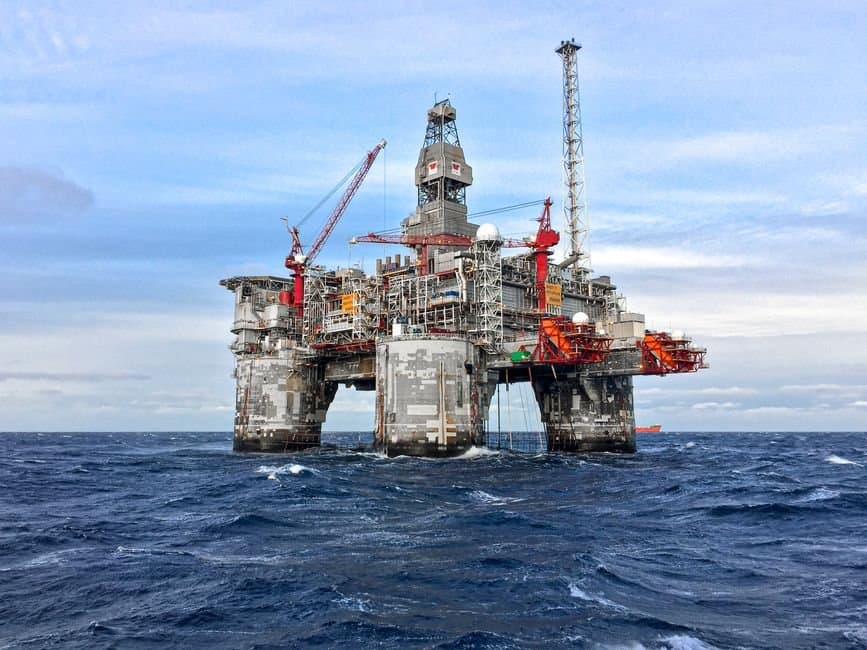
Photo by Jan-Rune Smenes Reite on Pexels · Source
Arctic drilling rule would make relief rig optional; 248 comments filed, none posted
Companies drilling exploratory wells in the Beaufort and Chukchi seas could skip the standby relief rig under a rule the Interior Department has proposed, and federal regulators would lose the power to halt drilling-mud discharge near whaling grounds. As of Monday, the public docket held two agency documents and no posted comments, with 248 submissions received.
The Bureau of Safety and Environmental Enforcement and the Bureau of Ocean Energy Management published the proposal on August 6. It rewrites parts of the 2016 Arctic Exploratory Drilling Rule, which was adopted after the 2010 Deepwater Horizon blowout.
Under the current rule, an operator drilling below the surface casing from a mobile rig must have a second rig available, close enough to drill a relief well, kill the original well and abandon both before seasonal ice returns. The proposal would let the operator install a subsea isolation device instead, seafloor equipment worked by a remote vehicle. An operator that still chooses the second rig could delay staging it until the last casing point before drilling into a hydrocarbon-bearing zone. The 45-day outer limit for killing a well would remain. The requirement to finish before ice encroachment would not.
A capping stack would still have to reach the well within 24 hours. The seven-day arrival requirement for the cap and flow system and the containment dome would be deleted, and access to that equipment could be delayed to the same casing point.
Whaling Ground Protections at Stake
The proposal would strike the provision that allows regulators to stop a rig from discharging drilling mud near whaling grounds. The bureaus' own impact analysis describes what that provision was for: to keep mud out of water where it would be "sensed by the whales, which may cause the whales to swim further from shore, making it harder and less safe for whalers to hunt."
The stated reason for the deletion is that the Environmental Protection Agency covers the same ground through its discharge permits. The analysis cites the 2012 Beaufort permits, which required capture of water-based muds "at all times during bowhead whaling season." The same analysis states those permits expired in 2017 and have not been administratively continued, and that any new project would need fresh coverage. BSEE says it retains general pollution authority either way. The analysis notes the EPA "is considering regulatory changes to its NPDES program," the federal permit system for water discharges. No document read here establishes whether the EPA intends to reissue the Arctic general permits.
The proposal would also delete the Integrated Operations Plan, a document an operator files 90 days before its exploration plan. That plan covers ice forecasting, contingency plans for early abandonment, staging of spill response gear, and efforts to limit impacts on local community infrastructure such as housing, energy and services. Nothing in the proposed text replaces it. In 2016, when BOEM declined to require a Conflict Avoidance Agreement between operators and the Alaska Eskimo Whaling Commission, it pointed to other rules that already covered community impacts. One of the two it named is the section now proposed for deletion.
The definition of "Arctic OCS" would widen from the Beaufort and Chukchi planning areas to every federal oil and gas planning area reaching north of 66 degrees 33 minutes, the Arctic Circle. That would bring the Hope Basin off Kotzebue Sound and a newly created High Arctic Planning Area under the Arctic rules for the first time. BOEM's draft 11th national leasing program, published in November 2025, proposes six Arctic lease sales.
The proposal scores itself at $161.3 million a year in cost savings from 2026 through 2049, at a 7 percent discount rate, against $0.1 million a year in quantified forgone benefits, under the higher of its two drilling scenarios. The limited case yields $136.7 million. The relief rig change accounts for $161.5 million of the savings, with its forgone benefits marked "Unquantified." The subsistence discharge provision is scored at zero on both sides. The analysis explains that "the benefits of these subsistence activities, and the value of any associated losses, are difficult to quantify." The preamble says forgone benefits come from "slight increases in the risks to subsistence hunters and fishermen and wildlife."
This is the second attempt at materially the same revisions. Interior proposed them on December 9, 2020, extended the comment period, drew 29 posted comments and withdrew the rule in June 2021. The withdrawal notice said any future attempt would begin with a new proposed rule and new opportunities for comment. The current proposal has run one 60-day window, with no extension announced.
Tribal Consultation and a Five-Year-Old Objection
The bureaus determined the rule may have substantial direct effects on Alaska Native tribes and ANCSA corporations. The consultation they describe took place between November 29, 2018, and January 30, 2019, with 23 of 25 invited entities, and was carried over from the 2020 rulemaking. The bureaus summarized the result themselves. "The most common comment received was a concern over food security." The second most common was a request to require a Conflict Avoidance Agreement with affected whaling communities. The summary also records support: certain tribal representatives and most ANCSA corporations backed the rulemaking as economic opportunity, and some said their villages had deeper ports that would speed spill response.
Neither phrase from the two most common comments appears in the 2026 document. The bureaus say BSEE plans to invite consultation by letter and will start it at the request of a tribe or corporation. No record read here shows a letter sent or received.
The only Arctic local government speaking in its own words is the Northwest Arctic Borough, in a 2021 letter on the withdrawn version. Planning director Eva Harvey wrote that the borough "does not support the revisions to the Arctic Drilling Rule." That letter is five years old and addressed a different docket. The new definition would bring the borough's own waters inside the rule for the first time.
No tribe, ANCSA corporation, borough or city appears on the 2026 docket, and neither does anyone else: none of the 248 submissions the docket reports receiving has been published. Regulations.gov posting lags submission, so the record establishes only that no comment is visible, not that none has been written.
Comments may be filed on docket BSEE-2026-0133 at regulations.gov until 7:59 p.m. Alaska time on October 5. This account is drawn from the rulemaking documents and the public docket, which carry the bureaus' reasoning and no response from any affected party.
Source: Interior has fourteen days left on a rule that would let Arctic drillers skip the relief rig, and nobody has commented ().
AI-assisted. No editor review is on record for this article. Who is accountable.
Stay informed. Support what matters.
Free, permanent access to local news you can verify. Subscribe to support Walter AlaskaNews and go ad-free.
Watch the short version
Related Coverage
Interior proposes easing Arctic offshore drilling safety rules
Alaska News · 1mo ago
BLM rule would let NPR-A operators waive subsistence conditions without public notice
Alaska News · 2w ago
A federal rule could stick Alaskans with abandoned-well cleanup costs
Alaska News · 2mo ago
BLM Rule Would Cut NPR-A Pad Approvals to 60 Days, Limit Hunting
Alaska News · 1w ago
A proposed rule would cut years of NPR-A oil review down to 60 days
Alaska News · 2w ago
Comments
Sign in to leave a comment.
No comments yet. Be the first to share your thoughts.