AI image
A proposed rule would cut years of NPR-A oil review down to 60 days
A company that wants to build an oil production site in the National Petroleum Reserve in Alaska spends three to five years getting a field development plan reviewed, and commonly six years between permit approval and first oil. Under a rule the Bureau of Land Management proposed Friday, a qualifying site would be approved in 60 days, with no environmental study written for that project.
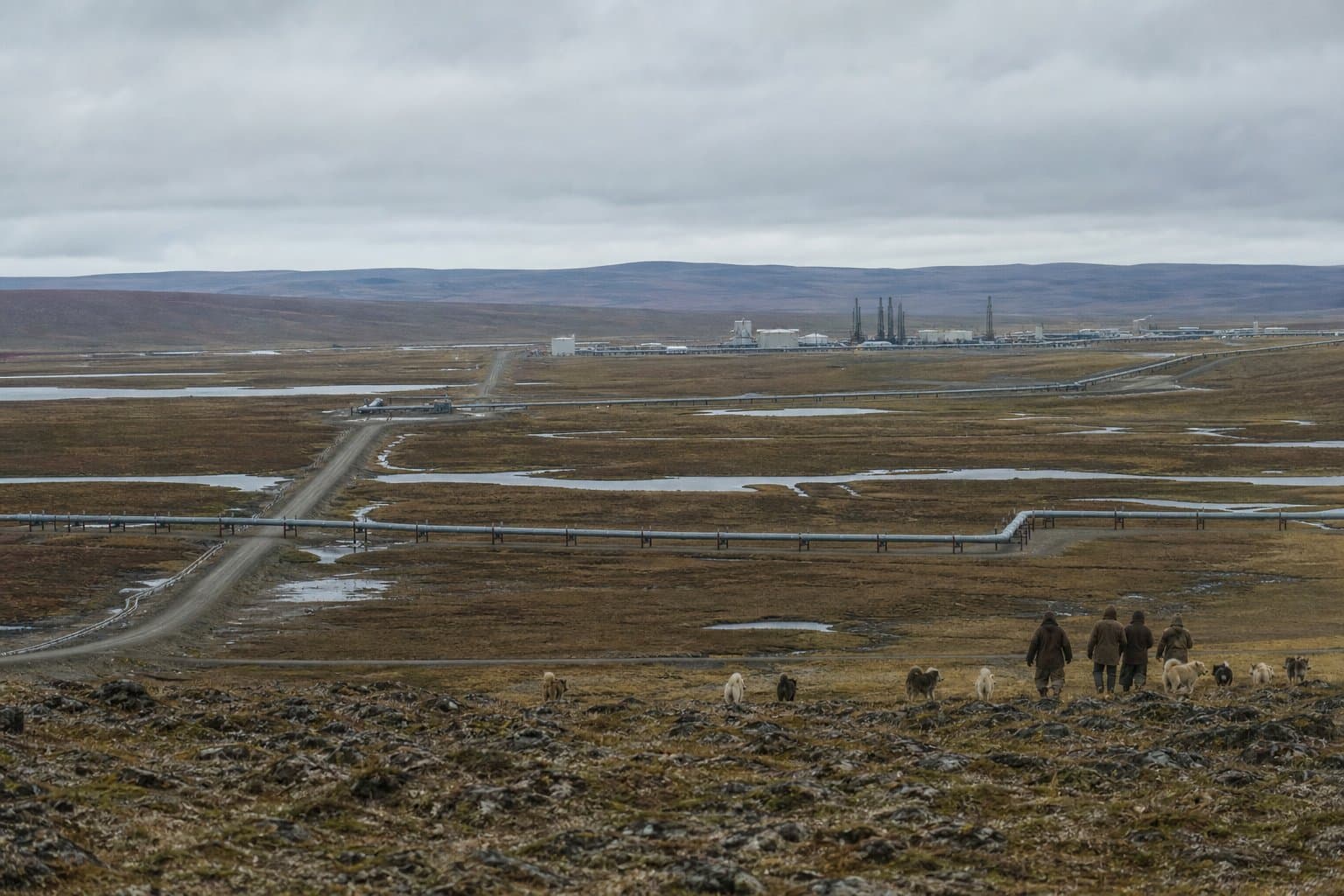
A site qualifies if all of it sits within 25 miles of permanent oil and gas infrastructure that already exists — a production pad, a pipeline, a gravel road that stays through the summer. It has to hold wells or the equipment to move what wells produce, and it has to lie outside the areas the reserve's management plan closes to surface occupancy. A single 25-mile circle covers about 1.26 million acres, more than a third of the 3.5 million acres currently under lease in the reserve.
Infrastructure built after the rule takes effect would count as an anchor too, so each approved site would anchor a new circle. The agency puts it directly: the standard "enables a gradual westward progression of development from existing NPR-A facilities."
The BLM's argument is that the effects of these sites can be analyzed once for the whole class rather than every time, which is the logic behind any programmatic review. The premise is that one production pad on the North Slope resembles the next closely enough, and that the ground, the caribou and the subsistence use across 25 miles are similar enough, for a single study to cover them.
That study is incomplete. Comment on the rule closes with only draft Chapters 1 and 2 released. Chapters 3 and 4 — the affected environment, the environmental consequences, the cumulative effects and the required consultations — arrive with the final version, after comment ends.
Congress built this ground for oil. The Naval Petroleum Reserves Production Act of 1976 moved what had been Naval Petroleum Reserve No. 4 to the Interior Department and renamed it. A 1980 amendment directs the Secretary to conduct an expeditious program of competitive oil and gas leasing there. The BLM describes three mandates under the act: run that leasing and production program, protect surface resources from its impacts through mitigation, and assure maximum protection for significant surface values inside designated Special Areas. Even that last one is written as a qualified duty — maximum protection "to the extent consistent with the requirements of this Act for the exploration of the reserve."
How much weight each mandate carries has been fought over through four administrations, in court and in successive management plans. Conservation groups have litigated recent projects there and treat the reserve's wetlands, caribou herds and coastal lagoons as values the law obliges the government to protect. Development supporters, including most North Slope Iñupiat institutions, point to the statute and to the reserve's name. Comment on this rule opened Friday, and nobody has filed yet.
The rule follows a December management plan that reopened nearly 82 percent of the 23-million-acre reserve to leasing, and a March lease sale that drew more than $163 million in bids across 187 tracts. The Alaska Oil and Gas Association petitioned the BLM's Alaska office in May for a development permit program, and the agency says what it drafted carries stronger environmental and subsistence protections than the industry asked for.
Its own analysis projects an annual economic effect of $100 million or more, and says more development under a streamlined process, with fewer design features, may increase disturbance impacts on subsistence resources and public safety.
An applicant would have to offer to meet with affected communities, tribes and Alaska Native corporations on the North Slope before applying, allow reasonable use of project roads for subsistence access, and align pipe racks so caribou can get through. The authorized officer may exempt an applicant from any of those conditions, with 30 days to decide.
Nuiqsut sits closest to current development, with Atqasuk, Wainwright and Utqiagvik farther out for now. The One Big Beautiful Bill Act, signed in July 2025, requires the BLM to hold at least five NPR-A lease sales within ten years, each offering no fewer than 4 million acres. The March sale was the first, and four more are due by 2035. The December decision makes about 18.6 million of the reserve's 23 million acres available for leasing, country that reaches all four communities. Each of those sales that produces oil moves development toward the three villages it has not reached, and the rule draws its 25-mile circle from wherever that lands.
None of the four communities appear in the filing. The BLM says tribes and Native corporations can weigh in during scoping for the impact statement and may request individual consultation on the rule.
Comments close Nov. 9 at Regulations.gov under identifier 1004-AF57. Comments on the two released chapters go separately, through the BLM's National NEPA Register.
Source: Bureau of Land Management, A proposed federal rule would approve North Slope production sites in 60 days with no project-level environmental review, inside a 25 mile radius that grows as each new site is built.
Made by our human newsroom with AI. How humans and AI work here · Grow with our newsroom
Stay informed. Support what matters.
Free, permanent access to local news you can verify. Subscribe to support Walter AlaskaNews and go ad-free.
Watch the short version
Related Coverage
A federal rule would let NPR-A drilling spread pad by pad, skipping environmental study
Alaska News · 1mo ago
Written comments on Willow drilling and injection rules are due Tuesday unless a Nov. 4 hearing is held
Alaska News · 2w ago
BLM Rule Would Cut NPR-A Pad Approvals to 60 Days, Limit Hunting
Alaska News · 1mo ago
BLM rule would let NPR-A operators waive subsistence conditions without public notice
Alaska News · 1mo ago
Interior lets BLM skip environmental assessments for qualifying NPR-A winter exploration
Alaska News · 1w ago
Comments
Sign in to leave a comment.
No comments yet. Be the first to share your thoughts.