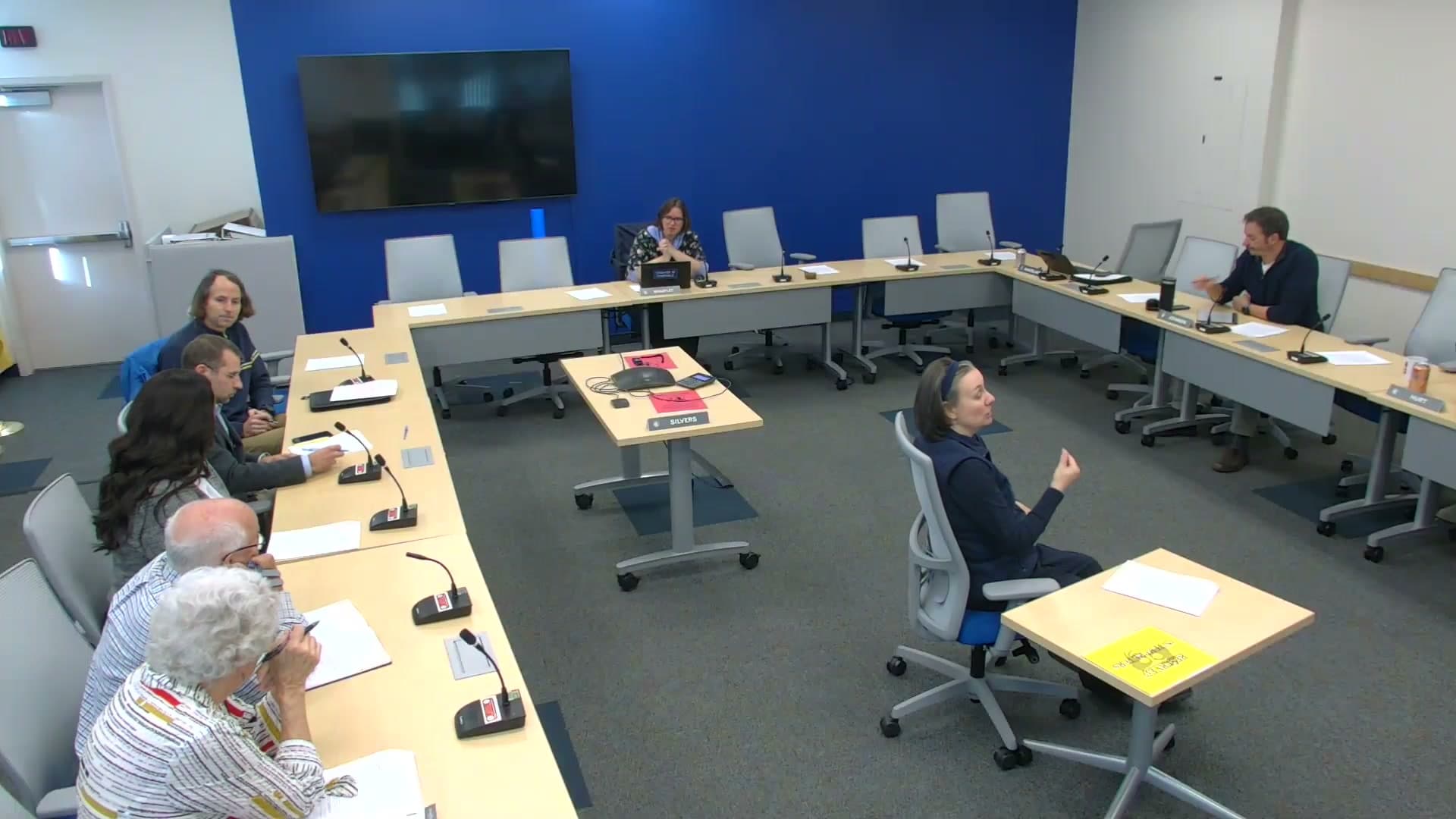
Appeals board chair says Anchorage cut most appealed values, expects more appeals
The chair of Anchorage's Board of Equalization told an Assembly work session Thursday, Oct. 8, that most of a record 1,990 property assessment appeals this year ended with lower values even though, in the board's view, few owners had good evidence. He predicted more appeals next year.
Appeals were up from 455 in 2025. Of this year's, 1,822 were resolved by the Municipal Assessor's office or withdrawn before reaching the board, and the assessor's office reported lowering values on 1,665 of those, according to the board's 2026 annual report to the Assembly. The board has heard 163, with five more scheduled next week. The appeals process produced a net $185,264,473 decrease in valuations, the report says.
"The property appraisal was interested in having them not go to the Board of Equalization, in assuaging people's concerns," Chair Ian Moore said. Values fell an average of nearly $100,000, he said, mostly through changes to subjective factors such as "grade factor," while similar properties that weren't appealed stayed the same. "I would think that intelligent landowners would realize that their properties were going to be overvalued compared to their neighbors and would want to appeal next year," he said. He urged the city to publish the full details of its "black box" valuation model and to commission an external audit, which he called "a huge step towards building trust."
Board Co-chair Mark June said "informal scuttlebutt" holds that appealing brings an automatic discount. If so, he said, owners who accept their assessments are being treated unfairly.
Municipal Assessor Jack Gadamus said appeals are self-selecting and that this year's total reduction was at the high end of his office's estimate but within the expected range. Feedback was largely positive, he said: "We can look at this as a success this year with building that trust."
The hearings themselves dragged on. The board heard its 163 appeals over 102 sessions from April to October, fewer than two per session, after almost 250 sessions were scheduled and most canceled. At four per session, Moore said, the board could have finished in about a month. Fifty-one appellants, 31% of those heard, didn't show and lost their deposits, and Moore asked the Assembly for ideas, including a larger deposit. First-term member Jen Motika said that for several weeks in a row, every appellant on her cases was a no-show.
Ben Bowman of the municipal Law Department said the department insisted on two weeks' notice for each hearing, so slots freed when appellants settled or withdrew couldn't be refilled, and appellants may withdraw "up to basically the minute before" a hearing. "We can build more of a stick, like the bond, into this, but we can't force anyone to show up," he said. June said he learned at the session that the two-week rule was an internal decision, not an ordinance, and called it arbitrary.
The board filled all 21 seats for the first time in over 20 years to handle the appeals, as Alaska News previously covered, but Moore said a number of members won't continue. Assembly Chair Anna Brawley of West Anchorage noted that the Assembly becomes the board if there isn't one, urged filling the seats before the next appeal cycle, and said she expects another discussion early in 2027 focused on how values are set.
This article is based on a public meeting of Municipality of Anchorage — Anchorage Assembly: Worksession re Board of Equalization annual report and 2026 assessment & appeals cycle ().
Made by our human newsroom with AI. Reviewed by Cale Green. How humans and AI work here · Grow with our newsroom Transcript byLucas Brown
Stay informed. Support what matters.
Free, permanent access to local news you can verify. Subscribe to support Walter AlaskaNews and go ad-free.
Related Coverage
Appeals board chair says Anchorage cut appealed property values but not neighbors'
Alaska News · 2h ago
Anchorage assessment appeals hit a record, and the board filled up to cope
Alaska News · 3w ago
Anchorage board sets seven property appeal hearings for next week
Alaska News · 3w ago
Anchorage holds more property-appeal hearings, as hundreds of over-assessed homes get lower valuations
Alaska News · 1mo ago
Anchorage tax appeal hearings continue into September, past the board's stated season
Alaska News · 1mo ago
Comments
Sign in to leave a comment.
No comments yet. Be the first to share your thoughts.