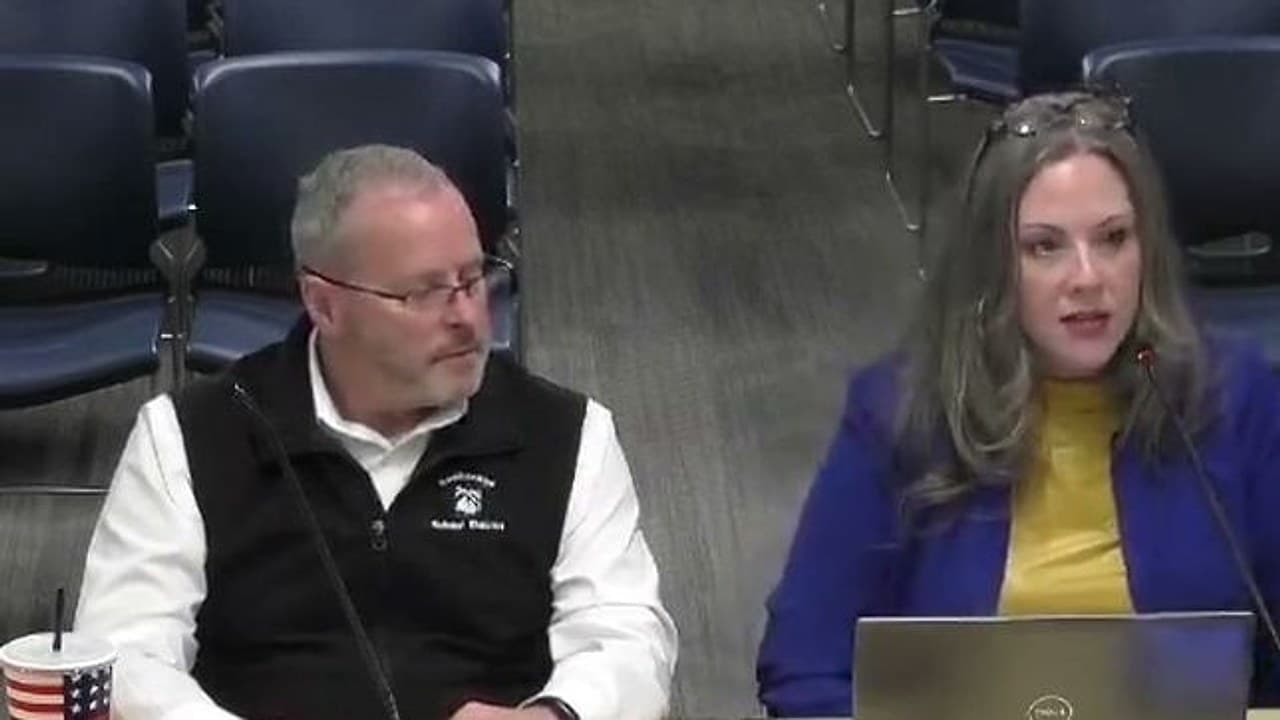
Frame from "Anchorage School Board: 11/2/2026: School Board Work Session" · Photo source
Anchorage School Board approves $7.5 million transfer to cover student nutrition deficit
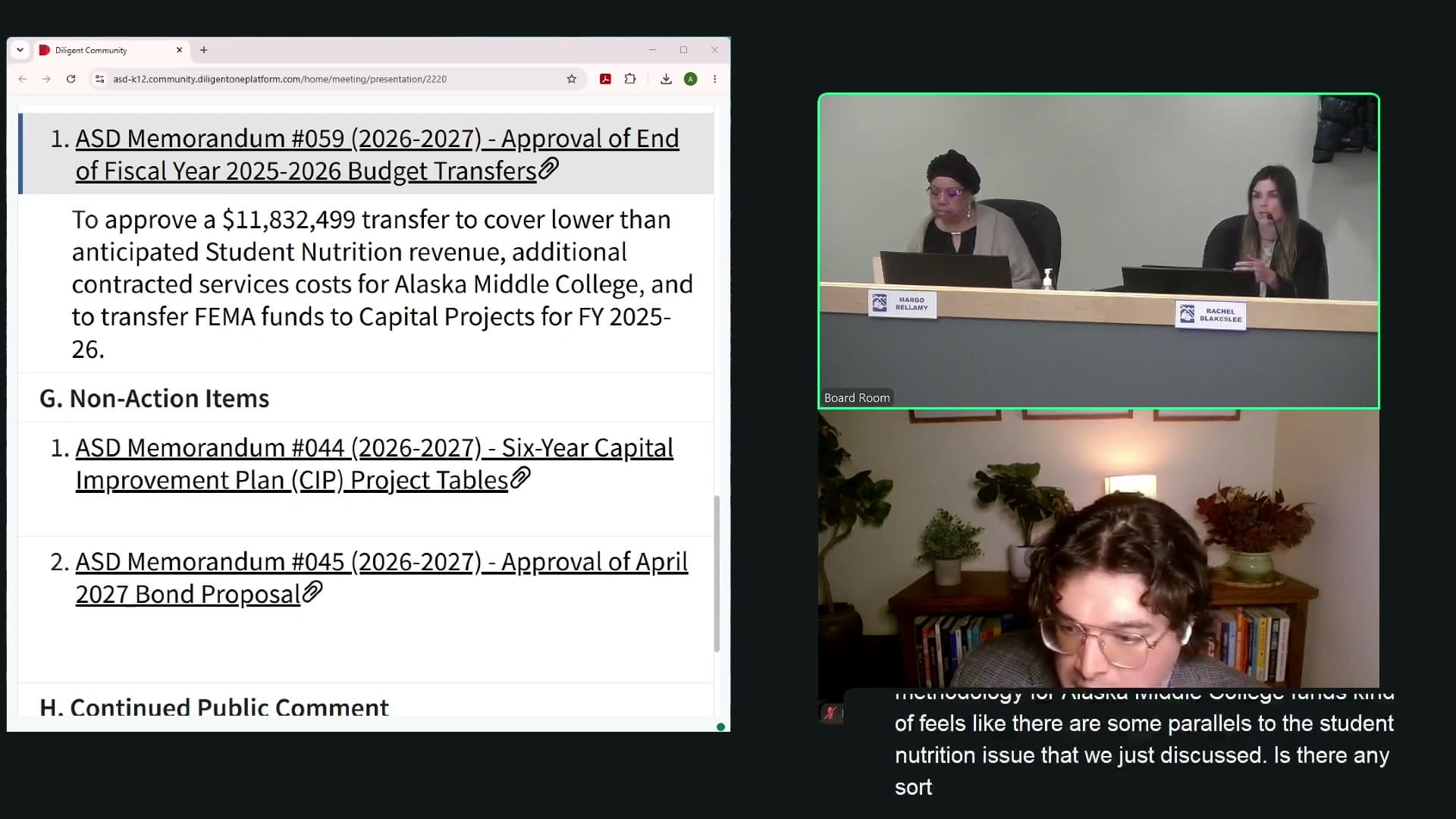
The Anchorage School Board voted 7-0 Monday to move about $7.5 million from the district's general fund to cover a deficit in the program that pays for school meals.
The student nutrition fund, which pays for meals and kitchen staff and runs about $29 million a year, came up nearly $8.9 million short on revenue in fiscal 2026, according to a district memo. It spent about $1.9 million less than budgeted.
The problem was money coming in, not going out, Katie Parrott, senior director of the district's budget office, told the board at a work session before the vote. Most of the fund's money comes from federal reimbursement for each meal, at rates that depend on whether a student qualifies for free, reduced-price or paid meals.
"There was a very, very steady uptick and growth over time of the meal production, but the revenue tells a different story," Parrott said.
She said the district's revenue assumptions were overly optimistic and didn't account for eligibility changes. In June 2025, the number of schools serving meals at no cost to families rose from 34 to 47 under a federal program, which fed more students but brought in about $450,000 less in reimbursement, the memo says.
Spending also rose, partly because a new labor agreement raised kitchen wages and filled open positions. Chief Operating Officer Jim Anderson said this is the first year every cafeteria is staffed, after years of shelf-stable meals at schools without kitchen managers.
The money for the transfer is available partly because health insurance claims leveled off in fiscal 2026 after years of running over budget, Parrott said. Starting with fiscal 2028, the budget office plans to forecast meal revenue with more up-to-date data, and the district plans to hire an accountant for the meal program.
"Barring a significant change at the federal government, student nutrition deficits are going to be like the transportation deficit," Vice President Margo Bellamy said. "It's just going to be a real thing every year."
Board member Pat Higgins said he would never suggest reducing food service. Anderson said some districts have cut breakfast to save on labor, but warned, "As soon as you cut benefits, they're going to quit, and now you're going to have, you know, 15 or 20 schools without a cafeteria manager again."
Money to cover the meal program has to come from somewhere else in the budget, Parrott said. The district closed three elementary schools and cut more than 500 positions to address a $90 million deficit in this year's budget, Alaska News reported March 12.
Made by our human newsroom with AI. Reviewed by Cale Green. How humans and AI work here · Grow with our newsroom Transcript byWalter AlaskaNews
Get Alaska News in your inbox
Create your free account and get the day’s top stories around 6 each morning, in a few minutes’ read.
The day's top stories around 6 each morning. Unsubscribe in one click.
This article is based on a public meeting of Anchorage School District — Anchorage School Board: 11/2/2026: School Board Work Session ().
Watch key moments from the source meeting. Click to expand.







Comments
Sign in to leave a comment.
No comments yet. Be the first to share your thoughts.