Katie Parrott
14:42 - 15:13
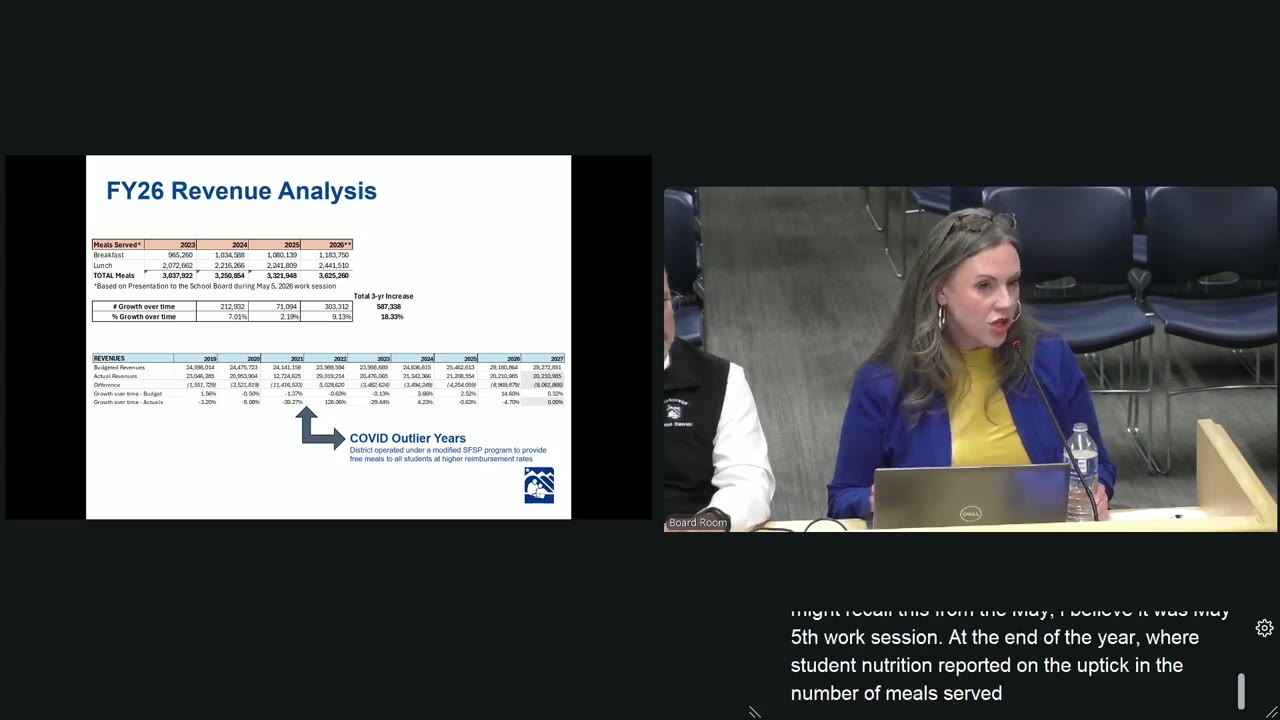
"there was a very, very steady uptick and growth over time of the meal production, but the revenue tells a different story."
“there was a very, very steady uptick and growth over time of the meal production, but the revenue tells a different story.”
- Speaker
- Katie Parrott
- Timestamp
- 14:42 – 15:13
- Community
- Alaska News
- Location
- Anchorage
- Captured at
- November 2, 2026
From the transcript
So then, to better understand the deficit for FY26, of course we want to take a look at the revenue and identify any blips or, or, you know, variances over a period of time. So that top chart there for meals served, you might recall this from the May— I believe it was May 5th work session at the end of the year where Student Nutrition reported on the uptick in the number of meals served and lots of the changes that were being done in that program. And so here you can see there was a very, very steady uptick and growth over time of the meal production, but the revenue tells a different story. And one of the reasons why the revenue tells a little bit of a different story that's hard to suss out, or was hard to suss out initially, is because every year essentially since COVID has been an atypical year. So it's been hard, or was hard, to kind of establish a baseline because there's been so much change.
Related Coverage
Anchorage School Board approves $7.5 million transfer to cover student nutrition deficit
Anchorage School District budget officials asked the school board Monday to cover a fiscal 2026 student nutrition deficit. They said meal counts rose while reimbursement revenue fell short, and they are changing how the fund is tracked.
 by Walter AlaskaNews1h ago2 min read