AI image
Anchorage Assembly weighs 10-year tax break for condos above shops and offices
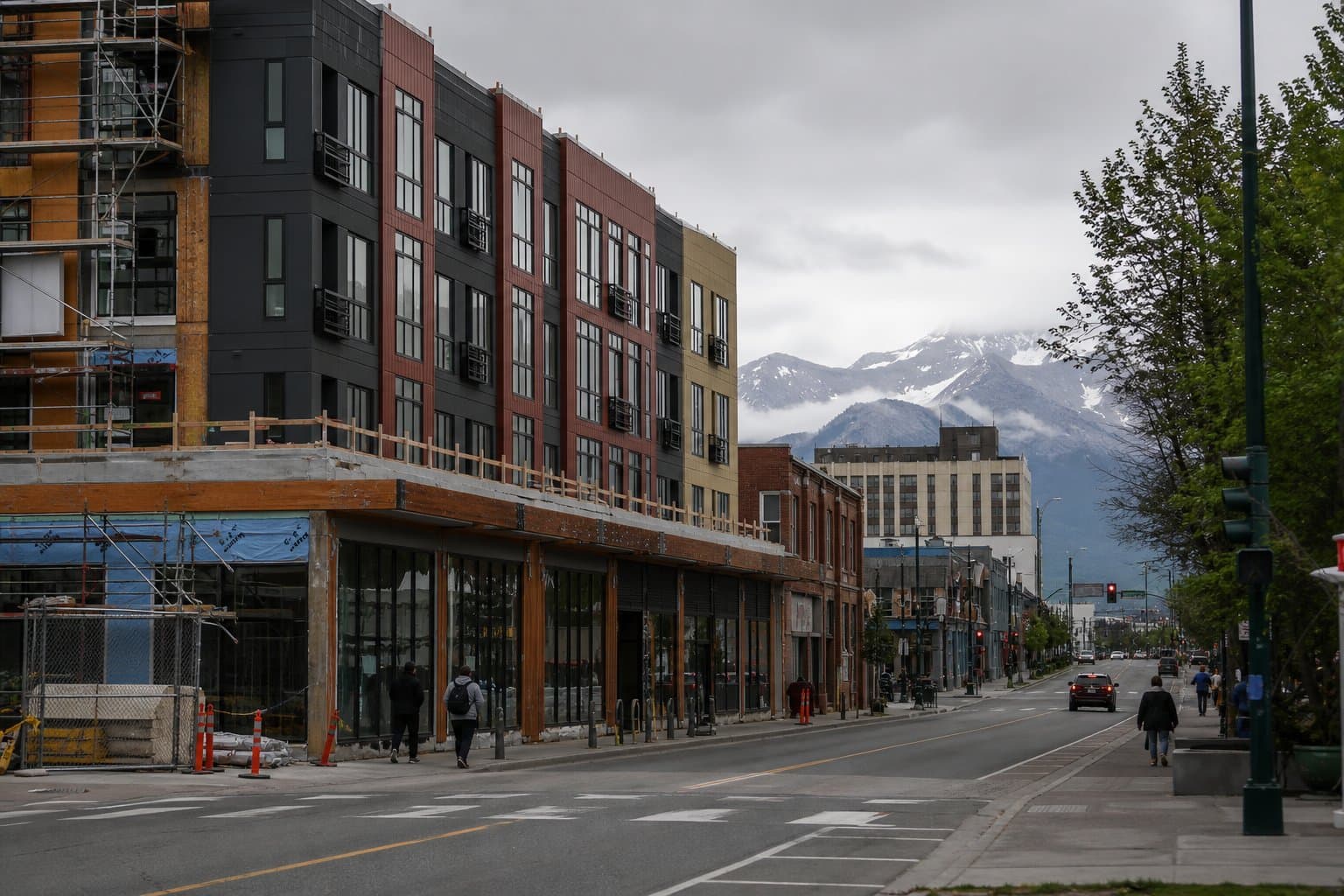
The Anchorage Assembly is weighing an incentive to get apartments built above shops: a decade without property taxes for the people who buy them.
Under the ordinance, if a developer builds condos inside a mixed commercial-residential building, the buyers wouldn't owe property tax on the new residential part of their unit for 10 years. It is a targeted break: it covers only the newly built living space, not the commercial floors or any existing value, so a buyer's full tax bill wouldn't disappear.
Policy Director Nolan Klouda wrote in the assembly memo that the break is meant to close the financial gap that keeps mixed-use redevelopment from happening, and that many of Anchorage's office and retail buildings, built in the 1970s and '80s, carry high vacancy rates. The measure, proposed by Mayor Suzanne LaFrance's administration, comes as the city confronts a housing shortage, with listing prices up 40% from 2020 to 2025, and cites the mayor's goal of adding or rehabilitating 10,000 homes in 10 years. A companion proposal would extend the same break to first-time buyers of new starter homes.
There are strings: a project needs at least four new units, each priced at or below the city's average single-family home value, about $497,000, and buyers must live in the unit rather than rent it short-term.
Whether the cap is generous enough came up at the Assembly's July 17 housing worksession. One speaker said of the roughly $500,000 figure, "if I look at some recent projects in Midtown, that is a single bedroom with bathroom and kitchen, uh, being built by one of our most efficient builders in town."
The exemption applies only to the residential square footage. Commercial space stays taxable. Applications close at 5 p.m. Aug. 31, 2031, and violations can draw penalties of up to three times the exemption received.
The Department of Law's economic summary, by Jack Gadamus, calls the measure largely revenue-neutral, because most of the exempt value would come from construction that isn't taxed today. It cautions, though, that tax exemptions can shift the cost of government onto other property owners through higher mill rates, an effect officials expect to be negligible.
Source: Municipality of Anchorage ().
Drafted with AI. Edited by Cale Green (1 revision). No full editor review is on record. Who is accountable.
Discussed in
Stay informed. Support what matters.
Free, permanent access to local news you can verify. Subscribe to support Walter AlaskaNews and go ad-free.
Related Coverage
Anchorage proposes tax break for mixed-use buildings with owner-occupied units
Alaska News · 2mo ago
Anchorage Assembly weighs 10-year tax break for first-time homebuyers of new starter homes
Alaska News · 2mo ago
Anchorage mayor introduces two property tax incentive proposals to spur housing
Alaska News · 2mo ago
Anchorage's new-home tax break would reach pricier houses under a revision
Alaska News · 4d ago
Anchorage's proposed tax break caps at $497,000. New homes average $750,000.
Alaska News · 2mo ago
Comments
Sign in to leave a comment.
No comments yet. Be the first to share your thoughts.