AI image
Anchorage proposes tax break for mixed-use buildings with owner-occupied units
Developers who convert or build mixed-use commercial-residential buildings with owner-occupied housing would get a 10-year property tax break under a proposal the Anchorage Assembly introduced this summer.
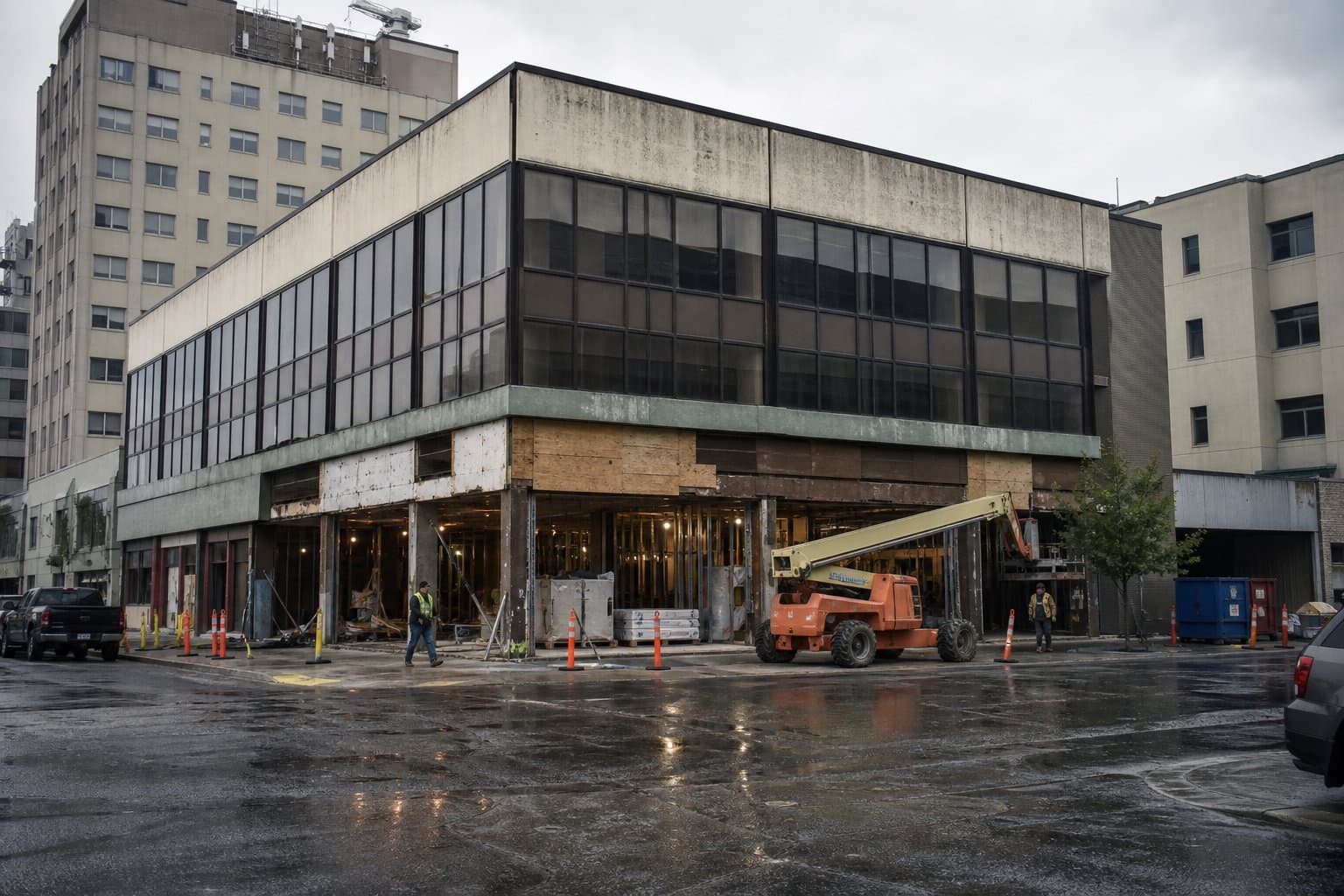
Ordinance AO 2026-93 would create a new chapter of Anchorage Municipal Code aimed at a specific problem: older commercial buildings from the 1970s and 1980s that sit largely empty but may not be financially feasible to convert to housing without a financial push. The administration says a feasibility gap, where conversion costs outrun what units can sell for, has stalled those projects. The existing multifamily tax incentive does not help because it excludes owner-occupied units. This ordinance fills that gap. The ordinance applies to newly constructed or rehabilitated mixed-use buildings anywhere in the municipality, not only to older vacant commercial properties.
"We need to use every tool at our disposal to drive new development, improve affordability and keep our workforce in Anchorage," Mayor Suzanne LaFrance said in a press release accompanying the proposal. "As a community, we have vacant office and commercial spaces but a shortage of homes. Converting some of this space to housing just makes sense, but it can be expensive. This tax incentive will help make it happen."
Under the ordinance, a developer must include at least four new owner-occupied residential units, each sold at or below $496,746, the municipality's current average assessed single-family home value. The exemption covers only the residential portion of the building. Land and commercial space remain fully taxable throughout the 10-year period. Short-term rentals are excluded from eligibility, and property owners must submit annual compliance reports to the Assembly.
Nolan Klouda, policy director for Mayor LaFrance, presented the proposal and framed the incentive as closing a gap in the existing toolkit. The program is open anywhere in the Municipality and accepts applications through August 31, 2031. Developers must apply before receiving a Certificate of Occupancy and complete construction within five years of provisional approval.
The administration says the program is expected to be revenue-neutral, because the exemption applies to new residential value that is not currently on the tax rolls. Critics of broad property tax incentives have argued, in prior Assembly policy discussions, that exemptions can shift the tax burden onto non-exempt property owners and should be narrowly tailored to avoid subsidizing projects that would be built regardless.
Context
Anchorage has been layering housing incentives since 2019, when the Assembly first authorized property tax exemptions for new residential construction. The previous multifamily incentive produced 86 new units over five years. The ordinance was introduced for first reading on June 23. The Assembly has not yet scheduled a final vote.
Source: Anchorage Assembly.
Made by our human newsroom with AI. How humans and AI work here · Grow with our newsroom
Discussed in
Stay informed. Support what matters.
Free, permanent access to local news you can verify. Subscribe to support Walter AlaskaNews and go ad-free.
Related Coverage
Anchorage Assembly weighs 10-year tax break for condos above shops and offices
Alaska News · 2mo ago
Anchorage mayor introduces two property tax incentive proposals to spur housing
Alaska News · 3mo ago
Anchorage Assembly weighs 10-year tax break for first-time homebuyers of new starter homes
Alaska News · 3mo ago
18 condo units draw 46 percent of Anchorage's housing tax exemptions, report says
Alaska News · 1mo ago
Anchorage's new-home tax break would reach pricier houses under a revision
Alaska News · 1mo ago
Comments
Sign in to leave a comment.
No comments yet. Be the first to share your thoughts.