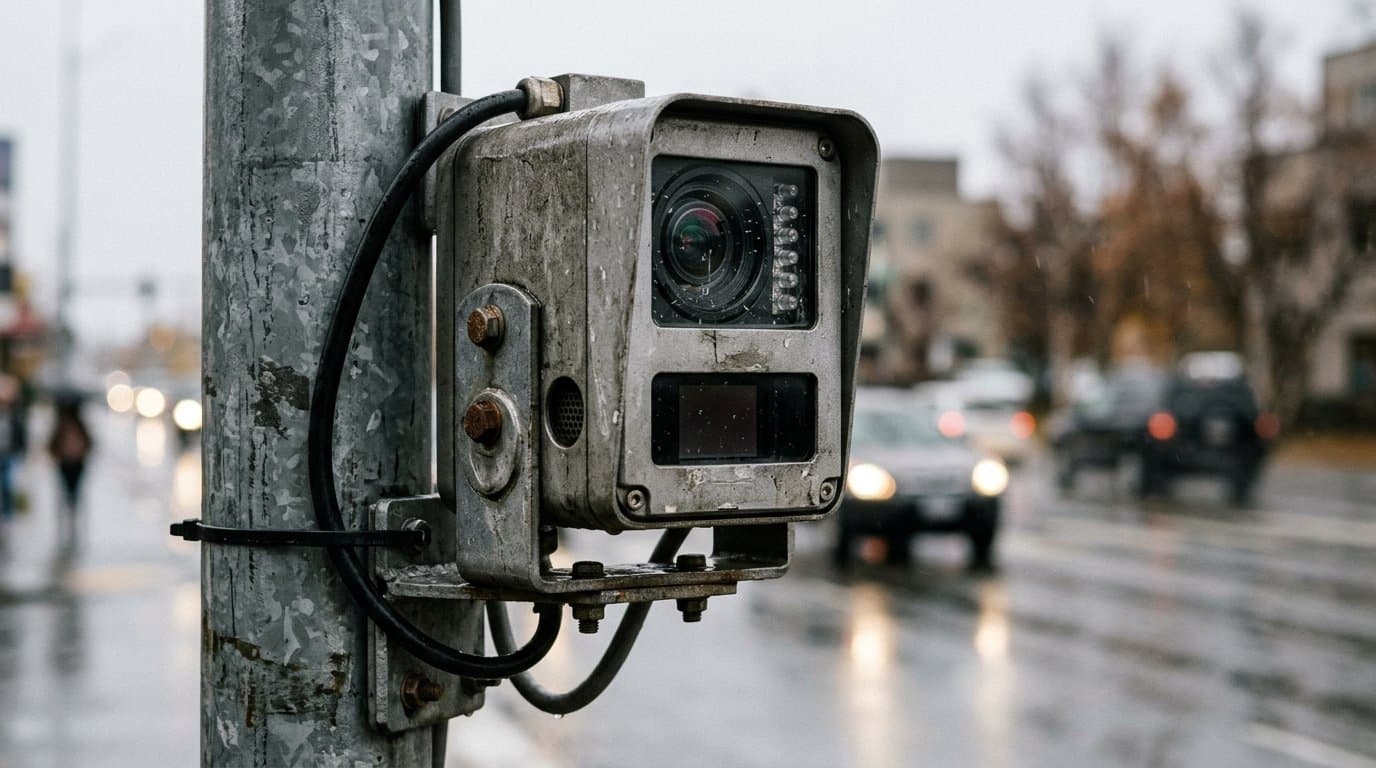
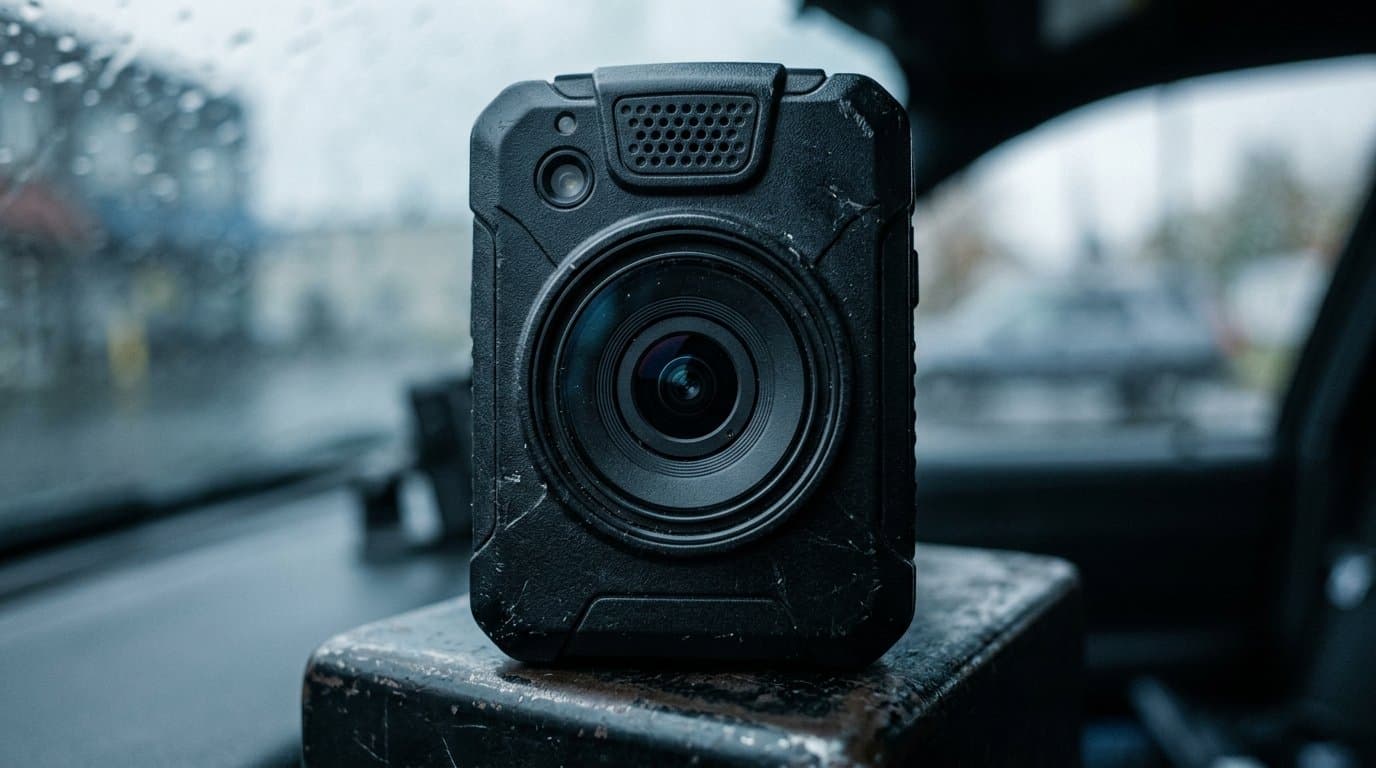
AI image
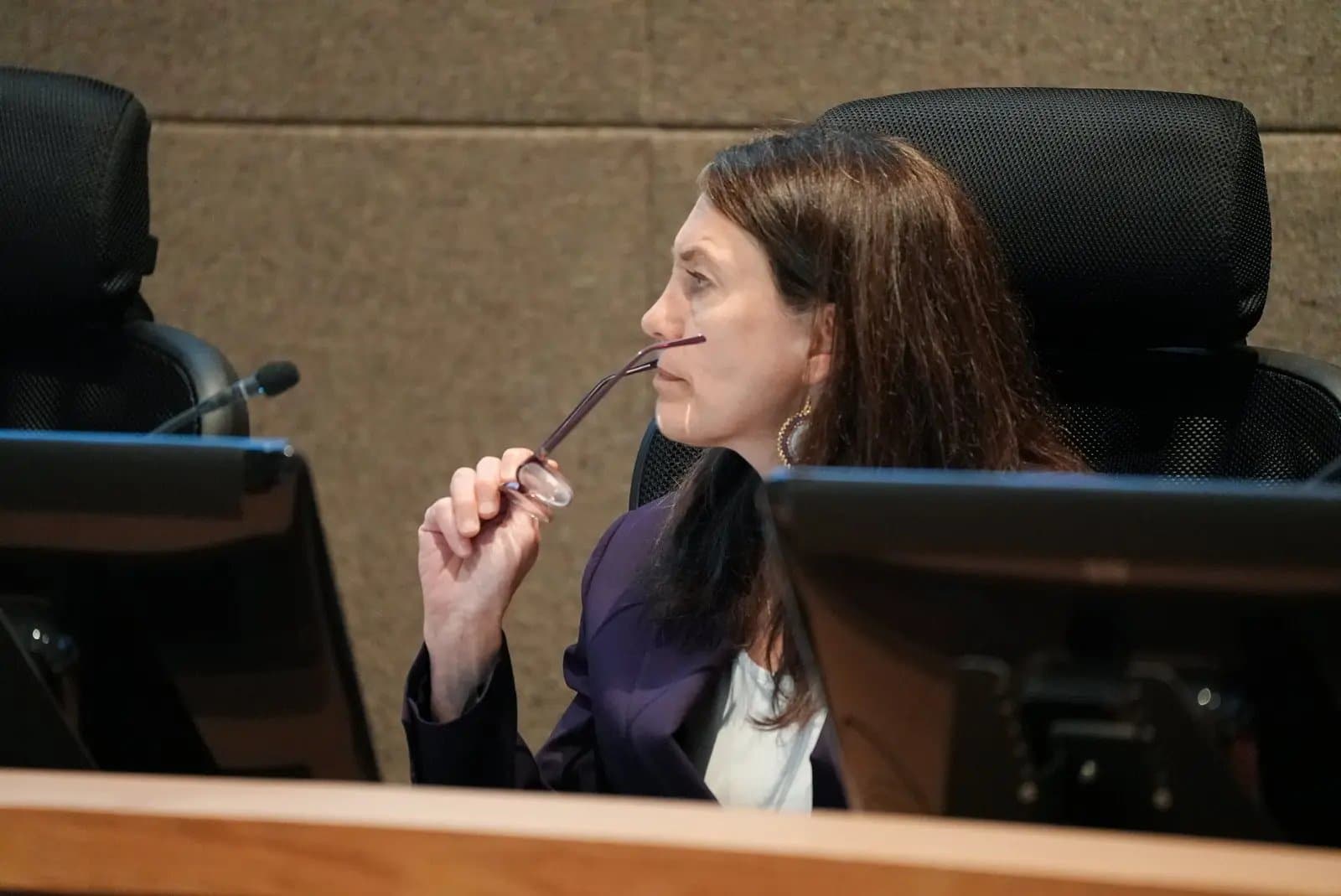
Anchorage Assembly takes up police surveillance rules Wednesday as residents urge limits
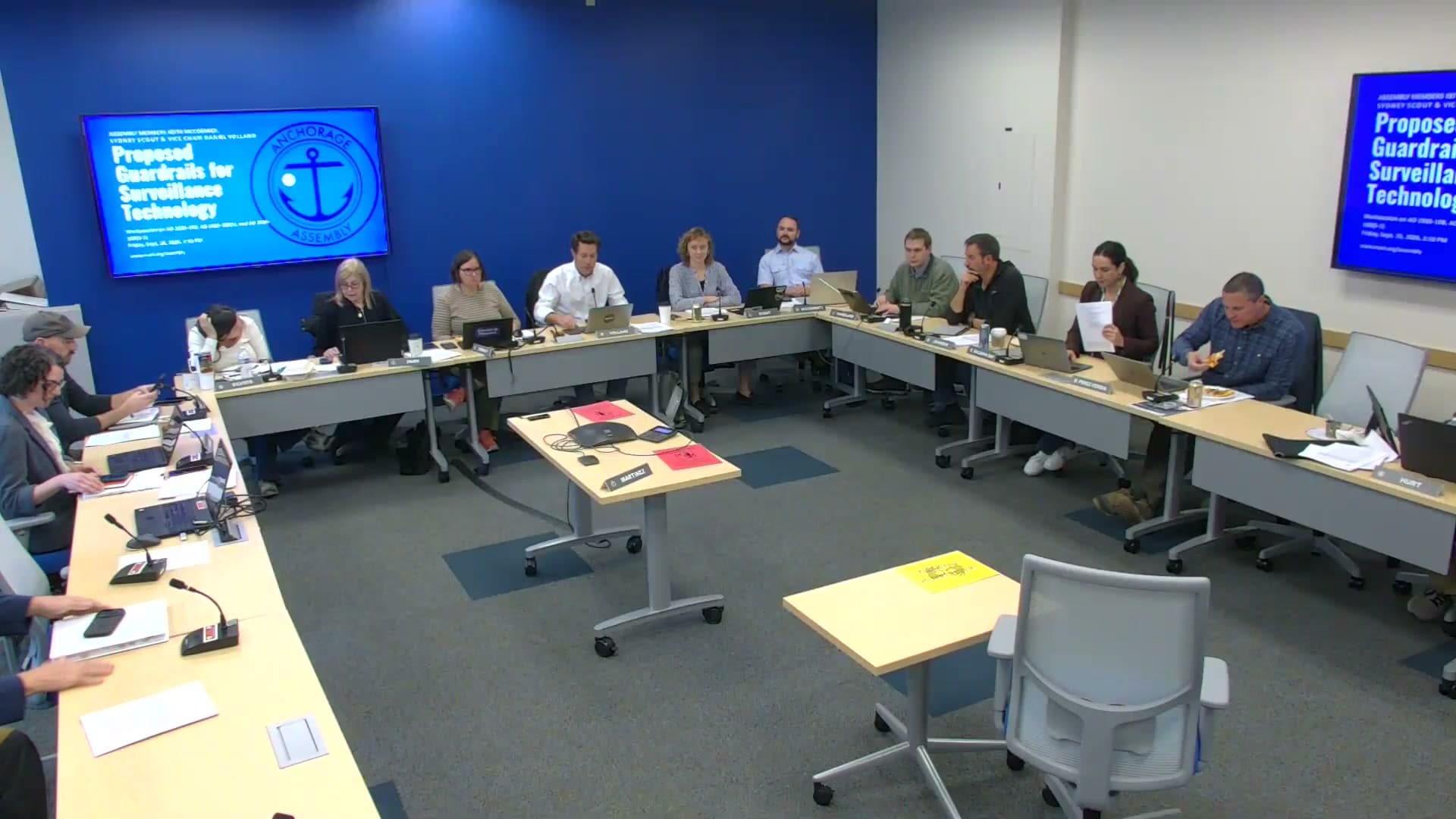
The Anchorage Assembly takes up its surveillance ordinance again Wednesday, Nov. 4. Seven residents filed written testimony Oct. 19 and 20 urging members to block or sharply limit license plate readers and Flock Safety cameras.
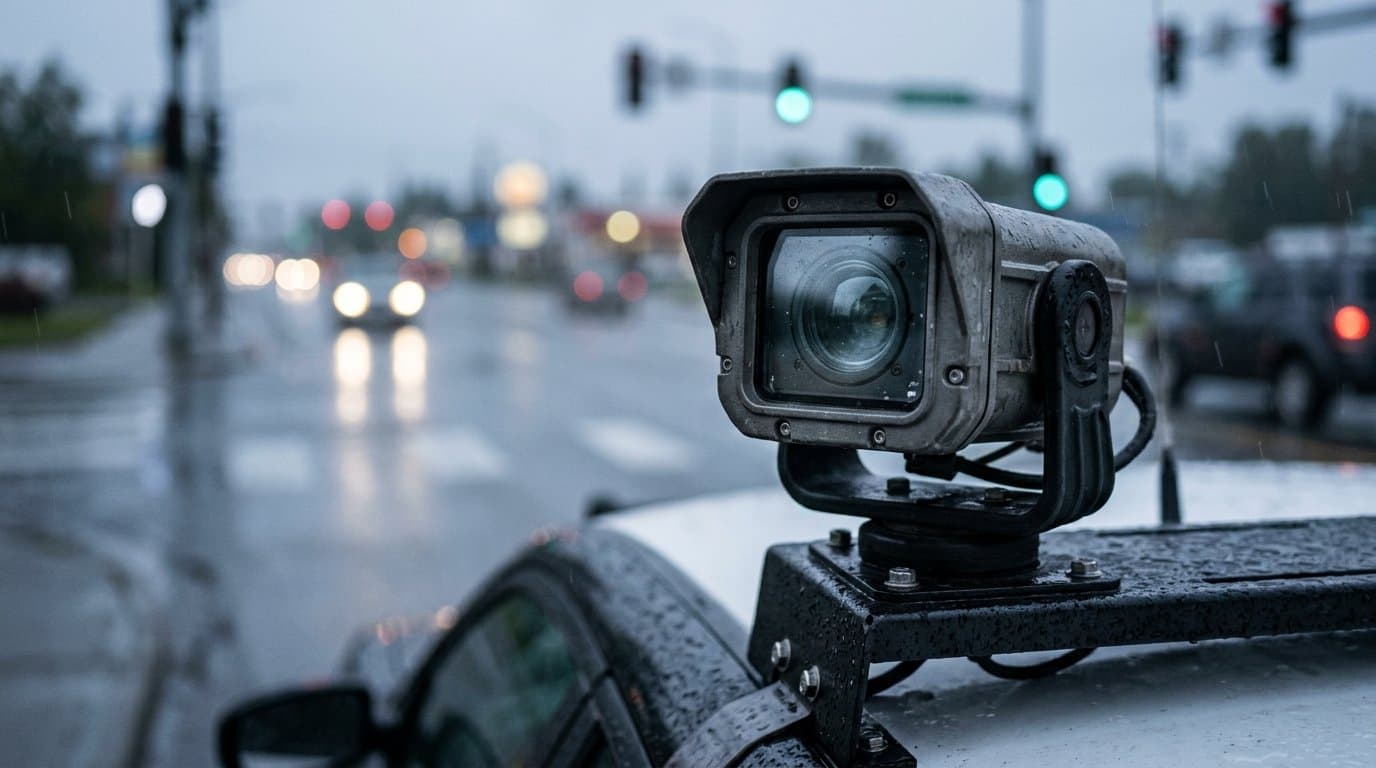
The ordinance would write rules into municipal code for police license plate readers, the Real-Time Crime Center (a hub combining live camera feeds and public safety data) and live camera monitoring. The Anchorage Police Department has already activated plate-reader capabilities on its in-car cameras, which came with the $11.8 million Axon Enterprise contract approved in September 2025 that also built the Real-Time Crime Center. Mayor Suzanne LaFrance told the Assembly on Sept. 1 that APD does not use Flock cameras.
The original version, sponsored by Assembly members Daniel Volland, Sydney Scout and Keith McCormick, would require Assembly approval for new surveillance technology and bar the city from joining outside surveillance data networks. The administration's substitute relies on written police policies, reporting and a complaint process. The seven residents filed before the Assembly amended that substitute Oct. 20. The amended version is in Wednesday's meeting packet.
Joshua Edwards said Mountain View terminated its Flock contract after an audit found federal and state agencies had accessed its data in violation of city policy.
Joshua Edwards also cited an Oct. 1 federal ruling in United States v. Kyle that found a warrantless search of a month of plate records unconstitutional. He wrote that the decision is not binding in Anchorage but is a warning. "A plate scan is a dot. A month of plate scans is a diary," he wrote.
Harvey Hoffman II cited reports that Flock has begun installing cameras for a private customer in Anchorage. He urged adoption of the original version. The substitute, he said, "preserves the ability to share data with federal partners without requiring a warrant."
Dawson Fowler of Eagle River, Melissa Udulutch and John Thompson opposed the technology outright. Shawn O'Donnell said he is vehemently opposed but asked for firm rules and Assembly oversight if the city goes ahead. He recalled that Anchorage rejected photo radar a generation ago.
The ACLU of Alaska's Oct. 20 letter asks the Assembly to reject a narrower definition of surveillance technology focused on AI and machine learning. It also opposes a 45-day curing provision, which gives the city 45 days to fix an alleged violation before a person can sue. The ACLU says that would undercut the private right to sue the Assembly created in 2023.
LaFrance backed the substitute at the Oct. 20 meeting. "The S version of the ordinance gives you a sensible and effective opportunity to do that tonight," she said. Her administration's memo on the substitute says those guardrails already exist in police policy and that putting them in code keeps them "regardless of who may be elected or appointed."
The public hearing on the ordinance has closed. Joshua Edwards asked the Assembly to reopen public testimony before deciding on the changes.
Source: Anchorage Assembly.
Made by our human newsroom with AI. How humans and AI work here · Grow with our newsroom
Get Alaska News in your inbox
The day’s top stories, around 6 each morning, in a few minutes’ read. Free, and every email has a one-click unsubscribe.









Comments
Sign in to leave a comment.
No comments yet. Be the first to share your thoughts.