
Hours before polls closed Nov. 3, lieutenant governor candidate Zac Johnson, left, waves a sign for his ticket with Jonathan Kreiss-Tomkins. (Alaska News)
Analysis: Ranked choices would put Kreiss-Tomkins over 50% as counting continues
On the ballots counted so far, voters' backup choices would put Democrat Jonathan Kreiss-Tomkins just over 50% in Alaska's governor race, an Alaska News analysis of state ballot data shows, with tens of thousands of ballots still to be counted.
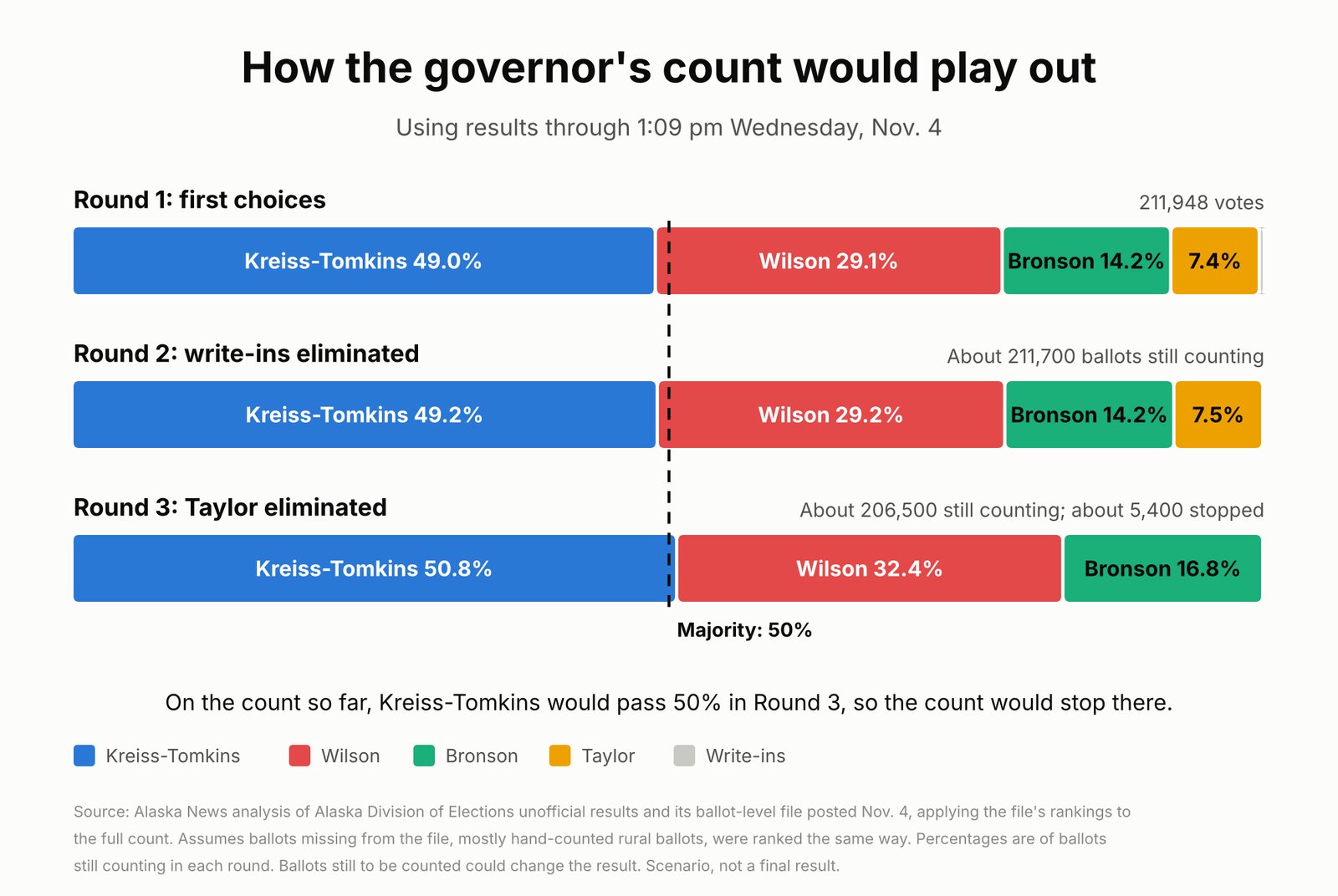
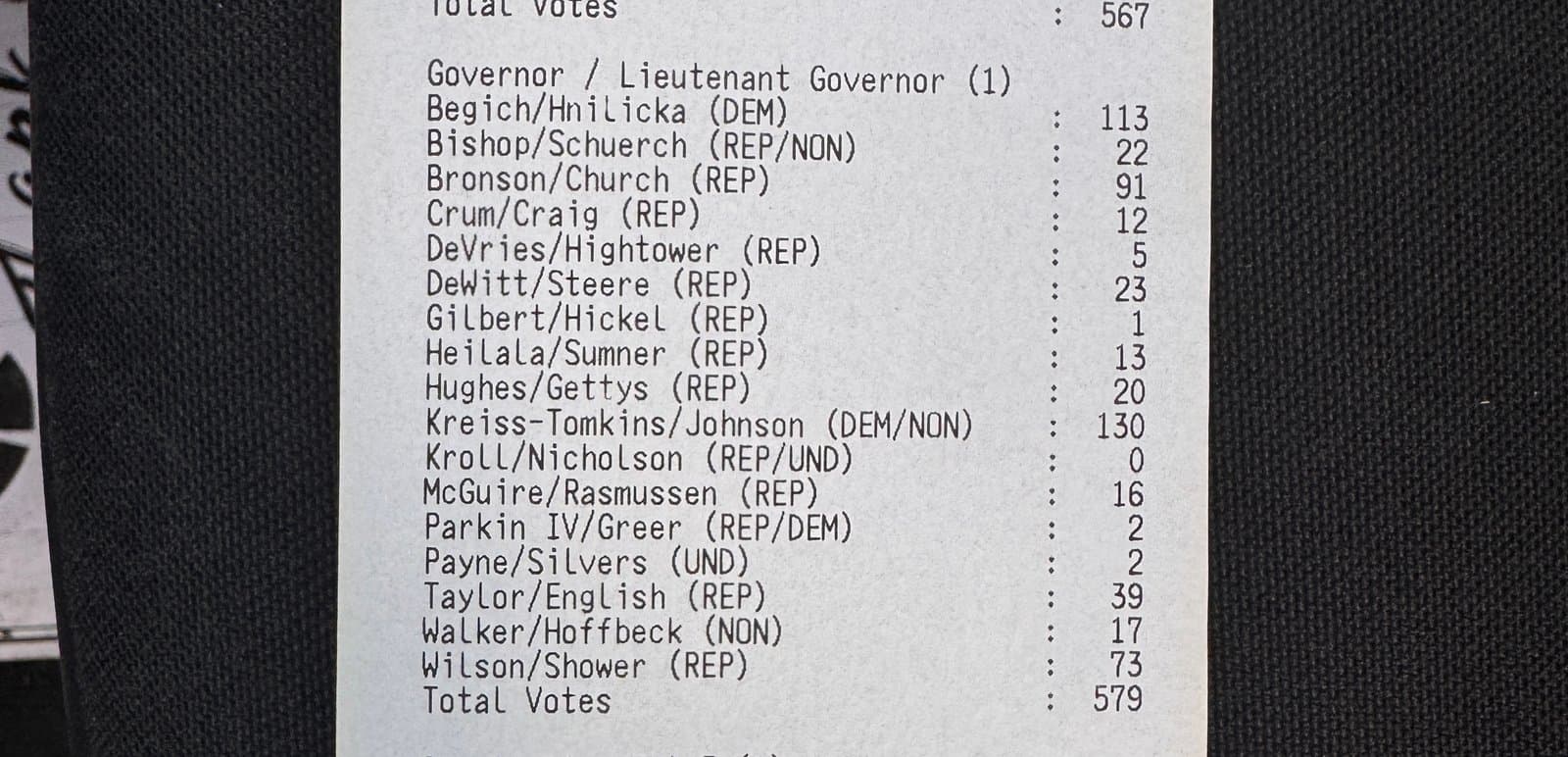
Kreiss-Tomkins has 49% of first-choice votes in the Division of Elections' latest report, posted at 1:09 pm Wednesday. Republicans Bernadette Wilson, Dave Bronson and Taylor have 29%, 14% and 7%.
If he wins, Kreiss-Tomkins would be the first Democrat elected governor since Tony Knowles won a second term in 1998. At 37, he would also be the youngest governor in state history. Sarah Palin was 42 when she took office in 2006.

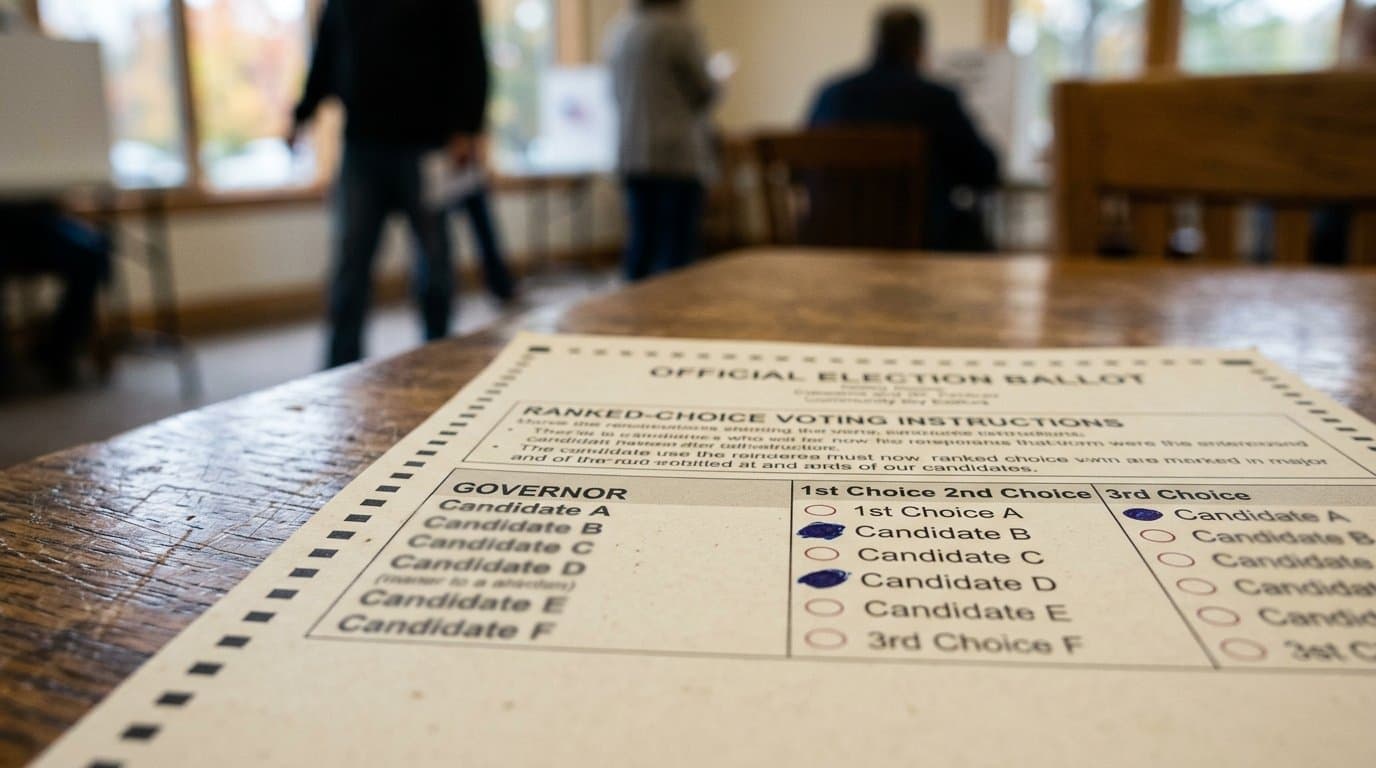
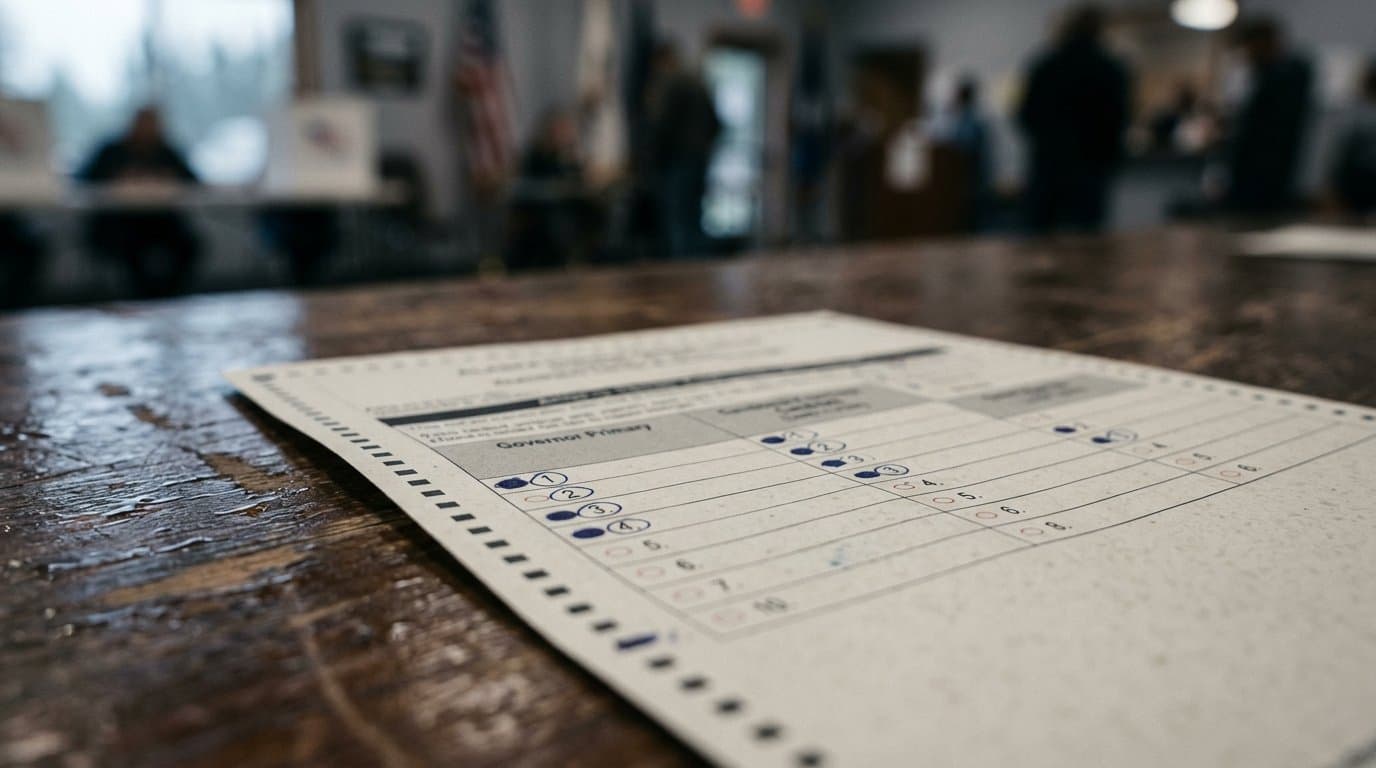
Together, the three Republican tickets drew 50.7% of first choices. But a ranked-choice ballot moves to another candidate only if the voter ranked one.
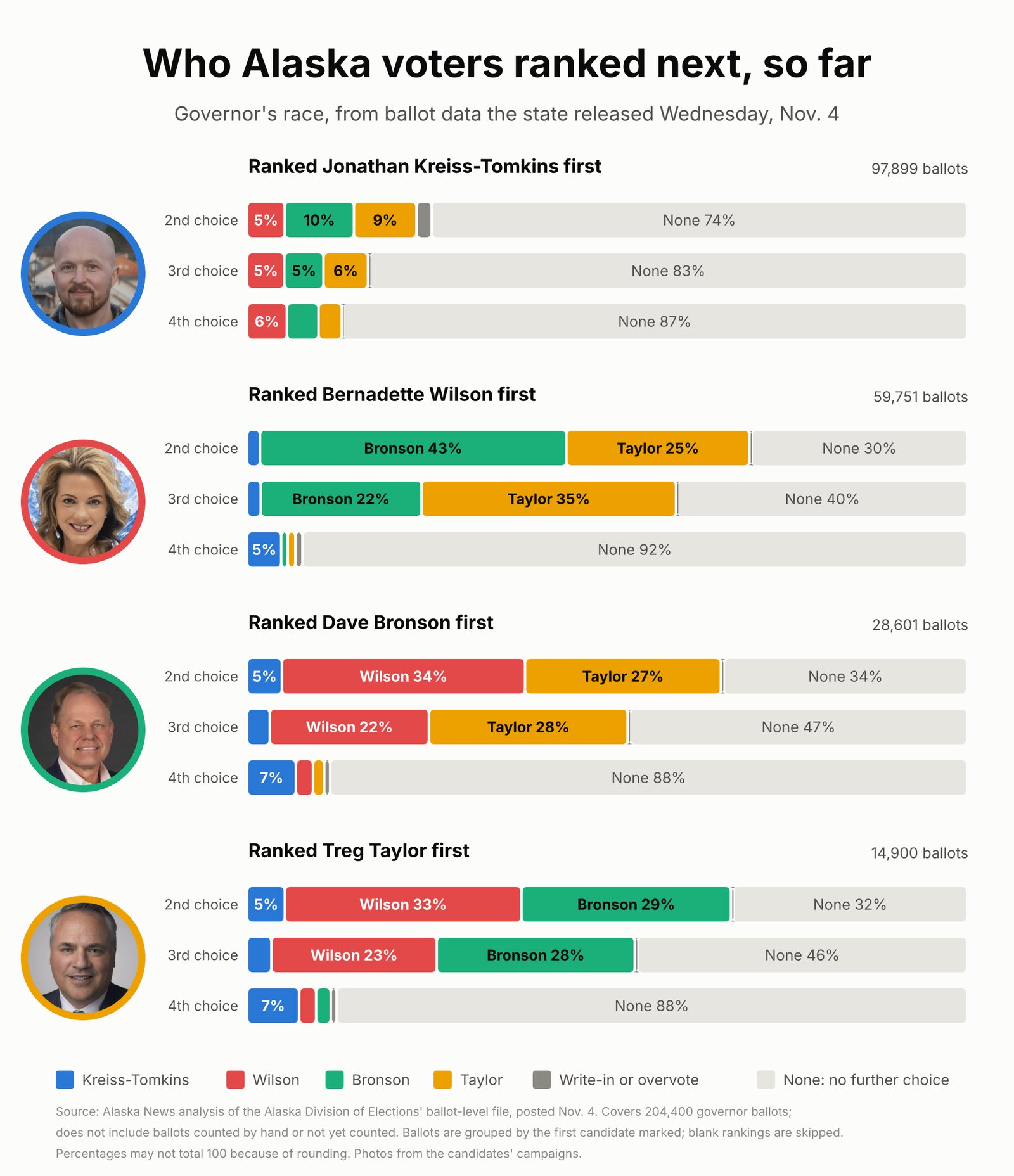
The division also posted a ballot-level file early Wednesday, which records how each ballot was marked without identifying voters and covers most, but not all, of the ballots counted so far. In it, about a third of the ballots that ranked Taylor first marked no other choice, so they stop counting once he is eliminated.
Of all the ballots that ranked Taylor first, 33% would move to Wilson, 29% to Bronson and 5% to Kreiss-Tomkins.
The ballots also show how each candidate's voters used their rankings. About three-quarters of the ballots that ranked Kreiss-Tomkins first ranked no one else. Ballots that ranked a Republican first usually ranked another Republican next, and 2% to 5% ranked Kreiss-Tomkins second.
Alaska News ran the ranked-choice rounds on that file and, using the same method as its Senate analysis, applied voters' rankings to the full preliminary count. That would give Kreiss-Tomkins about 50.8% of the votes in the round after Taylor is eliminated. Under Alaska's rules, the count stops once a candidate has a majority, so there would be no final round between the top two.
That is not a final result. The division plans to count more ballots starting Nov. 10, including early votes cast from Oct. 30 on and questioned ballots, and absentee ballots can arrive through Nov. 13 from inside the U.S. and through Nov. 18 from overseas.
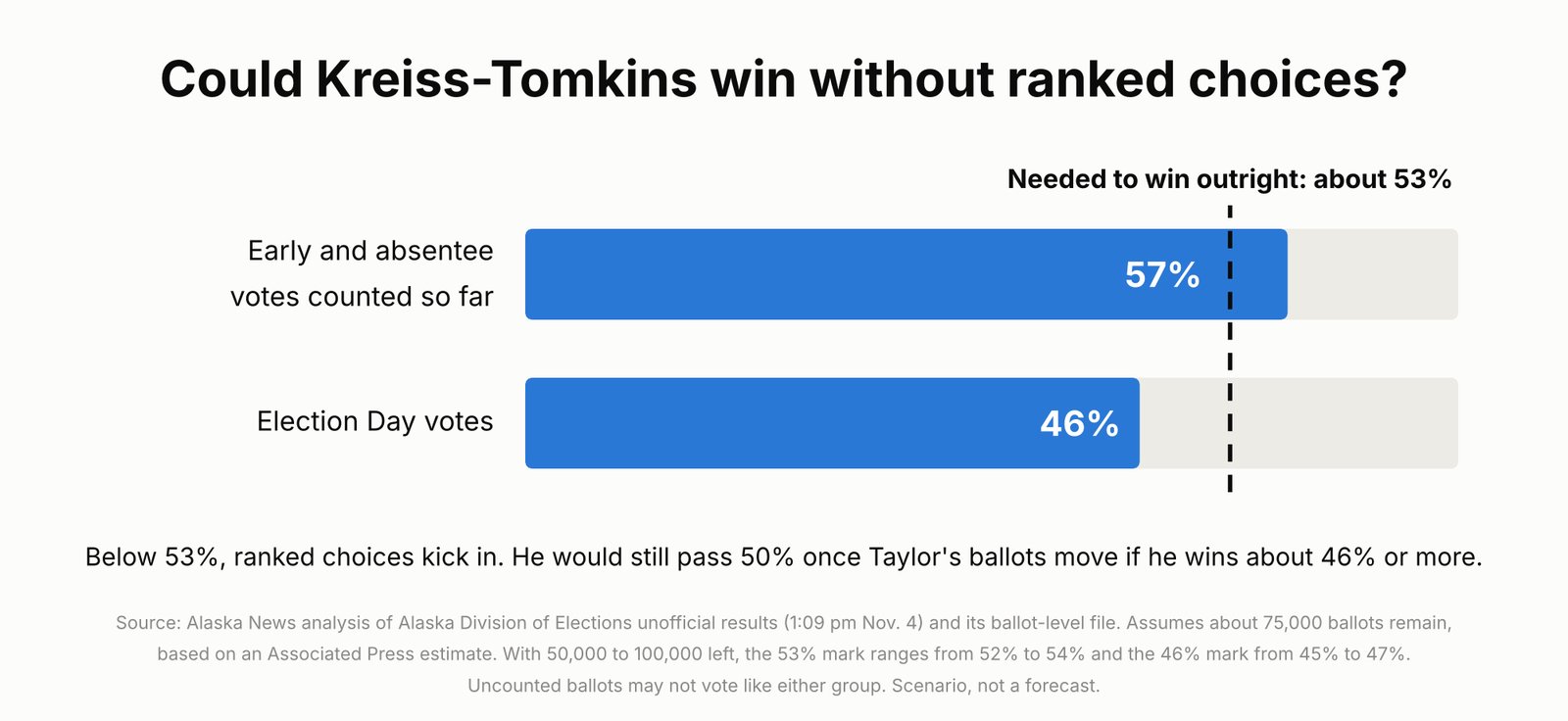
By Alaska News' math, Kreiss-Tomkins would clear 50% outright, with no ranked-choice count, if he wins about 53% of the votes still to be counted. He has won about 57% of the early and absentee votes counted so far and about 46% of Election Day votes.
If he falls short of that, he would still stay above half once Taylor's ballots move unless he wins less than about 46% of the remaining votes, close to his Election Day share. Both marks shift by only a point or two whether 50,000 or 100,000 ballots remain.
Falling below 46% wouldn't mean losing. The count would then go to a final round between Kreiss-Tomkins and Wilson, where voters' rankings give him about 55% on the current count. He would trail Wilson only if he won less than about a fifth to a third of the votes still to be counted, depending on how many ballots remain.
The ballots still to be counted include early votes cast later in the campaign, absentee ballots and questioned ballots, a different mix than either group.
The ballot-level file doesn't include ballots counted by hand, the division says, which leaves out Election Day ballots from many rural precincts. It covers 204,400 of the 215,776 ballots cast in the governor's race. Applying the file's rankings to the full count assumes voters missing from the file ranked the candidates the same way as voters in it.
The ranked-choice count for races without a majority is scheduled for Nov. 18. If Kreiss-Tomkins’ win comes down to that count, he would be the first Alaska governor whose victory depended on voters’ backup choices. Gov. Mike Dunleavy, the only governor elected under the current system so far, won a majority of first-choice votes in 2022, so no ranked-choice rounds were needed.
What did you make of this story? (no account needed)
Get Alaska News in your inbox
Create your free account and get the day’s top stories around 6 each morning, in a few minutes’ read.
The day's top stories around 6 each morning. Unsubscribe in one click.













Comments
Sign in to leave a comment.
No comments yet. Be the first to share your thoughts.