
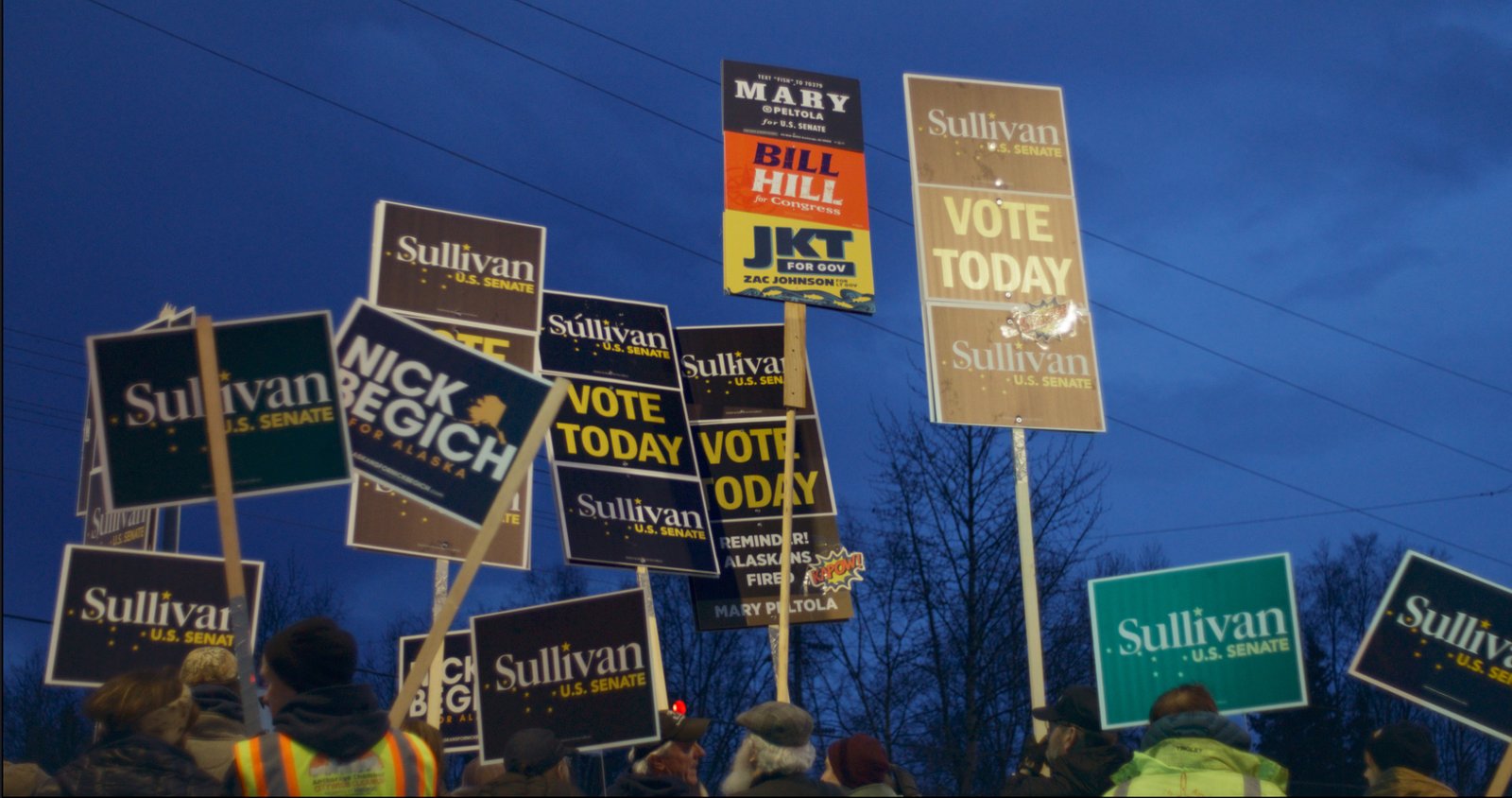
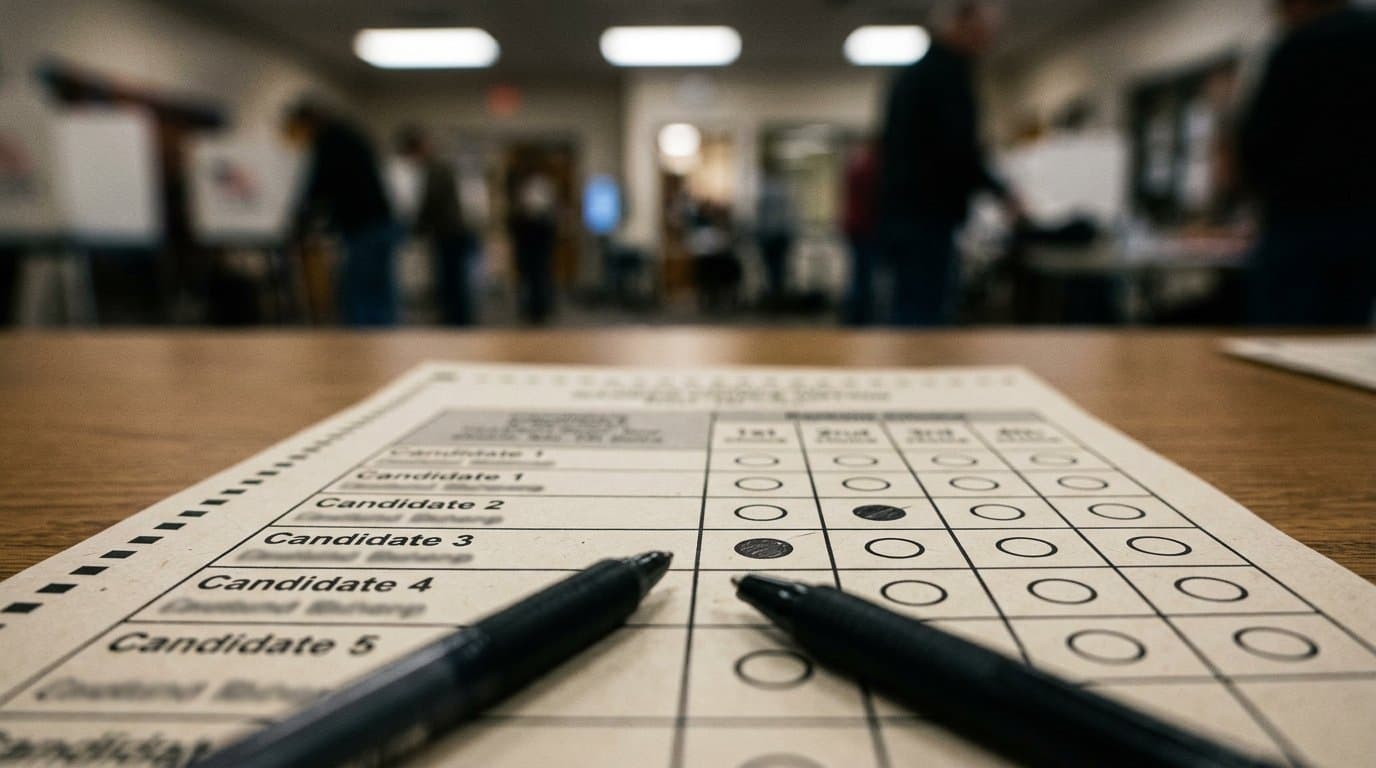
Ai Generated Image
Analysis: Ranked choices put Alaska’s Senate race near a tie as counting continues
Alaska's U.S. Senate race is close to a tie once voters' backup choices are taken into account, an Alaska News analysis of state ballot data shows, leaving the outcome to the roughly 75,000 ballots the Associated Press estimates are still uncounted.
Democrat Mary Peltola leads Republican Sen. Dan Sullivan by 626 first-choice votes in the Division of Elections' 2:19 am report. Neither has a majority, so the race is headed for a ranked-choice count on Nov. 18 unless one of them passes 50% as more ballots are counted. In that count, the last-place candidate is dropped and those ballots move to each voter's next choice, until two candidates remain.
Alaska News ran those ranked-choice rounds on a ballot-level file the division posted early Wednesday, which records how each ballot was marked without identifying voters and covers most, but not all, of the ballots counted so far. Sullivan gained more than Peltola as the other candidates were eliminated. When Alaska News applied those voters' rankings to the full preliminary count, Sullivan came out an estimated 340 votes ahead.
That is not a final result. The division still has to count early votes cast from Oct. 30 through Election Day, more absentee ballots and questioned ballots. The early and absentee ballots counted so far have favored Peltola.
By Alaska News' math, Peltola would finish ahead if she wins a little more than half of the remaining votes cast for her or Sullivan, about 50.3%. She has drawn about 58% of that vote in the early and absentee ballots counted so far. Sullivan won about 53% of it on Election Day.
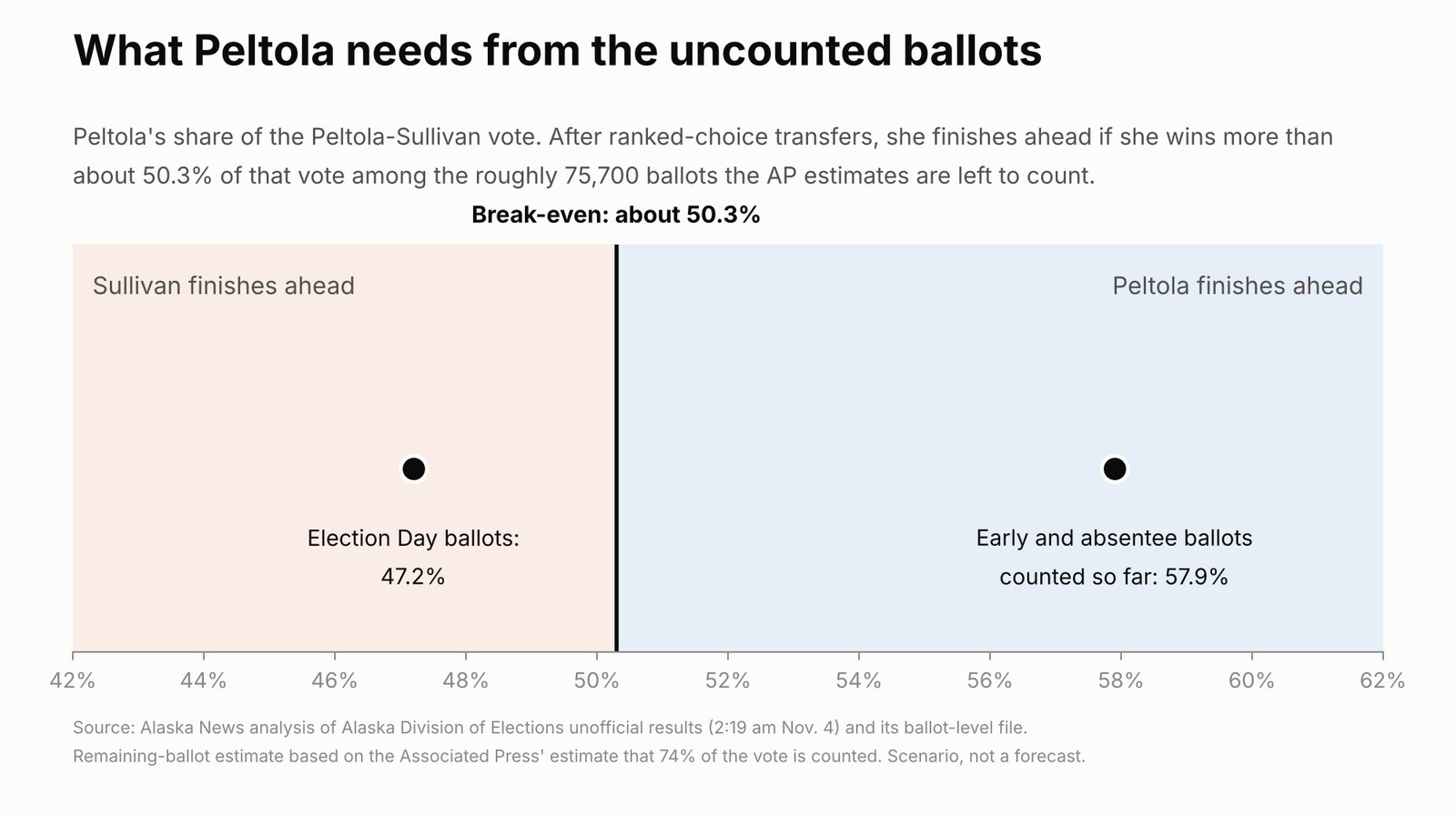
If Peltola wins 52% of the remaining vote, she would finish about 2,500 votes ahead. If it splits evenly, Sullivan would keep a narrow lead. The ballots still to be counted are a different mix than either group, including early votes cast later in the campaign, absentee ballots not yet counted and questioned ballots.
Those are scenarios, not a forecast. They rely on the Associated Press' estimate that about 74% of the vote has been counted, which would leave about 75,700 ballots, though the threshold barely moves if more or fewer remain. They also assume the voters still to be counted rank the candidates the way voters in the file did.
Two other candidates drew a combined 8,404 first-choice votes, and their voters leaned in opposite directions. Of the ballots in the file that ranked Republican Gerald Heikes first, about 44% ended up with Sullivan, 16% with Peltola and 40% with neither. Of those that ranked Daniel J. Sullivan Jr., who shares the senator's name, first, about 33% ended up with Peltola, 23% with the senator and 44% with neither. Heikes drew more votes and his voters leaned harder, so Sullivan nets about 960 votes from the transfers.
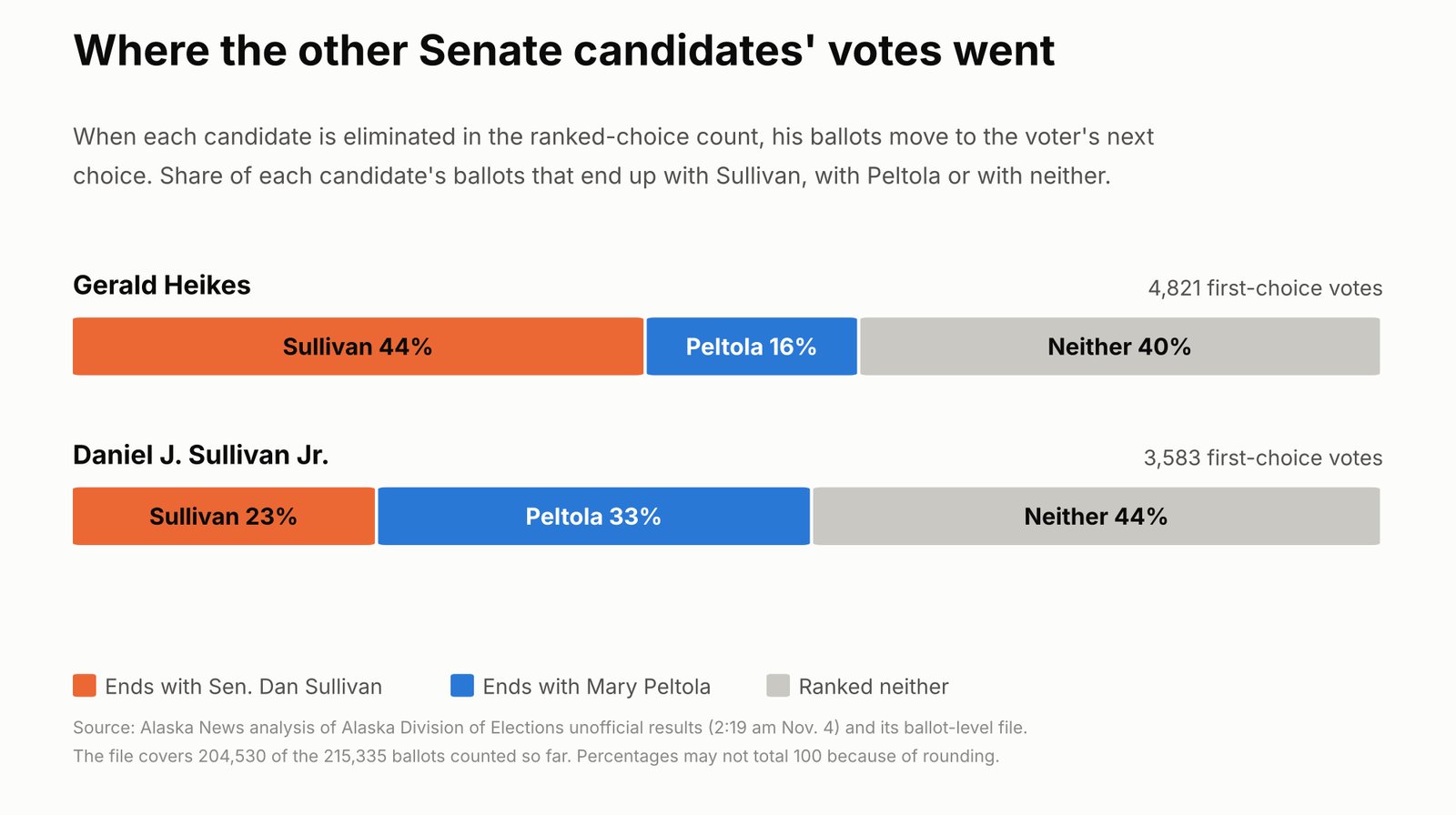
The ballot-level file covers 204,530 of the 215,335 ballots in the preliminary Senate count. It doesn't include the Election Day ballots from 138 precincts, most of them in rural Interior, Southwest and Northwest Alaska and the North Slope, including Kotzebue, Dillingham and Unalakleet.
Those precincts are in the official totals, where they gave Peltola about 7,100 votes to Sullivan's 2,600. That's why Sullivan leads in the file while Peltola leads the official count. Applying the file's rankings to the full count assumes voters in those precincts ranked the candidates the same way. Those voters favored Peltola far more than voters statewide, and the race is close enough that how they ranked the other candidates could matter.
The Division of Elections didn't immediately respond Wednesday to questions about the ballot file and how many ballots are left to count.
RCVis, an open-source project that charts ranked-choice elections, posted the same round-by-round totals from the same file.
By the same measure, the governor's race is less close. Democrat Jonathan Kreiss-Tomkins has 49.0% of first-choice votes, and the ballot file suggests he would pass 50% once the last-place Republican ticket, Treg Taylor's, is eliminated. About a third of Taylor's voters ranked no one else and 5% ranked Kreiss-Tomkins next, with the rest going to Republicans Bernadette Wilson and Dave Bronson. Applied to the full count, that would give Kreiss-Tomkins about 50.8% of the votes in that round. He would stay above half unless he wins less than about 46% of the ballots still to be counted. He has drawn about 57% of the early and absentee ballots counted so far.
In the U.S. House race, Republican Rep. Nick Begich has 49.5%, just short of a majority, and leads nonpartisan Bill Hill by about 19,500 first-choice votes. On the ballots counted so far, backup choices wouldn't close that gap. Of the ballots that ranked Democrat Eric Hafner first, about 45% ended up with Hill, 6% with Begich and 49% with neither. Applied to the full count, the rankings would give Begich about 53% in a final round against Hill. Hill would finish ahead only if Begich wins less than about 38% of the ballots still to be counted. Begich has drawn about 42% of the early and absentee ballots counted so far.
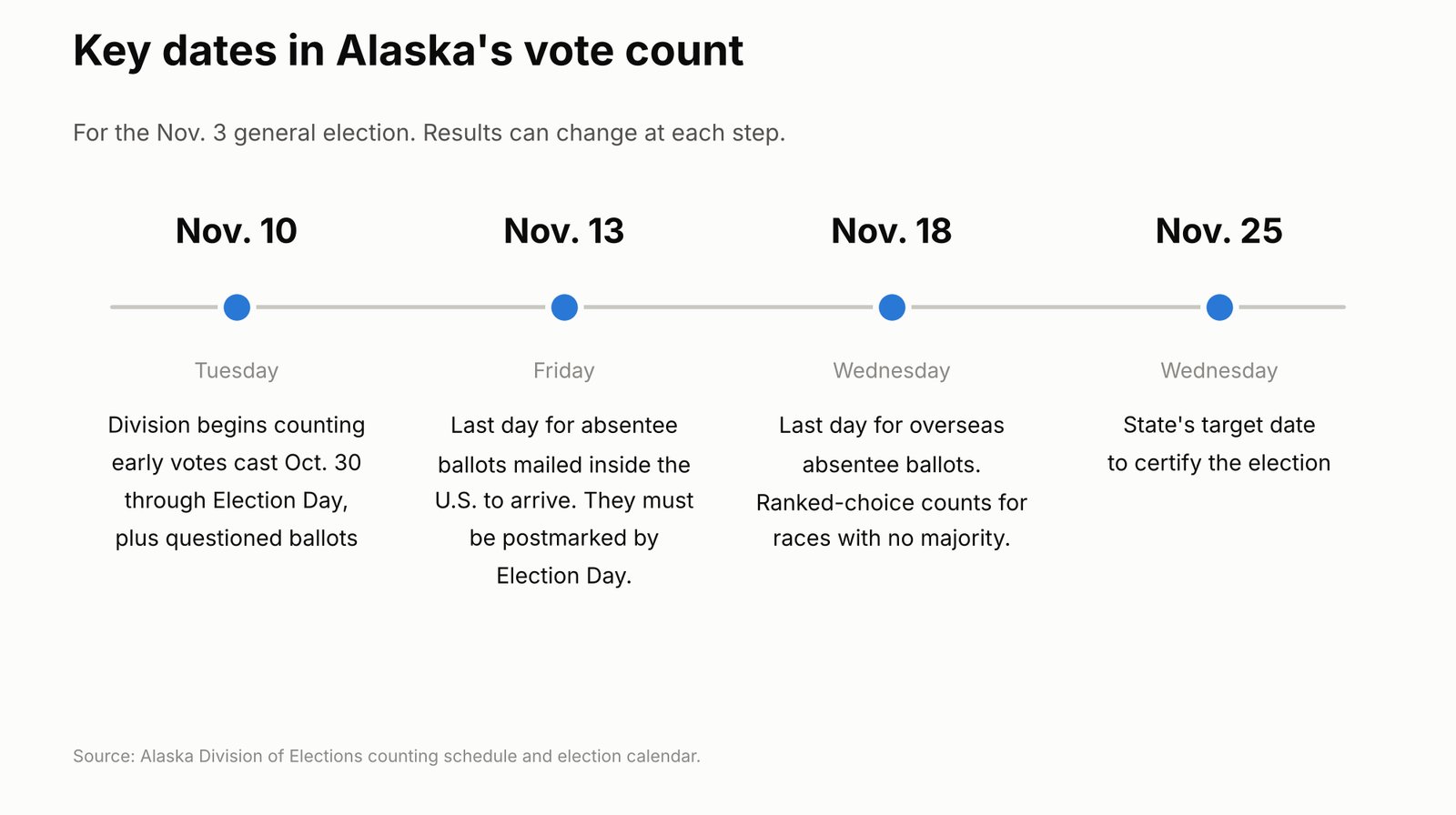
The division plans to begin counting the early votes cast from Oct. 30 on, along with questioned ballots, on Nov. 10. Absentee ballots postmarked by Election Day can arrive through Nov. 13 from inside the U.S. and through Nov. 18 from overseas, the same day as the ranked-choice count.
What did you make of this story? (no account needed)
Get Alaska News in your inbox
Create your free account and get the day’s top stories around 6 each morning, in a few minutes’ read.
The day's top stories around 6 each morning. Unsubscribe in one click.














Comments
Sign in to leave a comment.
No comments yet. Be the first to share your thoughts.