Alaska's tribal school compact bill navigates sovereignty and public education law
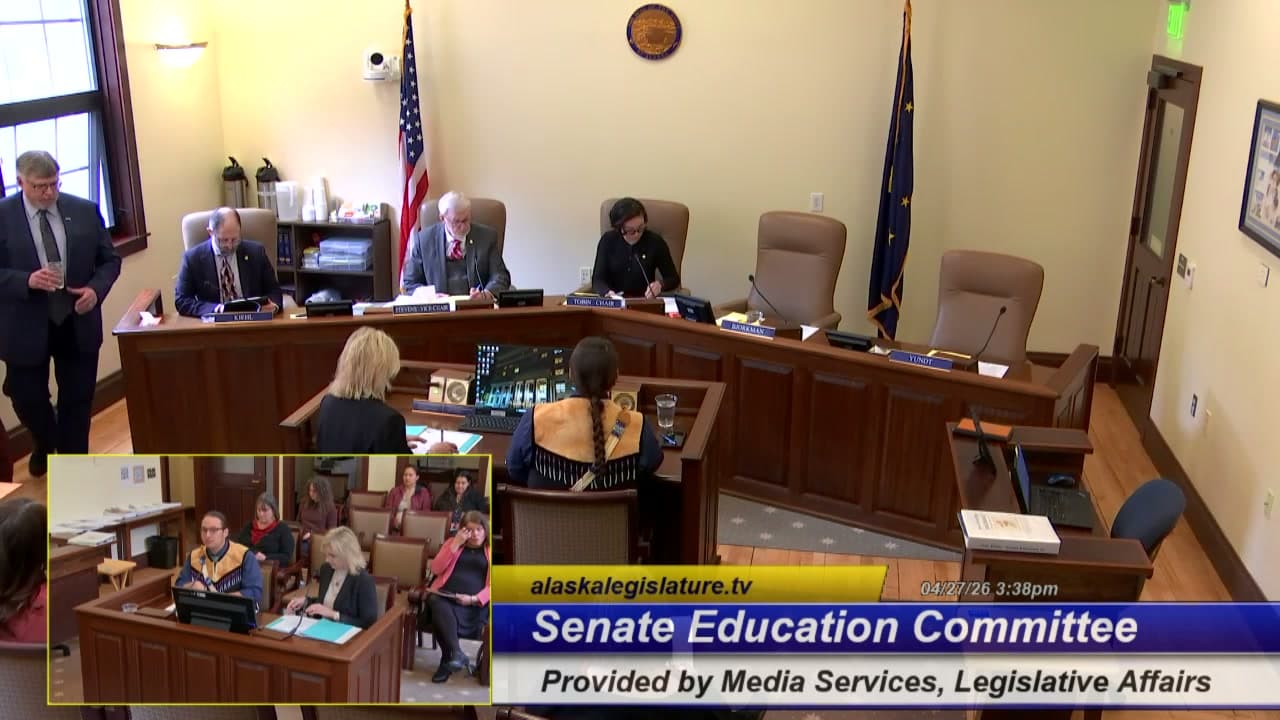
Alaska is charting a path between tribal sovereignty and state education law that few states have attempted. Senate Bill 66, heard Monday in the Senate Education Committee, would authorize up to five tribes to operate public schools under compact agreements. The model requires threading tribal governance through the existing framework of Alaska's public education statutes without dismantling either.
The bill builds on Senate Bill 34, enacted in 2022 to authorize compact agreements between the state and tribal partners for up to five demonstration tribally-run schools. Following that authorization, the Department of Education and Early Development and participating tribes completed a 72-page legislative framework in December 2024. The framework details how governance structures, funding mechanisms, and operational standards could support tribal sovereignty while maintaining public education requirements. SB 66 translates that framework into statute, authorizing a seven-year demonstration period: two years for startup, five years of operation.
The legislative strategy relies on uncodified law. This mechanism allows the compact schools to function alongside Title 14 education statutes without amending the entire code. "This is all uncodified law throughout, and that was that mechanism that we had talked about on Friday so that it keeps a fireproof wall between Title 14 but allows this uncodified to work with it," compacting consultant Dr. Joel Isaac said during the hearing. The structure designates compact schools as local education agencies for federal funding purposes while treating them as school districts under state law.
Five tribes have expressed interest: Central Council of Tlingit and Haida (100 projected students), Ketchikan Indian Community (200), King Island Native Community and Village of Solomon (120), K'nik Tribe (600 including correspondence students), and Kargi Academy (100). First-year costs would total $19.2 million, including $6 million in one-time startup grants and $13.3 million in foundation formula funding. Subsequent years would cost $13.3 million annually.
The funding model follows Alaska's foundation formula, meaning dollars move with students. When a student enrolls in a compact school, funding shifts from the existing district. That dynamic raised questions about financial stability for districts losing enrollment. Chair Tobin asked whether there was concern that if the legislature failed to extend the program beyond its sunset date, Nome Public Schools would face significant enrollment losses.
Commissioner Deena Bishop acknowledged the tension. "When we discussed hold harmless with the tribes, we are, and with the school districts, it was really insofar as maybe establishing something added to this bill to be more sensitive," she said. The department is exploring hold-harmless provisions to protect districts during the pilot period, though Director Heather Heineken noted that calculating impacts is complicated by Alaska's tiered funding formula. "The impact on the districts that they're coming from is really indeterminate due to the effects of potential enrollment shifts and the adjustments in the formula that we would experience," Heineken said.
The bill preserves core public education requirements: open enrollment, non-discrimination, special education services, teacher certification, participation in the state retirement system, and accountability under federal Every Student Succeeds Act reporting. Compact schools must follow the same health, safety, and fire codes as traditional districts. They cannot charge tuition or engage in sectarian activities.
Teacher certification includes flexibility. The State Board of Education could waive standard requirements for candidates with specialized knowledge tribes deem relevant, allowing subject matter experts to teach without traditional credentials. Teachers would remain in the state retirement system and could move between compact schools and traditional districts.
The correspondence school provision drew scrutiny. Compact schools could operate correspondence programs under the same rules as existing districts, but the physical school must be located within the associated district's boundaries unless operating as a correspondence program. Chair Tobin sought clarification: "If a state and tribal compact school was established as a correspondent school, it does not need to physically be in a school district or in Alaska." Isaac confirmed the school must be headquartered in Alaska within the tribe's geographic area.
Record retention and student transitions remain administrative questions. If a compact school closes after the five-year pilot, students would return to the local district. "There's still teachers who meet state certification standards requirements in that community," Isaac said. "So if they have to move or if the compacting school were to dissolve, those students could still go to the Nome Public School District schools."
The sunset clause requires legislative action to continue the program beyond 2036. "The process would be additional legislation would be required to make it permanent," Isaac said. The legislature could repeal the sunset, keep the framework in uncodified law, or codify it into Title 14 based on pilot results.
Bishop framed the bill as addressing persistent achievement gaps and responding to tribal leaders' calls for educational sovereignty. "Public education in Alaska has not done well for young people, especially Alaska Native people," she said. "And I hope you change that." She referenced conversations with tribal leaders about the distinction between compact schools and charter schools, noting that tribal leaders want to "own that permission" rather than operate under permission granted by others.
The legislative path has faced obstacles. House Bill 59, a companion measure that would have provided approximately $17.5 million in first-year funding for the pilot program, advanced through the House Tribal Affairs Committee in May 2025 but was set aside until the next legislative session due to time constraints and a nearly $2 billion state budget deficit.
The committee held SB 66 for future consideration. Chair Tobin noted legislative legal staff identified drafting corrections needed, including replacing references to codified law with specific statute citations. The Senate Education Committee will not meet Wednesday but will hold confirmation hearings Friday for a State Board of Education appointment.
This article is based on a public meeting — Alaska Legislature: Senate Education, 4/27/26, 3:30pm ().
AI-assisted. How we use AI Transcript byLucas Brown
Stay informed. Support what matters.
Free, permanent access to local news you can verify. Subscribe to support Alaska News and go ad-free.
Related Coverage
Senate Education Committee Advances Opioid Awareness Bill, Hears Tribal School Compact Proposal
Alaska News · 5mo ago
Murkowski moves to shield the offices funding Alaska Native and special education
Alaska News · 2mo ago
Senate panel hears data center safeguards, tribal education bill
Alaska News · 5mo ago
Senate panel advances bill to stabilize Alaska school funding with enrollment averaging
Alaska News · 4mo ago
House panel advances Alaska Native languages task force bill after rejecting university, state agency seats
Alaska News · 4mo ago
Comments
Sign in to leave a comment.
No comments yet. Be the first to share your thoughts.