Senate panel advances bill to stabilize Alaska school funding with enrollment averaging
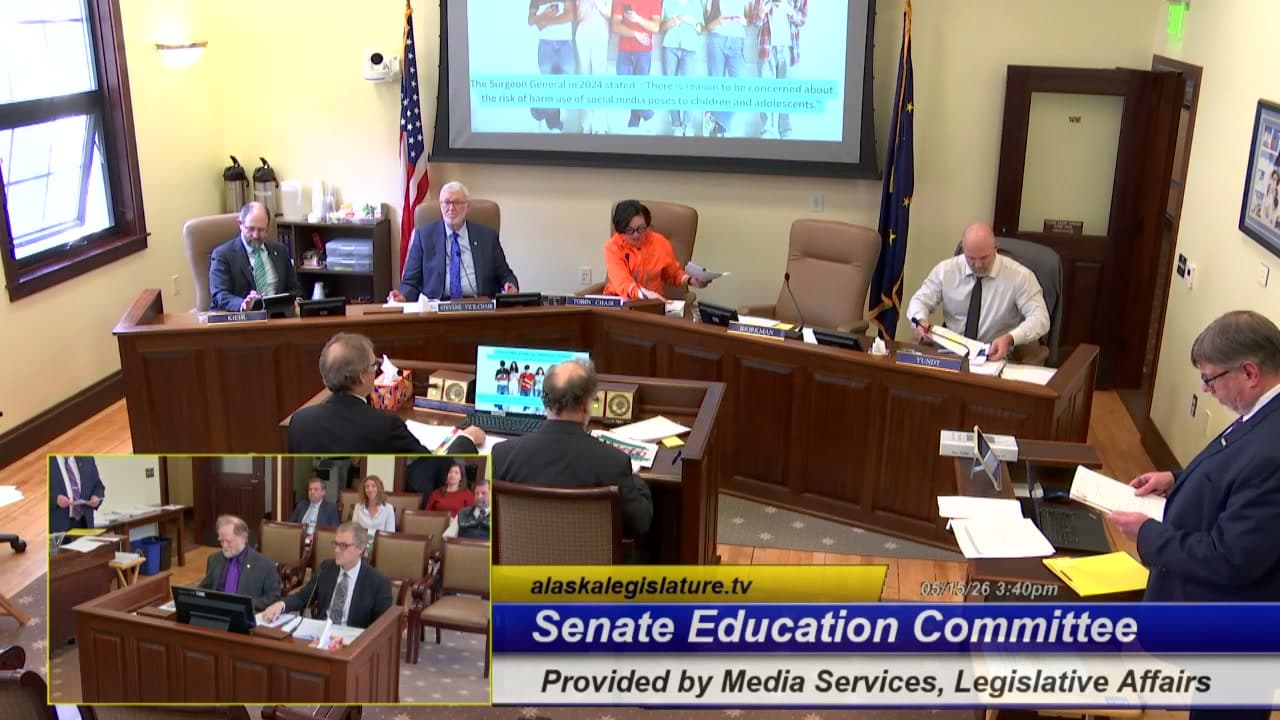
The Alaska Senate Education Committee heard a bill Friday that would change how the state funds schools by allowing districts to use multi-year enrollment averages instead of annual counts, then recessed the hearing until the next day to continue consideration.
House Bill 261 would let districts use either a three-year average of prior student counts, the previous year's count, or the current year count for their budgets, whichever is greater. Supporters say the change addresses a timing problem where districts must make staffing decisions months before knowing final funding levels, contributing to teacher retention problems and school closures across the state.
"Our education funding process is broken," said Representative Andi Story, who co-chairs the House Education Committee and sponsored the bill. "School communities routinely do not learn their final funding levels for the upcoming school year until late May, after critical staffing and program decisions must be made."
The committee adopted a substitute version of the bill before taking testimony. The substitute removed provisions capping growth in required local contributions from municipalities, an issue addressed separately in Senate Bill 278, which the committee advanced earlier in the same meeting.
Heather Heineken, director of finance and support services for the Department of Education and Early Development, told the committee the fiscal note projects costs of $154.5 million in fiscal year 2027, rising to $226.3 million by fiscal year 2032. Story noted that the averaging component alone accounts for $113 million in the first year, with the remainder covering career and technical education programs and reading initiatives under the Alaska Reads Act that the House added to the bill. The department based its estimates on current enrollment data, acknowledging it lacks the capacity for more sophisticated modeling.
Twenty-six other states already use multi-year enrollment averaging, a practice recommended for Alaska more than a decade ago in a 2015 legislative study. The Alaska Association of School Business Officials presented modeling showing the bill would provide needed stability while costs would decline in later years as enrollment trends smooth out.
"This timeline forces districts to deliver a notice of possible non-retention, the pink slips, in the late spring, causing educators to be left in limbo unsure whether they have a contract for the following upcoming school year," Story said. "This matters because education operates in a competitive labor market. In the middle of a national teacher shortage, Alaska's families, children and communities cannot wait until the rest of the nation has already recruited the best teachers."
Multiple school superintendents testified in support of the bill, citing recent school closures as evidence the current system has failed. Dr. Cindy Micka, superintendent of the Kodiak Island Borough School District, told the committee her district closed one elementary school last year and considered closing another this year while cutting 35 positions totaling $2.7 million. Lily Boron, superintendent of the Haines Borough School District, said uncertainty about enrollment and funding delays staffing decisions, causing districts to lose qualified employees to other opportunities. Susan Nezda, superintendent of Hoonah City School District, said stable, predictable funding is vital to the budgetary process and leads to retention and recruitment improvement.
The bill also provides districts with options for counting intensive-needs students, allowing them to use the previous year's count, the current October count or a new February count. Story said this would provide faster funding when students requiring significant support services arrive mid-year or are identified later in the school year.
The bill removes the current hold-harmless provision that protects districts losing more than five percent of enrollment. Districts already receiving that protection would be grandfathered in, though Story said that support would taper out as the new averaging system takes effect.
Small alternative schools serving fewer than 175 students would receive their own school-size adjustment factor under the bill, rather than being counted as part of the largest school in the district. Story said this change would better fund programs serving students with complex needs.
The Association of Alaska School Boards supported the bill's core framework while noting it does not address root causes of declining enrollment or replace the need for adequate base funding. Lon Garrison, executive director of the association, said the bill provides "greater ability to plan responsibly and retain educators and focus on student achievement rather than the annual budget disruption."
After hearing testimony, Committee Chair Senator Lukey Gail Tobin recessed the hearing until 11 a.m. the next day to continue consideration. She asked members considering amendments to work with the bill sponsor and her office before the continued hearing.
This article is based on a public meeting — Senate Education, 5/15/26, 3:30pm ().
AI-assisted. How we use AI Transcript byLucas Brown
Stay informed. Support what matters.
Free, permanent access to local news you can verify. Subscribe to support Alaska News and go ad-free.
Related Coverage
House Finance considers multi-year school funding averaging bill
Alaska News · 5mo ago
Alaska House Weighs $113M Education Funding Overhaul
Alaska News · 5mo ago
House panel debates $113M education funding formula shift
Alaska News · 5mo ago
Alaska House panel hears bill to overhaul school funding timelines
Alaska News · 5mo ago
House Finance Advances Education Funding Bill Despite Fiscal Concerns
Alaska News · 4mo ago
Comments
Sign in to leave a comment.
No comments yet. Be the first to share your thoughts.