
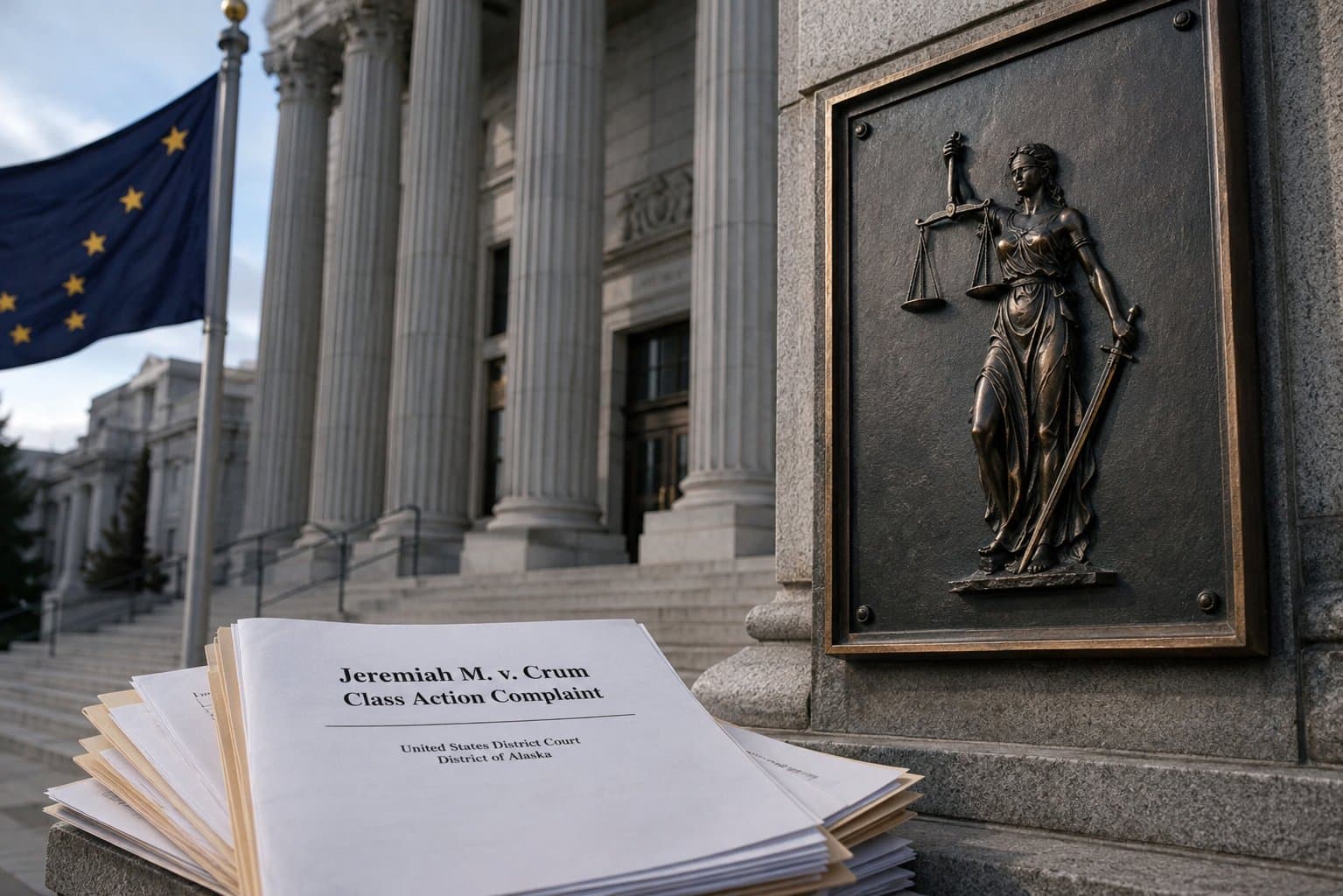
AI image
Alaska Supreme Court revives state's opioid nuisance suit against pharmacy chains
The Alaska Supreme Court on Friday revived the State of Alaska's public nuisance lawsuit against Albertsons, Safeway, Carr-Gottstein Foods, Kroger and Fred Meyer over how their pharmacies dispensed opioids. The court reversed an Anchorage Superior Court ruling that had thrown out the claim in March 2024.
The state sued in June 2022. The case now returns to Anchorage Superior Court, where Judge Una S. Gandbhir dismissed it. The state wants the companies ordered to stop the practices it blames and to repair the harm, including through addiction treatment and wide naloxone access.
Justice Jude Pate wrote the opinion. As required at this stage, the court treated every factual allegation in the complaint as true. "Although the State has not yet proven the allegations in its complaint, it has sufficiently articulated several claims so as to survive a motion to dismiss on the pleadings," it said. The state must still show the pharmacies caused the harm.
The state alleges the pharmacies ignored state and federal duties to monitor, investigate and report suspicious opioid prescriptions, and that Albertsons and Safeway stores in Alaska bought about 345 million morphine milligram equivalents of opioids in 2014. It says Safeway waited months to tell federal drug agents that employees at its Wasilla pharmacy had stolen tens of thousands of hydrocodone tablets, and that a U.S. Department of Justice investigation led to a $3 million settlement. The complaint also alleges Kroger paid pharmacists bonuses tied to prescription volume and speed.
Gandbhir had ruled that misuse of a legal product is not a violation of a public right, and that harm from dangerous products is better handled through product liability law. The pharmacies argued that selling a lawful product cannot create a public nuisance and that a ruling for the state would "open the floodgates of litigation," citing a 2021 Oklahoma Supreme Court decision rejecting a similar claim against a manufacturer.
The court said Alaska nuisance law is broader than Oklahoma's and that pharmacies, unlike manufacturers, are the final gatekeepers over prescription opioids. It declined to bar nuisance claims involving the sale of products. "We are not convinced," it wrote of the floodgates warning, pointing to the pharmacies' separate legal duties. A fast-food chain, it said, has no such duty to limit access to its products.
The state lost most of its consumer protection claim. The court agreed with Gandbhir that state drug law already regulates the conduct, which exempts it. One allegation survived: that the pharmacies deceived the public by promoting their efforts to keep drugs from the illegal market.
The opinion cites figures from the complaint. Overdose deaths rose 68% from 2020 to 2021. Infants born addicted to opioids rose 566% from 2004 to 2015. Alaska recorded 339 overdose deaths in 2024, down 5% from the year before.
Walgreens and Walmart, also sued, have settled. Alaska's opioid settlements with drugmakers and pharmacy chains totaled about $99 million over 10 to 15 years, the Department of Law said in March 2024.
What did you make of this story? (no account needed)
Made by our human newsroom with AI. How humans and AI work here · Grow with our newsroom ·
Get Alaska News in your inbox
Create your free account and get the day’s top stories around 6 each morning, in a few minutes’ read.
Top stories, around 6 each morning.
Stories on what you follow, on Sundays.
Source: Alaska Supreme Court, Alaska Supreme Court: S19048: State of Alaska v. Albertsons Companies, Inc.; Albertsons Companies LLC; Safeway; Inc.; Carr-Gottstein Foods Co.; The Kroger Co,; and Fred Meyer, Inc. (Op. 7836).










Comments
Sign in to leave a comment.
No comments yet. Be the first to share your thoughts.