Photo by Cale Green
A federal court said it can order states to fix foster care. Alaska's case looms.
A federal appeals court in Richmond ruled last week that federal judges have the authority — and even a duty — to order systemic reform of state foster care agencies that violate children's constitutional rights. The decision came in a class-action lawsuit brought by West Virginia foster children. Alaska Attorney General Treg Taylor had joined a brief with 16 other state attorneys general arguing the opposite — that federal courts shouldn't be ordering reform of state child welfare systems. The appeals court disagreed, reversing a lower court that had thrown the case out.
What that means for Alaska: Alaska is being sued in a nearly identical class action right now.
The case at home
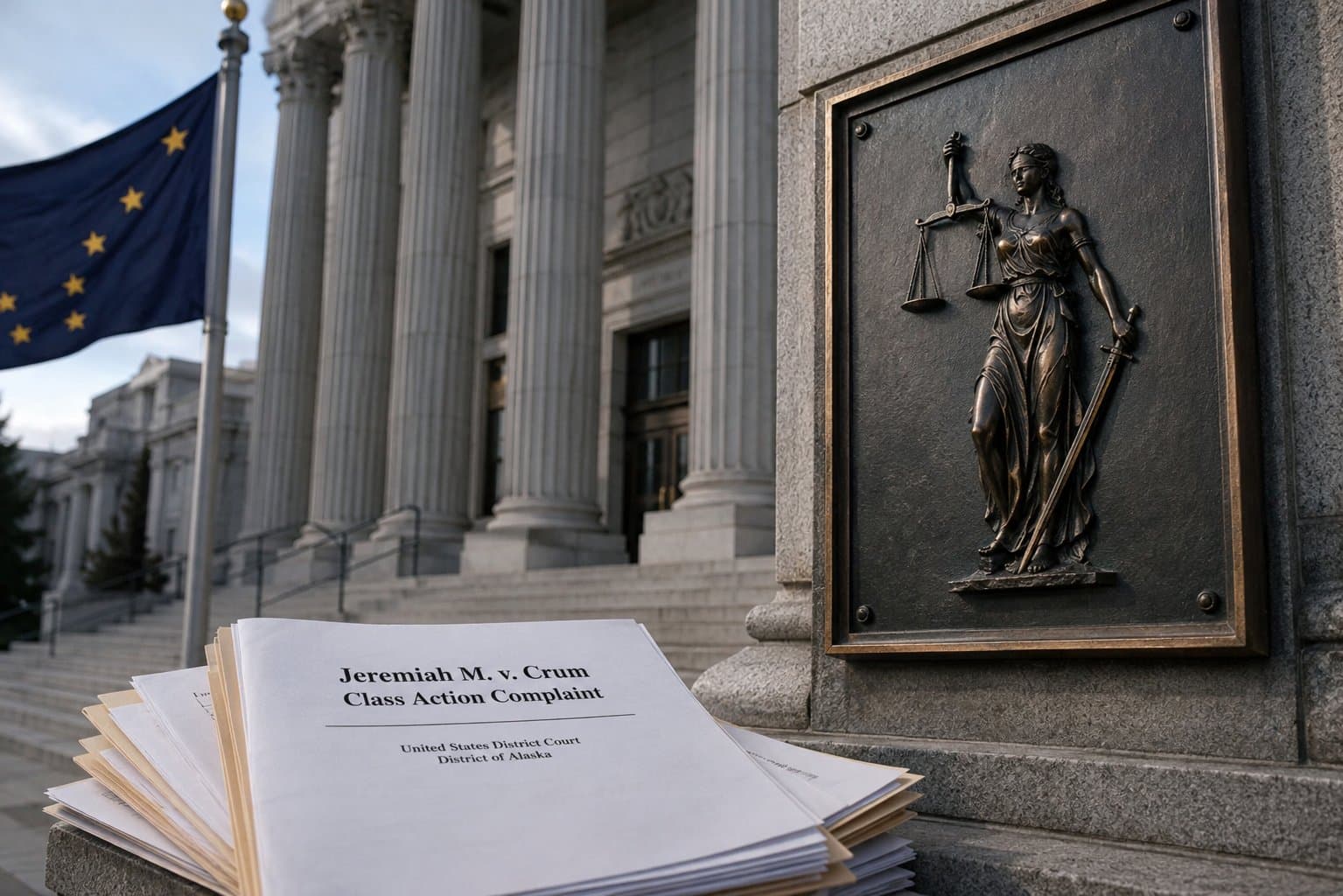
Jeremiah M. v. Crum was filed in federal district court in Alaska in May 2022 by the nonprofit A Better Childhood, on behalf of 14 named children who legally represent a class of more than 3,000 children in Alaska's foster care system. The complaint alleges long-running, systemic problems with how the state's Office of Children's Services places, supports, and protects children in its care. It cites violations of children's constitutional rights, the Indian Child Welfare Act (which requires special placement preferences for Native children), the Americans with Disabilities Act, the Rehabilitation Act, and the federal Adoption Assistance and Child Welfare Act.
The plaintiffs say the problems hit certain groups particularly hard: Alaska Native children, who they argue are not consistently placed in culturally appropriate settings as ICWA requires; children with disabilities, who don't always receive accommodations they're entitled to; and kinship caregivers — relatives caring for kids — who say the system doesn't support them. A Better Childhood reports that Alaska's OCS caseworkers carry caseloads more than three times the national average, meaning each worker is responsible for far more children than child welfare standards recommend.
Two sides of the legal argument
The State of Alaska, represented by Taylor and the Department of Law, has taken the position — both in the Alaska case and in the West Virginia amicus brief — that child welfare administration is fundamentally a state responsibility, and that federal courts shouldn't be supervising state agencies through court-ordered reform plans. The State's argument is structural: the federal system gives child welfare authority to states, and the legislature and governor are the bodies that should fix problems through funding, policy, and statutory reform, not a federal judge through a consent decree.
The plaintiffs argue that the State has been on notice of these problems for years and hasn't fixed them, and that federal court orders are the only remedy that has historically forced state child welfare systems to actually reform. Class actions like this have produced major reforms in other states.
What's next
The Fourth Circuit ruling doesn't directly decide anything in the Alaska case — different circuit, different facts. But the reasoning is persuasive authority that the federal district court in Anchorage and, if the case goes that far, the U.S. Court of Appeals for the Ninth Circuit will consider. The Alaska case continues to move through the federal court system.
Source: Jonathan R. v. Patrick Morrisey (25-1239) — 4th Cir. ().
Drafted with AI. Edited by Cale Green. No full editor review is on record. Who is accountable.
Stay informed. Support what matters.
Free, permanent access to local news you can verify. Subscribe to support Alaska News and go ad-free.
Related Coverage
Alaska's high court reversed a decision to end a Native mother's parental rights — over how the state made its case
Alaska News · 2mo ago
The state must bridge the language gap before ending parental rights, court says
Alaska News · 2mo ago
Alaska Supreme Court clarifies active-efforts standard in Jace B. ICWA case
Alaska News · 3mo ago
Alaska Supreme Court upholds ICWA termination, clarifies standards
Alaska News · 3mo ago
Alaska court: guardian, not child's lawyer, waives therapy privilege
Alaska News · 2w ago
Comments
Sign in to leave a comment.
No comments yet. Be the first to share your thoughts.