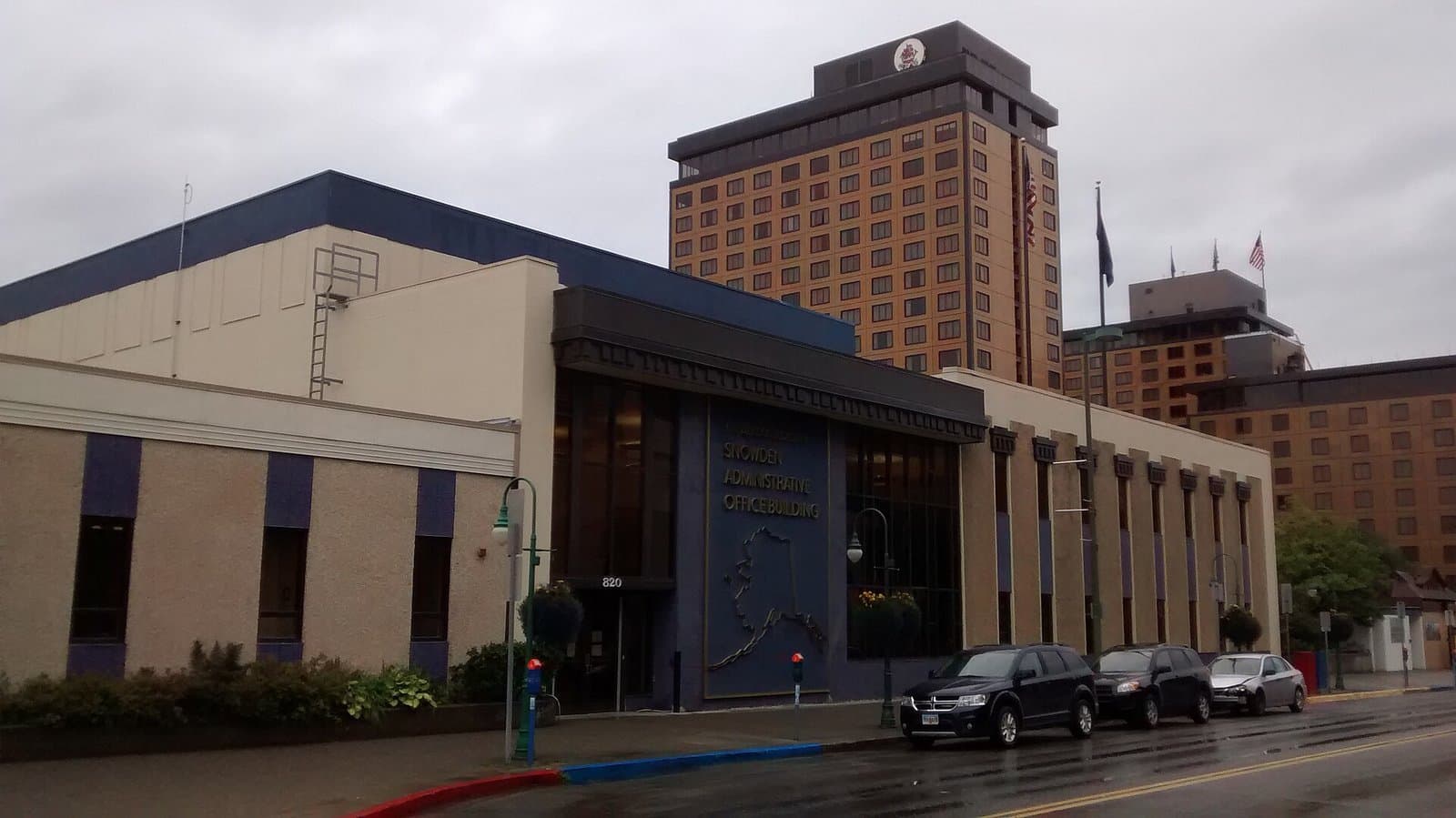
Photo: Mike Linksvayer via Wikimedia Commons · Photo source · CC0
Alaska Supreme Court revives opioid lawsuit against Carrs, Safeway and Fred Meyer owners
The Alaska Supreme Court on Friday revived the state's lawsuit accusing the companies behind Carrs, Safeway and Fred Meyer pharmacies of helping fuel Alaska's opioid epidemic by ignoring their legal duties when filling opioid prescriptions.
The ruling doesn't decide whether the pharmacies did anything wrong. At this early stage, the court had to treat the state's allegations as true. It ruled that the state's claim that the pharmacies created a public nuisance can go forward. The decision reverses Anchorage Superior Court Judge Una S. Gandbhir, who threw the case out in March 2024, and sends the case back to Anchorage Superior Court.
"Although the State has not yet proven the allegations in its complaint, it has sufficiently articulated several claims so as to survive a motion to dismiss on the pleadings," Justice Jude Pate wrote. No justice dissented.
The state sued in 2022. The defendants are Albertsons, Safeway and Carr-Gottstein Foods, and Kroger and Fred Meyer.
The state says the pharmacies failed to monitor, investigate and report illegitimate opioid prescriptions, as state and federal drug laws require. It alleges they ignored red flags, including some the U.S. Drug Enforcement Administration called "unresolvable," which should have stopped a pharmacist from filling the prescription.
The complaint also makes allegations about each company. It says Kroger paid pharmacists bonuses based on how many prescriptions they filled and how fast, controlled substances included. It also says Kroger's computer ordering systems flagged "excessive purchase" information, but the company let flagged opioid orders go through if a pharmacy coordinator gave a simple reason, such as "new customers."
The U.S. Department of Justice investigated Safeway's Wasilla pharmacy over the company's alleged failure to report missing or stolen controlled substances on time, according to the complaint. It says Safeway didn't notify the DEA until months after discovering that employees had stolen tens of thousands of hydrocodone tablets, and that the investigation led to a $3 million settlement with the federal government.
On the nuisance claim, the state wants a court order stopping the practices and requiring the companies to abate the nuisance, which it says could mean providing addiction treatment or making the overdose-reversal drug naloxone widely available.
Gandbhir had ruled that "the threat of misuse of an otherwise legal product is not a violation of a public right." She said prescription opioid use is a "private individual matter," and that harm from dangerous products is better handled through product liability law. The pharmacies argued that selling a lawful product can't create a public nuisance. They warned that recognizing such claims would expand nuisance law and "open the floodgates of litigation."
The court said Alaska's nuisance law is not as limited as Oklahoma's, where the state Supreme Court in 2021 rejected a public nuisance claim against an opioid manufacturer. Unlike a manufacturer, it said, the pharmacies were "the final step in the distribution process," gatekeepers over consumers' access to prescription opioids, with separate legal duties.
On the floodgates warning, the court wrote: "We are not convinced." Those separate duties set this case apart, it said: "a fast-food chain does not have a legal responsibility to limit access to its food products." It declined to bar public nuisance claims involving the sale of products across the board.
The state lost most of a second claim, under Alaska's consumer protection law. The court agreed with Gandbhir that the law exempts conduct that state drug and pharmacy law already regulates and specifically prohibits. One piece survived: the allegation that the pharmacies deceived the public by promoting their compliance and their efforts to keep drugs from being diverted to illegal use.
The opinion lays out the toll as the state describes it. Overdose deaths rose 68% from 2020 to 2021. The number of infants born addicted to opioids rose 566% from 2004 to 2015. From 2012 to 2016, foster care placements in Alaska grew at five times the national rate. Alaska recorded 339 overdose deaths in 2024, down 5% from the year before.
Walgreens and Walmart were also sued and have settled. As of March 2024, the Department of Law said Alaska's opioid settlements would bring in about $99 million over 10 to 15 years.
What did you make of this story? (no account needed)
Made by our human newsroom with AI. Reviewed by Cale Green. How humans and AI work here · Grow with our newsroom ·
Get Alaska News in your inbox
Create your free account and get the day’s top stories around 6 each morning, in a few minutes’ read.
Top stories, around 6 each morning.
Stories on what you follow, on Sundays.
Source: Alaska Supreme Court, Alaska Supreme Court: S19048: State of Alaska v. Albertsons Companies, Inc.; Albertsons Companies LLC; Safeway; Inc.; Carr-Gottstein Foods Co.; The Kroger Co,; and Fred Meyer, Inc. (Op. 7836).















Comments
Sign in to leave a comment.
No comments yet. Be the first to share your thoughts.