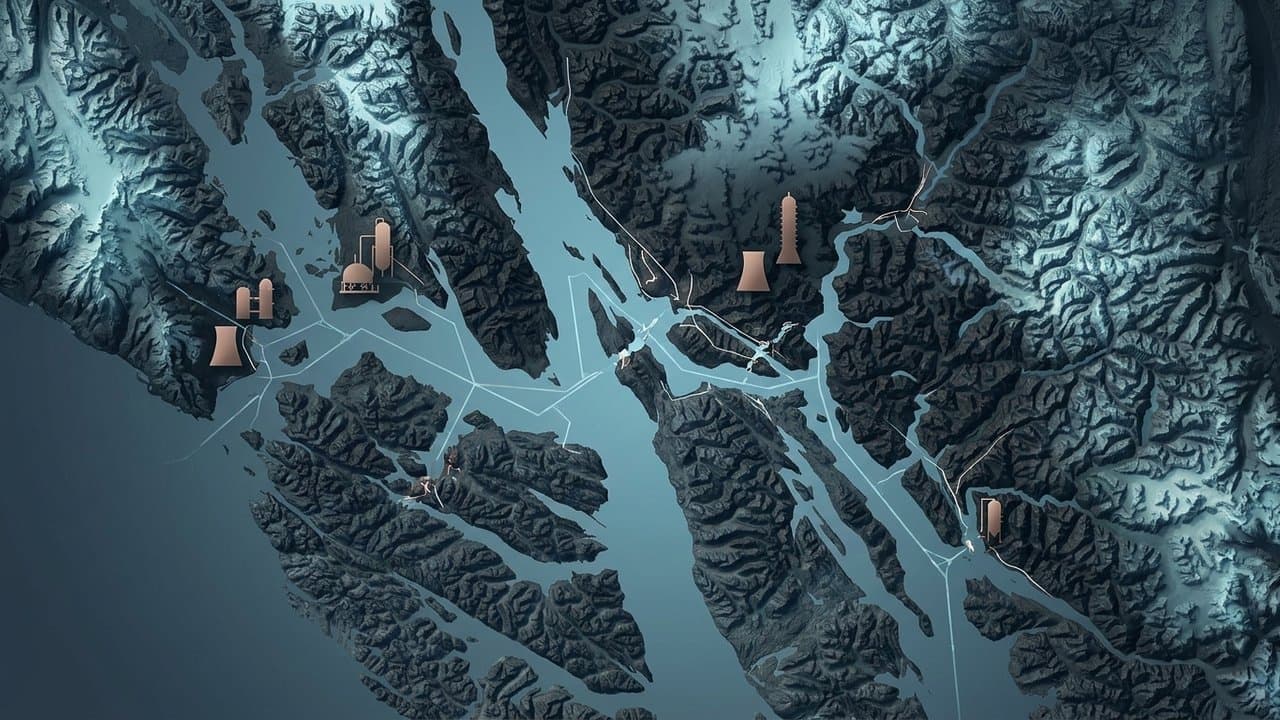
Editorial map (Gemini + Google Maps)
Alaska Senate passes LNG bill as Republicans warn it kills financing
The Alaska State Senate passed LNG enabling legislation Thursday on an 11-8 vote, and the chamber's Republican minority caucus responded within hours by declaring the bill would make the pipeline impossible to finance.
The Senate Majority added several provisions to the governor's original bill. Its own June newsletter listed them: a final investment decision deadline before 2028, construction deadlines of 2032 for Phase 1 and 2036 for Phase 2, a tax on oil and gas S-corporations, project labor agreements, and a bar on the state reimbursing developer Glenfarne if the project fails.
Three of those drew the minority caucus's fire. Republicans say the S-corporation tax will hit companies producing the Cook Inlet gas Alaskans depend on while the line is built, though they acknowledge the conference committee exempted the pipeline itself from it. They say the labor agreement requirement effectively locks out non-union contractors, and that the construction deadlines create financial exposure no developer can absorb given Alaska's weather and supply chains. Glenfarne told legislators four weeks ago that nearly identical language would sink financing, Republicans said, and the Majority passed substantially the same bill anyway.
The caucus statement, issued by press secretary Cassandra Day, closed by accusing the "Democrat-dominated Majority Caucus" of not wanting the project built. The Senate Majority is a 14-member bipartisan coalition of nine Democrats and five Republicans, led by Senate President Gary Stevens and Majority Leader Cathy Giessel, both Republicans. The Majority did not immediately respond to the caucus's objections.
Gov. Mike Dunleavy has backed the underlying framework, which swaps the project's property-tax structure for a volume-based tax on gas moving through the line. He said after the House passed an earlier version that the change would strengthen the project's competitiveness and give investors and communities long-term certainty.
Republicans also warned that tentative supply agreements they say were signed last year will start expiring in about two months, raising costs and potentially pushing customers toward competitors such as the Kitimat LNG expansion in British Columbia. Alaska News has not independently verified the terms or timing of those agreements.
The legislature has spent more than 60 days across multiple special sessions on the framework. A fourth special session begins July 27.
Based on a press release from Alaska State Legislature.
Made by our human newsroom with AI. How humans and AI work here · Grow with our newsroom
Stay informed. Support what matters.
Free, permanent access to local news you can verify. Subscribe to support Walter AlaskaNews and go ad-free.
Related Coverage
Senate passes gas-line bill; Dunleavy immediately calls lawmakers back to rewrite it
Alaska News · 4mo ago
Alaska House ties 19-19 on gas line bill, killing it for now
Alaska News · 3mo ago
Alaska Senate minority demands clean floor vote on LNG tax bill
Alaska News · 4mo ago
Senate Finance demands Phase 1 pipeline math before Alaska LNG tax vote
Alaska News · 4mo ago
Alaska Senate passes S-corp LNG tax with 2028 effective date
Alaska News · 4mo ago
Comments
Sign in to leave a comment.
No comments yet. Be the first to share your thoughts.